
When selecting boxing gloves, the designation “12oz” (approximately 340 grams) refers strictly to the total weight of the glove, not its protective capability, shape, or internal architecture. A common misconception among fitness enthusiasts and combat sports athletes is that any 12oz glove can serve as an all-purpose tool for every gym activity. In reality, the internal construction, foam density, and padding distribution of a glove dictate its true utility. Using a glove optimized for one specific task in the wrong training scenario can lead to hand injuries, premature gear degradation, or unnecessary risk to your training partners.
To find the right 12oz boxing gloves for your training, you must evaluate your primary gym activities. If your routine consists mostly of solo heavy bag training, you require a 12oz glove designed with dense knuckle protection and rigid wrist support to absorb repetitive, high-velocity impacts. If you focus on mitt work and Thai pads with a coach, you should prioritize a compact, responsive 12oz glove that offers crisp tactile feedback and rapid hand speed. For partner work, a critical safety boundary applies: 12oz gloves are generally considered too light and dense for standard adult sparring. Their use in partner drills must be strictly limited to light, technical flow work under close supervision, utilizing gloves specifically engineered with soft, highly distributed padding.
Gym environments in tropical climates like the Philippines introduce unique challenges for protective gear. High relative humidity and heat accelerate sweat accumulation inside the glove, which can rapidly break down internal foam layers and compromise wrist support. Therefore, understanding how different 12oz glove designs handle impact, support the hand, and withstand environmental moisture is essential for making an informed purchase.
Products mentioned in this guide
![[big-discount] Everlast Professional Boxing and MMA Gloves Muay Thai Training 12oz Fighting Training Sanda Gloves Punching Bag Fighting Gloves](https://img.lazcdn.com/g/p/491c68c2823b807ed529a5412ffe3f8b.jpg_webp_400x400q80.jpg_.webp)
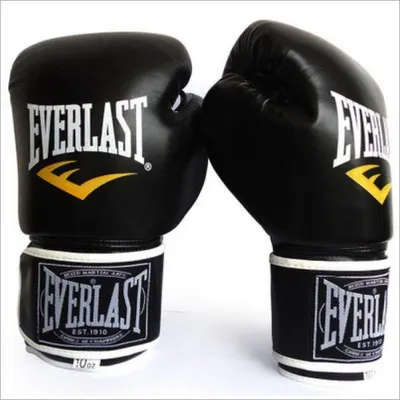
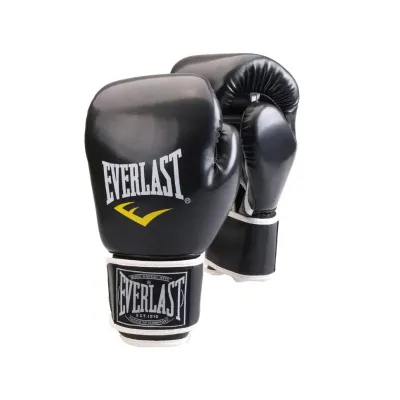
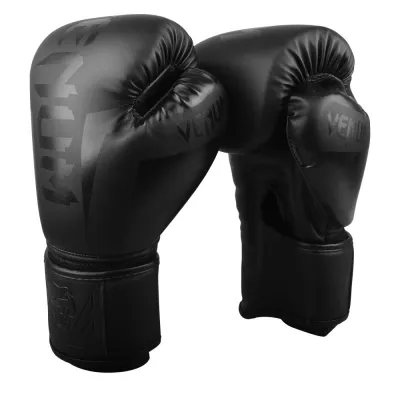
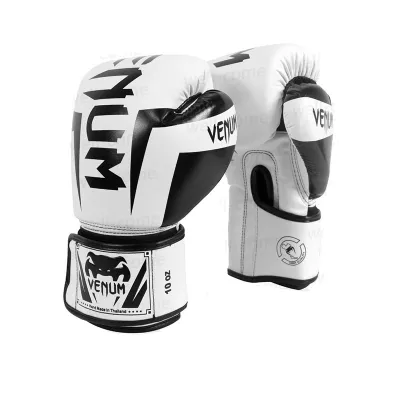
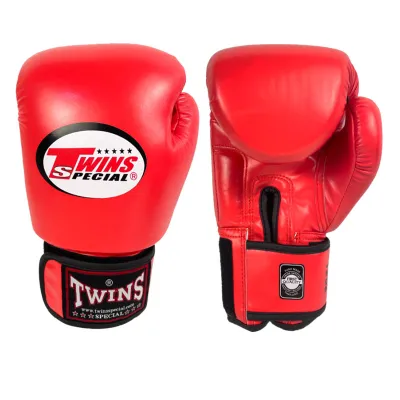
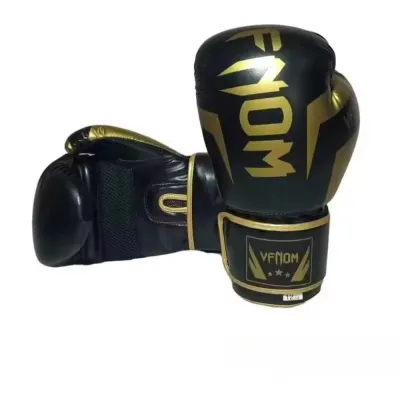
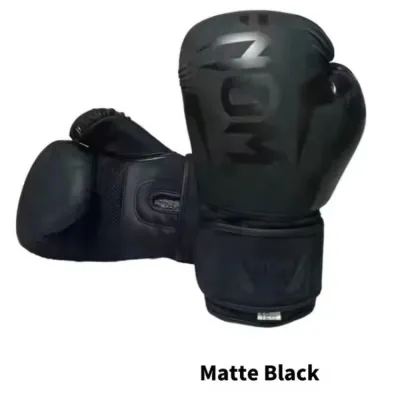
Prices are valid at publication and may change. Please refer to the product page for the latest price.
How Padding Distribution Changes a 12oz Glove's Purpose
The performance of a 12oz glove is determined by how those 12 ounces of weight are distributed across the hand and wrist. Manufacturers manipulate the thickness, density, and placement of internal materials to optimize a glove for specific impact profiles. A glove that concentrates its weight entirely over the knuckles will perform very differently from one that distributes weight evenly along the back of the hand and down into the wrist cuff.
To understand these differences, you must look at the primary padding compositions used in modern 12oz gloves:
- Multi-Layer Foam: This construction utilizes layers of varying foam densities, such as latex, ethyl-vinyl acetate (EVA), and polyurethane. The softer layers sit closest to your hand for comfort, while the firmer layers sit on the exterior to disperse high-velocity impact forces. Multi-layer foam is highly versatile and is commonly found in premium bag gloves and general training gloves.
- Injection-Molded Foam (IMF): IMF is manufactured by injecting a liquid foam mixture into a pre-shaped mold, resulting in a single, highly consistent, and anatomically correct foam block. IMF gloves offer excellent structural integrity and a highly protective outer shell. This design is exceptionally durable for heavy bag work but can feel stiff and lacks the subtle tactile feedback preferred for precise pad work.
- Horsehair and Hybrid Padding: Often found in traditional or professional-grade fight gloves, this construction combines layers of foam with animal hair or specialized synthetic fibers. Horsehair padding molds dynamically to the shape of your fist over time. While it offers unparalleled tactile feedback and a natural punch alignment during pad work, it lacks the long-term shock absorption required for daily heavy bag pounding and degrades rapidly under high-impact repetition.
Beyond material composition, the physical placement of the padding alters the glove’s center of gravity and protective characteristics. Front-heavy designs concentrate the foam directly over the primary knuckles (the index and middle fingers) to prevent the hand from bottoming out on impact. Balanced or back-heavy designs distribute a portion of the weight along the wrist cuff and the back of the hand, which improves defensive blocking and stabilizes the wrist joint, but results in a thinner protective barrier over the knuckles.
Before purchasing any 12oz glove, you should carefully inspect the manufacturer’s technical specifications. Do not rely solely on the weight tag; verify whether the product description specifies the foam type, layering technique, and intended training application.
12oz Gloves for Bag Work: Knuckle Protection and Wrist Support
Heavy bag training involves repetitive, high-force impacts against an unforgiving, stationary target. Traditional canvas or leather heavy bags, especially those found in local, open-air training facilities, can settle over time, creating dense, hard spots near the bottom and middle sections. Striking these dense areas with inadequate hand protection can lead to acute injuries, such as boxer’s knuckle (sagittal band tears), or chronic conditions like wrist tendonitis.

The primary requirement for a bag-focused 12oz glove is robust shock attenuation that prevents your knuckles from penetrating the foam and making direct contact with the inner core of the bag. To achieve this, bag gloves utilize dense, firm foam formulations—often IMF or highly compressed multi-layer EVA. This dense barrier absorbs the peak kinetic energy of the punch, dispersing it across a wider surface area before it reaches the small bones of your hand.
Equally critical is the glove’s wrist support system. When fatigue sets in during a long bag session, your wrist alignment can easily falter, leading to painful hyperextension or hyperflexion upon impact. Bag-focused 12oz gloves address this risk by incorporating rigid, elongated wrist cuffs and secure closure systems. Look for wide hook-and-loop (Velcro) straps that wrap completely around the wrist joint, or dual-strap systems that lock the wrist in place from two opposing angles. Traditional lace-up closures offer the most customizable and secure fit, though they typically require assistance to tie securely.
The trade-off for this extreme protection is a reduction in sensory feedback and flexibility. Bag-focused 12oz gloves tend to have a bulkier physical profile and a stiffer feel. They require a break-in period before the foam conforms to your hand, and they do not allow you to easily feel the exact angle of your punch alignment on impact.
When evaluating a 12oz glove for heavy bag work, use these observable checkpoints to assess its suitability:
- The Fist Test: Put the glove on with your hand wraps tightly applied. Attempt to make a complete, natural fist. The glove should allow your hand to close fully without requiring excessive forearm strain to keep the fist clenched.
- The Cuff Rigidity Check: Grasp the wrist cuff with one hand and try to bend it sideways. A high-quality bag glove will resist bending, indicating that the cuff will keep your radius, ulna, and carpal bones aligned during off-center impacts.
- The Knuckle Compression Check: Press your thumb firmly into the center of the knuckle padding. If the foam compresses easily and you can feel the hard structure of the inner glove with minimal pressure, the padding is too soft or thin for heavy bag training.
12oz Gloves for Pad Work: Feedback, Speed, and Compact Fit
Pad work with a coach on focus mitts or Thai pads is a highly dynamic exercise focused on precision, speed, head movement, and rapid combinations. Unlike the heavy bag, focus mitts are moving targets caught by a trainer who actively absorbs a portion of the punch’s energy. Consequently, the structural requirements for a pad-focused 12oz glove shift away from sheer mass and toward tactile feedback and aerodynamic efficiency.
For pad work, a striker needs to feel the “snap” of a clean punch. This tactile feedback is crucial for refining technique, adjusting the angle of entry, and maintaining proper distance. Pad-focused 12oz gloves achieve this by utilizing slightly thinner, highly responsive padding layers. Rather than completely deadening the impact, these gloves allow you to feel exactly how and where your knuckles connect with the target, helping you self-correct your form in real time.
Speed and maneuverability are enhanced by a compact physical profile. A streamlined glove cuts through the air with less resistance, allowing for faster hand speed and more realistic defensive slips, ducks, and catches. This compact design also ensures a snug, anatomical fit, preventing the glove from shifting or sliding on your hand during rapid-fire combinations.
Inside the glove, a prominent grip bar is essential. The grip bar is a cylindrical piece of foam or leather positioned inside the palm crease. It provides your fingers with a secure anchor to curl around, ensuring you can maintain a tight, anatomically correct fist at the moment of impact without experiencing premature hand fatigue.
In the high-humidity conditions common in the Philippines, sweat management is a major factor during intensive pad sessions. Look for pad-focused gloves that feature perforated palms, mesh ventilation panels, and specialized moisture-wicking inner linings. These features help keep your hands dry, preserve the integrity of the internal foam, and prevent the buildup of odor-causing bacteria.
The primary limitation of a pad-focused 12oz glove is its lack of heavy-duty protection. If you take a highly compact, responsive pad glove and use it for sustained, hard hitting on a dense heavy bag, the thinner foam will quickly bottom out, exposing your knuckles to direct impact and accelerating the breakdown of the glove’s internal structure. Furthermore, the compact, firm nature of these gloves makes them highly unsafe for any form of partner sparring.
12oz Gloves for Light Sparring: Safety Limits and Control
Using 12oz gloves for partner work requires a thorough understanding of safety limits and strict gym protocols. As a fundamental safety rule, 12oz gloves are generally insufficient for standard, full-contact adult sparring. In almost all reputable combat sports gyms, the standard requirement for adult sparring is 14oz, 16oz, or even heavier gloves. The extra weight in a 16oz glove represents additional foam thickness, which increases the deceleration distance of the punch and significantly reduces the peak impact force transmitted to your training partner’s head and body.
However, there are highly specific, narrow conditions where a 12oz glove is acceptable for partner work:
- Light Technical Sparring: This involves low-intensity "touch" sparring or flow drills where punches are thrown at a maximum of 30% to 40% power, focusing entirely on timing, footwork, and defensive reactions.
- Lightweight Athletes: Competitors in lighter weight classes (typically under 50 kilograms or 110 pounds) may use 12oz gloves for controlled sparring, as their lower body mass generates less kinetic energy.
- Amateur Competition Rules: Certain amateur organizations or youth divisions mandate the use of 12oz gloves for competitive bouts, requiring athletes to acclimatize to this weight during specific fight-camp drills.
If you are permitted to use 12oz gloves for light partner work, the glove’s construction must prioritize your partner’s safety. Sparring-oriented 12oz gloves feature soft, pillowy padding—often utilizing natural latex layers or specialized low-density foams—that compresses easily to cushion the blow. The padding must be evenly distributed across the front, sides, and back of the hand, rather than concentrated in a hard, dense block over the knuckles. This even distribution increases the physical volume of the glove, spreading the force of an impact over a larger surface area.
Never use a compact, stiff, or heavily worn 12oz glove for partner work. If the outer material feels rigid, or if you can feel your knuckles through the padding, the glove acts as a weapon rather than protective gear. Always consult your coach and verify your gym’s specific equipment policies before engaging in any partner drills with 12oz gloves. If your partner indicates that your punches feel excessively hard or sharp, you must immediately stop and switch to heavier, more protective sparring gear.
Feature Comparison: Bag, Pad, and Sparring Designs
To help you visualize the structural differences between these three distinct 12oz glove categories, the table below outlines their primary design characteristics, physical profiles, and inherent limitations.
| Design Focus | Padding Distribution | Wrist Support Priority | Physical Profile / Volume | Primary Limitation |
|---|---|---|---|---|
| Bag Work | Concentrated, high-density foam over the knuckles. | Maximum; rigid cuffs with wide hook-and-loop or lace closures. | Medium volume; stiff and structured profile. | Lacks tactile feedback; unsafe for partner sparring due to dense foam. |
| Pad Work | Thinner, highly responsive foam for tactile impact. | Moderate; flexible cuffs to allow rapid hand articulation. | Low volume; compact, streamlined, and aerodynamic. | Transmits too much shock for heavy bag work; unsafe for sparring. |
| Light Sparring | Evenly distributed, soft, and pillowy foam layers. | Moderate to High; padded cuffs to assist in blocking strikes. | High volume; larger physical footprint relative to weight. | Restricted to low-impact, technical drills; unsafe for full-contact sparring. |
Final Decision Framework
To finalize your purchase decision, evaluate your training habits against this structured framework. Choosing the correct glove requires matching your primary daily activity to the specific engineering of the gear.
- Choose a bag-focused 12oz glove if: Your training consists primarily of solo workouts on heavy bags, you require maximum shock absorption to protect your knuckle joints from repetitive stress, and you prioritize rigid wrist stabilization over hand speed and tactile feedback.
- Choose a pad-focused 12oz glove if: You train consistently with a coach on focus mitts or Thai pads, you want to maximize your hand speed and combination flow, you value hearing and feeling the clean "pop" of your punches, and you train in a hot, humid environment where ventilation and moisture-wicking linings are critical.
- Choose a sparring-oriented 12oz glove if: You are a lightweight athlete or are engaging strictly in light, technical flow drills under direct coaching supervision, your gym explicitly permits 12oz gloves for controlled partner work, and you select a model engineered with soft, distributed, high-volume padding.
- Verify first if: You intend to buy a single pair of 12oz gloves to handle all three training modes. An "all-around" 12oz glove is always a compromise. It will lack the dense knuckle protection needed to survive daily heavy bag pounding without bottoming out, and it will remain too firm and compact to safely protect your training partners during light sparring. If your budget allows, invest in task-specific gloves to protect your hands, respect your training partners, and extend the lifespan of your gear.
Frequently Asked Questions (FAQ)
Can I use the same 12oz gloves for heavy bag and sparring?
No, you should not use the same pair of 12oz gloves for both heavy bag training and sparring. Heavy bag work involves striking a dense, abrasive surface repeatedly, which rapidly compresses and breaks down the internal foam layers of the glove. Over time, this makes the padding hard and brittle. If you then use those same gloves to spar, you will transmit dangerous, un-cushioned forces directly to your training partner, greatly increasing the risk of cuts, bruises, and concussions. Furthermore, gloves designed to protect your knuckles on a heavy bag utilize dense, hard foam that is inherently unsafe for partner contact, even when brand new. Keep your bag gloves and sparring gloves separate to ensure safety and equipment longevity.
How should I care for 12oz gloves used for multiple training types?
Proper maintenance is critical to preserve the protective qualities and hygiene of your gloves, especially in humid climates. After every training session, immediately wipe the exterior of the gloves with a clean, damp microfiber cloth to remove sweat and salt buildup. Open the hook-and-loop straps fully and place the gloves in a well-ventilated, shaded area to air dry completely. Never leave your gloves inside a closed gym bag, and avoid exposing them to direct sunlight or high-heat sources like hair dryers, as extreme heat will warp and crack both leather and synthetic foams. To manage internal moisture, use breathable hand wraps during training to absorb sweat before it reaches the glove lining, and consider using cedar-filled glove inserts between sessions to absorb residual humidity. Always consult the manufacturer’s care label for material-specific cleaning instructions.
Community discussion
Share your experience or ask a question. Comments are reviewed before publication.