
Choosing between 3-wheel and 4-wheel inline skates depends on your current skill level, skating environment, and personal performance goals. Beginners and technical skaters generally benefit from the low center of gravity and predictable stability of a traditional 4-wheel setup. Intermediate and advanced skaters looking for higher top speeds, effortless roll-over capability on rough pavement, and efficient long-distance cruising typically prefer 3-wheel configurations, often called triskates.
Navigating outdoor spaces in the Philippines means adapting to unique environmental factors. From the smooth, wide pavements of modern urban parks to the cracked asphalt, sudden elevation changes, and debris found on local barangay roads, your choice of wheel configuration directly impacts your balance and safety. High tropical humidity and sudden afternoon downpours also demand careful consideration of how your gear handles slick surfaces and road vibrations.
How Frame and Wheel Design Change Your Ride
To understand how these two configurations perform, you must first look at the physical relationship between the frame length, wheel diameter, and deck height. The wheelbase—the distance from the center of the front wheel to the center of the rear wheel—dictates how stable the skate feels at high speeds and how tightly it can turn. A longer wheelbase naturally tracks in a straighter line, while a shorter wheelbase pivots with much less effort.
Products mentioned in this guide
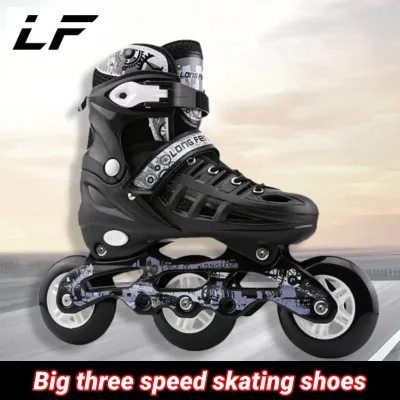
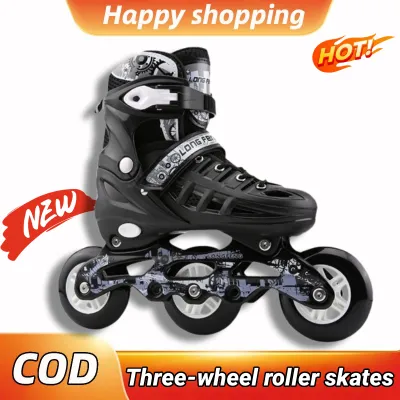
![[Free shipping + one year warranty + cash on delivery] large 3 wheel inline skates 110mm (black) roller skates 3 wheel speed skates 4 wheel skates can use 3x125mm wheels and 3X110mm wheels 4 rounds 76*80*80*76](https://img.lazcdn.com/g/p/d53353b38c1706ca830daddd712491de.jpg_400x400q80.jpg_.webp)
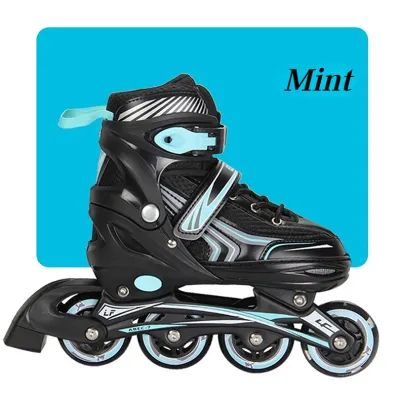
Prices are valid at publication and may change. Please refer to the product page for the latest price.
Traditional 4-wheel skates typically use smaller wheels, ranging from 72mm to 80mm in diameter, packed tightly together along a medium-to-long frame. This design keeps your foot positioned close to the ground, resulting in a low deck height. A lower deck height reduces the lateral leverage exerted on your ankles, making it significantly easier to keep your feet upright and aligned without muscle fatigue.
In contrast, 3-wheel skates utilize larger wheels, usually starting at 90mm and going up to 110mm or even 125mm. Because three large wheels take up less horizontal space than four, manufacturers can mount them on a remarkably short frame. This combination creates a high ride height, which raises your center of gravity. While the shorter frame allows for quick pivoting, the elevated position requires much stronger ankles to prevent the skate from tilting inward or outward during a stride.
Weight distribution also changes when you drop a wheel. Although larger wheels are heavier individually, a 3-wheel frame requires less metal, and you save the weight of one entire wheel, axle, and bearing set per skate. This hardware reduction offsets the bulk of the larger wheels, resulting in a setup that often feels surprisingly light on your feet during recovery strides.
4-Wheel Skates: Best for Stability and Control
Four-wheel inline skates remain the industry standard for recreational skating, and for good reason. Having four points of contact with the ground distributes your body weight more evenly across the frame. This even distribution provides a highly stable platform that makes learning fundamental skills—such as the basic stride, crossover turns, and various stopping methods—much more intuitive for beginners.

This configuration is highly specialized for disciplines that require precise footwork, sudden stops, and structural durability. Aggressive skaters rely on small, hard 4-wheel setups to navigate skatepark ramps and grind rails safely. Similarly, roller hockey players utilize 4-wheel frames to execute sharp, explosive directional changes on indoor courts, where maintaining a low, aggressive stance is key to performance.
However, the smaller wheels of a standard 4-wheel setup come with distinct trade-offs when transitioning to outdoor environments. Small wheels have a higher rolling resistance and struggle to roll over obstacles. When skating on weathered concrete or paths littered with small pebbles and twigs, small wheels can catch easily, transferring harsh vibrations directly into your feet and legs, which can quickly lead to fatigue.
Furthermore, maintaining high speeds on a 4-wheel setup requires continuous physical effort. Because smaller wheels lose momentum more rapidly than larger ones, you must maintain a higher stride cadence to keep up with faster skaters. This makes long-distance fitness skating or commuting on 4-wheel setups more physically demanding over time.
3-Wheel Skates: Built for Speed and Smooth Cruising
Three-wheel skates are engineered to maximize rolling efficiency and speed. The defining advantage of a triskate setup is the sheer size of the wheels. Large polyurethane wheels roll over road imperfections, cracks, and small debris with minimal deceleration. Instead of getting caught in a pavement gap, a 110mm wheel simply bridges the space, providing a much smoother and safer ride on unpredictable urban streets.
This smooth roll is enhanced by the reduction in rolling friction. With only three contact points per skate, there is less resistance holding you back. Once you accelerate a 3-wheel skate to its cruising speed, it retains that momentum for a remarkably long time. This high-speed glide allows fitness skaters and commuters to cover long distances with fewer strides, conserving energy over miles of travel.
Despite these benefits, the learning curve for triskates can be steep for those without prior skating experience. The elevated ride height acts as a lever against your ankle joint. If your ankles lack the strength to support this leverage, your feet may pronate, causing uneven wheel wear and increasing the risk of painful strain or falls. Beginners often find the sensation of being so high off the ground disorienting.
Additionally, the short frame length paired with large wheels can make the skates feel highly sensitive to minor foot movements. While experienced skaters appreciate this responsiveness for carving and weaving through urban obstacles, newer skaters may find it difficult to maintain a straight, stable line, especially when descending hills or attempting to balance on one foot.
Head-to-Head Comparison: Maneuverability, Speed, and Terrain
When comparing these configurations side-by-side, the differences in maneuverability, speed maintenance, and shock absorption become clear. A 3-wheel skate with a short frame offers an incredibly tight turning radius, allowing you to make sharp turns in crowded spaces. However, a 4-wheel skate provides superior tracking stability, making it easier to maintain control during high-speed descents or technical maneuvers.
In terms of speed, 4-wheel skates excel at quick acceleration from a complete standstill because the lower height allows for more explosive pushes. Once moving, however, the 3-wheel setup easily outpaces the 4-wheel configuration, requiring far less effort to maintain a fast cruise. For shock absorption, the larger volume of polyurethane on 3-wheel setups dampens the harsh vibrations of rough asphalt far better than thin, small wheels.
| Performance Feature | 4-Wheel Setup (e.g., 4x80mm) | 3-Wheel Setup (e.g., 3x110mm) |
|---|---|---|
| Target User | Beginners, hockey players, aggressive skaters | Intermediate to advanced skaters, commuters |
| Center of Gravity | Low (highly stable and supportive) | High (requires developed ankle strength) |
| Wheel Size Range | Typically 72mm to 80mm | Typically 90mm to 125mm |
| Maneuverability | Predictable, stable tracking | Highly responsive, tight turning radius |
| Vibration Dampening | Low (transfers road texture to feet) | High (smooths out rough pavement and cracks) |
| Speed Maintenance | Moderate (requires constant striding) | High (excellent glide and long-lasting momentum) |
How to Choose the Right Setup for Your Goals
To make the final decision, evaluate your current skill level, where you plan to skate, and what you want to achieve on your wheels.
Choose 4-wheel if:
- You are a complete beginner who needs to build ankle strength, balance, and confidence.
- Your primary goals involve learning technical tricks, slalom weaving, or playing roller hockey.
- You prefer a highly stable, low-to-the-ground feel that makes practicing stopping techniques easier.
- You skate primarily on smooth, dedicated surfaces like indoor rinks or well-maintained park paths.
Choose 3-wheel if:
- You are an intermediate or advanced skater looking to upgrade your speed and distance capabilities.
- Your main activity is long-distance fitness skating, trail cruising, or urban commuting.
- You regularly skate on rough asphalt, paving stones, or roads with minor debris and cracks.
- You have strong ankles and want a highly responsive skate that glides effortlessly.
Verify first if:
Before purchasing new gear or upgrading your current setup, verify the compatibility of your equipment. If you plan to swap frames, check your boot’s mounting standard—common standards include 165mm, 195mm, or UFS (Universal Frame System)—to ensure the new frame will bolt on securely. Inspect your local skating routes to see if the pavement quality justifies larger wheels, and check online marketplaces or local specialty shops for current ₱ pricing on quality protective gear, which is essential when adapting to the higher speeds of a triskate setup.
Frequently Asked Questions (FAQ)
Can I convert my 4-wheel skates to a 3-wheel setup?
Whether you can convert your skates depends entirely on your boot design. If your skates feature a removable frame that uses a standard mounting system, you can purchase a separate 3-wheel frame and install it on your existing boots. However, you cannot simply remove one wheel from a standard 4-wheel frame to create a triskate. Doing so will leave an empty space that ruins the weight distribution, alters the structural integrity of the frame, and negatively impacts your balance. Always check your skate manufacturer’s specifications to confirm frame compatibility.
Do 3-wheel skates require different braking techniques?
Yes, 3-wheel skates often require adjusted braking habits. Many high-performance 3-wheel frames do not come with a pre-installed heel brake because the larger wheels and shorter frames make traditional brake mounts difficult to position. Skaters must rely on active stopping methods such as the T-stop, plow stop, or powerslide. Because of the higher center of gravity, you must bend your knees deeper and sink lower into your stance to maintain balance during these stops. If you require a heel brake, verify if the manufacturer offers a compatible aftermarket brake attachment designed specifically for that 3-wheel frame model.
Community discussion
Share your experience or ask a question. Comments are reviewed before publication.