
When upgrading or replacing the disc brake rotors on your mountain bike, the first compatibility check is identifying how the rotor attaches to your wheel hubs. Choosing the correct rotor for bike mtb setups depends entirely on this mounting interface. If you purchase a rotor with a mounting style that does not match your hub, the component cannot be installed securely. The mountain biking industry relies on two primary standards for securing disc rotors to hubs: the traditional 6-hole (or 6-bolt) system and the Centerlock system. Fortunately, determining which system your bike currently uses is a straightforward process that requires only a brief visual inspection of your wheels.
How to Identify Your MTB Hub Mounting System
To determine which mounting system your mountain bike uses, begin by looking closely at the center of either wheel, specifically where the disc brake rotor meets the hub shell. If your bike uses a 6-hole system, you will see six individual bolts arranged in a circle around the center of the hub. These bolts pass directly through the rotor’s inner ring and thread into six matching holes integrated into the hub’s flange. This pattern is highly visible and easy to recognize, as each bolt head is exposed on the outside of the rotor.
Conversely, if your bike features a Centerlock system, you will not see any individual bolts securing the rotor. Instead, the center of the rotor is mounted onto a splined cylinder protruding from the hub. This assembly is secured by a single, circular lockring positioned at the very center of the hub axle. The lockring features a splined edge—either on the inside or the outside of the ring—which is used to tighten the rotor onto the hub. The rotor itself is built with a splined inner ring that slides directly onto the matching splines of the hub shell.
Products mentioned in this guide
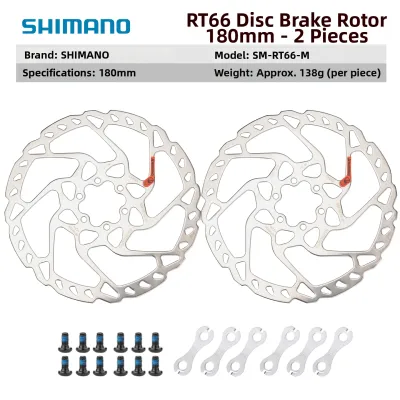
6 Lazada user ratings
🔨Durability:Goods 🔌Compatibility:All Bicycle 🛠️Ease of Installation:very easy Legit naman guys. Thank You Seller Thank You Lazada.
Goods maganda ang pag ka balot goods quality 1 💯 percent 160 kaso 180 ang isa need ko dalawa 160 heheh
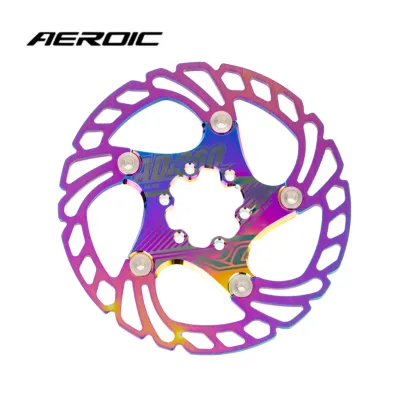
8 Lazada user ratings
🔨Durability:goods 🔌Compatibility:goods 🛠️Ease of Installation:gooods
🔨Durability:good 🔌Compatibility:compatible
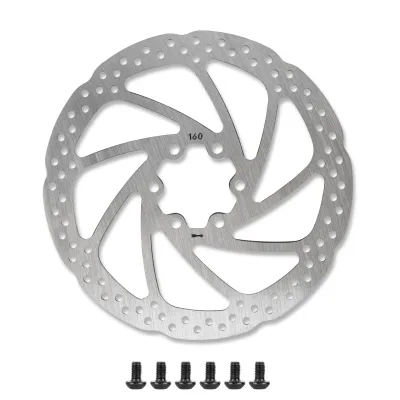
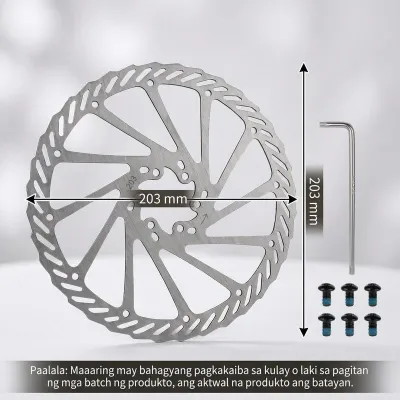
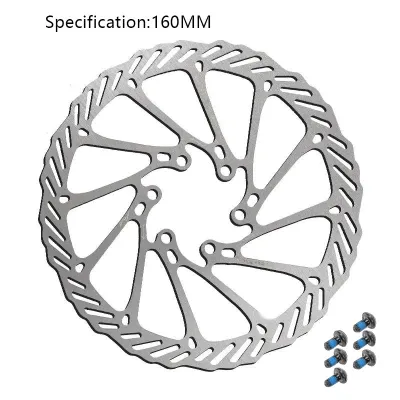
435 Lazada user ratings
Efficient and responsive braking system, High-quality material ensures long-lasting use, Improved stopping power on the road, Durable and re…Read full reviewShow less
Efficient and responsive braking system, High-quality material ensures long-lasting use, Improved stopping power on the road, Durable and reliable braking performance,
fast delivery, already received the item, the item is nice in just low price, compatible to my mtb project... thank seller and also to Lazad…Read full reviewShow less
fast delivery, already received the item, the item is nice in just low price, compatible to my mtb project... thank seller and also to Lazada....
Perfect fit for my BMX bike, High-quality material ensures long-lasting use, Efficient and responsive braking system,
Perfect fit for my BMX bike, Provides smooth and precise braking, High-quality material ensures long-lasting use,
Improved stopping power on the road, Efficient and responsive braking system, Great value for money,
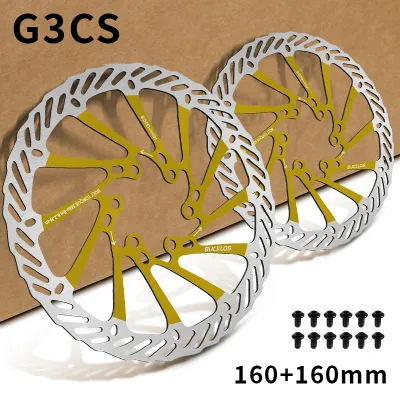
113 Lazada user ratings
🔨Durability:good 🔌Compatibility:good 🛠️Ease of Installation:good 160mm size option, Multiple color options,
Precise thickness control, Smooth braking performance, Includes 6 bolts, Easy installation design,
hindi kupa, nakakabit , pero ok naman sya.. mukhang maganda ang kapit nto..
thank you seller and rider,good items or products na narecieve ko
nice product! mukhang madali matanggal kulay yellow ng rotor.
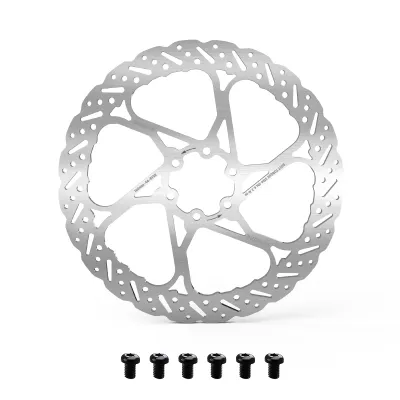
6 Lazada user ratings
legit! looks solid.
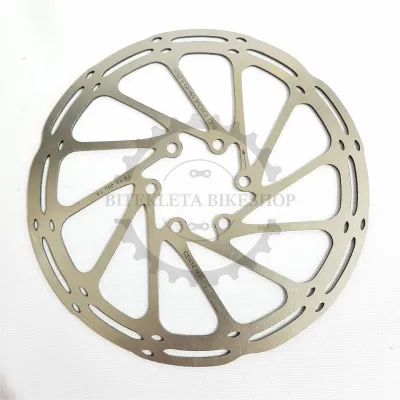
701 Lazada user ratings
I’m very satisfied with this purchase! The product arrived safely and was packed properly, so there were no damages or issues upon receiving…Read full reviewShow less
I’m very satisfied with this purchase! The product arrived safely and was packed properly, so there were no damages or issues upon receiving it. The quality is good and it looks just like the pictures posted by the seller. It works well and is definitely worth the price. Shipping was also fast, and the seller was responsive and accommodating. I appreciate the effort in making sure the item was securely packed. Overall, I’m happy with my purchase and would definitely recommend this product to others. Thank you, seller! I will surely consider buying again next time. Five stars for this product!
High-quality rotor material, Impressive stopping performance, Impressive stopping performance, Easy to install with included rotor bolts, Ea…Read full reviewShow less
High-quality rotor material, Impressive stopping performance, Impressive stopping performance, Easy to install with included rotor bolts, Easy to install with included rotor bolts, Excellent heat dissipation, Excellent heat dissipation, Great braking power!, Smooth and consistent braking, Durable and long-lasting, Perfect fit for my mountain bike,
Compatibility:Fits all bike types, Durability:Lasts a long time, Safety:Enhances safety, Perfect fit for my mountain bike, Durable and long-…Read full reviewShow less
Compatibility:Fits all bike types, Durability:Lasts a long time, Safety:Enhances safety, Perfect fit for my mountain bike, Durable and long-lasting, High-quality rotor material, Impressive stopping performance,
Smooth and consistent braking, Easy to install with included rotor bolts, Impressive stopping performance, High-quality rotor material,
Item received in good condition, well packed and on time. Fit to a Giant Trance Advanced 2016 woth no issues.
Prices are valid at publication and may change. Please refer to the product page for the latest price.
If you are unable to perform a visual inspection because the wheels are not physically present, you can verify the mounting standard by checking the manufacturer specifications for your bike model, wheelset, or hubs. Most bicycle brands list these details in their official online archives or user manuals under the wheel or brake specifications. Look for terms like “6-bolt,” “ISO 6-bolt,” “Centerlock,” or “CL” to confirm which standard your specific hub model requires before purchasing a replacement rotor.
6-Hole vs Centerlock: Structural and Design Differences
The 6-hole system is an open international standard (often referred to as the ISO standard) that has been widely adopted across the cycling industry for decades. Because it is an open standard, any hub or rotor manufacturer can produce 6-bolt components without licensing restrictions. This has led to widespread availability and broad compatibility across almost all major component brands. Structurally, the 6-bolt design relies on six steel bolts to transfer the rotational forces generated during braking from the rotor directly into the hub flange. This design requires precise alignment of the six threaded holes during manufacturing, but the overall mechanical concept is simple and highly reliable.

The Centerlock system, originally developed and patented by Shimano, utilizes a splined interface rather than individual bolt holes. The hub features a series of external splines, and the rotor features matching internal splines. When the rotor is slid onto the hub, these splines interlock, distributing the rotational braking forces evenly across the entire circumference of the interface rather than concentrating the load on six individual bolt points. A single lockring is then threaded onto the hub to prevent the rotor from sliding off laterally. This design minimizes the risk of uneven tensioning and simplifies the installation process.
From a structural standpoint, Centerlock rotors often feature a two-piece design consisting of an aluminum central carrier (or spider) riveted to a steel outer braking track. This construction helps manage heat dissipation and can reduce the weight of the rotor itself. However, because the Centerlock system requires a splined hub interface and a steel or aluminum lockring, the total system weight—including the hub, rotor, and fastening hardware—is often very similar to a comparable 6-bolt setup. The primary structural difference lies in how the braking forces are distributed and how the rotor is secured to the wheel.
Tool Requirements for Installation and Removal
Installing or removing a 6-hole rotor requires basic hand tools that are commonly found in most bicycle toolkits. The bolts used in 6-hole systems almost universally feature a Torx T25 head, though some older or budget-friendly setups may use 4mm hex bolts. When installing a 6-bolt rotor, it is critical to tighten the bolts in a progressive, star-pattern sequence (tightening opposite bolts rather than adjacent ones) to ensure the rotor sits flat against the hub flange. Using a torque wrench is highly recommended to tighten each bolt to the manufacturer’s specified torque—typically between 4 Nm and 6 Nm—to prevent stripping the threads in the aluminum hub shell or warping the rotor.
In contrast, securing a Centerlock rotor requires specialized tools that are also used for other drivetrain components. Depending on your bike’s axle configuration, you will need either an internal or external lockring tool. Internal lockrings, which are common on quick-release or 12mm thru-axle wheels, are tightened using a standard cassette lockring tool. External lockrings, which are typically required for 15mm or 20mm thru-axles due to the larger axle diameter, require a 16-notch bottom bracket tool. Centerlock lockrings require a significantly higher torque specification than 6-bolt setups, usually around 40 Nm, making a high-capacity torque wrench essential for safe installation.
Proper maintenance is vital for both systems to prevent components from seizing over time. For 6-bolt systems, applying a mild thread-locking compound (such as blue Loctite) to the bolt threads helps prevent them from backing out under vibration, while also protecting the threads from corrosion. For Centerlock systems, applying a thin layer of high-quality bicycle grease or anti-seize compound to the hub splines and the lockring threads ensures smooth removal during future maintenance. Always consult the manufacturer’s care labels and instructions to verify the correct lubrication and torque values for your specific components.
Adapters and Cross-Compatibility Options
If you find yourself with a mismatch between your wheel hubs and your preferred rotor for bike mtb setups, adapters can sometimes bridge the gap. The most common and reliable option is a Centerlock-to-6-bolt adapter. This adapter consists of a splined base that slides onto a Centerlock hub, featuring six integrated steel pins that align with the bolt holes of a standard 6-bolt rotor. A specialized lockring then secures the entire assembly in place. This allows riders to use widely available 6-bolt rotors on Centerlock wheelsets without compromising braking performance.
However, using an adapter does introduce physical limitations that must be carefully evaluated. The adapter assembly adds a small amount of thickness to the hub face, which can sometimes cause clearance issues with certain suspension forks, frame dropouts, or brake caliper mounts. Checking this clearance before riding is highly recommended. Additionally, adapters are not compatible with all axle configurations, so you must verify that the specific adapter model is rated for your axle width and diameter.
Conversely, adapting a 6-bolt hub to accept a Centerlock rotor is generally not feasible or recommended. Because a 6-bolt hub lacks the splined cylinder required to support a Centerlock rotor’s inner interface, there is no structurally sound way to mount a splined rotor onto a 6-bolt flange. Attempting to modify or adapt components in this direction poses significant safety risks, as the braking forces cannot be safely distributed. If you have 6-bolt hubs, you must purchase 6-bolt rotors or replace the hubs entirely.
Decision Framework: Choosing Your Next Rotor for Bike MTB
When selecting a new rotor for bike mtb applications, your primary decision point is the mounting interface of your existing hubs. If you are purchasing a completely new wheelset or building a custom mountain bike, you can choose the system that best aligns with your riding style, maintenance preferences, and tool availability.
Opt for a 6-hole system if you prioritize universal compatibility and ease of trailside repair. Because Torx T25 keys are standard on almost every cycling multi-tool, trailside adjustments are straightforward. The 6-bolt standard also offers a wide selection of aftermarket rotor brands, designs, and colors, allowing for greater customization. It is highly suitable for riders who travel frequently or participate in backcountry adventures where specialized workshop tools are unavailable.
Choose a Centerlock system if you value rapid installation, precise alignment, and a streamlined aesthetic. The single-lockring design allows you to install or remove a rotor quickly, which is highly convenient for riders who frequently pack their bikes into travel cases or swap wheelsets for different terrain. The splined interface also ensures that the rotor is precisely centered on the hub every time, reducing the likelihood of brake rub. Before finalizing your choice, always verify your bike’s axle spacing, caliper clearance, and manufacturer guidelines to ensure seamless integration with your braking system.
Frequently Asked Questions (FAQ)
Can I mix 6-hole and Centerlock rotors on the same bike?
Yes, you can safely run a 6-hole rotor on one wheel and a Centerlock rotor on the other. The front and rear braking systems operate independently. The brake calipers and pads only interact with the outer steel braking track of the rotor, meaning they do not differentiate between how the rotor is mounted to the hub. As long as both rotors match the diameter and thickness specifications required by your brake calipers, mixing mounting standards across your wheelset will not negatively impact braking performance or safety.
Do Centerlock rotors loosen more easily than 6-bolt rotors?
No, Centerlock rotors do not loosen more easily than 6-bolt rotors when they are installed correctly. Because Centerlock lockrings require a high torque specification of approximately 40 Nm, they form a highly secure connection resistant to vibration. 6-bolt rotors are also highly secure, but they rely on six individual fasteners that must be torqued evenly in a star pattern with thread-locking compound to prevent loosening. For both systems, regular safety inspections and adherence to manufacturer torque specifications are essential to ensure long-term reliability.
Are all 6-hole rotors the same size and thickness?
No, the 6-hole designation only refers to the mounting interface, not the physical dimensions of the rotor itself. While the bolt pattern is standardized to a 44mm Bolt Circle Diameter, rotors are manufactured in various diameters—typically ranging from 140mm to 223mm—and different thicknesses, usually between 1.8mm and 2.3mm. You must verify that your frame, fork, and brake calipers are designed to accommodate the specific diameter and thickness of the rotor you plan to install, as using incompatible dimensions can lead to severe frame damage or brake failure.

Community discussion
Share your experience or ask a question. Comments are reviewed before publication.