
Finding the right 7-speed rear derailleur for your bicycle is not about searching for a single, universally perfect component. Instead, the most reliable setup for daily commuting and light trail riding depends entirely on matching the derailleur to your bike’s existing drivetrain geometry, shifter pull ratio, and the specific terrain you navigate. A commuter navigating paved city streets requires different mechanical characteristics than a recreational rider tackling muddy, uneven trails. By understanding how these components interact, you can select a derailleur that ensures smooth shifting, minimizes chain drops, and withstands daily wear.
Understanding 7-Speed Rear Derailleur Compatibility
Before purchasing a new 7-speed rear derailleur, you must verify how your bicycle’s rear wheel and frame are configured. Many entry-level and older bicycles utilize either a threaded freewheel or a cassette system. A freewheel combines the gears and the ratcheting mechanism into a single unit that threads directly onto the hub, whereas a cassette consists of individual cogs that slide onto a splined freehub body. While the derailleur does not touch the internal hub mechanism, the spacing between the gears can vary slightly between these two systems. This variation requires careful adjustment of the derailleur’s limit screws to ensure the chain aligns perfectly with the smallest and largest cogs without slipping off.
Another critical factor is the derailleur hanger type on your bicycle frame. Frames generally feature either a direct-mount hanger or a bracket-mount (claw) design. A direct-mount hanger is an integrated or replaceable piece of metal with a threaded hole where the derailleur bolts directly. In contrast, a bracket-mount derailleur includes an integrated steel claw that slips over the rear axle dropout and is secured by the axle nut or quick-release skewer. Many budget-friendly commuter frames use the bracket-mount system. You must inspect your frame’s dropout configuration before buying, as a direct-mount derailleur cannot be installed on a claw-mount frame without a separate adapter.
Products mentioned in this guide
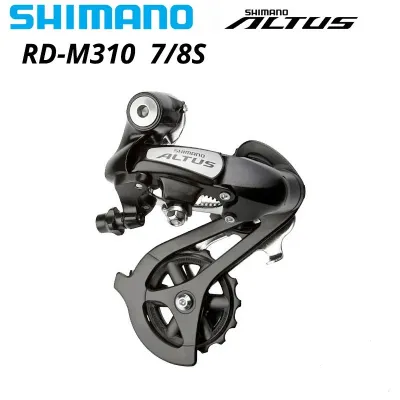
18 Lazada user ratings
solid yung item. 🔌Compatibility:Lightweight and strong, Smooth gear shifting,
Looks great! Thanks seller! 💪🙏🙏
.ok namna cxa mura lang
.ok namnan mura pa
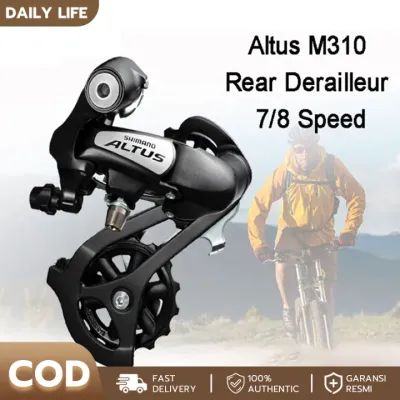
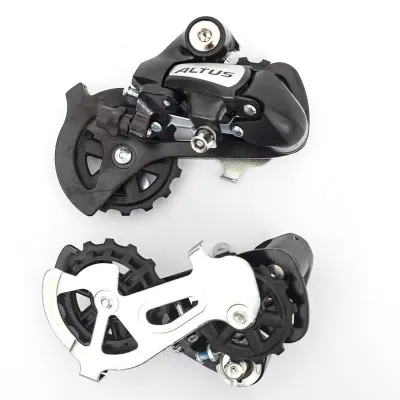
16 Lazada user ratings
Great value for the price, Provides reliable and precise gear changes, 🔨Durability:good 🔌Compatibility:good 🛠️Ease of Installation:good. 5 st…Read full reviewShow less
Great value for the price, Provides reliable and precise gear changes, 🔨Durability:good 🔌Compatibility:good 🛠️Ease of Installation:good. 5 star rating for this good quality item from this seller, thank you seller, Lazada and Ninja van courier services for fast delivery of the parcel.
Great value for the price, Perfect for mountain biking,Provides a comfortable grip while riding,Enhances overall bike performance.
Durable alloy material, Suitable for various terrains, Great value for the price, Smooth and precise shifting, good quality sya.
clicky din yung shifting nya kaya mukang magandang quality din. di ko pa nakabit kasi di ko pa tapos pinturahan yung bike.
Easy installation and adjustment, Enhances overall bike performance, Smooth and precise shifting,
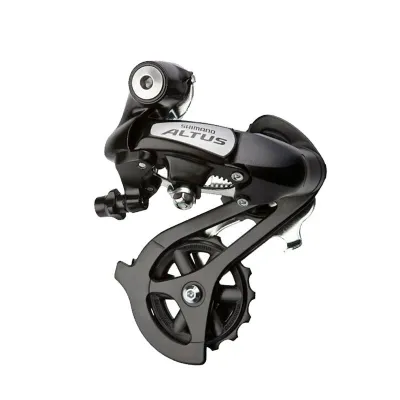
13 Lazada user ratings
di na nga naihatid sa bahay mismo ako pa nanguha sa malayo di pa Shimano, bungi pa yung isang gear, hindi sya same sa picture di sta totoo
maganda sya sulit thank you
🔨Durability:good quality
Good quality
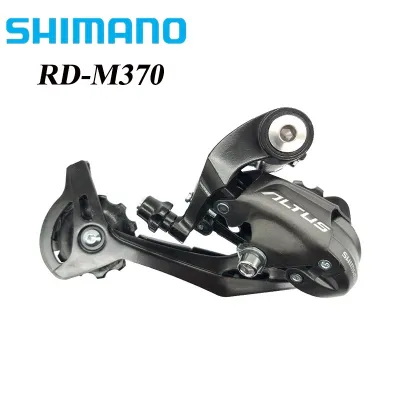
59 Lazada user ratings
🔌Compatibility:its compatible
ok po sya tnx lazada
🔌Compatibility:
goods na goods
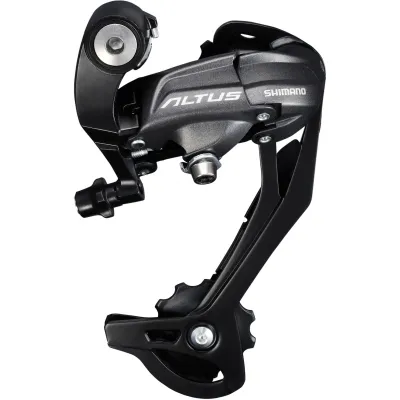
57 Lazada user ratings
Quality: Appearance: Performance:
Reliable and trustworthy brand,
Easy to install and adjust,
bat madaming gasgas
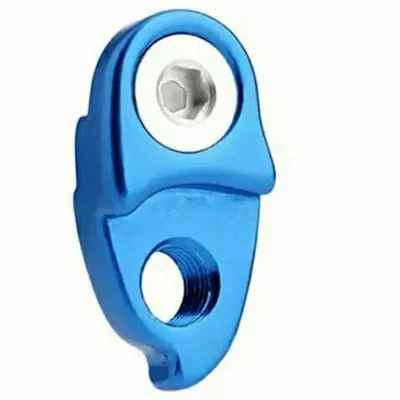
29 Lazada user ratings
Legit ang item same sa post kaya thumbs up. Hopefully maikabit na pra masubukan at kung pwede sa aking mtb. Salamat sa seller at sa nagdeliv…Read full reviewShow less
Legit ang item same sa post kaya thumbs up. Hopefully maikabit na pra masubukan at kung pwede sa aking mtb. Salamat sa seller at sa nagdeliver
dumating na po Yung order ko maraming salamat po seller at Lazada sa uulitin po 💙💙💙💙💙💙💙💙
Enhances overall bike performance, Perfect for mountain biking adventures,
Great value for the price,
246 Lazada user ratings
natanggap ko na at walang damage.maganda sya.sabi nila plastic daw,pero ito metal at mabigat.love the stylish look,at syempre yung malaking …Read full reviewShow less
natanggap ko na at walang damage.maganda sya.sabi nila plastic daw,pero ito metal at mabigat.love the stylish look,at syempre yung malaking pulley wheels.good quality sa murang presyo nya.satisfied with this product!
nice item mukang matibay sulit yung presyo ikakabit ko na sa bike ko para masubukan thank you lods
Brand new genuine Shimano M370 shifter at a great price. Will install and try it out next week.
Good quality, expectation had been meet! Highly recommended for viking enthusiast like me
Affordable upgrade for my 7/8-speed bike., Perfect fit for my MTB!, thankyou seller
Prices are valid at publication and may change. Please refer to the product page for the latest price.
Matching the shifter pull ratio is the most vital compatibility step. When you click your shifter, it pulls a specific length of inner cable, and the rear derailleur translates this pull into lateral movement across the gears. Different brands use distinct cable pull ratios. For example, traditional Shimano 7-speed systems use a 1:2 actuation ratio, while SRAM systems often use a 1:1 ratio. Mixing a Shimano shifter with a SRAM derailleur, or vice versa, will result in misaligned shifts, skipped gears, and constant chain drops. Always verify that the replacement derailleur matches the brand and actuation standard of your existing shifter.
Key Selection Criteria for Everyday Riding Conditions
Selecting a derailleur requires evaluating several mechanical features that dictate how well the component will perform under daily use. The cage length—the distance between the upper guide pulley and the lower tension pulley—is a primary consideration. Derailleurs are available in short, medium, and long cage configurations. A short-cage derailleur is compact, keeps the chain tight, and offers excellent ground clearance, but it has a limited gear capacity. A long-cage derailleur can wrap more slack chain, which is necessary if your bicycle has a triple chainring crankset or a wide-range rear cassette, though it sits closer to the ground and is more vulnerable to trail obstacles.

Build materials directly impact the longevity of your drivetrain, especially in humid, tropical environments like the Philippines. Moisture, heavy seasonal rains, and road salt can quickly corrode low-grade steel components. Look for derailleurs that utilize aluminum alloy for the main body and outer links to reduce weight and resist rust. While steel cage plates are common and offer excellent impact resistance, they require regular lubrication to prevent surface rust from seizing the pivot points. Choosing a model with anodized or painted finishes provides an extra layer of protection against the elements.
Pulley wheel design is another crucial factor for handling dust and water ingress. The upper guide pulley pushes the chain from gear to gear, while the lower tension pulley keeps the chain taut. In entry-level derailleurs, these pulleys typically spin on simple metal sleeves or plastic bushings. Over time, road grit and water penetrate these bushings, causing friction, squeaking, and eventual seizing. Derailleurs equipped with sealed cartridge bearings or high-quality bushings with rubber seals offer much better durability, ensuring the pulleys spin freely even after riding through heavy downpours or dusty trails.
Ideal Derailleur Types for Daily Commuting
Commuting in dense urban environments presents specific challenges, including stop-and-go traffic, tight parking spaces, and road debris. For these conditions, a short-cage or medium-cage derailleur is highly advantageous. The shorter profile keeps the derailleur tucked closer to the bicycle frame, significantly reducing the risk of it getting bent or snagged when parking in crowded public racks or navigating narrow city lanes. This compact design also provides better ground clearance, keeping the component away from high curbs and deep potholes.
Urban riders should focus on derailleurs featuring robust return springs and simple parallelogram linkages. City commuting involves constant shifting to adapt to traffic flow and changing road gradients. A strong return spring ensures that the derailleur pulls the chain down to smaller cogs quickly and crisply, even when the shift cables are slightly dirty from road grime or rainwater. Simple mechanical designs with fewer moving parts are inherently more reliable and require less frequent fine-tuning, allowing you to focus on your daily route rather than constant maintenance.
For a reliable commuter setup in the Philippines, you can expect to spend between ₱400 and ₱1,500 for a quality 7-speed rear derailleur. Within this price range, major manufacturers offer highly durable, workhorse components that are built to withstand daily wear. Another major advantage of choosing a standard 7-speed derailleur in this price bracket is the widespread availability of replacement parts. If a pulley wheel wears out or a mounting bolt is lost, almost any local bike shop will have compatible replacements in stock, allowing you to get back on the road quickly and affordably.
Ideal Derailleur Types for Light Trail Riding
Light trail riding, such as exploring gravel paths, fire roads, and gentle singletrack, demands a different set of capabilities from your rear derailleur. To tackle off-road climbs, you will likely need a wider gear range than what is typically found on a city commuter. Many trail-oriented 7-speed bikes utilize wide-range cassettes or freewheels, such as 11-34T or 13-34T configurations. To handle the large jump between the smaller cogs and the massive climbing gears, a long-cage derailleur is necessary. The longer cage provides the extra travel needed to keep the chain under proper tension across all gear combinations.
Sturdy construction and high-tension springs are vital when leaving the pavement. When riding over tree roots, loose rocks, and bumpy terrain, the entire drivetrain is subjected to constant vibration. A derailleur with a weak spring will allow the chain to bounce excessively, leading to loud chain slap against the frame, potential paint damage, and a high risk of the chain jumping off the chainrings entirely. While advanced clutch mechanisms are generally reserved for high-end 10-speed to 12-speed drivetrains, selecting a trail-ready 7-speed derailleur with a stiff, high-tension cage spring will significantly improve chain retention and reduce drivetrain noise on rough surfaces.
It is crucial to understand the physical limitations of a 7-speed system when riding off-road. These components are designed for recreational, light trail use and are not built to withstand the extreme forces of aggressive downhill riding, jumps, or highly technical rock gardens. Before heading out, always check that your chain is cut to the correct length; a chain that is too long will exacerbate chain slap, while a chain that is too short can rip the derailleur off the frame if you shift into the largest cog. If you plan to ride on steep, highly technical descents, maintain a conservative speed and focus on smooth line choices to avoid overloading your entry-level drivetrain components.
Installation, Adjustment, and Maintenance Checklist
Installing and adjusting a new rear derailleur requires a systematic approach to ensure safe and precise shifting. Follow this basic sequence to set up your derailleur correctly:
- Mount the derailleur: Thread the mounting bolt into the hanger (or secure the claw bracket to the axle). Ensure the B-tension adjustment washer is resting behind the hanger's stop tab, not on top of it, to prevent damage.
- Set the High (H) limit: With the shift cable disconnected, look at the derailleur from behind. Turn the H-limit screw until the upper guide pulley is perfectly aligned with the outer edge of the smallest cog. This prevents the chain from shifting past the smallest cog and getting wedged against the frame.
- Connect the cable: Ensure your shifter is clicked all the way to the highest gear (7th speed). Pull the inner shift cable taut with pliers and tighten the cable anchor bolt on the derailleur to the manufacturer's recommended torque.
- Set the Low (L) limit: Manually push the derailleur body inward while spinning the pedals until the chain moves to the largest cog. Turn the L-limit screw until the guide pulley aligns perfectly with the center of the largest cog. This is a critical safety step; if the L-limit is too loose, the derailleur can shift into the spinning spokes, causing catastrophic wheel and frame damage.
- Adjust cable tension: Shift through the gears. If the chain hesitates when shifting to larger cogs, turn the barrel adjuster counter-clockwise to increase cable tension. If it hesitates when shifting to smaller cogs, turn the barrel adjuster clockwise to release tension.
The combination of high humidity, heavy rain, and road dust in the Philippines requires a proactive maintenance routine. Clean your drivetrain every 100 to 150 kilometers. Use a soft brush and a mild degreaser to scrub away accumulated grime from the derailleur body, pivot points, and pulley wheels. After washing, dry the components thoroughly and apply a drop of bicycle-specific lubricant to each of the pivot pins and the pulley wheel bushings. Wipe away all excess lubricant with a clean rag, as wet oil on the outside of the derailleur will act as a magnet for trail dust and road grit, accelerating wear.
Regularly inspect your derailleur for signs of wear or damage. If your shifting becomes inconsistent and cannot be resolved with the barrel adjuster, check if your derailleur hanger is bent. A bent hanger misaligns the pulley wheels with the cassette, causing skipped gears. Look for worn jockey wheels; if the teeth are sharp, pointed, or heavily chipped, they will degrade shifting precision and should be replaced. Finally, inspect the shift cable for fraying near the anchor bolt or rust inside the housing. If you observe any of these issues, or if the derailleur body has excessive play at the pivot pins, stop riding and consult a professional bike mechanic at your local shop to ensure your bicycle remains safe to ride.
Frequently Asked Questions (FAQ)
Can I use an 8-speed or 9-speed rear derailleur on a 7-speed drivetrain?
Yes, you can often use an 8-speed or 9-speed rear derailleur on a 7-speed drivetrain, provided you match the brands and pull ratios. For example, Shimano’s 7-speed, 8-speed, and 9-speed mountain bike components share the same cable pull ratio (the classic 2:1 ratio). This means a 9-speed Shimano rear derailleur will respond correctly to the movements of a 7-speed Shimano shifter, moving the exact distance required to align with a 7-speed cassette. However, you cannot mix brands (such as pairing a SRAM derailleur with a Shimano shifter) or use newer 10-speed or 11-speed derailleurs, which utilize different pull ratios and will not index properly.
How often should I replace the jockey wheels on a 7-speed derailleur?
Jockey wheels typically last between 1,000 and 2,000 kilometers of regular riding, though their lifespan depends heavily on your maintenance habits and riding environment. If you frequently ride in wet, muddy, or dusty conditions, the internal bushings or bearings will wear out faster. Inspect them regularly for visual signs of wear, such as teeth that have become sharp and pointed like shark fins, or excessive side-to-side play when you wiggle the pulley wheel. If you hear a persistent grinding or squeaking noise from the derailleur cage that persists after cleaning and lubrication, it is time to install a replacement set.
Is it necessary to upgrade the shifters when replacing the rear derailleur?
No, it is not necessary to upgrade your shifters when replacing your rear derailleur, as long as the new derailleur is fully compatible with your existing shifter’s brand and speed index. The shifter is the component that controls the indexing (the precise amount of cable pulled per click), while the rear derailleur simply acts as a slave mechanism that moves in response to that cable pull. You only need to upgrade your shifters if you are changing to a different brand with an incompatible pull ratio, if your current shifter is broken, or if you decide to upgrade your entire drivetrain to an 8-speed or higher system.
Community discussion
Share your experience or ask a question. Comments are reviewed before publication.