
Selecting a 3-in-1 balance bike for your child in the Philippines is an excellent way to support their physical development while ensuring long-term value. These versatile, convertible trainers adapt to your child’s growing motor skills, transitioning from a stable, parent-guided ride to an independent balance bike, and finally to a pedal-driven or advanced configuration. By understanding how to match a bike’s physical dimensions, materials, and safety features to your child’s specific age group, you can make an informed decision that keeps them safe and active.
Understanding 3-in-1 Balance Bikes and Core Selection Criteria
A 3-in-1 balance bike is a multi-stage developmental toy designed to evolve alongside your child’s coordination and strength. Typically, these bikes feature three distinct configurations: a parent-assisted push tricycle for early stability, a two-wheeled balance bike to teach steering and equilibrium, and a pedal-driven mode to introduce independent riding mechanics. The transition between these modes is usually achieved through modular frames, detachable pedals, or adjustable wheel configurations that can be locked into place as your child’s skills progress.
When evaluating these convertible bikes, the most critical measurement to consider is the seat height relative to your child’s inseam, rather than their overall height or age. To measure this accurately, have your child stand flat-footed against a wall and measure the distance from their crotch to the floor. For the balance bike mode to be effective and safe, the minimum seat height must allow the child to place both feet flat on the ground with a slight bend in their knees, giving them the leverage needed to push off, glide, and stop safely.
Products mentioned in this guide
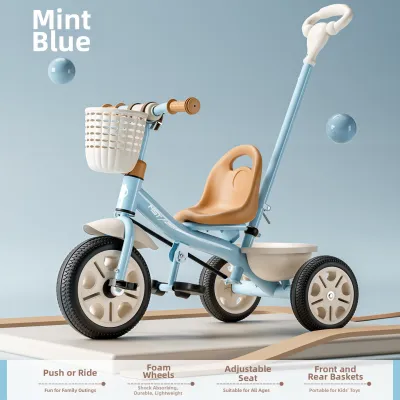
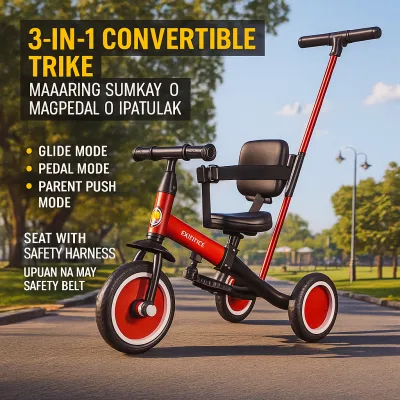
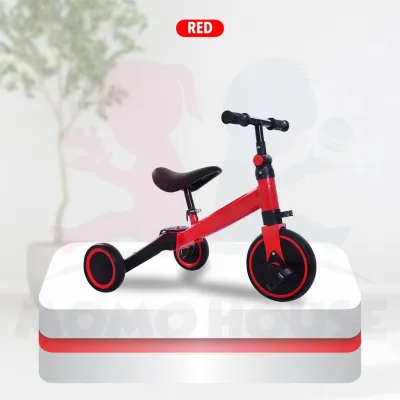
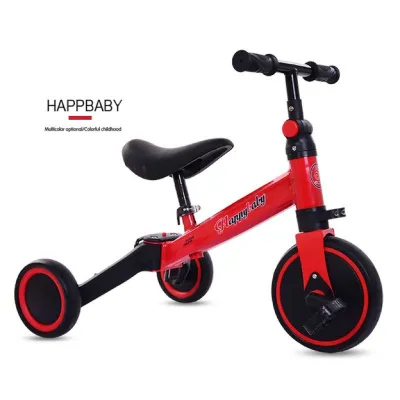
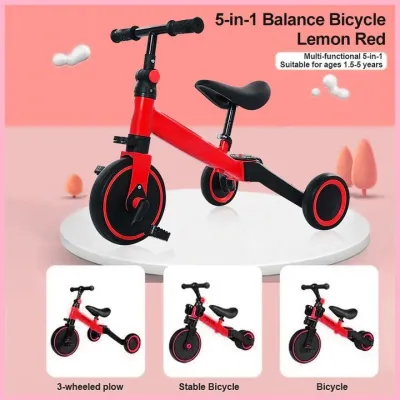
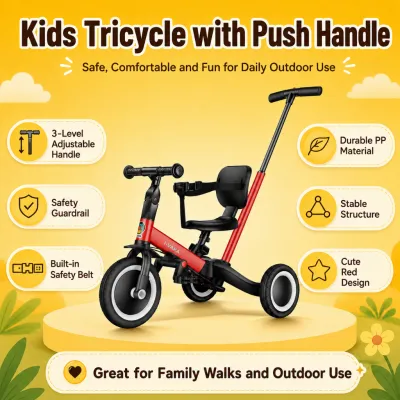
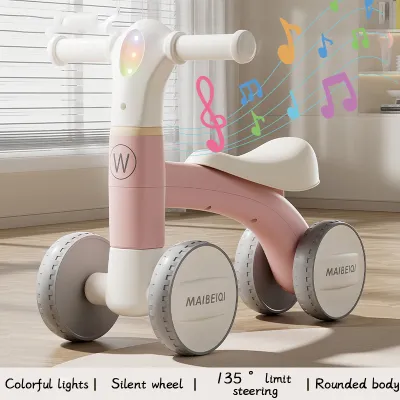
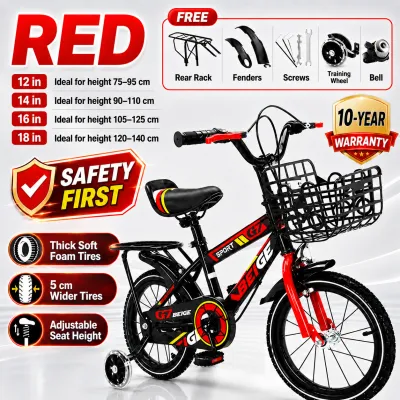
Prices are valid at publication and may change. Please refer to the product page for the latest price.
Additionally, parents must evaluate both the rider’s weight limit and the physical weight of the bike itself. A heavy frame can be incredibly frustrating for a young child to maneuver, lift, or recover after a minor fall. As a general guideline, the bike should not weigh more than 30% of your child’s total body weight. Checking these specifications beforehand ensures that the bike remains a source of fun and physical development rather than an exhausting obstacle.
Age-Specific Selection Guide for Different Growth Stages
Children develop motor skills, balance, and spatial awareness at vastly different rates during their early years. A single 3-in-1 balance bike must be highly adaptable to accommodate these rapid physical changes, transforming its geometry to support your child’s evolving coordination and confidence over several years of active outdoor play.

Toddlers (12 to 24 Months): Stability and Support
During the earliest stage of riding, toddlers are still mastering basic walking and upright stability. For this age group, prioritize the tricycle or push-bike configuration equipped with an adjustable parent push-handle. This feature allows you to guide the steering and control the speed while your toddler builds confidence. A secure safety harness or a protective guardrail is also essential to prevent younger toddlers from slipping sideways off the saddle during sudden stops or turns.
Physical dimensions are highly critical at this stage to prevent accidents. Look for models that offer an exceptionally low minimum seat height, allowing the toddler’s feet to rest comfortably on the ground or on integrated footrests. A wide rear wheelbase is equally important, as it provides the lateral stability needed to prevent the bike from tipping over when the child leans sideways or attempts to mount and dismount the frame independently.
Safety checks for toddlers must focus on eliminating pinch points and catching hazards. Ensure that the bike features fully enclosed wheels or solid wheel discs rather than open spokes, which can easily trap tiny fingers or feet. Any drive mechanisms, chains, or folding joints must be completely covered, and the footrests should be positioned far enough from the wheels to prevent accidental toe-catching while the bike is in motion.
Preschoolers (2 to 3 Years): Transitioning to Balance
As children reach two to three years of age, they begin to develop the bilateral coordination required for independent steering and balancing. This is the ideal time to transition the bike into its two-wheeled balance mode, removing the training wheels or narrowing the rear wheelbase. Because preschoolers experience rapid growth spurts, look for frames with easily adjustable handlebars and seats that can be modified quickly to maintain proper riding posture.
To prevent common riding accidents during this learning phase, evaluate the presence of steering limiters. A steering limiter prevents the handlebars from turning a full 90 degrees, which stops the front wheel from jackknifing during sharp, panicked turns. This simple mechanical safety feature keeps the bike moving in a predictable forward arc, allowing the child to focus on mastering their balance without losing control of their steering.
The overall weight of the bike becomes highly influential during this stage of independent play. Opt for lightweight frame designs, such as those constructed from aluminum or high-grade reinforced plastics. A lightweight bike allows a preschooler to easily pick up, turn, and reposition the frame on their own after a fall, fostering independence and reducing physical fatigue during outdoor play sessions in your neighborhood or local park.
Older Kids (3 to 5 Years): Pedaling and Advanced Control
By age three to five, children have usually mastered balancing and gliding, making them ready for the final transition to a pedal-driven configuration. When evaluating 3-in-1 models, carefully verify the compatibility and ease of use of the pedal kit. Some designs feature snap-on pedals that attach directly to the front wheel hub, while others utilize a removable chain or belt drive system. Ensure that the conversion process is straightforward and does not require specialized workshop tools.
With increased speed comes the need for reliable stopping power. Look for models that include appropriately sized hand brakes, specifically designed with a short lever reach suitable for small hands. The brake lever should be easy to squeeze, allowing the child to practice stopping safely before they transition to larger, heavier youth bicycles.
Tire selection also plays a major role as older children ride faster and explore more varied outdoor terrains. Look for tires that offer reliable traction and shock absorption on concrete pavements, subdivision roads, or park paths. The tread pattern should provide sufficient grip to handle dusty or slightly damp outdoor surfaces without slipping.
Essential Features and Safety Checks to Verify Before Purchase
When comparing different 3-in-1 balance bikes, the choice of frame material significantly impacts the bike’s weight, durability, and suitability for the local climate. Steel frames are highly durable and impact-resistant, but they are heavy and highly susceptible to rust in the humid, tropical climate of the Philippines. Aluminum frames offer an excellent alternative, providing a lightweight structure that is naturally resistant to corrosion, though they often come at a higher price point. Wood frames are eco-friendly and lightweight, but they can warp or delaminate if exposed to heavy rain or high humidity. Heavy-duty plastics or composite materials are completely weatherproof and lightweight, making them highly practical for tropical conditions, though they may exhibit more flex under heavier loads.
The conversion mechanisms themselves require close inspection before purchase. Examine the locking pins, quick-release clamps, and joints to ensure they lock securely into place with an audible click or visible indicator. The mechanism must be robust enough to withstand daily mode changes without loosening over time. Tool-free designs are highly convenient, allowing you to switch modes or adjust the seat height during a trip to the park without carrying a heavy toolkit.
Grip and saddle quality are vital for both comfort and safety. Handlebar grips should be made of non-slip rubber or textured silicone, featuring wide, protective end caps to cushion the child’s hands and prevent them from slipping off during sharp turns. The saddle should be ergonomically shaped, padded, and covered with a breathable, water-resistant material that does not absorb sweat or rainwater, ensuring comfort during warm outdoor rides.
Finally, always look for recognized toy safety certification marks on the product packaging, official listings, or manufacturer documentation. These certifications, such as the European EN71 standard or the American ASTM F963, indicate that the bike has undergone rigorous testing for structural integrity, non-toxic materials, and mechanical safety. Avoid purchasing products that lack clear manufacturing details or safety labels, as they may pose hidden risks to your child.
Navigating the Philippine Market: Shopping and Warranty Tips
When sourcing a 3-in-1 balance bike, parents must weigh the convenience of online marketplaces against the hands-on assurance of physical retail. Purchasing from official brand stores on major e-commerce platforms often provides access to a wider selection and direct customer service. However, visiting a physical specialty cycling shop or a dedicated toy store allows your child to physically sit on the bike, ensuring the minimum seat height matches their inseam perfectly before you make a financial commitment.
Warranty coverage is a critical factor that is often overlooked. Prioritize sellers that offer clear, local warranty terms covering essential mechanical components such as wheel bearings, steering joints, and conversion latches. A local warranty ensures you can easily source replacement parts or secure repairs without dealing with expensive international shipping or unresponsive overseas sellers.
Be highly cautious of unbranded, suspiciously cheap listings found on online marketplaces. While the low price point may be tempting, these products often compromise on structural integrity, using brittle plastics or thin metals that can fail under stress. They rarely undergo rigorous safety testing and seldom offer access to replacement parts, meaning a single broken latch or lost bolt could render the entire bike unusable.
Frequently Asked Questions (FAQ)
Can a 3-in-1 bike replace a standard bicycle for an older child?
While a 3-in-1 bike is an excellent developmental tool, it cannot fully replace a standard, dedicated bicycle as a child grows older. The geometry of multi-mode bikes is designed to accommodate a wide range of developmental stages, which often results in a shorter wheelbase and a more upright riding position than a dedicated pedal bike. This compromise can limit the child’s maximum speed, pedaling efficiency, and overall stability as they grow taller and heavier.
Look for physical signs that your child has outgrown the 3-in-1 bike. If their knees are consistently bent at sharp angles while pedaling at the maximum seat height, or if they struggle to maintain a comfortable posture, it is time to transition to a dedicated youth bicycle with larger wheels (such as 12-inch or 14-inch pneumatic tires) and a frame geometry optimized solely for pedaling.
Are air-filled tires better than foam tires for local riding conditions?
Neither tire type is universally superior; the best choice depends entirely on where your child will ride. Pneumatic (air-filled) tires offer superior shock absorption and traction, making them ideal for uneven outdoor surfaces like rough concrete sidewalks, gravel paths, or grassy park areas. They cushion the ride over bumps, but they require regular pressure checks and are susceptible to punctures from sharp debris or thorns.
In contrast, EVA foam tires are completely puncture-proof and require virtually zero maintenance, as they never go flat. This makes them highly convenient for smooth indoor surfaces, tiled floors, or paved mall corridors. However, foam tires offer very little traction and shock absorption on rough, wet, or uneven outdoor terrains, where they can slip easily and wear down quickly.
Community discussion
Share your experience or ask a question. Comments are reviewed before publication.