
Selecting the right dumbbell set is one of the most critical decisions you will make when building a home gym. The choice between adjustable and fixed dumbbells shapes not only your upfront financial investment but also the physical layout of your workout space and the daily flow of your training sessions. Both equipment styles offer unique advantages, meaning the ideal option depends entirely on your personal training goals, available floor space, and budget.
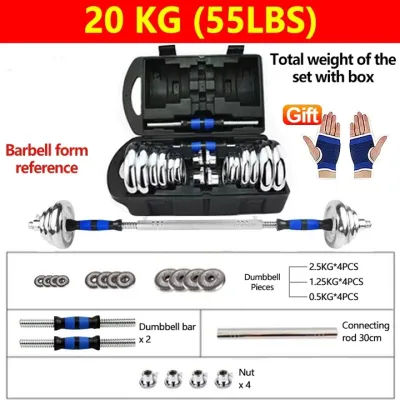
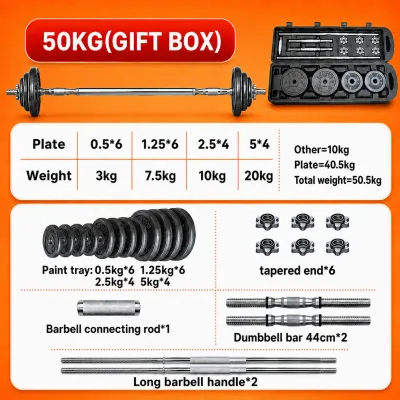
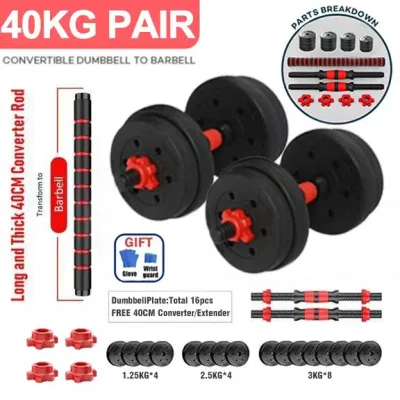
Adjustable dumbbells serve as an exceptionally efficient choice for individuals dealing with limited workout space, those prioritizing progressive overload on a moderate budget, and fitness enthusiasts performing standard strength routines. By consolidated multiple weight options into a single pair, they eliminate the need for bulky storage systems. This makes them highly suitable for apartment dwellers or multi-purpose rooms where gym equipment must remain out of sight when not in use.
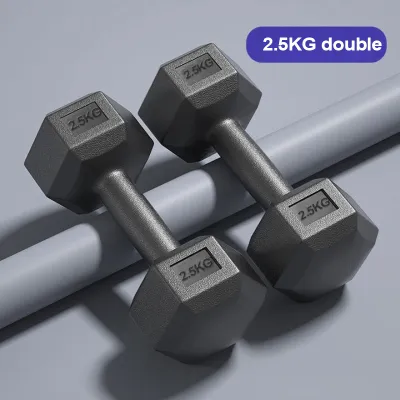
Fixed dumbbells, conversely, represent the gold standard for dedicated home gym spaces, high-intensity training styles, and lifters who demand maximum durability. They are the superior option for workouts that feature rapid drop sets or supersets, where resting to modify equipment would disrupt your heart rate and muscle pump. Because they contain no moving parts, they can withstand heavy use and accidental impacts that could easily damage more complex mechanical alternatives.
Products mentioned in this guide
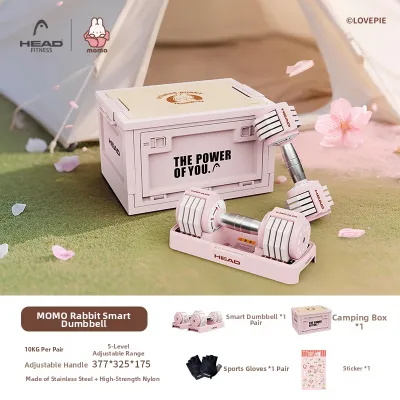
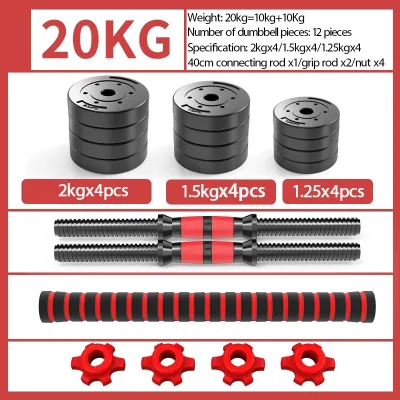
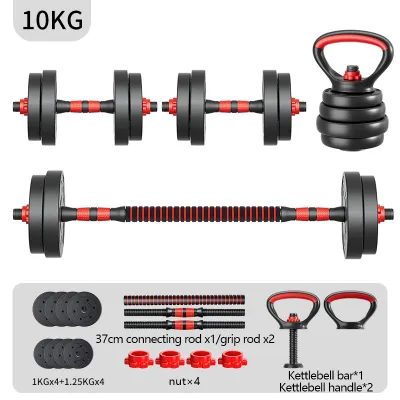
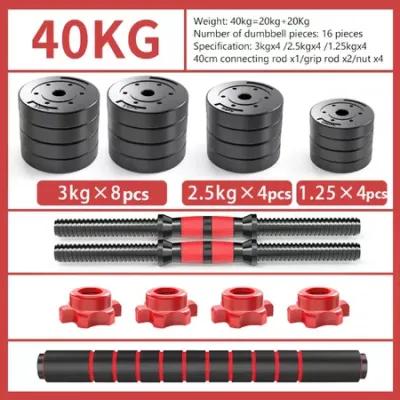
Prices are valid at publication and may change. Please refer to the product page for the latest price.
Ultimately, your final purchase decision will rest on a careful evaluation of your spatial limits, financial flexibility, and the specific structural demands of your weekly workout routine. Understanding how these factors intersect with the mechanical realities of each dumbbell type will help you avoid buyer’s remorse and build a highly functional home training setup.
Core Differences: Adjustable vs. Fixed Dumbbells
To choose the correct equipment, you must first understand how these two categories operate. Adjustable dumbbells utilize a single handle frame paired with a mechanism—such as selector dials, sliding pins, or traditional spin-lock collars—to secure varying numbers of weighted plates. This design allows a single pair of handles to scale from light to heavy settings in a matter of seconds. Fixed dumbbells are individual, single-weight implements where the weighted ends are permanently welded, pressed, or bolted to a central handle, resulting in a highly stable but single-purpose tool.
Fixed dumbbells are commonly manufactured with hexagonal or round heads, often coated in rubber, urethane, or left as bare painted cast iron. Adjustable models rely on intricate engineering to align and lock plates safely, which alters their physical footprint and handling characteristics compared to traditional gym weights.
| Feature | Adjustable Dumbbells | Fixed Dumbbells |
|---|---|---|
| Space Required | Minimal; typically requires only the size of two storage cradles | High; requires a multi-tier rack to organize multiple pairs |
| Weight Adjustment Speed | Moderate to slow; requires manual dialing, pinning, or spinning | Instant; simply put down one pair and pick up another |
| Upfront Cost Structure | High initial investment for a single pair, but low cost-per-kilogram | Low entry cost for single pairs, but highly expensive for a full set |
| Durability/Drop Tolerance | Low; fragile internal locking mechanisms can break if dropped | High; solid construction designed to withstand impact and drop wear |
| Best Use Case | Small apartments, general strength training, progressive overload | Dedicated home gyms, drop sets, commercial environments, high-impact workouts |
Space and Storage: Managing Your Home Gym Footprint
For many home fitness enthusiasts, physical space is the ultimate limiting factor. This is particularly true in urban residential settings, such as condominiums or townhouses in metropolitan areas, where dedicated spare rooms are rare. Adjustable dumbbells excel in these environments because of their incredibly compact footprint. A single pair of dial-adjustable dumbbells can replace up to fifteen individual pairs of traditional weights, consolidating hundreds of kilograms of resistance into a space no larger than a pair of shoeboxes.

This consolidation eliminates the visual clutter that often accompanies home fitness gear. When your workout is complete, adjustable sets can sit neatly in their custom-molded cradles on a closet shelf, under a bed, or in the corner of a living room without disrupting the aesthetics of your home. For households where workout spaces must double as home offices or living areas, this unobtrusive profile is a massive advantage.
Fixed dumbbell sets demand a much more significant spatial commitment. To match the weight range of a single adjustable set, you must purchase and store multiple pairs of individual dumbbells. Keeping these loose on the floor creates a severe tripping hazard and can damage residential flooring over time. Consequently, owning a fixed set necessitates purchasing a multi-tiered steel weight rack. These racks require a permanent, dedicated footprint along a wall, often measuring over a meter in length and half a meter in depth.
Furthermore, the sheer physical weight of a complete fixed set and its steel rack can be a structural consideration for upper-floor apartments. The total weight of a 5-to-50-pound (approximately 2.5-to-24-kg) set of fixed dumbbells, plus the rack itself, can easily exceed 250 kilograms concentrated in a small area. Organizing these weights also requires sufficient clearance around the rack to safely lift and return heavy dumbbells without pinching your fingers or straining your lower back.
Workout Flow and Exercise Compatibility
Your training style should dictate the physical design of the weights you buy. The mechanical differences between adjustable and fixed systems directly influence how smoothly you can transition between movements and how comfortably you can execute specific exercises.
Weight Transition and Drop Sets
If your training program relies heavily on high-intensity techniques like drop sets, supersets, or fast-paced circuit training, fixed dumbbells offer an unmatched operational advantage. Because each weight is a standalone tool, transitioning from a heavy set of shoulder presses to a lighter set of lateral raises takes less than two seconds. You simply place the heavy pair on the floor or rack and immediately grasp the lighter pair. This rapid transition keeps your heart rate elevated and maintains targeted muscular tension.
Adjustable dumbbells introduce a physical delay into this process. Even with rapid dial or selector systems, you must stop your workout, return both dumbbells precisely into their alignment cradles, select the new weight setting on both ends of each handle, and lift them back out. If you use traditional spin-lock collars, this process is even slower, requiring you to manually unscrew the collars, slide plates off or on, and retighten the locks. This interruption can take anywhere from ten seconds to over a minute, cooling down your muscles and disrupting the rhythmic flow of high-intensity training sessions.
Ergonomics and Exercise Compatibility
Ergonomics play a vital role in exercise safety and joint comfort. Fixed dumbbells feature a standardized, balanced design where the physical length of the dumbbell scales naturally with its weight. A light fixed dumbbell is physically short and easy to maneuver, while a heavy one is longer and wider. This natural scaling ensures that your wrists, elbows, and shoulders can move through optimal biographical pathways without interference from the equipment itself.
Adjustable dumbbells, particularly dial-based models, maintain a constant, maximum physical length regardless of the weight selected. Even if you adjust the setting to a light 5 kilograms, the central spindle bar remains at its full length to accommodate the maximum weight capacity. This bulky, static length can interfere with close-grip chest presses, bicep curls, or overhead tricep extensions, as the protruding ends of the dumbbells may collide with each other or rub against your torso and thighs. Additionally, some adjustable models feature squared plates or delicate plastic components on the outer edges, making them unsuitable for exercises like renegade rows where you must balance your body weight directly on top of the dumbbell handles.
Budget and Long-Term Value: Upfront Cost vs. Expansion
Analyzing the financial aspect of your home gym requires looking beyond the initial price tag. You must evaluate the long-term cost of your strength progression over months and years of consistent training.
When purchasing adjustable dumbbells, the upfront cost can feel intimidating. A high-quality pair of selectorized adjustable dumbbells can range from ₱10,000 to over ₱25,000. However, this single purchase covers a vast spectrum of weight increments. If you calculate the “cost per usable weight,” adjustable sets are incredibly cost-effective. Purchasing fifteen individual pairs of high-quality fixed dumbbells to match the increments of a single adjustable set would require a cumulative investment that can easily exceed ₱40,000, even before factoring in the cost of a heavy-duty storage rack.
For beginners or casual fitness enthusiasts, fixed dumbbells offer a very low entry barrier. If you only need a single pair of 5-kilogram dumbbells for light toning or rehabilitation exercises, you can purchase them for a modest price of ₱1,000 to ₱2,000. This low initial cost makes it easy to start exercising immediately without a major financial commitment.
The financial drawback of fixed dumbbells becomes apparent as you grow stronger. As your muscles adapt to progressive overload, you will inevitably outgrow your initial weights. To continue making progress, you must buy increasingly heavier pairs. This continuous cycle of purchasing and shipping heavy iron or rubber weights to your home quickly drains your budget.
Some high-end adjustable dumbbell systems offer modular expansion kits, allowing you to buy a base set that adjusts up to 24 kilograms and later purchase add-on plates to expand the capacity to 40 kilograms or more as your strength increases. This modular approach spreads your financial investment over time while preserving your valuable floor space. When deciding, calculate your projected strength goals over the next two years to determine whether buying individual fixed pairs or a single adjustable set offers the best long-term value for your wallet.
Durability and Maintenance: What to Expect Over Time
Gym equipment is subjected to significant physical stress, sweat, and environmental exposure. The mechanical complexity of your dumbbells determines how well they will perform over years of regular use.
Fixed dumbbells are renowned for their near-indestructible nature. Solid cast iron, rubber-encased hex, and urethane-coated round dumbbells have no moving parts, internal gears, or delicate springs. If a rubber hex dumbbell accidentally slips from your hands at the end of a grueling set of deadlifts, it is highly likely to bounce harmlessly on a protective rubber gym mat without sustaining functional damage. This extreme durability makes them the preferred choice for high-traffic home gyms, households with multiple lifters, and environments where equipment is handled roughly.
Adjustable dumbbells are precision-engineered mechanical devices. Whether they utilize a dial, a selector pin, or a twisting handle mechanism, they rely on small internal gears, alignment tabs, and locking plates to keep heavy weights safely suspended above your body. Because of this mechanical complexity, they are inherently fragile compared to solid metal weights.
To prevent catastrophic equipment failure and serious physical injury, you must never drop adjustable dumbbells.
Dropping an adjustable dumbbell, even from a height of a few inches, can crack the internal plastic gears, bend the selector pins, or warp the alignment plates. Once the locking mechanism is compromised, the dumbbell becomes incredibly dangerous to use, as plates could slide off mid-exercise. If you train to failure or enjoy explosive movements where dropping weights is a common safety release, adjustable models are not suitable for your training style.
Maintaining your dumbbells is also essential, especially in tropical climates with high relative humidity, which can accelerate rust and corrosion. For fixed dumbbells, maintenance is minimal: occasionally wipe away sweat with a dry microfiber cloth to prevent rust on exposed metal handles. For adjustable dumbbells, you must perform regular preventative care. Keep the dial mechanisms, selector pins, and base cradles free of dust, chalk, and moisture. Always check the manufacturer’s care instructions before applying any lubricants, as some oils can attract debris and clog the internal gears. Regularly inspect spin-lock collars for thread wear to ensure they still lock tightly during use.
Final Verdict: How to Make Your Decision
To make your final purchase, evaluate your personal profile against these specific training, spatial, and financial scenarios.
Choose Adjustable Dumbbells if:
- You live in an apartment, condominium, or home with limited floor space and no room for a dedicated multi-tier weight rack.
- You want a comprehensive range of weight options to support progressive overload across various exercises but want to keep your upfront costs optimized.
- Your training style focuses on traditional strength training, steady-state lifting, and slow-tempo hypertrophy work where transition times between sets are not critical.
- You can commit to handling your equipment with care, always returning them gently to their cradles without dropping them.
Choose Fixed Dumbbells if:
- You have a dedicated garage, basement, or spare room solely committed to a home gym setup.
- Your workouts feature rapid-fire supersets, drop sets, or high-intensity functional fitness routines that require instant weight changes.
- You prioritize rugged, commercial-grade durability and want the peace of mind that comes with dropping weights safely when training to failure.
- Multiple family members or training partners of different strength levels will be exercising together simultaneously, requiring multiple pairs of weights to be in use at the same time.
Before finalizing your purchase of either dumbbell type, always verify the maximum weight capacity of the set to ensure it aligns with your long-term strength goals. Additionally, check the handle grip thickness and knurling texture, as a secure, comfortable grip is vital for maintaining control and safety during heavy overhead movements.
Frequently Asked Questions (FAQ)
Can I build muscle effectively with adjustable dumbbells?
Yes, you can build muscle just as effectively with adjustable dumbbells as you can with fixed ones. Muscle hypertrophy relies on the principles of mechanical tension, metabolic stress, and progressive overload over time. Your muscles cannot distinguish whether the resistance you lift comes from a solid piece of iron or a dial-adjusted mechanical system, provided the weight selected is heavy enough to challenge your target muscle groups near failure.
Are spin-lock adjustable dumbbells worth the effort?
Spin-lock adjustable dumbbells are highly durable, safe, and incredibly budget-friendly, making them an excellent entry point for home strength training. However, they require you to manually spin the metal collars off and on to change plates, which can take up to a minute per adjustment. If you do not mind slower transitions between exercises and are working with a strict budget, they offer outstanding long-term value.
How do I maintain the mechanism on dial-adjustable dumbbells?
To maintain dial-adjustable dumbbells, always place them back into their alignment cradles gently to avoid warping the selector plates. Keep the base plate and dial gears completely free of dust, sweat, and gym chalk by wiping them down regularly with a clean, dry cloth. Always refer to your specific product’s user manual before applying any spray lubricants, as improper oils can degrade internal plastic parts and compromise safety.
Community discussion
Share your experience or ask a question. Comments are reviewed before publication.