
Building a home gym requires balancing physical space, financial investment, and training efficiency. Among the most critical decisions you will face is selecting the right dumbbells, which serve as the foundation of almost any strength-training routine. While the primary function of these tools remains the same, the mechanical design you choose will fundamentally shape your daily workouts, your safety, and the layout of your training area.
The choice between adjustable and fixed dumbbells is not about finding a universally superior product. Instead, it is about aligning your equipment with your specific living conditions, fitness goals, and training style. By understanding the core trade-offs of each system, you can make an informed investment that supports your long-term physical progression without cluttering your home.
Quick Answer: Which Dumbbell Type Should You Buy?
There is no single best option when choosing between adjustable and fixed dumbbells. The right choice depends entirely on your specific home gym constraints, including your available floor space, your budget structure, and how you prefer to train. Both styles offer distinct advantages that cater to different types of lifters.
Products mentioned in this guide
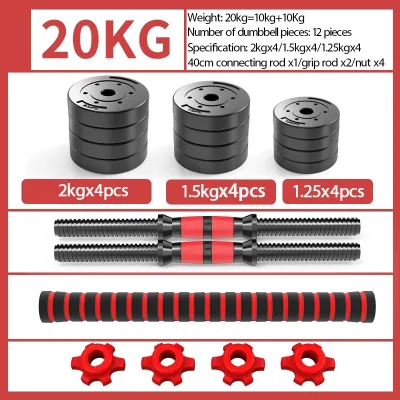
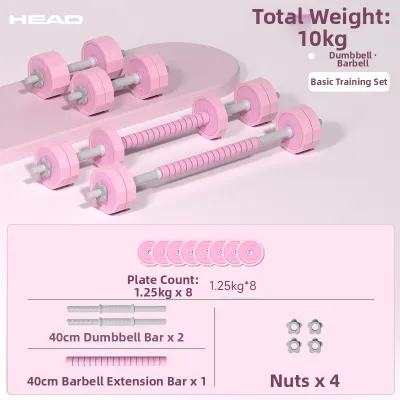
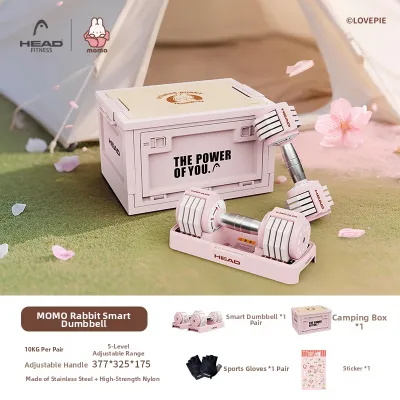
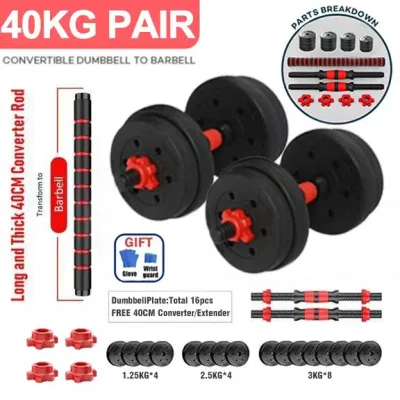
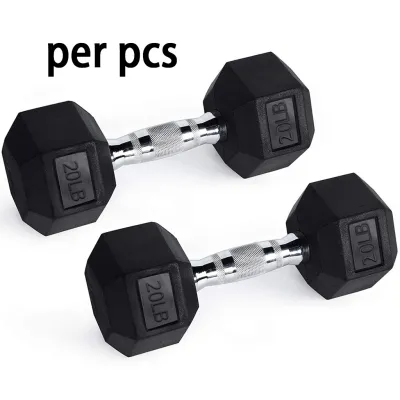
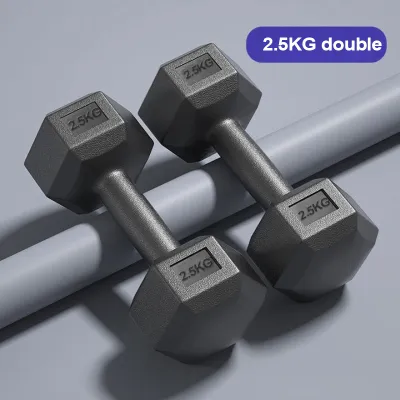
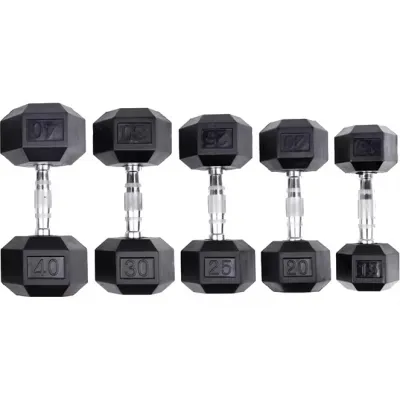
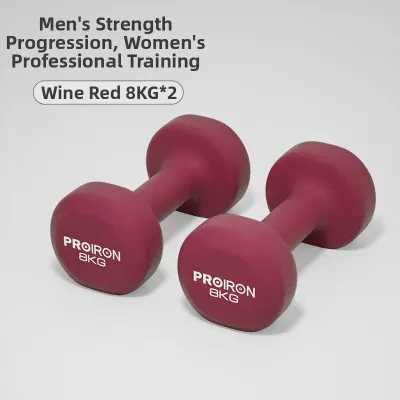
Prices are valid at publication and may change. Please refer to the product page for the latest price.
You should buy adjustable dumbbells if you have limited floor space, require a wide range of weight options for diverse exercises, and train alone. They are highly efficient for general fitness, hypertrophy, and progressive overload training where you need to change weights frequently but do not mind taking a few seconds between sets to adjust the load.
You should buy fixed dumbbells if you have a dedicated gym room, focus on heavy powerlifting or rapid drop sets, or share your workout space with other family members. They are also the ideal choice if you prefer the traditional, indestructible feel of commercial gym equipment and want the freedom to drop your weights safely without risking mechanical failure.
Core Differences Between Adjustable and Fixed Dumbbells
Adjustable dumbbells are consolidated training systems designed to replace an entire rack of individual weights. They consist of a single handle mechanism that connects to a series of nested weight plates. By using a dial, pin, or spin-lock mechanism, you can instantly select the specific weight you need, leaving the remaining plates resting securely in a storage cradle.

Fixed dumbbells are single-weight units that are permanently assembled at a specific weight. Usually sold in pairs or complete sets, they are constructed from solid cast iron, rubber-coated iron, or high-durability urethane. They have no moving parts, no selection mechanisms, and require no setup time before you begin an exercise.
The primary trade-off between these two styles lies in versatility versus durability. Adjustable models offer incredible space-saving convenience and a wide range of weight increments in a single package. Fixed models counter this with absolute simplicity, superior balance, and a level of structural durability that can withstand decades of heavy use and accidental drops.
Space and Storage Requirements
Physical footprint is often the deciding factor for home gyms, especially in urban living spaces where every square meter is valuable. Adjustable dumbbells excel in compact environments. A complete set typically sits within a small plastic or metal storage tray that measures less than two square feet, making it easy to store in a closet, under a bed, or in the corner of a bedroom.
Fixed dumbbells require a significantly larger spatial commitment. To store a functional range of weights, you will need a dedicated multi-tier dumbbell rack. A standard rack housing ten pairs of dumbbells can easily occupy a wall space of 1.5 to 2 meters in length and nearly a meter in depth, permanently dedicating a large portion of your room to equipment storage.
Choosing fixed weights also introduces the challenge of a creeping footprint. As your strength increases over time, you will inevitably need to purchase heavier pairs. Each new pair requires additional physical storage space, forcing you to constantly expand your rack system or allow loose weights to clutter your workout floor.
Before purchasing any equipment, it is highly recommended to measure your designated training area carefully. If you are considering fixed weights, map out the exact dimensions of a multi-tier rack to ensure it does not block walkways or ventilation. If you lean toward adjustable models, verify the dimensions of the storage trays to ensure they fit comfortably in your intended storage spot when not in use.
Cost and Long-Term Value
Evaluating the financial aspect of dumbbells requires looking past the initial price tag to analyze the long-term cost per kilogram. Adjustable dumbbells carry a high upfront cost, often ranging from ₱12,000 to over ₱25,000 for a quality pair. However, because a single pair can replace up to 15 individual sets of weights, the cost per kilogram is exceptionally low when compared to buying the equivalent weight in separate pairs.
Fixed dumbbells offer a much lower entry barrier. You can purchase a single light pair of fixed dumbbells for a relatively low price, making it easy to start training immediately on a tight budget. The financial downside appears as you progress; buying new pairs every time you get stronger scales your costs continuously, eventually resulting in a much higher total investment than a single adjustable set.
Resale value and depreciation also play a role in long-term value. Fixed dumbbells are virtually wear-free, meaning they hold their value incredibly well on the secondhand market and can easily be resold for a high percentage of their original purchase price. Adjustable dumbbells contain complex internal components that can wear out over time, which can lower their resale value if the selection mechanism becomes sticky or loose.
To determine the most cost-effective path for your gym, calculate your projected strength needs over the next two years. If you plan to perform a wide variety of exercises that require vastly different weight loads—such as light lateral raises and heavy goblet squats—an adjustable set is almost always the more economical choice. If you only need a few specific weights for targeted training, buying individual fixed pairs may save you money.
Training Experience and Performance
How your equipment feels during a workout directly impacts your consistency and overall performance. The physical design of each dumbbell type alters ergonomics, transition speeds, and the types of exercises you can safely perform.
Ergonomics and Grip
Fixed dumbbells are designed to mimic the exact feel of commercial gym equipment, offering consistent handle diameters and balanced weight distribution. They typically feature aggressive steel knurling that provides a secure, non-slip grip, which is particularly beneficial in hot, humid tropical environments where sweaty hands can compromise safety.
Adjustable dumbbells often feature contoured handles, rubberized grips, or smoother metal surfaces that may not feel as secure during heavy lifts. Because the handle must house the selection mechanism, the physical size of the dumbbell remains at its maximum length regardless of how much weight you load. This bulky profile can alter the center of gravity and make the weights feel awkward during certain movements.
Weight Transition Speed
Transitioning between weights quickly is essential for specific training methodologies. Fixed dumbbells offer instantaneous transitions; when performing drop sets or supersets, you simply place one pair on the floor and immediately pick up the next pre-loaded pair from your rack.
Adjustable dumbbells require you to pause your workout to change weights. You must return both dumbbells to their storage cradles, align the plates, turn the selection dials or adjust the pins, and lift them back out. This process takes several seconds and requires both hands, which can disrupt your heart rate during high-intensity interval training or reduce the targeted fatigue during rapid drop sets.
Exercise Limitations and Handling
Certain movements are physically awkward or potentially hazardous when performed with adjustable models. Exercises like renegade rows, where you support your entire body weight on the dumbbells while planking, should not be performed with adjustable dumbbells. The lateral pressure can damage the selection plates or cause the locking mechanism to fail, presenting a direct safety risk.
Fixed dumbbells, particularly those with hexagonal rubber heads, provide a highly stable and flat base for bodyweight-supported exercises. They can also be rested comfortably on your thighs before you kick them back into a bench press. Adjustable models often have protruding pins, dials, or hollow ends that can press painfully into your legs when preparing for heavy presses.
Maintenance and Durability
Your willingness to maintain your equipment and your lifting style should heavily influence your purchase. Dumbbells represent a significant physical investment, and proper care is required to ensure they remain safe and functional for years.
Fixed dumbbells are incredibly durable and require minimal upkeep. Cast iron models are highly resistant to structural damage, though they should be wiped down regularly in humid climates to prevent sweat from causing surface rust. Rubber or urethane-coated fixed dumbbells require only occasional cleaning with a damp cloth to remove dust and hand oils.
Adjustable dumbbells are complex mechanical instruments containing delicate moving parts, spring-loaded pins, and plastic selector gears. Because of this complexity, they are highly sensitive to physical impact and require careful handling to prevent mechanical failure.
You must never drop adjustable dumbbells on the floor, even from low heights. Dropping them can shatter the internal plastic gears, misalign the selector plates, or bend the central shaft, rendering the locking mechanism unsafe and instantly voiding the manufacturer’s warranty. Always consult your product’s manual for specific weight limits, cleaning instructions, and safety warnings.
To keep your adjustable dumbbells functioning smoothly, always store them in their dedicated trays when they are not in use. This protects the selection gears from accumulating dust, pet hair, and floor debris that can jam the dials. Periodically check the alignment of the plates and the tightness of any visible screws according to the manufacturer’s care guidelines.
How to Choose: The Decision Framework
To finalize your decision, evaluate your personal training environment and habits against these structured guidelines. Selecting the right tool will ensure your home workouts remain safe, effective, and enjoyable.
Choose Adjustable if…
- Your space is highly limited: You train in a small apartment, condo, or shared living room where a large equipment rack is impractical.
- You want maximum variety: You perform diverse full-body workouts that require small, incremental weight adjustments across many different exercises.
- You train alone: You do not need to share weights simultaneously with a training partner during your workout sessions.
- You prioritize cost efficiency: You want a complete weight range up to 24 kg or 40 kg without spending a fortune on individual pairs.
Choose Fixed if…
- You have a dedicated workout area: You have a garage, spare room, or large basement that can easily accommodate a multi-tier dumbbell rack.
- You perform high-impact training: Your workouts include movements where weights are dropped, or exercises like renegade rows that require supporting your body weight on the handles.
- You utilize fast-paced training styles: Your routines rely heavily on rapid drop sets, supersets, or circuit training where transition speed is critical.
- Multiple people train together: You share your home gym with family members or friends who need to use different weights at the same time.
Verify First if…
- Checking product specifications: Always verify the exact weight increments of adjustable models to ensure they offer the micro-loading steps (such as 1 kg or 2 kg jumps) needed for your progression.
- Reviewing warranty terms: Check the manufacturer's warranty policy regarding mechanical parts, and ensure you are comfortable with the strict "no-drop" rules associated with adjustable systems.
- Measuring physical clearance: Double-check your ceiling height, floor load capacity, and wall clearance if you plan to install a heavy steel rack for a complete set of fixed weights.
Frequently Asked Questions (FAQ)
Can I build significant muscle mass with adjustable dumbbells?
Yes, you can build significant muscle mass using adjustable dumbbells. Muscle hypertrophy is driven by the principles of progressive overload, mechanical tension, and metabolic stress, all of which can be achieved with any load-bearing implement. As long as your adjustable dumbbells offer a maximum weight capacity that continues to challenge your muscles near failure, they are fully capable of stimulating muscle growth. The ability to make small, incremental weight adjustments with an adjustable set actually makes progressive overload easier to manage over time.
Are spin-lock adjustable dumbbells better than dial systems?
Neither system is universally better, as they serve different priorities. Spin-lock dumbbells use a threaded collar that you manually screw onto the end of a steel bar to secure loose weight plates. This traditional design is highly durable, inexpensive, and allows you to add standard plates over time, but it is slow and tedious to change between sets. Modern dial or pin systems use automated internal gears to select weights instantly, offering unmatched speed and convenience, but they are more expensive and far more fragile if dropped.
How much weight should a beginner start with?
Beginners should start with lighter weights that allow them to master proper exercise form, build joint stability, and establish neuromuscular coordination. For most beginners, a weight range starting as low as 2 kg to 5 kg is ideal for upper-body movements like lateral raises and shoulder presses, while 10 kg to 15 kg is suitable for lower-body movements like squats and lunges. Adjustable dumbbells are highly advantageous for beginners because they allow you to start very light and gradually increase the resistance in small increments as your strength and confidence improve.
Community discussion
Share your experience or ask a question. Comments are reviewed before publication.