
Quick Answer: Which Dumbbell Type Fits Your Home Gym?
Choosing the right home gym equipment set depends on your available space, training style, and long-term budget. An adjustable dumbbell set is ideal if you have limited floor space, require a wide range of weights for progressive overload, and prefer a single upfront purchase. Conversely, a fixed dumbbell set is better suited for a dedicated workout area with room for a storage rack, lifters who prefer traditional ergonomics, and training styles that involve dropping weights. Aligning your choice with your home environment and fitness goals ensures a safer, more effective workout.
Space Efficiency: Footprint and Storage Requirements
When planning a home gym, floor space is often the most critical constraint. A single pair of adjustable dumbbells occupies a remarkably small footprint, typically requiring only a small corner of a room or a single storage tray. This compact design makes them highly attractive for apartment dwellers or those setting up a workout space in a multi-purpose room. You can easily tuck them under a bed or place them in a closet when they are not in use, keeping your living area free of clutter.

In contrast, a full set of fixed dumbbells requires a dedicated storage infrastructure. To accommodate a comprehensive weight range, you will need a tiered rack, an A-frame tree stand, or heavy-duty shelves. These storage solutions have a substantial physical footprint, often extending several feet along a wall. In a typical room, this setup permanently claims a significant portion of your floor space, which can restrict movement and limit where you can perform dynamic exercises.
Products mentioned in this guide
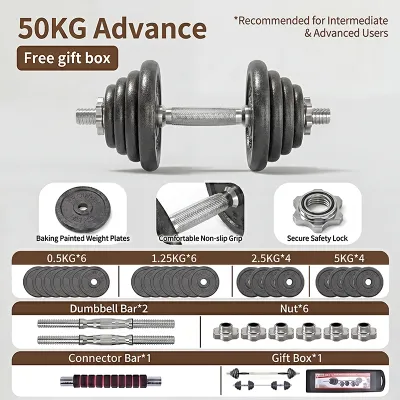
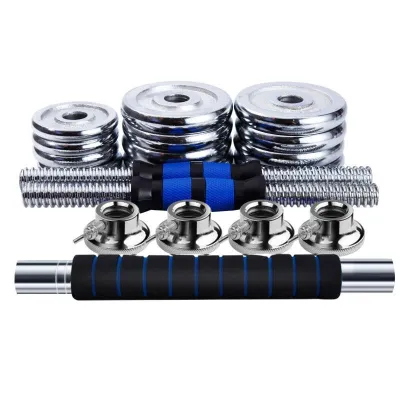
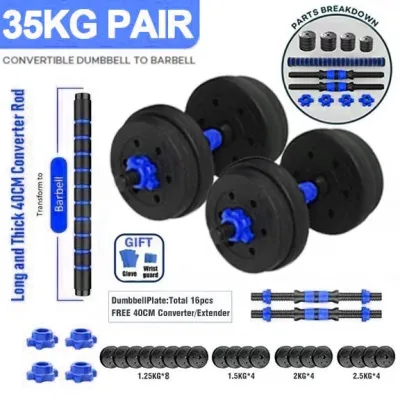
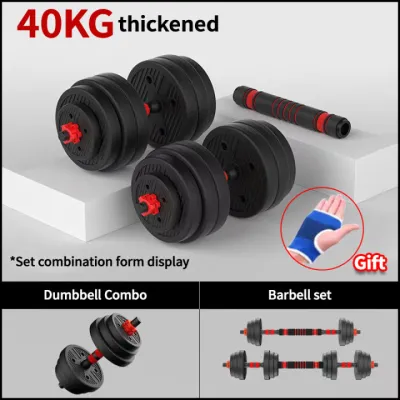
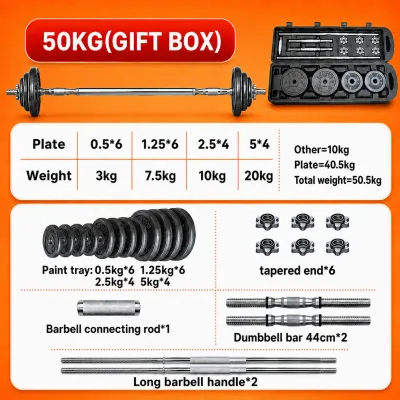
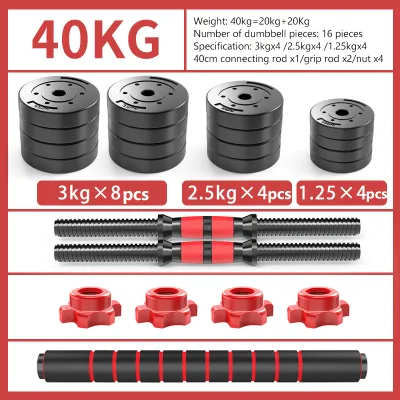
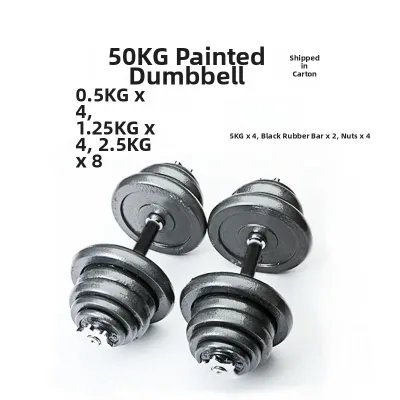
Prices are valid at publication and may change. Please refer to the product page for the latest price.
Beyond static storage, you must also consider the clearance and handling space required during your workouts. Adjustable dumbbells, particularly dial-system or pin-selected models, require a flat, stable surface for their adjustment cradles. You need sufficient room to stand directly over the cradles to align the plates and turn the dials safely. If your workout area is cramped, maneuvering these bulky units in and out of their trays can become awkward and increase the risk of accidental drops. Fixed dumbbells, while taking up more rack space, allow you to quickly grab a pair and step away without needing to align pins or clear a specific adjustment zone.
Budget and Value: Upfront Costs vs. Long-Term Investment
Building a home gym requires balancing immediate costs against long-term utility. Purchasing a high-quality adjustable dumbbell set represents a significant upfront investment. However, this single purchase provides a complete range of weight increments, often replacing up to fifteen individual pairs of traditional dumbbells. When you calculate the cost-per-kilogram, an adjustable set often proves highly economical compared to buying the equivalent total weight in individual fixed pairs all at once.
For those who prefer to build their gym gradually, fixed dumbbells offer a lower initial barrier to entry. You can start by purchasing just one or two pairs that match your current strength levels for primary lifts. The financial challenge arises as you progress; as your strength increases, you must continually buy heavier pairs. Over time, the cumulative cost of expanding a fixed set, combined with the necessity of purchasing a sturdy rack to hold them, can far exceed the initial price of a premium adjustable set.
Longevity and resale value also play a role in the overall financial equation. Fixed dumbbells are incredibly durable, with no moving parts to wear out, meaning they retain their value well on the secondary market and rarely need replacement. If a single fixed dumbbell is damaged, you only need to replace that specific weight. With adjustable models, a failure in the dial mechanism or a cracked selector plate can render the entire unit unusable, potentially requiring a costly replacement of the whole system if it is out of warranty.
When budgeting for your home gym equipment set, always check current local retail prices in ₱ and factor in heavy-item shipping fees. Shipping multiple heavy boxes of cast iron or rubber-coated weights across different provinces in the Philippines can add a substantial premium to your total cost. Comparing local pickup options or regional distributors can help minimize these extra expenses.
Training Versatility: Progression, Ergonomics, and Speed
Your choice of dumbbell directly influences how you execute your training program and progress over time. Adjustable dumbbells excel at micro-loading, often allowing you to increase weight in small increments, such as 1 to 2 kilograms. This precise control is highly beneficial for progressive overload on smaller muscle groups, such as during lateral raises or bicep curls, where standard 2.5-kilogram jumps can be too challenging.
However, the speed of weight transitions is a notable drawback for certain training styles. If your workouts feature drop sets, supersets, or fast-paced circuit training, the time required to dock the adjustable dumbbells, turn the dials or move the pins, and lift them back out can disrupt your momentum. Fixed dumbbells allow for near-instantaneous transitions; you simply drop one pair onto the rack and immediately grab another, keeping your heart rate elevated and maintaining muscular tension.
Ergonomics and grip feel also differ significantly between the two styles. Fixed dumbbells typically feature contoured, knurled metal handles that offer a secure grip, even when your hands are sweaty in a humid, tropical climate. Their overall length scales with the weight, providing a natural balance and compact feel during tight movements. Adjustable dumbbells maintain their maximum length regardless of the selected weight, which can feel bulky or awkward during exercises like overhead presses, bicep curls, or chest presses where the ends might collide.
Furthermore, the physical shape of the dumbbell affects exercise selection. Fixed hex dumbbells provide a flat, stable base on the floor, making them excellent for movements like renegade rows, push-ups, or dumbbell planks. Many adjustable models have rounded plates or delicate outer mechanisms that are not designed to support body weight, making them unsuitable or unsafe for floor-based weight-bearing exercises.
Durability and Safety: Maintenance and Drop Tolerance
Maintaining your equipment is essential for ensuring safe workouts and protecting your investment over time. Adjustable dumbbells contain intricate mechanical components, including selector dials, spring-loaded pins, and interlocking plastic or metal trays. These moving parts make them highly vulnerable to structural damage. Dropping an adjustable dumbbell from even a short height can misalign the internal locking mechanism, causing plates to slip out unexpectedly during an exercise, which poses a severe safety risk.
Fixed dumbbells, whether constructed from solid cast iron, rubber-coated steel, or urethane, are built to withstand high-intensity training and accidental drops. They are the standard choice for commercial gyms because they can endure repeated impacts without losing structural integrity. While you should still avoid dropping weights unnecessarily to protect your flooring, fixed models offer a level of ruggedness that adjustable systems simply cannot match.
In tropical environments with high humidity, routine maintenance is crucial for both types of equipment. Moisture can cause exposed steel handles to rust and can degrade rubber coatings, leading to unpleasant odors or a sticky, slipping grip. For adjustable models, humidity can also affect the smooth operation of internal dials and pins. Regularly wiping down your dumbbells after a workout, keeping them in a well-ventilated area, and inspecting them for loose plates or worn parts will extend their lifespan.
As a fundamental safety rule, always verify the manufacturer’s weight limits and warranty conditions before starting your routine. Never drop adjustable mechanisms onto hard floors, and consider investing in thick rubber gym mats to absorb impact and protect both your equipment and your home’s flooring.
Final Verdict: How to Choose Your Home Gym Equipment Set
Selecting the ideal home gym equipment set requires a realistic assessment of your space, budget, and training habits. There is no single option that suits every lifter, but analyzing your specific constraints will point you toward the right investment.
Choose Adjustable If…
- Your space is tight: You need to store your gear in a small corner, a bedroom, or a shared living area.
- Your budget favors one purchase: You prefer a single upfront investment that covers a wide range of resistance levels.
- You need precise progression: Your training program relies on small, precise weight increments to achieve progressive overload.
- You prefer a minimalist setup: You want a tidy workout environment without the visual clutter of multiple weight racks.
Choose Fixed If…
- You have a dedicated area: You have a garage, spare room, or permanent gym space with ample room for a multi-tiered rack.
- You train with high intensity: Your style involves rapid drop sets, supersets, or movements where you frequently drop the weights.
- You prioritize ergonomics: You prefer a traditional, balanced grip and want to perform floor-based exercises like renegade rows.
- You train with a partner: You share your workout space and need the ability to use different weight pairs simultaneously.
Verify First If…
- You are buying second-hand: Carefully inspect adjustable dials or check fixed welds for hidden structural damage.
- You plan to mix brands: Ensure that any replacement plates or storage racks are fully compatible with your existing gear.
- You are unsure of your progression: Starting with a few key fixed pairs may be safer than investing heavily in a large set upfront.
Before placing your order, take the time to measure your intended workout area to ensure you have enough clearance for safe movement. Additionally, verify your floor’s load capacity, especially if you live in a multi-story building or plan to store a heavy rack of fixed weights in one concentrated spot.
Frequently Asked Questions (FAQ)
Can I drop adjustable dumbbells during heavy lifts?
No, you should never drop adjustable dumbbells. These units rely on precise internal locking mechanisms, plastic dials, and alignment pins to keep the weight plates secure. Dropping them can crack the casing, bend the pins, or misalign the plates, making the dumbbells unsafe to use. To protect your equipment, practice controlled lowering techniques and always perform your lifts over high-density rubber flooring or shock-absorbing mats.
Do I need a special rack for fixed dumbbells?
While not strictly mandatory for a single pair, a dedicated rack is highly recommended if you own a set of fixed dumbbells. Storing multiple loose dumbbells on the floor creates a tripping hazard and makes organizing your space difficult. A sturdy, tiered rack or A-frame stand keeps your weights organized, protects your floor from scratches, and allows you to select and return weights safely without straining your back.
Community discussion
Share your experience or ask a question. Comments are reviewed before publication.