
Choosing the right exercise equipment at home requires balancing your fitness goals, available space, and budget. When building a home gym, dumbbells are often the first major investment. The choice between adjustable dumbbells and fixed-weight sets represents a fundamental decision in how you train, store your gear, and progress over time. While adjustable dumbbells offer a compact, all-in-one solution that replaces multiple pairs, traditional fixed-weight sets provide exceptional durability and a classic, balanced feel. The most suitable choice depends on your specific training style, the physical space you can dedicate to workouts, and your long-term budget.
Core Differences in Design and Functionality
The primary distinction between these two options lies in their mechanical design and structural integrity. Adjustable dumbbells utilize a single handle paired with a selection mechanism that engages different weight plates.
Common designs include dial systems, where turning a dial on the side locks in the desired weight; selector pin systems, which function similarly to weight stack machines; and traditional spin-lock collars, where plates are manually added and secured with a threaded nut.
Products mentioned in this guide
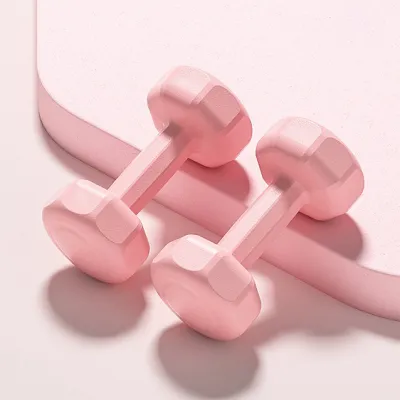
Prices are valid at publication and may change. Please refer to the product page for the latest price.
These mechanisms allow a single pair of handles to span a wide range of weight options, facilitating progressive overload by letting you increase resistance in small, controlled increments.
In contrast, fixed-weight dumbbells feature a solid, non-adjustable construction. The weight heads—typically made of cast iron, rubber-coated steel, or urethane—are permanently welded or bolted to a central handle.
Because there are no moving parts, the physical footprint of each dumbbell is proportional to its weight. A lighter fixed dumbbell is physically smaller and easier to maneuver, whereas an adjustable dumbbell maintains its maximum frame size regardless of how much weight is selected.
This structural difference directly impacts handle design. Adjustable models often feature longer, thicker shafts to accommodate the plate-locking mechanisms, while fixed models offer standardized, ergonomic grips tailored to the specific weight.
Space and Storage Requirements for Home Gyms
Evaluating your available floor space is a critical step when selecting exercise equipment at home. A single pair of adjustable dumbbells occupies a minimal footprint, typically requiring only a small corner of a room or a compact storage tray.

This makes them well-suited for multi-purpose spaces, small apartments, or shared living areas where dedicated gym space is unavailable. You can easily tuck them under a bed or place them in a closet when your workout is complete.
Conversely, a comprehensive set of fixed dumbbells requires a dedicated storage solution, such as a multi-tier horizontal or vertical A-frame rack. As you acquire more weight pairs to support your strength progression, the physical space required for these racks increases significantly.
A full set can easily dominate an entire wall, transforming a room into a dedicated workout zone. This requires a permanent commitment of floor space that cannot easily be reclaimed.
Safety is another vital consideration when planning your storage layout. In humid, tropical environments like the Philippines, moisture and sweat can make flooring slippery.
Leaving loose fixed dumbbells on the floor creates immediate tripping hazards and can damage tiles, wood, or vinyl flooring over time. Utilizing dedicated stands or heavy-duty rubber mats is essential for protecting your home’s infrastructure and ensuring a safe, organized training environment.
Budget and Long-Term Value Assessment
The financial commitment of setting up a home gym involves weighing immediate upfront costs against long-term utility. When evaluating the initial investment in ₱, a quality set of adjustable dumbbells often carries a higher starting price than a few pairs of fixed weights.
However, this single purchase provides a complete range of weight increments, effectively replacing ten or more individual pairs. This can make the upfront cost highly efficient if you plan to progress through various weight levels.
To assess the true value, you can use a simple framework: calculate the total cost in ₱ relative to the total weight capacity and the number of increments provided.
Purchasing individual fixed-weight pairs one by one may seem more affordable initially. However, as your strength increases and you require heavier resistance, the cumulative cost of buying new pairs, along with the necessary storage racks, can quickly surpass the cost of a single adjustable set.
Durability also plays a major role in long-term value. Because adjustable dumbbells rely on intricate internal gears, pins, or dials, they are more susceptible to wear and mechanical failure over time.
Fixed dumbbells, with their solid construction, are highly durable under normal use. When making your decision, it is crucial to verify the specific manufacturer specifications, warranty terms, and weight limits to ensure your investment is protected against premature wear.
Training Experience and Workout Suitability
Your preferred style of training should heavily influence your choice of exercise equipment at home. For workouts that require rapid weight transitions, such as drop sets, supersets, or fast-paced circuit training, fixed dumbbells offer a distinct advantage.
You can simply drop one pair and immediately grab another from the rack without interrupting your momentum. Adjustable dumbbells, even those with rapid-dial systems, require a brief pause to align the mechanism and select the new weight, which can disrupt the flow of high-intensity sessions.
The physical feel and balance of the weight also differ during exercise execution. Fixed dumbbells provide a highly balanced, predictable center of gravity, and their compact size allows for maximum clearance close to the body during movements like chest presses, bicep curls, or overhead extensions.
Adjustable dumbbells can feel bulky or long, especially at lighter settings where the empty frame or selector bar still extends to its maximum width. This extra length can sometimes interfere with your range of motion or cause the weights to bump against each other or your body.
Furthermore, maximum weight limits vary. While some adjustable sets offer substantial weight ranges, advanced lifters may eventually outgrow them.
Fixed dumbbells are available in virtually unlimited weight options, making them the traditional choice for those focusing on heavy compound lifts. Beginners, however, may find the versatility and smaller increments of adjustable sets more than sufficient for their progression.
Decision Matrix: Which Dumbbell Type Fits Your Needs?
To help you choose the right configuration for your home workouts, consider how your space, budget, and training preferences align with the characteristics of each dumbbell type.
Choose adjustable dumbbells if:
- Your workout area is limited, and you need to store your gear in a closet or corner.
- You perform a wide variety of exercises requiring frequent, small weight adjustments.
- You want a complete weight range immediately and prefer a single upfront investment in ₱.
Choose fixed dumbbells if:
- You have a dedicated home gym space with room for a multi-tier storage rack.
- Your training style relies on rapid transitions, drop sets, or high-impact movements.
- You prefer a traditional, balanced grip and want equipment that can withstand heavy, long-term use.
Verify first if:
- The specific adjustable mechanism is smooth and matches your physical handling capabilities.
- The manufacturer's user manual permits the specific exercises you plan to perform.
- The weight increments align with your current strength level and realistic progression goals.
| Decision Dimension | Adjustable Dumbbells | Fixed-Weight Sets |
|---|---|---|
| Space Efficiency | High (single compact tray) | Low (requires dedicated racks) |
| Upfront Cost (₱) | Higher initial investment | Lower per-pair entry cost |
| Long-Term Value | High (replaces multiple pairs) | High durability, but cumulative costs add up |
| Adjustment Speed | Moderate (requires mechanical selection) | Instant (grab and go) |
| Durability | Moderate (contains moving parts) | Extremely high (solid construction) |
| Grip and Balance | Can be bulky or long | Ergonomic and highly balanced |
Frequently Asked Questions (FAQ)
Can I build muscle effectively with adjustable dumbbells?
Yes, you can build muscle effectively using adjustable dumbbells. Muscle hypertrophy relies on the principle of progressive overload, which involves gradually increasing the tension placed on your muscles over time. Adjustable dumbbells are highly effective for this because they allow you to make small, precise weight increments as your strength improves. To ensure long-term muscle growth, verify that the maximum weight limit of the set you choose matches your strength potential, and focus on maintaining proper form and consistency throughout your training routine.
Are adjustable dumbbells safe to drop?
Generally, adjustable dumbbells are not safe to drop. Unlike solid fixed-weight dumbbells, adjustable models contain delicate internal mechanisms, plastic dials, selector pins, or alignment trays that can crack, bend, or misalign upon impact. Dropping them can damage these parts, rendering the locking mechanism unsafe or unusable. Always check the manufacturer’s guidelines regarding impact resistance. If your training style involves explosive movements or lifting to failure where dropping weights is common, fixed rubber-coated dumbbells are a much safer choice.
How do I maintain my dumbbells to prevent rust or mechanism failure?
Proper maintenance is essential, especially in humid climates where moisture can accelerate rust and degrade moving parts. After every workout, wipe down your dumbbells with a dry cloth to remove sweat, oil, and moisture. Avoid storing your equipment in damp areas like open garages or balconies. For adjustable models, regularly inspect the selector pins, dials, or threads to ensure they are free of debris. Apply lubrication or perform deep cleaning only as explicitly directed by the manufacturer’s user manual to avoid damaging the internal components.
Community discussion
Share your experience or ask a question. Comments are reviewed before publication.