
Choosing between an adjustable weight bench and a flat weight bench is one of the most critical decisions you will make when setting up a home gym or selecting equipment for your training routine. If your primary goal is building raw strength through heavy barbell presses, a flat bench offers unmatched stability and a solid, unyielding foundation. Conversely, if you want to target different areas of your chest, shoulders, and arms using varied angles, an adjustable bench provides the versatility needed for a complete, multi-angle workout. Balancing these factors requires looking closely at your training style, space constraints, and long-term fitness goals.
Core Differences and Training Impact
At its most basic level, the difference between these two types of benches lies in their structural design. A flat bench consists of a single, continuous steel frame topped with a solid padded platform. Because it has no moving parts, hinges, or adjustment pins, it provides a highly stable surface that does not shift or wobble under heavy loads. This straightforward construction makes it the gold standard for traditional powerlifting and foundational strength training.
An adjustable bench, often referred to as a Flat-Incline-Decline (FID) bench, features a split pad design with a separate seat and backrest. These components are connected by a pivoting hinge system, allowing you to adjust the angle of the backrest from a fully flat position to various incline and decline settings. This mechanical versatility opens up a wide range of exercise options, though it introduces multiple moving parts that require careful engineering to remain stable.
Products mentioned in this guide
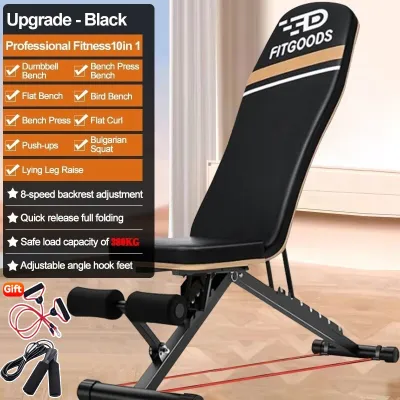
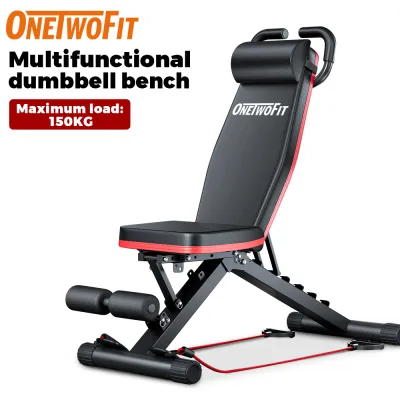
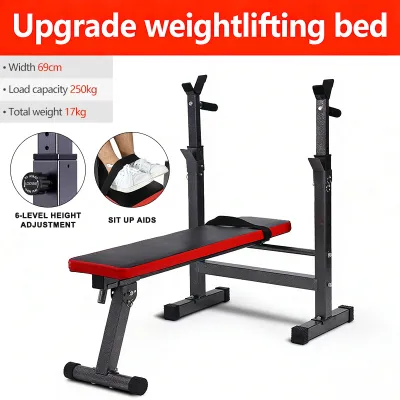
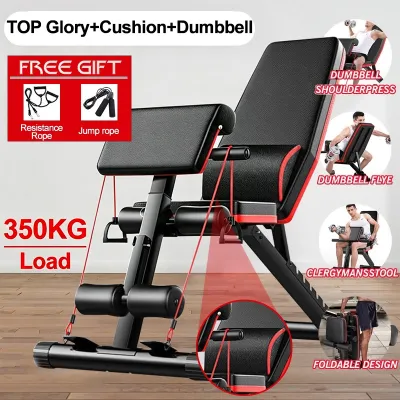
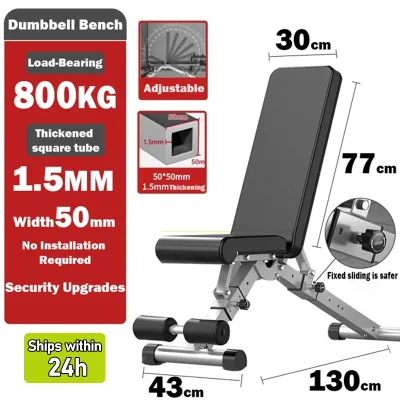
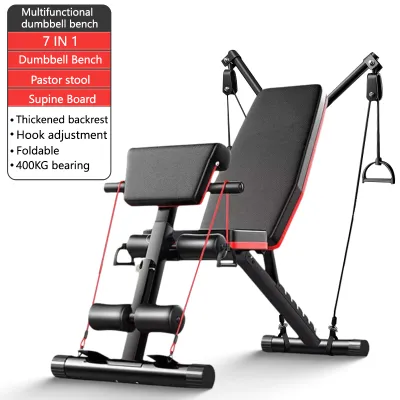
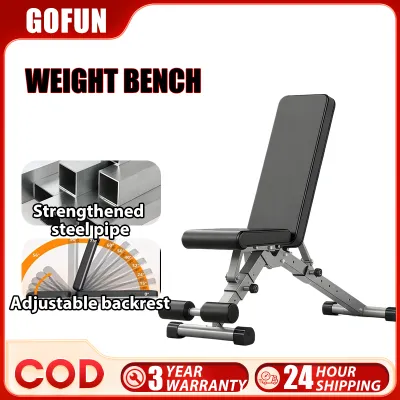
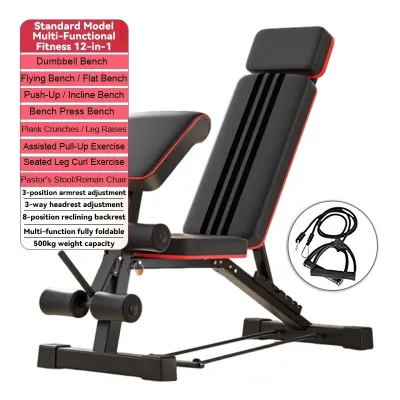
Prices are valid at publication and may change. Please refer to the product page for the latest price.
Your current training level and fitness objectives should dictate which design fits your routine. Beginners focusing on mastering foundational compound movements often benefit from the simplicity of a flat bench, which allows them to concentrate on form without worrying about equipment adjustments. Intermediate and advanced lifters, particularly those focused on hypertrophy and muscle isolation, frequently require the specific angles of an adjustable bench to target different muscle fibers and overcome training plateaus.
Exercise Variety and Muscle Targeting
When it comes to muscle engagement, the angle of your bench directly influences which muscle groups bear the brunt of the load. A flat bench is optimized for the traditional flat bench press, which primarily targets the sternocostal head of the pectoralis major, the anterior deltoids, and the triceps. It also serves as an excellent platform for exercises like dumbbell rows, bench dips, and Bulgarian split squats, where a stable, non-moving surface is essential for balance.

An adjustable bench dramatically expands your exercise library by allowing you to alter the angle of incline. Setting the bench to a 30- to 45-degree incline shifts the training emphasis upward, targeting the clavicular head of the pectoralis major (the upper chest). Adjusting the bench to a high incline or a fully upright position (around 75 to 85 degrees) transitions the movement into a seated shoulder press, isolating the deltoids while supporting your lower back.
Some adjustable models also offer decline settings, which target the lower pectoral muscles and mimic the movement pattern of a decline press. Additionally, the ability to sit at an incline supports specialized dumbbell work, such as incline chest flyes, incline biceps curls, and chest-supported rows. These variations are highly effective for isolating specific muscle groups and reducing momentum during your lifts.
However, it is important to assess whether you will actually utilize these angles in your daily workouts. If your training program is built almost entirely around flat barbell pressing and standing overhead presses, the added mechanical complexity of an adjustable bench may go unused. A dedicated flat pressing station might serve your current routine better by providing a wider, more supportive pad and a more robust frame.
Space, Stability, and Budget Considerations
Practical constraints like space and budget play a massive role in equipment selection, especially when setting up a workout space in the Philippines. The tropical climate brings high humidity and sweat, which means fitness equipment must be highly durable. When evaluating either bench type, look for frames with a thick, powder-coated finish to prevent rust, and high-density foam padding wrapped in sweat-resistant, non-slip vinyl that can be easily wiped down after a humid workout session.
Space is another major factor, particularly if you are training in a compact spare room, a garage, or a condominium balcony. Flat benches generally have a lighter, more compact footprint and can easily be propped up against a wall when not in use. While some adjustable benches are designed to fold flat for easy storage, their adjustment mechanisms and wider stabilizer feet often require a larger operational footprint during your workouts.
Stability is paramount for safety when lifting heavy weights. Any lateral movement or wobble during a heavy press can compromise your shoulder mechanics and increase the risk of injury. Flat benches are inherently more stable because of their welded joints and lack of moving parts. When inspecting an adjustable bench, you must verify the quality of the adjustment mechanism—whether it uses a ladder-style bracket or a pop-pin system—to ensure there is minimal play or movement when locked into position.
| Feature | Flat Bench | Adjustable Bench |
|---|---|---|
| Primary Focus | Maximum stability, heavy powerlifting | Exercise variety, muscle isolation |
| Structural Design | Single solid frame, no moving parts | Split pad, hinge and pin/ladder mechanism |
| Space Requirement | Compact footprint, easy to move | Larger operational footprint, some foldable models |
| Budget Range | Generally lower ₱ investment | Higher ₱ investment due to mechanical parts |
| Maintenance | Low (wipe down vinyl, check frame bolts) | Moderate (lubricate hinges, inspect locking pins) |
From a financial perspective, flat benches offer a highly cost-effective entry point, requiring a lower initial ₱ investment due to their simpler construction. Adjustable benches command a higher ₱ price range because of the extra steel, hinges, and locking mechanisms required to make a moving joint safe under heavy loads. Investing in a cheap, poorly constructed adjustable bench can compromise your safety, so if budget is tight, a high-quality flat bench is often a safer choice than a low-grade adjustable model.
How to Choose the Right Bench for Your Routine
To make the final decision, evaluate your training style against a clear, condition-based framework. Your choice should align with your primary fitness goals, your physical space, and your safety requirements.
Choose a flat bench if:
- Your primary goal is maximizing your flat bench press strength or training for powerlifting.
- You require absolute stability with zero frame play or wobble under heavy barbell loads.
- You prefer a wider, continuous back pad without any gaps to support your spine and shoulders.
- You are working with a limited budget and want the highest quality steel frame possible for your money.
Choose an adjustable bench if:
- Your training routine focuses on bodybuilding, hypertrophy, and isolating different areas of the chest and shoulders.
- You perform a wide variety of dumbbell exercises that require incline, decline, or seated upright positions.
- You have limited space and need a single, versatile piece of equipment to perform multiple roles in your home gym.
- You are willing to invest in a heavy-duty, commercial-grade model with a robust locking mechanism.
Neither option may fit your needs if you are preparing for a specific powerlifting competition that mandates exact International Powerlifting Federation (IPF) height, width, and pad density specifications. In such cases, standard commercial utility benches may not match the required competition dimensions. Additionally, if you require integrated rack attachments or spotter platforms, you will need to look at specialized Olympic bench stations rather than standalone utility benches.
Before making any purchase, always verify the manufacturer’s maximum weight capacity, ensuring it comfortably covers your body weight plus the heaviest load you plan to lift. Inspect the pad gap on adjustable models; a gap that is too wide can cause discomfort or lack of support in the lower back during flat presses. Finally, measure your workout area to ensure you have enough clearance around the bench to safely mount and dismount the equipment during heavy training sessions.
Frequently Asked Questions (FAQ)
Can I do flat bench presses on an adjustable bench?
Yes, almost all adjustable benches can be set to a zero-degree flat position to perform standard flat bench presses. However, you must pay close attention to the design of the bench before loading heavy weights. Many adjustable benches have a noticeable gap between the seat pad and the backrest pad to allow the hinges to rotate. This gap can sometimes align directly with your lower back or hips, which may affect your comfort, arch, and overall stability during the lift.
Before performing heavy flat presses on an adjustable bench, ensure that the locking pin or ladder mechanism is fully engaged and secure. It is also wise to perform a few warm-up sets to check for any lateral shifting or rocking. If the bench feels unstable or if the pad gap compromises your lifting posture, you may need to adjust your body positioning or consider a dedicated flat bench for your heaviest pressing sessions.
Is an adjustable bench less stable for heavy lifting?
By design, an adjustable bench is inherently less stable than a high-quality flat bench because it relies on moving parts, hinges, and locking pins to function. Over time, these connection points can develop slight play, leading to minor wobbles or shifting when you transition under a heavy load. This is especially true for budget-friendly models that use thinner steel frames and lower-tolerance joint connections.
To ensure safety during heavy lifts, always check the manufacturer’s frame specifications, looking for heavy-gauge steel (such as 11-gauge or 12-gauge) and wide stabilizer feet. If you notice significant wobbling, creaking, or slipping of the adjustment mechanism during a lift, you should stop using the bench immediately. For lifters regularly handling heavy barbell loads, upgrading to a commercial-grade adjustable bench or switching to a solid, welded flat bench is highly recommended to maintain a safe training environment.
Community discussion
Share your experience or ask a question. Comments are reviewed before publication.