
Choosing the right front suspension fork is one of the most impactful decisions you can make for your mountain bike, directly shaping how your front tire interacts with the trail. The choice between an air fork and a coil fork represents a fundamental divide in suspension design, with each offering distinct advantages in traction, weight, and adjustability. Air forks utilize compressed air as the spring medium, creating a progressive spring rate that resists bottoming out while keeping the chassis light. In contrast, coil forks rely on a physical steel or titanium spring, delivering a highly linear feel that remains exceptionally sensitive to tiny trail chatter and maintains consistent traction through rough terrain.
Your optimal choice depends heavily on your primary riding discipline, typical trail conditions, and preference for on-the-fly tuning versus set-it-and-forget-it reliability. Cross-country riders and trail enthusiasts often lean toward air suspension for its climbing efficiency and easy adjustability, while downhill racers and aggressive enduro riders frequently favor the relentless grip of a coil. However, modern engineering advancements have significantly narrowed the performance gap between these designs. High-end air forks now feature larger negative air chambers to mimic the initial suppleness of a coil, while modern coil forks incorporate hydraulic bottom-out controls to prevent harsh landings, making specific model specifications and damper tuning just as critical as the spring type itself.
Spring Rate Behavior and Small-Bump Sensitivity
To understand how these forks behave on the trail, you must first look at their spring rate curves, which dictate how much force is required to compress the fork through its travel. A coil spring exhibits a linear spring rate, meaning the force required to compress the fork increases at a constant, predictable rate from the top of the stroke to the bottom. This provides a highly predictable feel, allowing you to anticipate how the bike will react to mid-corner bumps or sudden drops.
Products mentioned in this guide
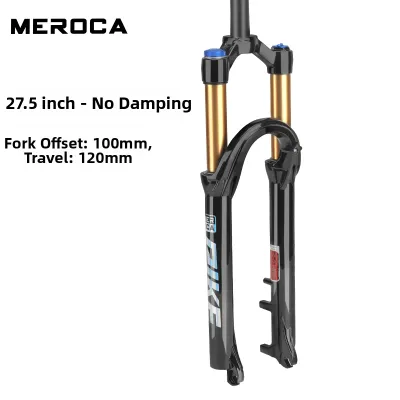
36 Lazada user ratings
Finally, after 30 days my order was delivered. Actually, it's NOT the Seller or LAZ problem, it's the local courier XDE. They tag twice as F…Read full reviewShow less
Finally, after 30 days my order was delivered. Actually, it's NOT the Seller or LAZ problem, it's the local courier XDE. They tag twice as Failed Delivery due to customer unreachable but in reality they never deliver or call me. Im tracking this when the status was ready for delivery and was at home the whole day and weeks. The courier was dishonest and they wanted to blame the customer instead of their fault. The courier posted a pic of call log, they call at 12AM midnight and 10:28PM just to say they have proof, how dumb they are! Thanks to LAZ they escalated my complaint and was delivered the following day. For the product, I'm 101% certified. To LAZ agent, good job👍
Excellent shock absorption, High quality material,kahit matagal ang delivery almost a month pero sulit naman dahil legit store l.
Elegant design, Fast shipping service, safe ang item recommended shop good job seller thnx......
very good, ganda ng gawaDurable gold tube, Excellent shock absorption,
Looks good, will assemble it when I have some time.
Prices are valid at publication and may change. Please refer to the product page for the latest price.
Air springs possess a progressive spring rate. As the fork compresses, the volume of the air chamber decreases, causing the internal pressure to rise exponentially. This means the fork is relatively easy to compress in the initial part of its travel but becomes rapidly stiffer as it approaches the end of its stroke, providing built-in resistance against harsh bottom-outs on big impacts. Riders can customize this progressiveness by adding plastic volume spacers (often called tokens) to the air chamber, allowing them to fine-tune how quickly the fork ramps up without changing the initial sag pressure.
Small-bump sensitivity—the fork’s ability to track tiny roots and ripples—is another area where these designs diverge. Coil forks typically excel here because they have fewer dynamic seals. An air fork requires tight, high-pressure seals to prevent air from leaking between chambers, which introduces static friction, commonly known as stiction. This stiction can cause the fork to hesitate slightly before initiating travel, whereas a coil spring moves almost instantly. While high-end air forks have made massive strides in reducing stiction through advanced coatings and larger negative air springs, riders seeking maximum front-wheel traction on off-camber, slippery roots often find that a coil fork still offers a more glued-to-the-trail sensation. When shopping, check manufacturer specifications for stiction-reducing technologies and damper designs rather than assuming a spring type alone guarantees a smooth ride.
Weight, Adjustability, and Tuning Options
For many riders, the physical weight of the suspension system is a primary consideration, especially when long climbs or technical ascents are a regular part of the route. Air forks are inherently lighter because a chamber of compressed air weighs virtually nothing compared to a heavy metal coil made of steel or titanium. This weight savings, which can range from a few hundred grams to over half a kilogram depending on the chassis and travel length, makes the front end of the bicycle easier to lift over obstacles and reduces rider fatigue during long climbs.

Adjustability is where air forks offer an undeniable convenience advantage. Tuning an air fork to match your body weight, riding gear, or changing trail conditions requires nothing more than a high-pressure shock pump. By attaching the pump to the fork’s valve, you can add or release air in seconds to achieve the perfect sag—the amount the suspension compresses under your body weight in a neutral riding position. This rapid adjustability is incredibly useful if you transition between smooth flow trails and steep, technical descents that require different setup pressures.
Coil forks require a physical spring swap to change the spring rate, which is measured in pounds per inch (lbs/in) or Newtons per millimeter (N/mm). If you change weight or carry heavy gear, you must purchase a new physical coil spring of a different stiffness, partially disassemble the fork, and swap the springs. This process involves an upfront cost for extra springs and requires basic mechanical tools. While this logistical effort is a trade-off, proponents of coil forks point out that once you install the correct spring for your weight, the spring rate remains completely consistent regardless of temperature changes or altitude shifts, unlike air forks which can experience minor pressure fluctuations during long, high-speed descents as the air heats up.
Maintenance Requirements and Long-Term Durability
Owning a high-performance suspension fork requires a commitment to regular maintenance to preserve its performance and protect your investment. Air forks generally demand more frequent attention because their performance relies heavily on maintaining airtight seals and clean lubrication within the air spring chamber. Over time, dirt, dust, and moisture can bypass wiper seals, contaminating internal grease and oil, which increases stiction. To prevent this, manufacturers typically recommend lower-leg services—which involve cleaning the lowers, replacing the bath oil, and lubricating the seals—at relatively short intervals, often between 30 to 50 hours of riding time.
Coil forks are widely regarded as more robust and lower-maintenance over long-term use. Because the physical coil does not rely on a pressurized air chamber to support the rider, there are fewer critical dynamic seals that can fail or leak. A minor scratch on the inner wall of a coil fork’s stanchion or spring shaft is rarely catastrophic, whereas a similar scratch inside an air spring chamber can cause air to bypass the piston seal, rendering the fork unusable. However, the damper cartridge, lower-leg bushings, and dust wiper seals still require regular cleaning and oil changes to prevent wear on the stanchions and ensure smooth operation.
Regardless of which fork type you choose, always consult the manufacturer’s user manual to verify the exact service intervals for your specific model. Local environmental factors play a massive role in these timelines. If you frequently ride in muddy, wet conditions or on extremely dusty trails, you will need to perform lower-leg lubrication and seal cleanings much more frequently than a rider operating in dry climates. Neglecting these intervals can lead to premature wear on the expensive upper stanchion tubes, which can ruin the fork regardless of whether it uses an air or coil spring.
Decision Framework: Choosing the Right Suspension Fork
Selecting the ideal suspension fork requires balancing your personal riding style, your physical weight, and your willingness to perform routine bike maintenance. Use the following guidelines to determine which technology aligns best with your needs on the trail.
Choose Air if…
- You prioritize weight savings: If you ride cross-country, participate in marathon races, or spend a significant portion of your ride time climbing steep hills, the lighter weight of an air fork is highly beneficial.
- You want quick, versatile tuning: If you frequently adjust your setup for different trail styles, carry varying gear loads, or simply prefer the convenience of adjusting your suspension in minutes with a shock pump.
- You need progressive bottom-out support: If you ride jump lines, drop-offs, or harsh terrain where you need the fork to ramp up aggressively at the end of its travel to prevent hard metal-on-metal bottoming.
Choose Coil if…
- You demand maximum traction and sensitivity: If your primary goal is keeping your front tire glued to loose, wet, or highly technical terrain, and you want the absolute smoothest initial feel over small bumps.
- You ride aggressive downhill or enduro: If you spend most of your time shuttling bike parks, riding lift-accessed downhill tracks, or tackling long, rough descents where consistent, fade-free performance is critical.
- You prefer a low-maintenance setup: If you want a highly durable spring system that is less sensitive to minor seal wear and does not require frequent pressure checks before every ride.
Verify First if…
Before purchasing any new fork, verify several critical compatibility standards to ensure it fits your current mountain bike frame and wheelset. Check the steerer tube diameter (such as a tapered 1.5-inch to 1-1/8-inch steerer) and ensure the fork’s axle standard (such as 15x110mm Boost or 15x100mm non-Boost) matches your front hub. Additionally, confirm that the fork’s brake mount type and maximum tire clearance are compatible with your existing rotors and tire width. Finally, always purchase from authorized dealers to ensure you receive a valid manufacturer warranty and have access to replacement parts, such as different coil spring rates or air volume spacers.
Frequently Asked Questions (FAQ)
Can I convert my air fork to a coil fork or vice versa?
Yes, several aftermarket manufacturers offer conversion kits that allow you to swap the internal air spring assembly of specific fork models for a physical coil spring, or vice versa. However, these conversions require strict verification of compatibility, as they are typically designed only for specific chassis models and model years. You must also be aware that installing aftermarket conversion kits can void your manufacturer’s warranty and may alter the fork’s intended damping characteristics. If you decide to proceed with a conversion, have the work performed by a professional suspension technician to ensure correct installation and prevent damage to the internal stanchion walls.
Does rider weight affect the choice between air and coil?
Rider weight is a significant factor when deciding between these two suspension types. Air forks offer a continuous, highly adjustable pressure range, making them exceptionally adaptable to virtually any rider weight without requiring any additional parts. Coil forks, however, rely on physical springs that are manufactured in discrete stiffness increments. If your weight falls at the extreme light or extreme heavy end of the spectrum, you may find it difficult to source the correct spring rate from the manufacturer, or you may have to special-order a custom spring, making the tuning process more complex and costly.

Community discussion
Share your experience or ask a question. Comments are reviewed before publication.