
Upgrading your mountain bike suspension or choosing a new fork can feel overwhelming when you are caught between the lightweight adjustability of air and the plush traction of coil. The choice between air and coil suspension forks ultimately depends on whether you prioritize precise, tool-free adjustability and low weight (air) or maximum traction, consistent mid-stroke support, and minimal initial friction (coil) for your specific riding style and local trail conditions. Navigating this decision requires looking beyond marketing buzzwords and focusing on how each spring medium behaves under the physical forces of the trail.
For riders tackling diverse terrains, from steep technical descents to long, grueling climbs, the suspension fork is a critical component for maintaining control and reducing fatigue. A fork that matches your body weight, riding style, and local environment will transform your riding experience, while an ill-suited setup can lead to constant adjustments, hand numbness, or a lack of front-wheel traction. Understanding the mechanical realities of these two systems is the first step toward dialing in your ideal ride.
How Do Air and Coil Springs Actually Work on the Trail?
Air forks use compressed air inside a sealed chamber to act as a spring, while coil forks rely on a physical metal spring (usually steel or titanium) to absorb impacts. This fundamental difference in the spring medium dictates how the fork behaves as it moves through its travel. When you compress an air fork, the volume of the air chamber decreases, which causes the internal pressure to rise exponentially. This behavior is known as a progressive spring rate, meaning the fork naturally becomes much stiffer and harder to compress the deeper it gets into its travel.
Products mentioned in this guide
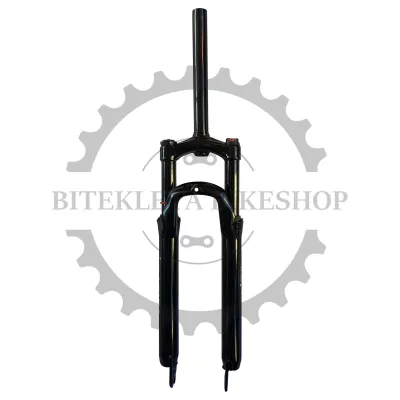
8 Lazada user ratings
Salamat Seller maganda! Maayos pagkakabalot! Manilis pang dumating!! Salamat din lazada!!! 10⭐️ akin!! Para sa akin highly recommended kayo!!
not a ragusa brand as the stock indicates
Steel construction ensures durability,
ok nman may kunti lang gasgas pero tnx
sulit sa presyo 👍👍👍
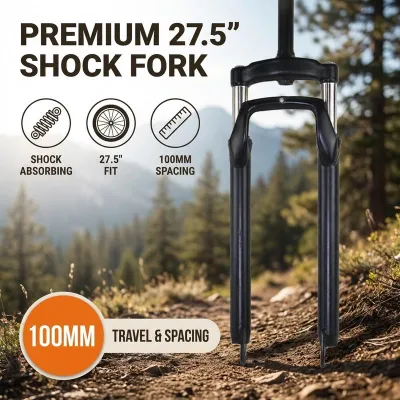
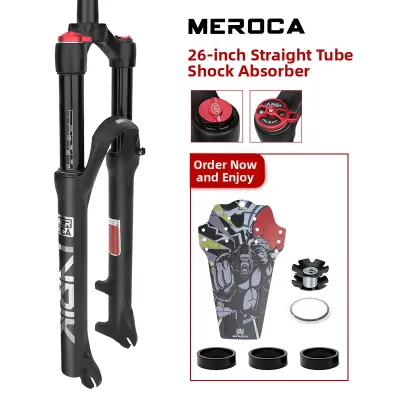
122 Lazada user ratings
Good product quality, Great value for money, Excellent shock absorption,
It really looks great, I fell in love with it as soon as I saw it.
Fast shipping service, High-quality durable material,
Good product quality, High-quality durable material,
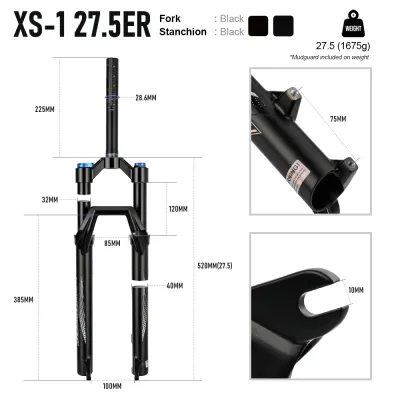
1 Lazada user ratings
recieved the parcel late and had guarantee compensation in the form of lazrewards, mtb fork is lightweight and seems durable, have yet to in…Read full reviewShow less
recieved the parcel late and had guarantee compensation in the form of lazrewards, mtb fork is lightweight and seems durable, have yet to install and test for break-in to know performance
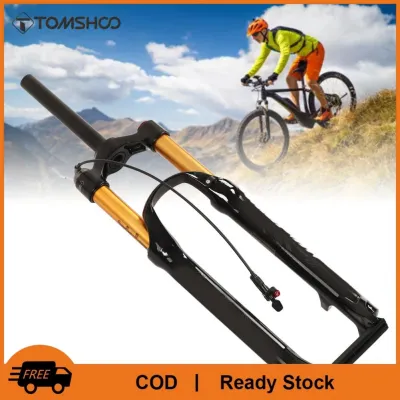
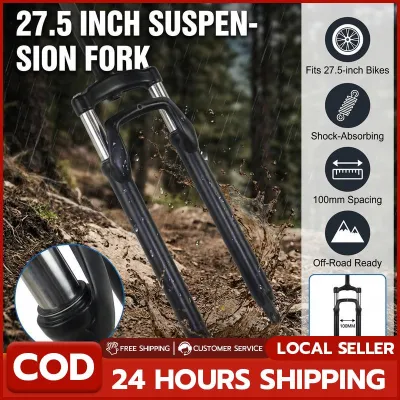
Prices are valid at publication and may change. Please refer to the product page for the latest price.
In contrast, a coil fork utilizes a physical metal coil that compresses linearly. A linear spring rate means that the force required to compress the spring increases at a constant, predictable rate throughout the entire stroke. If it takes a certain amount of force to compress the first ten millimeters of travel, it will take exactly the same additional force to compress the next ten millimeters, all the way until the spring is fully compressed.
On the trail, these mechanical differences translate directly to how the bike feels under your body weight. An air fork tends to feel relatively soft and supportive in the middle of its travel but ramps up quickly at the end to resist bottoming out. A coil fork provides a highly predictable, uniform feel across its entire stroke, offering consistent support without any sudden changes in stiffness. To understand how a specific model behaves, riders should check manufacturer specification sheets for spring curve graphs and travel limits.
Which Fork Type Offers Better Small-Bump Sensitivity?
Coil forks inherently offer highly responsive small-bump sensitivity because they lack the tight, high-friction airtight seals required to keep pressurized air inside an air fork. In any suspension system, static friction—often called stiction—is a primary obstacle to smooth performance. Because air forks must contain pressures often exceeding 50 to 100 psi, they require tight rubber seals and O-rings that press firmly against the inner walls of the stanchions. This tight fit creates initial resistance, meaning the fork requires a larger initial impact to break past this friction and begin moving.

Coil forks do not require these high-pressure seals because the metal spring sits loosely inside the fork leg. Without the drag of tight air seals, a coil fork reacts almost instantly to the smallest imperfections on the trail, such as loose gravel, small roots, and minor ripples. This immediate reaction keeps the front tire glued to the ground, providing highly reliable traction and reducing the high-frequency vibrations transmitted to your hands and arms.
To bridge this performance gap, modern air fork designs incorporate negative air chambers. These negative chambers hold air that pushes in the opposite direction of the main positive chamber, helping to overcome the initial seal friction and mimic the active feel of a coil spring. While these designs have significantly improved air fork sensitivity, they still cannot completely eliminate the physical friction of the seals.
Riders looking to maximize their fork’s initial sensitivity should regularly test static sag and consult product manuals for seal break-in periods and lubrication requirements. In highly humid or dusty tropical environments, keeping the lower-leg seals clean and well-lubricated is essential to prevent stiction from degrading your ride quality over time.
How Do Air and Coil Forks Handle Bottom-Out Resistance?
Air forks handle bottom-out resistance naturally through their progressive spring rate, which ramps up sharply at the end of the travel, whereas coil forks require external mechanical or hydraulic systems to prevent harsh bottoming. When you land a jump, drop off a ledge, or plow through a deep rock garden, your suspension must absorb massive amounts of energy. If the fork runs out of travel too quickly, it will bottom out, sending a harsh, jarring shock through the handlebars that can cause you to lose control or damage your equipment.
Because air compresses exponentially, the last portion of an air fork’s travel becomes incredibly stiff. This natural ramp-up acts as a built-in safety cushion, making it very difficult to completely bottom out the fork even on massive impacts. Furthermore, riders can easily tune this end-stroke behavior by adding plastic volume spacers inside the air chamber. These spacers reduce the volume of the air chamber, causing the fork to ramp up even earlier and more aggressively without affecting the initial part of the stroke.
Coil forks, with their linear spring rate, do not have this natural ramp-up. If a coil fork is subjected to an impact that exceeds its spring rate, it will compress all the way to the end of its travel with very little extra resistance, resulting in a harsh metal-on-metal clunk. To prevent this, coil manufacturers must integrate physical elastomer bump stops or advanced hydraulic bottom-out controls within the damper. These systems act as secondary decelerators, slowing down the fork’s movement in the final millimeters of travel.
When choosing a fork, it is crucial to verify the presence and adjustability of volume spacers or hydraulic controls in your specific fork model. If you are a heavier rider or enjoy aggressive, high-impact riding, having a reliable way to manage bottom-out resistance is vital for both your safety and the longevity of your bike.
What Are the Real Weight and Maintenance Differences?
Air forks are significantly lighter and require more frequent, detailed seal maintenance, whereas coil forks add noticeable weight but offer highly reliable, lower-maintenance performance over long periods. For many riders, weight is a deciding factor. An air fork typically saves anywhere from 200 to 500 grams compared to an equivalent coil fork. This weight savings is achieved because a chamber of compressed air weighs virtually nothing, whereas a steel or titanium coil spring is a heavy, solid metal component.
On long climbs, technical climbs, or during long days in the saddle, carrying less weight on the front of your bike makes a noticeable difference in climbing efficiency and maneuverability. It allows you to lift the front wheel over obstacles with less effort and reduces overall rider fatigue. However, this weight advantage comes at the cost of more intensive maintenance.
Air forks rely on a complex system of seals, O-rings, and precise air chambers to function. Over time, these seals wear out, dry up, or become contaminated with dirt and moisture, leading to air leaks and a loss of performance. To keep an air fork running smoothly, riders must perform regular lower-leg services and air sleeve maintenance, which involves cleaning the internals, replacing seals, and applying fresh grease and oil.
Coil forks are mechanically much simpler. Because they do not rely on high-pressure air seals to hold up the rider, they are far less sensitive to minor dirt ingress and seal wear. While they still require regular damper oil changes and lower-leg lubrication to protect the stanchions, a coil fork can often run longer between services without a catastrophic loss of spring performance. Riders should check the manufacturer’s recommended service intervals and required tools for their exact fork model to ensure they are prepared for the upkeep.
How Should You Adjust and Tune Each Fork Type?
Air forks are highly adjustable using a high-pressure shock pump to change the air pressure for different rider weights, whereas tuning a coil fork requires physically swapping the internal metal spring. This difference in adjustability is one of the most practical considerations when choosing between the two systems. With an air fork, setting your initial sag—the amount the suspension compresses under your body weight—is a quick and precise process.
If you gain weight, carry a heavy hydration pack, or want to stiffen your suspension for a smoother trail, you simply attach a shock pump and add a few pounds per square inch of air. If you want a softer, more forgiving ride, you let a small amount of air out. This micro-adjustability allows you to fine-tune your suspension to match your exact weight and riding preferences in a matter of minutes, right at the trailhead.
Tuning a coil fork is a much more involved and costly process. Because the spring rate is determined by the physical thickness and material of the metal coil, you cannot change the stiffness of the fork without physically replacing the spring. Coil forks are sold with a standard spring installed, which is designed for an average rider weight range. If you fall outside of this range, you must purchase a softer or firmer spring and disassemble the fork to install it.
While some coil forks feature a preload adjuster dial on the top cap, this dial only compresses the spring slightly to adjust sag; it does not change the actual spring rate or stiffness of the coil. To ensure safe handling, optimal traction, and proper bike geometry, always use the manufacturer’s sag and spring rate charts rather than guessing pressures or spring weights.
Which Suspension Fork Matches Your Riding Style and Terrain?
Air forks are well-suited for cross-country, trail, and general mountain biking where weight savings and versatile tuning are key, while coil forks excel in downhill, enduro, and heavy-duty trail riding where maximum traction and heat consistency are critical. Your choice should align with the types of trails you ride most frequently and your willingness to perform regular maintenance.
If your typical ride involves long climbs, varied terrain, or if you enjoy fine-tuning your suspension for different trail conditions, an air fork is the logical choice. Its lightweight nature keeps your bike agile, and its easy adjustability means you can quickly adapt the fork to different riding styles. This versatility makes air forks the standard choice for the vast majority of modern mountain bikes.
However, if your riding is focused on high-speed descents, technical bike parks, or rough, rocky terrain where traction is your primary concern, a coil fork offers an unmatched ride quality. The linear spring rate and lack of seal friction keep your front tire firmly planted through off-camber turns, wet roots, and loose rocks, giving you the confidence to carry more speed. Furthermore, coil forks do not suffer from the pressure buildup and performance changes that can occur in air forks during long, punishing descents due to heat generation.
When riding in the Philippines, local trail conditions play a significant role in this decision. The tropical climate often means navigating muddy, slippery clay trails in areas like Rizal, or tackling the steep, rocky, and root-filled descents of popular mountain bike parks. In these wet and slippery conditions, the superior small-bump sensitivity and consistent traction of a coil fork can be a massive advantage, helping your front tire find grip where an air fork might deflect. Conversely, if you frequently ride long, humid climbs under the tropical sun, the weight savings of an air fork will save valuable energy. Remember that no matter which fork you choose, equipment cannot replace proper skills training, trail judgment, and safety gear. Assess your primary riding discipline, local trail conditions, and maintenance preferences before finalizing your choice.

Community discussion
Share your experience or ask a question. Comments are reviewed before publication.