
The hop-up bucking is one of the most critical components in an airsoft gun, serving a dual purpose that directly dictates your range and accuracy. This small rubber sleeve sits inside the hop-up chamber, where it seals the air nozzle against the inner barrel to prevent pressure loss while using an internal ridge to apply backspin to the BB. This backspin creates aerodynamic lift, allowing the projectile to fly much farther and flatter than it would otherwise.
Choosing the right rubber compound for your bucking is essential because the material determines how consistently this backspin is applied and how well the system seals under pressure. The primary material categories used in the industry are natural rubber, silicone, and synthetic blends like nitrile. Each material interacts differently with rubber hardness (measured in durometer) and environmental conditions, meaning your choice should align with your specific gun setup, local climate, and playing style.
Common Rubber Compounds for Airsoft Hop-Up Buckings
Natural Rubber
Natural rubber is highly valued in the airsoft community for its exceptional friction coefficient. This high level of grip allows the bucking to apply a consistent backspin to the BB with minimal physical pressure from the hop-up tensioner. Because it grips so effectively, natural rubber is excellent for achieving a stable trajectory. However, natural rubber is highly sensitive to environmental changes. In cold weather, it tends to stiffen and lose its grip, while in extreme heat, it can soften excessively. It is also more susceptible to rapid wear, tearing, and degradation over time when subjected to high-velocity friction.
Products mentioned in this guide
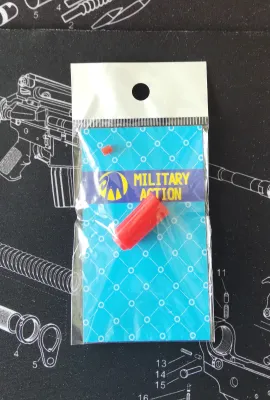
Prices are valid at publication and may change. Please refer to the product page for the latest price.
Silicone
Silicone buckings are engineered to offer outstanding thermal stability, making them highly reliable across a wide range of temperatures. Whether you are playing on a chilly morning or under the direct midday sun, silicone maintains its flexibility and elasticity. This material is also highly resistant to moisture absorption, which prevents the bucking from swelling in humid conditions. The primary trade-off with silicone is that it generally offers slightly less initial friction than natural rubber. To compensate, setups using silicone buckings may require a slightly firmer tensioner or a more pronounced contact patch to lift heavier BBs effectively.
Synthetic Blends
Synthetic rubber blends, such as nitrile butadiene rubber (NBR), are designed to combine the best properties of both natural rubber and silicone. These engineered compounds offer excellent resistance to wear, tearing, and oil degradation, making them highly durable under high-stress cycling. They provide a balanced level of grip and temperature stability, performing consistently in various weather conditions. Because synthetic formulations vary significantly between manufacturers, it is important to check the specific product documentation to understand the unique characteristics and limits of each synthetic blend.
How Rubber Hardness Interacts with Material Performance
Rubber hardness is measured on a durometer scale, typically ranging from 50 degrees (very soft) to 80 degrees (very hard) within the airsoft industry. This rating works hand-in-hand with the material type to determine how the bucking behaves when the air nozzle seals against it and when the BB passes through.

Softer rubbers, generally rated between 50 and 60 durometer, conform easily around the air nozzle and the BB. This flexibility creates an exceptional air seal, minimizing velocity loss and ensuring highly consistent shot-to-shot energy. Softer compounds are ideal for lower-velocity setups, such as indoor close-quarters battle (CQB) guns. However, because they are pliable, soft buckings wear down much faster under high-velocity friction and can deform or tear under the stress of high-rate-of-fire builds.
Harder rubbers, rated between 70 and 80 durometer, are built to withstand the intense friction and high pressure of high-velocity setups, such as designated marksman rifles (DMRs) or bolt-action sniper rifles. These stiff compounds resist deformation, ensuring that the contact patch remains structurally stable even under high kinetic energy. The trade-off is that harder rubbers require more physical pressure from the hop-up arm to grip the BB, which can make fine-tuning your hop-up dial highly sensitive and demanding.
When selecting a bucking, always verify the manufacturer’s stated durometer rating on the packaging rather than relying on the color of the rubber. While some brands use color-coding to distinguish between hardness levels, there is no universal industry standard, and colors vary widely across different brands.
Choosing the Right Rubber for Your Airsoft Setup and Climate
Selecting the ideal bucking requires balancing your gun’s velocity, your local environment, and the weight of the BBs you plan to shoot.
Playstyle and Velocity Limits
For CQB setups operating at lower velocities (typically under 350 FPS), a softer natural rubber or soft synthetic bucking is highly effective. It provides rapid, consistent backspin on lighter BBs without requiring heavy tension from the hop-up arm. Conversely, for high-velocity outdoor setups operating above 400 FPS, a harder synthetic blend or a durable silicone bucking is necessary to prevent premature wear and handle the high-speed impact of the BB.
Climate and Temperature Factors
In tropical climates like the Philippines, high humidity and intense heat are constant challenges for airsoft equipment. Natural rubber buckings can degrade quickly under these conditions, losing their elasticity and becoming sticky or brittle over time. For these environments, silicone buckings or high-grade synthetic nitrile blends are highly recommended. They resist moisture absorption and maintain their structural integrity despite high ambient temperatures, ensuring your shots remain consistent throughout long outdoor games.
BB Weight Compatibility
Lighter BBs (0.20g to 0.25g) require relatively little friction to hop, making them highly compatible with softer, high-grip buckings. Heavier BBs (0.28g to 0.40g and above) require significantly more friction to stabilize. To lift these heavy rounds consistently without jamming the barrel, you will need a medium-to-hard synthetic blend or a specially designed silicone bucking with an extended contact patch that distributes pressure evenly over a larger surface area.
Inspecting Wear and Knowing When to Replace Your Bucking
Because the hop-up bucking is a wear item, regular inspection is necessary to maintain peak performance. You can perform both visual and physical checks to determine when it is time for a replacement.
Visual and Tactile Inspection
To inspect your bucking, carefully disassemble your hop-up chamber and slide the rubber sleeve off the inner barrel. Examine the feed lips—the front opening where the air nozzle enters—and the internal contact ridge for any signs of tiny tears, cracks, or permanent deformation. Gently squeeze the rubber to check its elasticity; if it feels sticky, brittle, or fails to snap back into its original shape, the compound has degraded and the bucking should be replaced.
Cleaning Protocols
Dirt, dust, and oil residue from BBs can accumulate inside the bucking, drastically reducing friction and causing erratic shots. To clean the bucking, slide it off the barrel and wash it gently using warm, soapy water, then let it air dry completely. Avoid using petroleum-based solvents, penetrating oils, or harsh chemical cleaners, as these substances will cause the rubber compound to swell, soften, or permanently disintegrate.
Identifying Performance Drops
You do not always need to disassemble your gun to know when a bucking is failing. Watch for key performance indicators during play. A sudden, unexplained drop in FPS often points to a failing air seal at the feed lips. Erratic BB trajectories, where shots randomly hook to the side or drop short, indicate that the internal contact patch is worn unevenly or dirty. If adjusting your hop-up dial yields no change in trajectory, the rubber has likely lost its grip or torn completely.
Frequently Asked Questions (FAQ)
Can I use silicone oil or grease on my hop-up bucking?
No, you should avoid applying liquid silicone oil or grease to the internal contact surfaces of your hop-up bucking. While silicone is safe for some rubber types, any oil inside the bucking eliminates the friction required to spin the BB, causing severe accuracy issues. Additionally, petroleum-based lubricants will actively swell and destroy natural rubber and synthetic compounds. If lubrication is needed to ease installation into the chamber, apply only a tiny amount of manufacturer-approved, high-viscosity grease to the outside of the bucking, keeping the inside completely dry.
Does the color of the hop-up bucking always indicate its hardness?
No, the color of a hop-up bucking is not a universal indicator of its hardness. While some specific brands use color-coding to distinguish between their 50, 60, 70, and 80 durometer options, these colors are brand-specific. A blue bucking from one manufacturer may have a completely different hardness rating than a blue bucking from another. Always check the packaging or the manufacturer’s technical specifications to verify the actual durometer rating.
How often should I replace my airsoft hop-up bucking?
There is no fixed calendar timeline for replacing a hop-up bucking, as its lifespan depends on your rate of fire, muzzle velocity, and environmental exposure. A bucking in a high-speed automatic setup may wear out after a few months of heavy play, while one in a semi-automatic rifle might last a year or more. As a general rule, inspect the bucking at the start of every playing season or whenever you notice inconsistent FPS or erratic BB flight paths.
Community discussion
Share your experience or ask a question. Comments are reviewed before publication.