
Selecting the ideal magazine pouch configuration depends entirely on whether your primary goal is surviving a dynamic, multi-hour airsoft skirmish or shaving milliseconds off a structured practical shooting stage. While both activities require quick access to ammunition, they demand fundamentally different balances between retention security and draw speed. Airsoft players typically navigate rugged outdoor terrain where dropping a magazine means losing expensive gear, whereas practical shooters operate in controlled environments where every fraction of a second influences their match score.
To make the right choice, you must evaluate how the rules, physical movement, and environmental conditions of your chosen discipline affect your gear requirements. A setup that excels on a manicured shooting range may fail catastrophically when crawling through dense brush, while a secure tactical rig might slow your reload times enough to drop you down the competitive leaderboard.
Core Demands of Airsoft vs. Practical Shooting
Airsoft games often demand high ammunition capacity and long-term comfort. Players frequently carry multiple mid-capacity or high-capacity magazines to sustain themselves through extended firefights without returning to the staging area. Because airsoft matches involve running, sliding, and crawling through diverse outdoor environments, the risk of losing a magazine is high. This makes secure retention a primary concern, especially when navigating thick vegetation or humid, slippery terrain.
Products mentioned in this guide
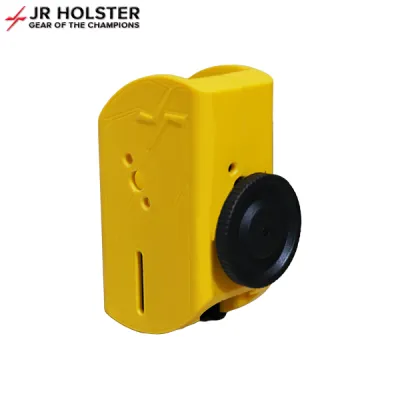
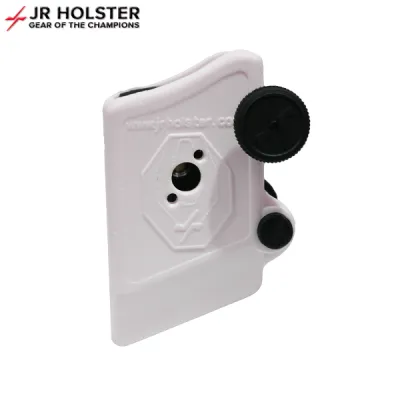
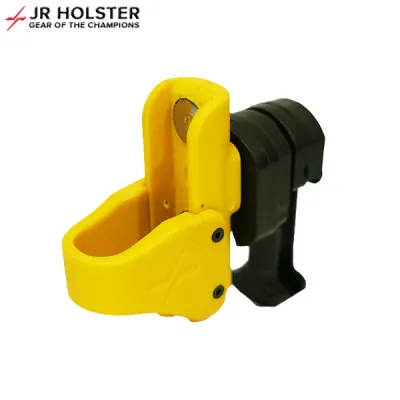
Prices are valid at publication and may change. Please refer to the product page for the latest price.
In contrast, practical shooting disciplines focus heavily on raw speed and economy of motion. Matches are highly structured, with shooters moving through pre-planned stages where targets are engaged in a specific order. Because stages are short, you only need to carry enough ammunition to complete the course of fire, plus a spare magazine for emergencies. The primary challenge is executing a flawless, friction-free draw from a highly stable, fixed position on your belt.
Furthermore, practical shooting organizations enforce strict rules regarding equipment placement. Depending on the division you enter, there may be precise limits on where your pouches can be positioned relative to your hip bone and how far they can protrude from your belt. Airsoft offers much more freedom, allowing you to mount gear on chest rigs, plate carriers, or battle belts based purely on personal comfort and load distribution.
Pouch Styles and Retention Mechanisms
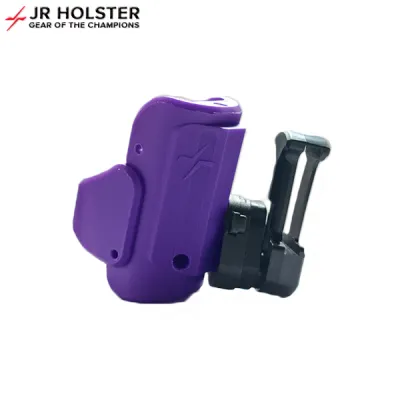
Friction-based retention is the standard choice for competitive practical shooting. Open-top polymer or Kydex pouches, such as JR Holster mag pouch designs, utilize the natural tension of the material to hold the magazine in place. This design eliminates flaps, straps, or bungee cords, providing an unobstructed path for your hand during a reload. Many of these competition-style pouches feature adjustable tension screws, allowing you to customize the draw resistance to your exact preference.

For airsoft, active retention mechanisms are often necessary to prevent gear loss. Pouches featuring elastic bungee cords or full hook-and-loop flaps offer maximum security during intense physical activity. While these retention systems require an extra movement to release the magazine, they ensure your expensive gas blowback or mid-cap magazines remain firmly anchored to your rig when you are sprinting or climbing over obstacles.
If you want a balance between the two, hybrid pouches with removable inserts are an excellent option. These pouches use a fabric outer shell combined with a removable thermoplastic insert that provides friction retention. This allows you to run an open-top configuration for faster draws while retaining the option to reattach bungee tabs when transitioning to highly active airsoft scenarios.
Capacity, Placement, and Rig Integration
In practical shooting, a rigid, dedicated belt system is essential. Competition belts consist of an inner belt threaded through your pant loops and a stiff outer belt that secures your holster and magazine pouches in a fixed position. This rigidity prevents the pouches from twisting or shifting during a run, ensuring that your magazines are always exactly where your muscle memory expects them to be. Most competitors mount three to four single pouches on their non-dominant side, angled slightly forward to match the natural angle of their wrist during a draw.
Airsoft players often benefit from distributing weight across a chest rig or a padded battle belt. Carrying multiple heavy rifle or pistol magazines on a standard belt can cause sagging, discomfort, and lower-back fatigue, particularly during long games in hot, humid tropical climates. A chest rig keeps your ammunition centered on your torso, making it easily accessible while keeping your waist free of clutter and allowing for easier crouching and bending.
When configuring your layout, consider the trade-offs between single, double, and triple pouch units. Single pouches offer the greatest flexibility, allowing you to adjust the spacing and angle of each magazine individually. Double and triple pouch units save valuable space on your belt or MOLLE platform, but they force a fixed, parallel alignment that may not be ergonomically ideal for every reload cycle.
Cross-Discipline Compatibility and Gear Transition
Attempting to use a single magazine pouch configuration for both airsoft and practical shooting requires careful compromise. If you take a pure competition rig into a rugged airsoft game, you run a high risk of dropping and damaging your magazines on hard dirt or concrete. Conversely, using bulky tactical pouches with protective flaps in a practical shooting match will significantly slow down your reload times, putting you at a distinct disadvantage against competitors with open-top setups.
For those seeking a hybrid approach, modular pouch systems offer a viable middle ground. Look for pouches that feature adjustable tension systems and compatible mounting clips that can transition between a thick competition belt and standard MOLLE webbing. This allows you to use the same pouch bodies for both sports, adjusting the retention tightness and mounting style depending on the weekend’s activity.
However, if you participate regularly in both disciplines, investing in two dedicated setups is generally the most effective path. A dedicated competition belt ensures your muscle memory remains perfectly consistent for matches, while a separate tactical belt or chest rig provides the durability, capacity, and security needed to withstand the rigors of airsoft skirmishes.
Pre-Purchase Verification and Fit Checklist
Before purchasing any magazine pouch, it is crucial to verify compatibility with your specific gear. Magazine dimensions vary significantly between brands and models; a pouch designed for a single-stack 1911 will not securely hold a wide double-stack 2011 or a thick gas blowback airsoft magazine. Always check the manufacturer’s specifications to ensure the pouch is rated for your exact magazine profile.
Next, inspect the mounting hardware to ensure it matches your existing belt or vest setup. Competition pouches typically use belt loops designed for 1.5-inch or 1.75-inch rigid belts, while tactical pouches rely on MOLLE straps or paddle mounts. Verifying these attachment standards beforehand prevents compatibility issues when assembling your rig.
Finally, consider the environmental durability of the materials. In warm, humid climates, sweat and moisture can accelerate the wear on metal tension screws and low-grade fabrics. Opt for high-quality polymers, Kydex, or heavy-duty nylon with corrosion-resistant hardware to ensure your gear maintains its structural integrity and retention strength over long-term use.
Frequently Asked Questions (FAQ)
Do I need a different pouch for rifle and pistol magazines?
Yes, rifle and pistol magazines have vastly different physical dimensions, weights, and retention requirements. Pistol pouches are shallow and narrow, designed to hold smaller magazines securely without letting them slip too deep into the pocket. Rifle pouches are much larger and require deeper pockets or stronger retention to support the additional height and weight of rifle magazines. While some multi-caliber utility pouches exist, dedicated pouches provide the most reliable fit and smoothest draw.
Are Kydex magazine pouches allowed in all practical shooting divisions?
Most practical shooting organizations, including local and international bodies, allow Kydex and polymer friction pouches in the majority of their divisions. However, specific division rules often dictate the exact placement of these pouches on your belt, the maximum distance they can sit from your body, and whether they must be positioned behind the hip bone. Always consult the official rulebook of your specific shooting organization before registering for a match to ensure your equipment is fully compliant.
Community discussion
Share your experience or ask a question. Comments are reviewed before publication.