
Choosing the right ankle weight for women starting strength training comes down to balancing your current fitness baseline with the specific mechanics of your exercises. For most beginners, starting with a light range of 0.5 to 1.5 kilograms (approximately 1 to 3 pounds) per ankle ensures you build muscle endurance without overloading delicate joint structures.
Ankle weights serve as a highly targeted tool for isolating the lower body, particularly during mat-based workouts like Pilates, barre, or targeted glute routines. However, selecting the wrong resistance or using them incorrectly can lead to joint strain, altered movement patterns, and unnecessary discomfort. By understanding your body’s readiness and evaluating key product features, you can safely integrate these weights into your fitness regimen.
Do You Actually Need Ankle Weights for Your Routine?
Before purchasing ankle weights, assess whether they align with your current fitness level and training objectives. These weights add localized resistance to the end of your limbs, increasing the lever length of your leg during movement. This makes them highly effective for targeting smaller, stabilizing muscles like the gluteus medius, hamstrings, and hip abductors during low-impact, controlled exercises.
Products mentioned in this guide
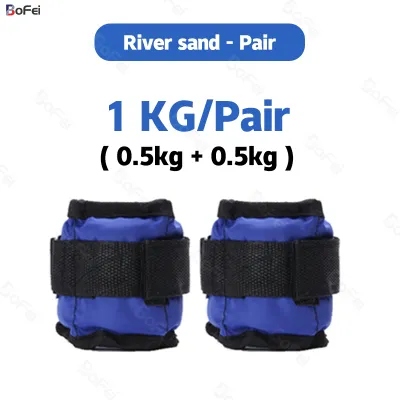
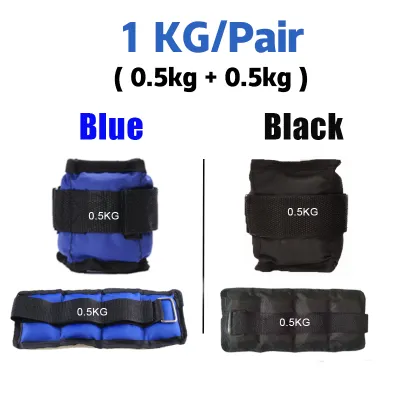
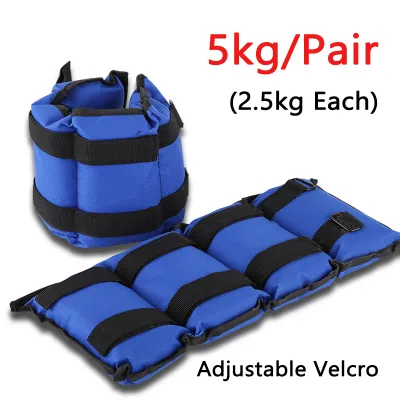
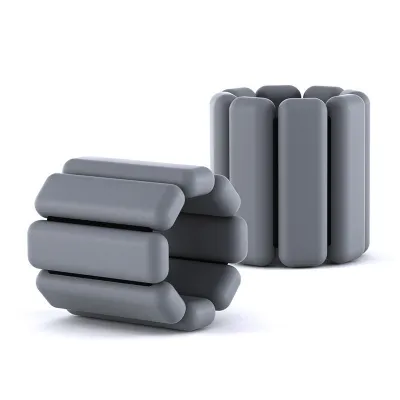
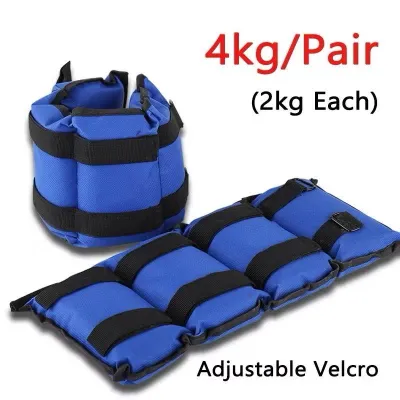
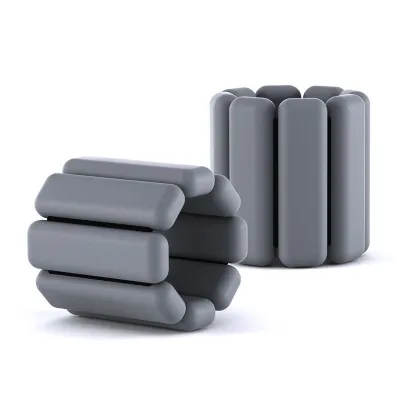
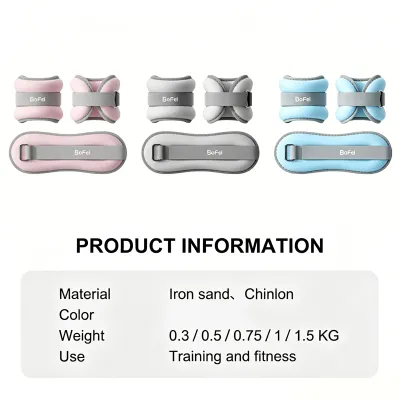
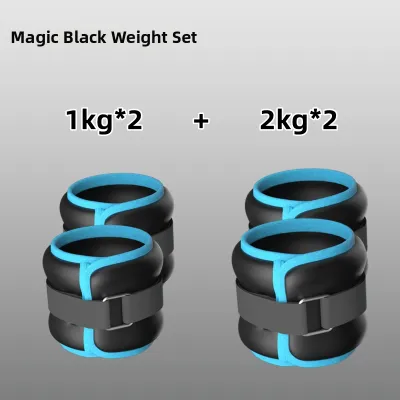
Prices are valid at publication and may change. Please refer to the product page for the latest price.
To determine readiness, look for specific signals in your current routine. You should be able to complete three sets of 15 to 20 repetitions of bodyweight exercises—such as donkey kicks, fire hydrants, and leg raises—with perfect form and minimal fatigue. If these movements no longer challenge your muscles, your body has adapted, and you are ready to introduce external resistance.
Conversely, ankle weights are not recommended in several scenarios. If you are recovering from a joint injury in your ankles, knees, hips, or lower back, adding weight to the end of your limbs can exacerbate joint shear forces. Furthermore, if you lack baseline core stability or struggle to maintain a neutral spine during basic movements, adding resistance will cause your body to compensate by arching the lower back.
Finally, avoid the common misconception that ankle weights cause spot reduction of fat in the legs or ankles. Fat loss is systemic, and it is physiologically impossible to target fat loss in a specific area through localized exercise. Instead, ankle weights function to build localized muscular endurance and improve overall functional strength when paired with a balanced exercise program.
How to Determine Your Starting Weight
Selecting the appropriate starting weight requires a careful balance between physical challenge and joint safety. Because ankle weights are positioned far from your hip joint—the pivot point for most leg raises—even a minor increase in weight exerts a substantial rotational force on your joints. Consequently, your choice should depend heavily on your baseline strength and the specific biomechanics of the exercises you plan to perform.

To find your ideal starting point, perform a simple diagnostic self-test using a very light test weight or a heavy shoe wrapped around your ankle. Execute five to eight repetitions of a standard side-lying leg raise. Pay close attention to your movement: if you feel your lower back arching, your pelvis tilting, or a pulling sensation in your knee joint, the resistance is too high, and you must scale back to preserve your form.
Beginner Level (0 to 6 Months of Strength Training)
If you have less than six months of consistent strength training experience, your primary focus must be on neuromuscular adaptation and perfecting your movement patterns. During this initial phase, your muscles, tendons, and ligaments are still adapting to new loading patterns. Prioritizing heavy resistance too early can compromise your joint alignment and lead to chronic overuse issues.
For beginners, exploring a lighter starting range of 0.5 to 1.5 kilograms (roughly 1 to 3 pounds) per ankle is highly recommended. These ranges serve as non-exhaustive examples to help you safely test your initial physical tolerance without overloading your connective tissues. Starting with a conservative load allows you to focus on muscle activation—learning how to squeeze your glutes or engage your core—rather than simply struggling to lift your leg against gravity.
To maximize safety, beginners should look for highly adjustable ankle weights or start with a very light fixed-weight pair. Adjustable models allow you to start with the lowest possible weight setting and gradually insert small weight packets as your comfort improves. This gradual approach ensures that you never alter your natural movement mechanics just to lift a heavier strap.
Intermediate Level (6+ Months of Consistent Training)
Once you have established a solid foundation of lower-body strength through at least six months of consistent training, your body will require a greater stimulus to continue adapting. At this stage, your muscles have adapted to lighter loads, and you may find that performing high repetitions with light weights no longer induces sufficient muscle fatigue near the end of your target rep range.
Transitioning to a moderate weight range of 1.5 to 2.5 kilograms (approximately 3 to 5 pounds) per ankle is generally appropriate for intermediate users seeking progressive overload. However, as you increase the physical load, you must remain highly vigilant about monitoring your joint health and spinal alignment. A heavier weight increases the temptation to swing the leg or use momentum, which shifts the workload away from the target muscles and onto your lower back and hip joints.
It is also crucial to recognize that different exercises demand different weight capacities. For instance, isolation movements such as glute kickbacks utilize the gluteus maximus—the largest muscle in your lower body—meaning you can handle a slightly heavier weight. In contrast, side-lying leg raises isolate the smaller gluteus medius and hip abductors, which require a much lighter weight to prevent the larger hip flexors from taking over the movement.
Essential Features for Comfort and Secure Fit
When selecting ankle weights, physical design and material construction are just as important as the weight itself. Choosing a pair with the right features ensures that the weights remain secure, comfortable, and hygienic throughout your workout sessions.
- Adjustability vs. Fixed Weights: Adjustable ankle weights typically feature pockets filled with removable sand, iron shot, or metal bars, offering excellent versatility as you progress. However, they tend to be bulkier and can shift during movement. Fixed-weight designs, often made of silicone-coated steel or streamlined neoprene, are much sleeker and more comfortable, though they do not allow you to change the resistance level.
- Strap and Closure Systems: Look for wide, high-quality hook-and-loop (Velcro) straps that allow for precise tension adjustments. Systems featuring a metal or plastic D-ring are highly beneficial, as they let you pull the strap tight and loop it back for a secondary lock. Additionally, some modern designs incorporate textured silicone grips on the interior surface to prevent the weights from sliding down your leg and rubbing against your ankle bone.
- Material and Climate Considerations: In hot, humid, and tropical climates like the Philippines, material choice is paramount for maintaining hygiene and skin health. Cheap synthetic fabrics tend to trap sweat and moisture, which quickly leads to bacterial growth, unpleasant odors, and painful skin chafing. Opt for highly breathable, moisture-wicking neoprene or water-resistant, medical-grade silicone. Silicone-coated weights are particularly practical for tropical workouts, as they do not absorb sweat and can be easily wiped clean with a damp cloth and mild soap after use.
- Ergonomic Contouring: The human ankle is narrow and tapers quickly toward the foot, meaning a simple flat rectangular weight will often slide or sit awkwardly. Look for tapered or contoured shapes specifically engineered to wrap snugly around smaller ankle circumferences. This secure fit prevents the weight from shifting, rotating, or causing painful friction during high-leverage movements.
Safe Exercises and High-Risk Movements to Avoid
To get the most out of your ankle weights while protecting your joints from injury, you must establish clear safety boundaries regarding how and when you use them. Ankle weights are highly specialized tools that excel in specific, controlled environments but can become hazardous when used during high-impact activities.
- Recommended Movements: The most recommended movements for ankle weights are controlled, low-impact exercises performed at a slow, deliberate tempo. Exercises such as donkey kicks, side-lying leg raises, clamshells, standing glute kickbacks, and straight leg raises are ideal because they rely on gravity to create resistance. Performing these movements slowly allows you to maximize muscle fiber recruitment while keeping the joint capsule perfectly stable.
- High-Risk Movements to Avoid: You should strictly avoid using ankle weights during high-impact or dynamic cardiovascular exercises, such as running, jogging, jumping jacks, or brisk walking. When you run or walk, your feet strike the ground with multiple times your body weight in force. Adding weight to the very end of your lower limbs alters your natural gait, increases centrifugal force during the swing phase, and places immense shear stress on your knees, ankles, and hip joints. Over time, this repetitive, unnatural impact can lead to joint misalignment, ligament strain, and conditions like patellar tendinitis.
- Form Checkpoints: Always pay close attention to your body's feedback during your workouts, and treat specific physical sensations as immediate stop conditions. If you feel a sharp, pinching sensation in your hip joint, a dull ache in your lower back, or notice that your lower back is arching excessively to complete a rep, stop the exercise immediately. Additionally, if you feel the weight shifting, pinching your skin, or rubbing against your Achilles tendon, pause to readjust the strap or reduce the weight to prevent skin damage.
Progression: When and How to Increase the Load
Progressive overload is the cornerstone of any successful strength training routine, but advancing with ankle weights requires a cautious, structured approach. Because the load is positioned so far from your body’s center of mass, jumping to a heavier weight too quickly can easily compromise your form and strain your joints.
You will know it is time to progress when you can complete all of your target sets and repetitions with absolute control, perfect form, and minimal muscle fatigue. If you finish your last set of 15 repetitions feeling as though you could easily perform another ten, your muscles have fully adapted to the current stimulus.
However, before purchasing heavier weights, follow a safe progression hierarchy. First, increase the number of repetitions per set (up to a maximum of 20 to 25 reps). Second, slow down the tempo of your movements—specifically the eccentric, or lowering, phase—to increase the overall time under tension. For example, take three full seconds to lower your leg back to the starting position during a donkey kick.
It is also important to recognize the physical ceiling of ankle weights. Once you reach a point where you require more than 2.5 to 3 kilograms of resistance per ankle, the physical bulk of the weights becomes impractical and puts excessive leverage strain on your joints. At this threshold, it is far more effective and safer to transition to other strength-training modalities, such as heavy resistance bands, cable machines, or free weights like dumbbells and kettlebells, to continue developing your lower-body strength.
Frequently Asked Questions (FAQ)
This quick-reference section addresses common queries regarding the daily use, safety, and comparative effectiveness of ankle weights in a standard fitness routine.
Is it safe to wear ankle weights all day to burn more calories?
No, it is not safe or recommended to wear ankle weights during your normal daily activities or casual walking. Wearing added weight at the end of your limbs for extended periods alters your natural walking gait, which places continuous, unnatural stress on your ankles, knees, hips, and lower back. This constant joint strain far outweighs any minor increase in calorie burn; therefore, you should restrict their use strictly to dedicated, controlled workout sessions.
Can ankle weights replace resistance bands or dumbbells?
Ankle weights are a complementary fitness tool rather than a complete replacement for resistance bands or dumbbells. They excel at isolated, gravity-dependent exercises like leg lifts where you need a hands-free weight. However, they lack the versatile tension profiles of resistance bands—which provide continuous resistance throughout a full range of motion— and do not offer the heavy load capacity of dumbbells required for compound movements like squats and lunges.
Community discussion
Share your experience or ask a question. Comments are reviewed before publication.