
Choosing the ideal Aquaflask size comes down to finding the “sweet spot” between your daily hydration goals and how much weight you are willing to carry. For most people, the 24oz capacity serves as the ultimate all-rounder, fitting easily into standard backpack side pockets and car cup holders while providing enough water to get through a commute or a short workout. If your day is centered around a stationary office desk or heavy gym training, stepping up to a 32oz or 40oz bottle minimizes disruptive trips to the water dispenser, though you will have to manage the extra bulk. Conversely, if you prioritize a light load during a crowded transit commute, the compact 18oz model keeps your bag light and manageable.
By evaluating how you move between your home, office, and fitness spaces, you can select a bottle that supports your hydration without becoming a physical burden. In a tropical climate where humidity and heat naturally increase your daily fluid requirements, making the right choice ensures you stay refreshed throughout the day.
Understanding Your Daily Hydration Needs
Staying properly hydrated requires looking at your baseline physiological needs alongside your daily environment. Living and moving in a warm, humid tropical climate significantly increases your hydration requirements. When you factor in active commuting, walking under the sun, or working out in non-air-conditioned spaces, your body loses moisture rapidly through sweat, making regular fluid replacement essential.
Products mentioned in this guide
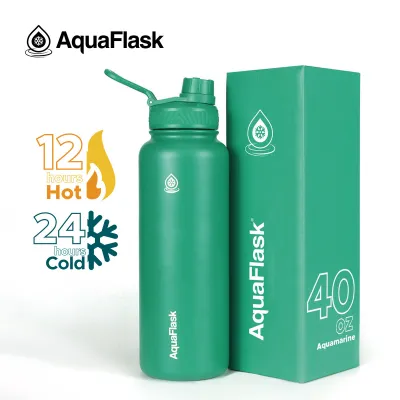
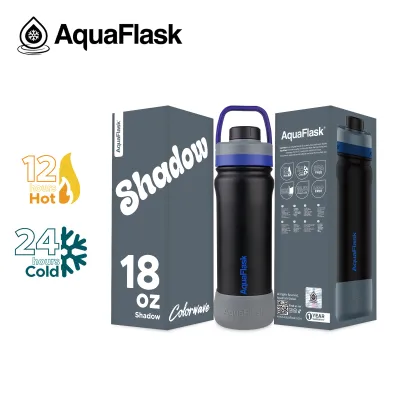
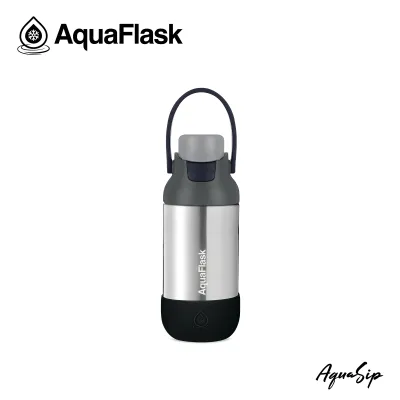
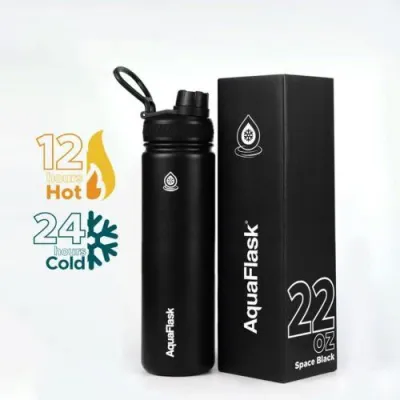
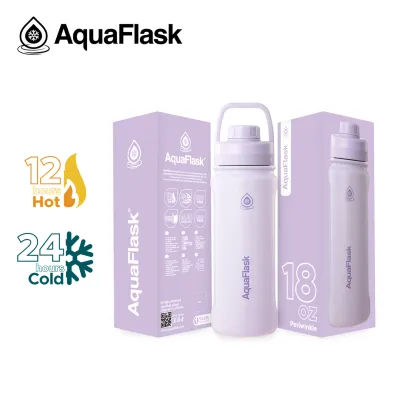
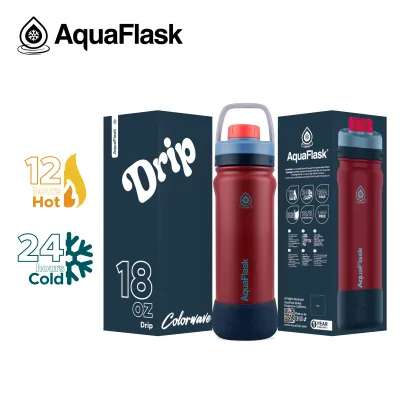
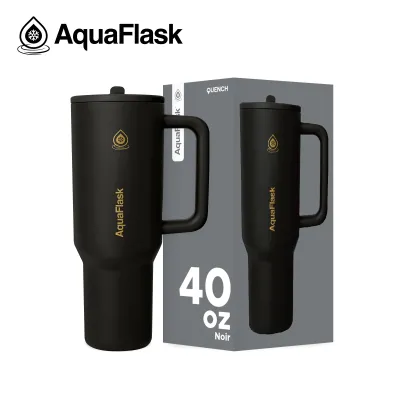
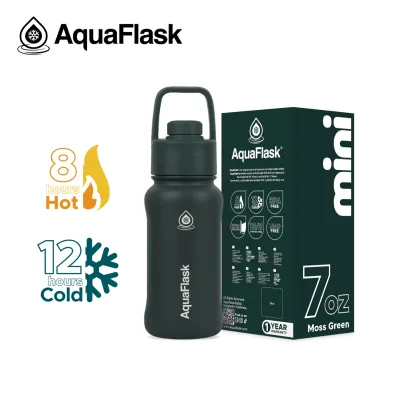
Prices are valid at publication and may change. Please refer to the product page for the latest price.
Your personal sweat rate and daily habits dictate how much water you actually need to carry. If you spend most of your day in an air-conditioned office, your immediate sweat loss might be low, but the dry air can still dehydrate you over several hours.
To determine the best bottle size, calculate your target intake against the number of times you are willing to refill your flask. For example, if you aim to drink two liters of water during your active hours, a smaller 18oz bottle will require nearly four full refills. Opting for a 32oz bottle cuts that requirement down to just two fills, while a 40oz bottle almost covers your entire target with a single refill.
Matching Aquaflask Sizes to Your Scenarios
The standard Aquaflask lineup—spanning 18oz, 24oz, 32oz, and 40oz—presents a clear trade-off between fluid volume and physical portability. As the capacity increases, the double-wall vacuum insulation that keeps your drinks cold also adds structural weight and width to the stainless steel container. Finding the right match requires looking closely at how each size fits into the specific environments of your daily routine.

Gym and Workout Sessions
Your fitness routine is a major factor in determining how much water you need to have on hand. During high-intensity cardio, heavy weightlifting, or functional fitness classes, you lose water quickly and need immediate access to cold fluids. A larger 32oz or 40oz bottle is highly practical for these sessions, as it holds enough water to keep you hydrated through an hour or more of intense exercise without forcing you to interrupt your momentum for a trip to the gym’s water station.
However, the physical layout of your workout space should also influence your choice. Larger bottles, particularly the 40oz model, have a wide base that rarely fits into the standard cup holders found on treadmills, stationary bikes, or elliptical machines. If you prefer keeping your bottle securely slotted into the machine rather than placing it on the floor, a slimmer 24oz bottle is often the more practical limit.
Grip and handling during active movement also matter. A fully filled 40oz bottle is heavy and can be awkward to hold with sweaty hands, especially if you are moving quickly between workout stations. If you prioritize a bottle that is easy to grab, lift, and drink from mid-workout, a 24oz or 32oz bottle paired with a silicone boot for extra grip offers a more secure and manageable handling experience.
Office and Desk Work
In a stationary office environment, the physical weight of the bottle becomes less of an issue once it is resting on your desk. Here, the primary goal is often productivity and convenience. A larger 32oz or 40oz Aquaflask is highly advantageous in an office setting because it minimizes the need to constantly walk to the pantry or water dispenser, allowing you to maintain your focus and workflow during busy work hours.
Despite the convenience of fewer refills, you must consider your physical desk space and storage. A wide 40oz bottle takes up a notable amount of desk real estate and can easily clutter a compact workstation, especially if you are balancing a laptop, external monitors, and paperwork. Additionally, you should verify if the bottle fits comfortably inside your office bag’s dedicated compartments or if it must be carried separately, which can be inconvenient if you already carry a laptop sleeve and lunch box.
Stability is another factor when keeping a large volume of liquid near expensive electronics. A tall, heavy bottle can pose a spill hazard if accidentally knocked over. While the double-wall construction prevents external condensation from pooling on your desk, a wider, lower-profile 32oz bottle with a protective silicone boot provides a more stable base than a top-heavy, fully filled smaller bottle or an overly tall container.
Daily Commute and Travel
For those who face a daily commute involving walking, riding buses, or navigating train transits, portability and carrying comfort are the most critical factors. Carrying a heavy, bulky bottle in your hand or on your shoulder for extended periods can quickly lead to fatigue. A fully filled 40oz bottle weighs significantly more than an 18oz or 24oz model, making it a demanding addition to your daily carry.
The physical dimensions of your bottle must align with your transit setup. Slimmer sizes like the 18oz and 24oz models are designed to slide easily into the side mesh pockets of standard backpacks or the interior compartments of tote bags. If you commute by car, these smaller diameters are also highly compatible with standard vehicle cup holders, ensuring your water stays secure and within reach while driving.
If you choose to carry a larger 32oz or 40oz bottle on your commute, you will likely need to carry it by its lid loop or store it inside the main compartment of your bag. This can displace other essentials and increases the risk of accidental leaks if the lid is not sealed perfectly. Balancing your hydration needs against the physical effort of transit usually makes the 24oz bottle the most practical limit for active commuters.
Cross-Scenario Compatibility: Can One Bottle Do It All?
If you want a single Aquaflask to transition seamlessly from your morning commute to your office desk, and finally to an evening gym session, you need a versatile middle-ground option. The 24oz and 32oz sizes stand out as the most adaptable compromises. The 24oz bottle offers excellent portability for the commute while still providing a decent volume of water, whereas the 32oz bottle leans toward better hydration capacity while remaining just compact enough to fit into larger backpack pockets.
For some users, attempting to force a single bottle into every scenario can lead to daily frustration. If your budget and storage space allow, owning two different sizes can be a highly practical alternative. You might keep a compact 18oz bottle specifically for your active commute and quick errands, while leaving a larger 40oz bottle permanently at your office desk or using it strictly for heavy gym days where maximum water volume is non-negotiable.
You can also significantly improve a single bottle’s versatility across different environments by utilizing official accessories. Adding a straw lid allows for quick, one-handed sipping during a drive or workout without needing to tilt the bottle. A paracord handle or a carry loop makes transporting larger sizes much easier during long walks, while a silicone boot protects the bottom from dents and reduces the metallic clanging noise when placing the bottle on quiet office desks.
Practical Checks Before You Buy
Before making your final decision, take a few minutes to perform some physical checks to ensure your chosen Aquaflask size fits your daily life. Start by measuring the diameter of your backpack’s side pockets, your car’s cup holders, or the bottle pockets in your favorite gym bag. Compare these measurements against the manufacturer’s specified base dimensions for each size to avoid the frustration of a bottle that does not fit where you need it to.
Next, consider the weight of the bottle when fully filled with water and ice. Stainless steel vacuum-insulated bottles are inherently heavy even when empty, and adding liquid increases that weight substantially. If you plan to carry the bottle in a tote bag or backpack during a long walking commute, test carrying a similar weight around your home to ensure it will not cause shoulder strain over time.
Finally, review the compatibility of your preferred lid style with the bottle size you are considering. While most standard wide-mouth lids fit across the main Aquaflask lineup, some specialized lids or color options may only be available for specific capacities. Checking these details beforehand ensures you get a bottle that matches both your functional needs and your personal style.
Frequently Asked Questions (FAQ)
Does the size of the Aquaflask affect its temperature retention?
Yes, the volume of liquid inside the bottle directly influences how long it stays cold. A larger, fully filled Aquaflask contains more thermal mass, which helps it maintain its cold temperature longer than a smaller bottle under the same conditions. Additionally, a bottle that is kept full has less internal air space, reducing the rate of heat transfer. To get the best performance, choose a size that you can keep relatively full throughout your day, and refer to the manufacturer’s specific insulation ratings for each capacity.
Which Aquaflask size is best for children or teenagers?
For younger users, the 18oz size is generally the most suitable option. This capacity is lightweight enough when fully filled to avoid putting excessive strain on a child’s back when carried in a school backpack. The smaller diameter of the 18oz bottle is also much easier for smaller hands to grip securely, reducing the likelihood of accidental drops. When selecting a bottle for a student, always check that the filled weight is manageable and that the bottle fits easily into their standard school bag side pockets.
Community discussion
Share your experience or ask a question. Comments are reviewed before publication.