
The Short Answer: Floating Vests in Open Water
When planning a family trip to a beach resort or preparing for an island-hopping adventure, ensuring your child’s safety in the water is paramount. Many parents look at a standard floating vest for kids and assume it provides adequate protection for any water activity. However, standard floating vests—often marketed as swim aids or swim vests—are generally not safe or sufficient for open water environments.
Open water presents unpredictable hazards that differ vastly from the calm, controlled environment of a swimming pool. Sudden waves, strong tidal currents, rip tides, and rapid depth changes can quickly overwhelm a child wearing a basic swim aid. These environments demand certified life jackets, also known as Personal Flotation Devices (PFDs), alongside constant, active adult supervision. A standard recreational floating vest should never be used as a substitute for a certified life jacket when swimming in the ocean, lakes, or rivers.
Swim Aids vs. Life Jackets: Understanding the Critical Difference
To make an informed safety decision, parents must understand that flotation gear falls into two distinct categories: recreational swim aids and life-saving devices. Confusing these two categories is one of the most common and dangerous mistakes a parent can make.
Products mentioned in this guide
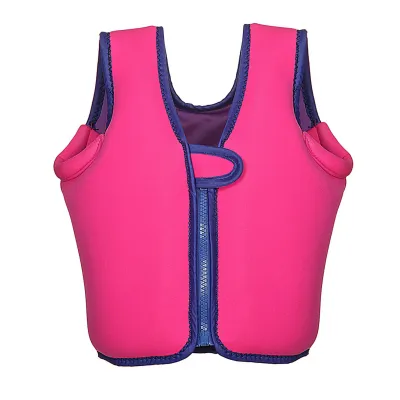
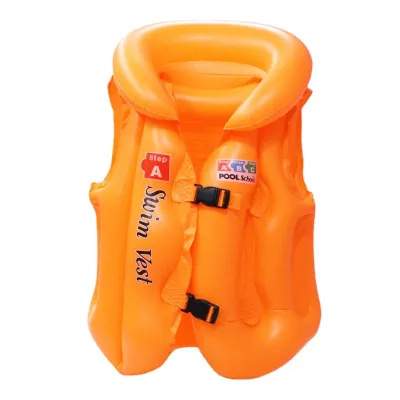
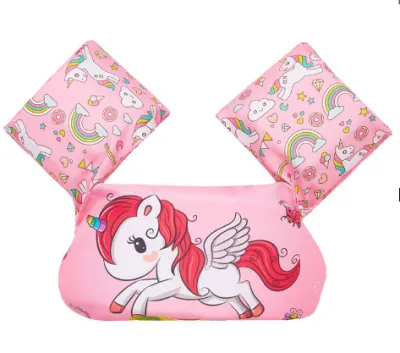
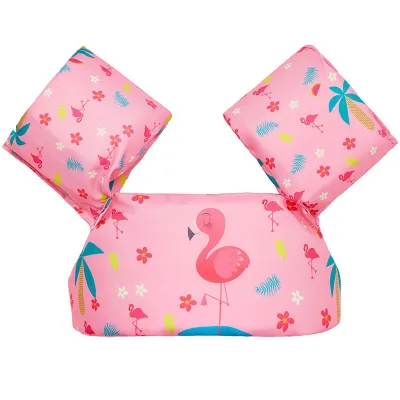
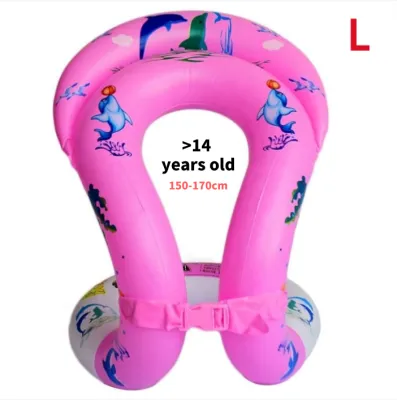

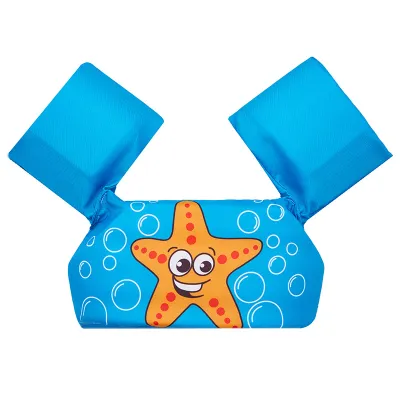
Prices are valid at publication and may change. Please refer to the product page for the latest price.

Recreational swim aids, such as standard floating vests, puddle jumpers, and inflatable arm bands, are designed solely to assist with water confidence. These products help children maintain a natural swimming position while learning to kick and paddle in calm, shallow water. However, they lack the buoyancy distribution required to save a life in an emergency. If a child becomes exhausted, panics, or loses consciousness, a standard swim aid will not guarantee that the child is turned face-up with their airway clear of the water. In fact, some swim vests can keep a struggling child in a vertical or face-down position, making it difficult for them to breathe.
In contrast, certified life jackets (PFDs) are highly engineered safety devices. They are designed with specific buoyancy distribution, often featuring extra flotation material in the front and a supportive collar behind the head. This design is specifically calculated to roll an unconscious or exhausted wearer onto their back, keeping their chin and mouth elevated well above the water surface. Certified life jackets undergo rigorous testing to ensure they perform reliably under turbulent conditions, providing the necessary buoyancy to keep a child afloat without active effort on their part.
When shopping for flotation gear, it is vital to inspect the product packaging and the interior lining of the vest itself. Legitimate swim aids are legally required to carry warning labels, which often read: “Not a life-saving device” or “Use only under constant competent supervision.” If you see these disclaimers, the product is classified as a toy or a swim training tool, not safety equipment. Never rely on these items to protect your child in open water where conditions can change in an instant.
Matching the Gear to the Water Environment
Choosing the right flotation gear depends heavily on where your child will be entering the water. Different aquatic environments present unique physical forces, visibility levels, and rescue response times, all of which dictate the type of gear required.
Pools and Calm, Controlled Water
Swimming pools at home, in residential communities, or at local resorts represent the primary environment where a standard floating vest for kids is appropriate. In these shallow, flat-water settings, there are no currents, waves, or hidden underwater hazards to contend with.
In a pool, a swim vest serves as an excellent tool for swim practice, helping children build muscle memory and water confidence. Because rescue is immediate and the water is clear, the lower buoyancy of a swim aid is acceptable, provided that an adult is practicing “touch supervision.” This means a responsible adult must remain in the water, strictly within arm’s reach of the child at all times, ready to intervene instantly if the child slips or panics.
Beaches, Rivers, and Open Water
The natural waters of the Philippines, from the sandy shores of Boracay and Batangas to local rivers and lakes, present a completely different set of challenges. Open water is dynamic, unpredictable, and highly powerful.
Sudden drop-offs can plunge a wading child into deep water instantly. Rip currents can pull a swimmer away from the shore faster than an adult can swim, while waves can crash over a child’s head, causing them to swallow water and panic. In these environments, standard floating vests fail because they can easily slip off, shift upward over a child’s face, or fail to provide enough buoyancy to keep their head above turbulent waves. For any activity along the beach, in rivers, or near open water, a properly fitted, certified life jacket is mandatory to ensure the child remains safely afloat even if swept away by a current.
Boats and Watercraft
Whether you are boarding a motorized bangka for an island-hopping tour, riding a ferry, or participating in water sports like jet skiing, open-water vessels carry inherent risks of capsizing or passenger falls.
In these scenarios, standard swim vests and puddle jumpers are strictly unsafe and often violate maritime safety regulations. If a vessel encounters trouble or a child falls overboard, they may be thrown into deep, rough water far from immediate help. Maritime regulations require every passenger, especially children, to wear a properly fitted, certified life jacket. These life-saving devices are designed to keep a child floating safely for extended periods, making them visible to rescuers and keeping their airways clear of water while awaiting assistance.
How to Verify Your Child's Flotation Gear
Before letting your child near the water, you must perform a thorough safety inspection of their flotation gear. Relying on a vest without verifying its condition, fit, and certification can put your child at serious risk.
To verify your child’s gear, start by reading the safety label printed on the inside of the vest. Look for official certification marks from recognized maritime or safety standards organizations, such as the United States Coast Guard (USCG) approval, European CE marks, or local Philippine Coast Guard compliance indicators. If the label only contains recreational warnings or lacks any official safety certification stamp, the vest is a swim aid and should not be used in open water.
Next, perform the “shoulder lift test” to check the fit of the vest. Put the life jacket on your child, secure all zippers, buckles, and straps snugly, and then lift the jacket firmly by the shoulder straps. If the jacket slides up over your child’s chin, ears, or nose, it is too large or too loose. A properly fitted life jacket should stay securely in place, keeping the child’s head supported without riding up.
You must also inspect the physical condition of the gear before every trip to the water. The intense tropical sun, high humidity, and saltwater exposure in the Philippines can quickly degrade materials. Check for torn straps, cracked or broken plastic buckles, rusted or stuck zippers, and frayed stitching. Additionally, squeeze the foam panels to ensure they have not become waterlogged, crushed, or degraded, as damaged foam loses its buoyancy.
Finally, always verify that the gear matches your child’s current weight and chest size, rather than relying on their age or height. Children grow quickly, and a life jacket that fit perfectly last summer may now be too small to provide adequate buoyancy. Check the manufacturer’s weight range printed on the label and use a scale to confirm your child falls safely within those limits before heading out.
Beyond the Gear: Essential Supervision Rules
While choosing the correct life jacket is a critical step in water safety, equipment alone can never replace active human supervision. Flotation devices are safety tools, not babysitters, and they can fail if not combined with vigilant adult behavior.
The most important rule of water safety is “touch supervision.” For infants, toddlers, and weak swimmers, a supervising adult must always be in the water within arm’s reach. This close proximity ensures that if a child slips, flips over, or panics, the adult can intervene within seconds. Drowning can occur quickly and silently, often without the dramatic splashing or screaming depicted in movies.
Supervising adults must completely avoid distractions while children are in or near the water. This means putting away mobile phones, books, and tablets, and refraining from socializing or consuming alcohol. A child can slip underwater in the time it takes to read a single text message or reply to a quick notification.
During group gatherings, beach outings, or family pool parties, it is easy to assume someone else is watching the kids. To prevent this dangerous lapse in supervision, designate a specific adult as the “water watcher” for a set shift, perhaps 15 to 20 minutes. This person’s sole responsibility is to watch the water without any interruptions, handing off the duty to another designated adult only when their shift is over.
Lastly, invest in formal swimming lessons and water survival training for your child as early as appropriate. Learning how to float on one’s back, tread water, and control breathing are invaluable skills that stay with a child for life. Flotation gear should be viewed as a temporary aid to help them learn, not a permanent substitute for true swimming ability and water safety knowledge.
Frequently Asked Questions (FAQ)
Can my child wear a puddle jumper at the beach?
No, your child should not wear a puddle jumper at the beach. Puddle jumpers are classified as swim aids and are designed strictly for calm, controlled environments like swimming pools. The unpredictable waves, undercurrents, and tidal forces at the beach can easily shift a puddle jumper out of place, pull it off the child’s arms, or force the child into a face-down position. For any beach or open water activity, always use a certified life jacket.
At what age can a child stop wearing a life jacket in open water?
There is no universal age at which a child can safely stop wearing a life jacket in open water. Safety depends on the child’s physical stamina, actual swimming proficiency, the water conditions, and local maritime laws. Even strong teenage swimmers should continue to wear certified life jackets when boating, jet skiing, or swimming in areas with strong currents, deep water, or low visibility, as open water hazards can exhaust even experienced swimmers.
Are inflatable floating vests safe for kids?
Inflatable floating vests are not recommended for open water safety because they carry a high risk of failure. They can easily puncture on sharp rocks, shells, or boat fittings, and they can leak air or deflate unexpectedly. For any environment outside of a shallow, supervised swimming pool, foam-filled certified life jackets are significantly safer and more reliable, as they provide permanent buoyancy that cannot be compromised by a puncture.
Community discussion
Share your experience or ask a question. Comments are reviewed before publication.