
Choosing the right wheeled footwear depends on whether you want a dedicated workout on paved park paths, a fun way to cruise around local commercial centers, or a compact option that straps onto your favorite sneakers. While traditional inline skates offer the structural support needed for fitness and speed, attachable shoe skates provide a flexible, budget-friendly alternative for growing feet, and roller shoes offer the ultimate convenience of transitioning from walking to rolling with a simple step. Matching your choice to your skill level, local terrain, and skating goals ensures a safe and enjoyable experience on the pavement.
Comparing Attachable Skates, Inline Skates, and Roller Shoes
Attachable shoe skates, often referred to as roller skates for shoes, feature adjustable frames and strap-on mechanisms designed to clamp onto your existing footwear. These are highly popular for casual recreation because they adjust to fit multiple shoe sizes, making them a practical option for families or sharing. However, because they rely on the structure of your everyday shoes, they have clear limits when it comes to high-speed stability or rough outdoor surfaces.
Traditional inline skates utilize a dedicated, integrated boot that completely encloses your foot and ankle. This rigid or semi-soft boot design provides superior ankle stability, allowing for efficient power transfer and precise control over the wheels. They are built specifically for fitness, distance skating, or technical maneuvers, making them the standard choice for anyone looking to develop serious skating skills.
Products mentioned in this guide
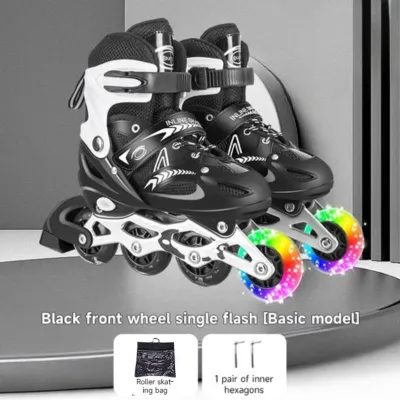
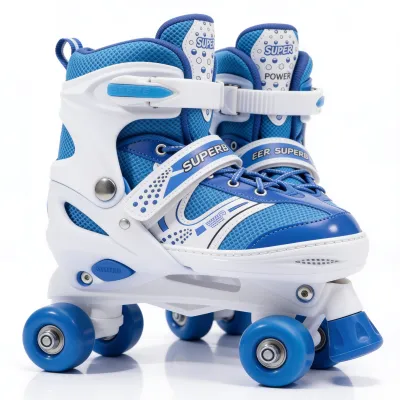
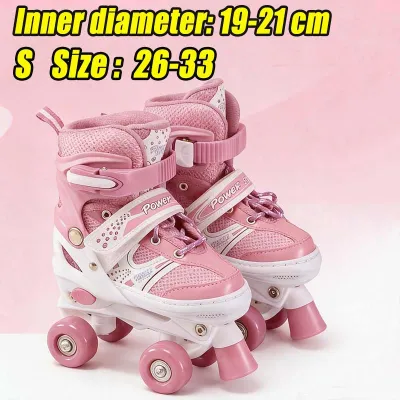
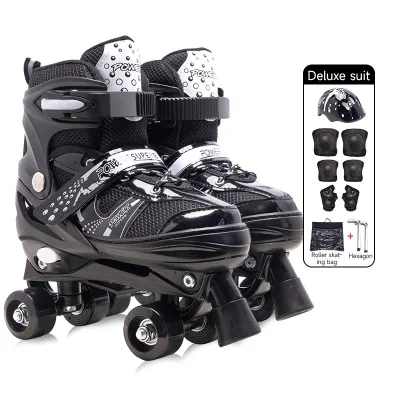
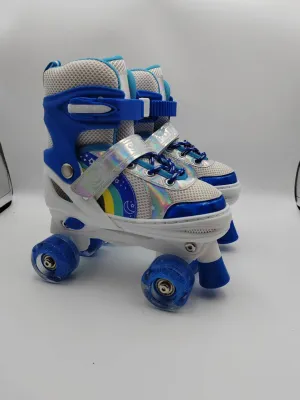
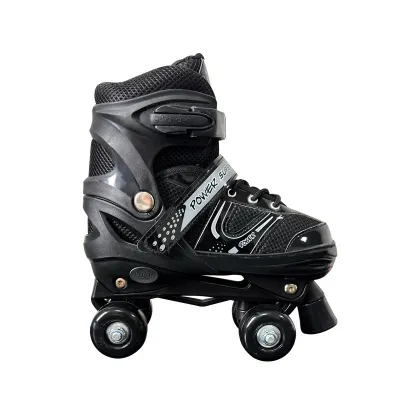
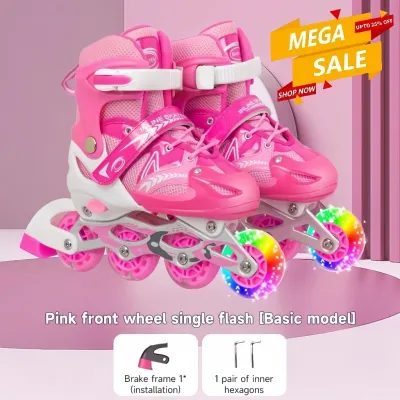
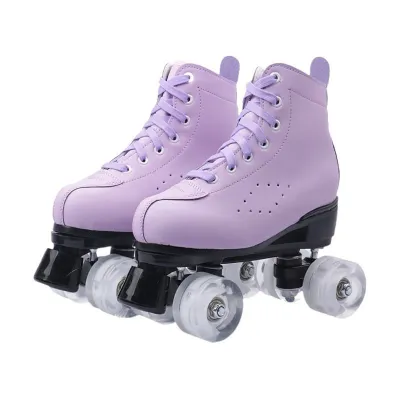
Prices are valid at publication and may change. Please refer to the product page for the latest price.
Roller shoes, or retractable-wheel shoes, look like standard sneakers but house one or more wheels recessed into the heel of the sole. Some models feature a button-activated retractable mechanism, while others require you to manually insert or remove the wheels using a small tool. They are designed for casual cruising on smooth, flat indoor surfaces like mall floors or polished concrete, offering unmatched convenience for quick transitions between walking and rolling.
Key Decision Dimensions and Feature Trade-offs
Ankle support is the most critical factor for safety and control, especially on uneven outdoor surfaces. Dedicated inline skates feature high-cut cuffs made of rigid plastics that lock the ankle in place, preventing lateral rolling and reducing fatigue during long sessions. In contrast, attachable skates and roller shoes rely entirely on the structural integrity of your regular shoes, which often lack the stiffness required to support your ankles under lateral force.

Portability and convenience dictate how easily you can integrate skating into your daily routine. Roller shoes excel here, as they require no extra gear to carry; you simply walk when the wheels are retracted or removed. Attachable skates are also highly portable, fitting easily into a backpack once unstrapped from your shoes. Inline skates, with their bulky boots and heavy frames, are the most cumbersome to carry and require you to bring a separate pair of shoes along if you plan to walk at your destination.
Skill progression and performance limits vary widely across these three categories. Inline skates are the only option that allows you to progress to advanced disciplines like urban freeskating, slalom, or speed skating, thanks to their high-quality bearings, durable frames, and replaceable wheels. Attachable skates and roller shoes are strictly limited to basic forward rolling and gentle turns, as their structural designs cannot safely withstand the impact of jumps, slides, or high-speed cornering.
| Feature | Attachable Shoe Skates | Traditional Inline Skates | Roller Shoes |
|---|---|---|---|
| Footwear Requirement | External shoes required | Integrated boot | Built-in shoe |
| Ankle Support | Low (depends on shoe) | High (molded cuff) | Low (standard sneaker) |
| Portability | High (fits in backpack) | Low (bulky to carry) | Maximum (worn as shoes) |
| Wheel Configuration | Typically 2 to 4 wheels | 3 to 4 inline wheels | 1 or 2 heel wheels |
| Primary Terrain | Smooth concrete, patios | Roads, parks, rinks | Polished indoor floors |
| Wheel Replacement | Limited options | Standardized replacement | Proprietary or none |
Which Type Should You Choose Based on Your Goals?
Choose attachable shoe skates if you want an occasional, low-commitment skating experience without investing in dedicated footwear. They are excellent for casual play in spacious garages, smooth driveways, or quiet neighborhood courts. Because they adjust across several sizes, they are also a highly economical choice for growing children who might otherwise outgrow dedicated boots within a single season.
Choose inline skates if you plan to skate for fitness, cover longer distances, or want to master advanced skating techniques. If your goal is to join weekend skate groups along parkways or navigate paved outdoor tracks, the ankle support and wheel quality of inline skates are indispensable. They provide the necessary control to handle minor road vibrations, small debris, and gentle slopes safely.
Choose roller shoes if you prioritize seamless transitions and casual, short-distance fun. They are ideal for active individuals who want to roll through smooth commercial spaces, school campuses, or paved plazas without the hassle of changing footwear. Keep in mind that they require a specific heel-toe balance to roll, making them more of a fun novelty than a tool for athletic conditioning.
Neither option may fit if your goals involve high-impact extreme sports, aggressive park skating, or professional-grade speed training. Aggressive inline skating on ramps and rails requires specialized boots with grind plates and reinforced frames. Similarly, competitive speed skating demands low-cut carbon fiber boots and oversized wheels that none of these recreational options can provide.
Fit, Safety, and Pre-Purchase Verification
Before purchasing, verifying proper fit and compatibility is essential to prevent discomfort and injury. For attachable skates, check the manufacturer’s maximum weight limit and the specific shoe width compatibility, as bulky sneakers or wide-soled running shoes may not sit securely in the binding. For traditional inline skates, measure your feet in centimeters and consult the brand’s specific sizing chart, as skate sizes often differ significantly from standard shoe sizes.
Regardless of the skating type you choose, protective gear is non-negotiable for safety. A properly fitted helmet, wrist guards, knee pads, and elbow pads should always be worn, even for short sessions on roller shoes. Falling is a natural part of the learning process, and high-quality wrist guards are especially critical for preventing fractures when instinctively reaching out during a fall. Equipment cannot replace training, physical preparation, and sound judgment.
Regular mechanism inspection is vital to ensure your equipment remains safe to use over time. For attachable skates, inspect the strap buckles, tension ratchets, and frame adjustment screws before every session to ensure nothing has vibrated loose. For roller shoes, check that the spring-loaded wheel cavities are clear of dirt, small stones, or hair that could jam the retraction mechanism or cause a wheel to lock up unexpectedly. In the humid tropical climate of the Philippines, sweat and moisture can accelerate rust on metal bearings and buckles, making regular drying and cleaning essential.
Establish clear stop conditions to protect yourself from mechanical failures. If you observe deep cracks in plastic frames, stripped axle threads, frayed straps, or wheels that do not spin freely after cleaning, halt use immediately. Do not attempt to ride on compromised equipment; instead, consult the manufacturer’s manual or contact a qualified local skate technician for replacement parts or repair advice. When planning your budget, remember to allocate a portion of your funds in ₱ for high-quality protective gear rather than spending your entire budget on the skates alone.
Frequently Asked Questions (FAQ)
Can attachable skates fit over any type of everyday footwear?
No, attachable skates require specific footwear to function safely and securely. You must wear closed-toe, flat-soled shoes with a sturdy upper, such as classic court sneakers or skate shoes, to provide a stable base for the straps. Avoid wearing sandals, slip-ons, canvas shoes with thin soles, or boots with thick, irregular heels, as these can slip out of the bindings or cause painful pressure points. Always check the manufacturer’s sizing charts and strap clearance guidelines before attempting to ride.
Do retractable-wheel shoes require special maintenance compared to standard inline skates?
Yes, retractable-wheel shoes require unique maintenance due to their spring-loaded heel cavities. Because these cavities sit close to the ground, they easily collect dust, mud, and small pebbles, which can jam the locking mechanism or prevent the wheel from retracting fully. You should regularly clear out debris using a small brush or compressed air, and consult the product manual for specific cleaning and lubrication instructions. Unlike standard inline skates, which use open frames that are easy to wipe down, roller shoes must be kept dry to prevent the internal springs and locking pins from rusting.
Community discussion
Share your experience or ask a question. Comments are reviewed before publication.