
An auto incline feature on a treadmill allows you to change the slope of the running deck electronically while moving, without needing to pause your workout. This functionality transforms indoor cardiovascular training by automatically simulating real-world terrain and adjusting intensity on the fly.
If you are shopping for home fitness equipment in the Philippines, deciding whether to invest in a motorized option like a My Hi auto incline treadmill depends heavily on your training style and budget. While manual incline models require physical adjustments before you start, motorized incline systems offer seamless transitions that keep your heart rate in the target zone.
This feature is particularly valuable in tropical climates where high humidity, afternoon heat, or sudden monsoon downpours make outdoor running impractical. An auto incline system allows you to replicate the physical challenge of outdoor hills in the comfort of an air-conditioned room.
Products mentioned in this guide
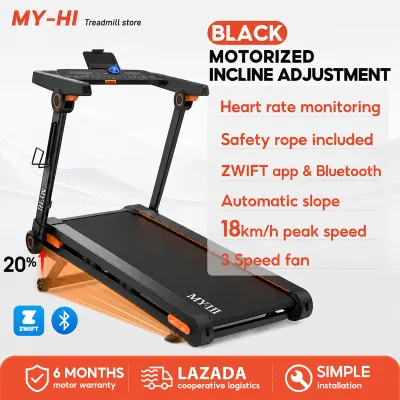
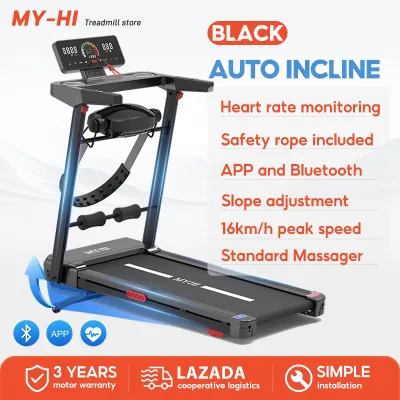
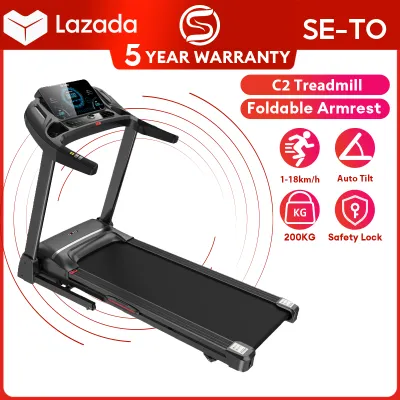
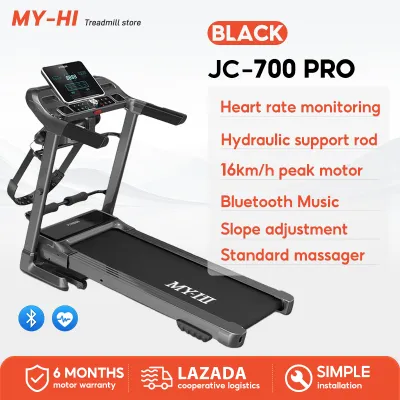
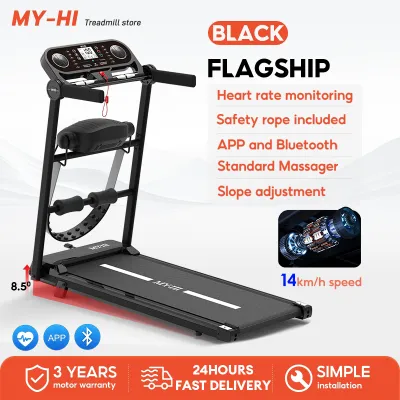
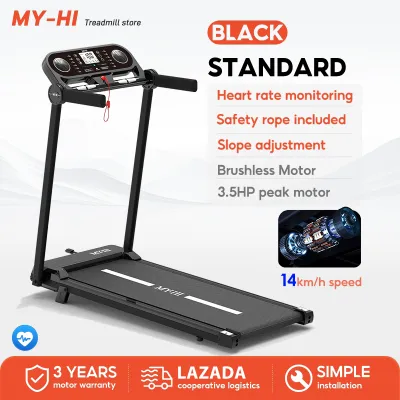
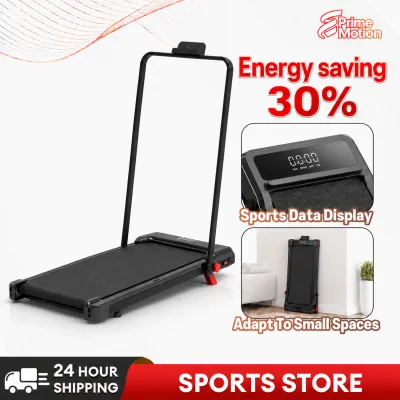
Prices are valid at publication and may change. Please refer to the product page for the latest price.
What Auto Incline Actually Means on a Treadmill
To understand the value of auto incline, it is helpful to look at how treadmill decks adjust their angle. On an auto incline treadmill, a dedicated lift motor receives signals from the console to raise or lower the front of the deck.
This adjustment happens in real-time while you are moving. When you press a button, turn a dial, or follow a pre-programmed workout, the deck transitions smoothly from a flat run to a steep climb without breaking your stride.
In contrast, manual incline systems are entirely mechanical. To change the angle on a manual treadmill, you must stop the belt, step off the machine, and physically adjust a pin, lever, or crank at the base.
Once set, you must complete your entire session at that single angle unless you are willing to interrupt your workout again. This manual process can disrupt your momentum and lower your average heart rate during interval sessions.
The integration of auto incline with modern fitness technology is where the feature truly shines. Built-in workout programs can automatically adjust the deck’s slope to simulate rolling hills or high-intensity interval training (HIIT) profiles without any manual input.
How Incline Ranges Change Your Workout Intensity
Adjusting the angle of your treadmill deck fundamentally changes the biomechanics and physiological demands of your workout. Even a small change in percentage can shift which muscles are targeted and how hard your cardiovascular system must work.

Low Incline (1% to 3%) A slight grade of 1% to 3% is commonly used by runners to simulate the natural wind resistance and terrain variations of outdoor running. Running on a completely flat 0% deck can feel artificially easy because the moving belt assists your stride. Setting the deck to a 1% incline closely mimics the effort required on a flat outdoor road, making it ideal for warm-ups, active recovery days, and steady-state cardio.
Moderate Incline (4% to 7%) Stepping up to a moderate incline of 4% to 7% significantly elevates your heart rate and increases energy expenditure without requiring you to increase your speed. As the slope increases, your body works harder against gravity, shifting the primary muscle load from your quadriceps toward your glutes, hamstrings, and calves. This is an excellent zone for building lower-body endurance and burning more calories in a shorter period.
High Incline (8% to 15%+) A high incline of 8% to 15% or more transitions your workout into a power-walking or hiking simulation. This steep grade heavily recruits your posterior chain—specifically your glutes and calves—and requires active engagement of your core to maintain stability. While high-incline walking is exceptional for building strength, it demands careful attention to posture. Leaning forward too aggressively or gripping the handrails tightly can transfer strain to your lower back and place excessive tension on your Achilles tendons.
Joint Impact Considerations One of the most significant benefits of incline training is its impact profile. Walking at a higher incline allows you to achieve a high cardiovascular intensity similar to running, but with much lower ground reaction forces. When you walk on an incline, your feet land at a shallower angle relative to the deck, which reduces the jarring impact on your knees and ankles. However, you must maintain an upright posture and resist the urge to lean heavily on the handrails to experience these joint-saving benefits.
Choosing Between Manual and a My Hi Auto Incline Treadmill
When shopping for fitness equipment, balancing features against your budget is crucial. Deciding between a manual adjustment system and a motorized option like a My Hi auto incline treadmill comes down to how you plan to train and how much convenience you require.
| Feature | Manual Incline Treadmill | Auto Incline Treadmill (e.g., My Hi Auto Incline Treadmill) |
|---|---|---|
| Adjustment Method | Physical pins, levers, or cranks adjusted while stopped | Motorized lift system controlled via console buttons or apps |
| Program Integration | None; workouts remain at a fixed angle | Dynamic; automatically syncs with terrain programs and HIIT profiles |
| Mid-Workout Convenience | Low; requires stopping the belt and stepping off | High; seamless, hands-free adjustments mid-stride |
| Typical Cost Tier | Budget-friendly (typically under ₱15,000) | Mid-range to premium (typically ₱20,000 to ₱50,000+) |
Who Should Choose Auto Incline An auto incline treadmill is highly recommended for users who want to follow interactive training applications, execute structured interval workouts, or simulate real-world running routes. If you enjoy high-intensity interval training (HIIT), where you rapidly switch between flat sprints and steep climbs, a motorized system is essential. It allows you to maintain your momentum and keep your heart rate in the target zone without disruptive pauses. It is also the ideal choice for multi-user households where different family members prefer different baseline angles for their workouts.
Who Can Skip It If your fitness routine consists primarily of flat walking, light jogging at a consistent pace, or steady-state cardio where you set a single moderate incline and leave it there, a manual incline treadmill may suffice. Casual walkers and those on a strict budget can save a significant amount of money by opting for a manual model. If you do not mind stopping your workout to adjust the pin at the base of the machine, the manual route offers a cost-effective path.
Is the Price Premium for Auto Incline Worth It?
The price difference between manual and automatic incline treadmills is driven by mechanical and electronic complexity. An auto incline system requires a secondary lift motor, robust steel pivot hinges, reinforced deck supports, and complex control boards. In the Philippine market, these components typically elevate the price of the machine into the mid-to-high tier, often starting around ₱20,000 and going up significantly for commercial-grade models.
To evaluate whether this premium is worth your investment, consider your long-term fitness consistency. Workout boredom is one of the primary reasons home fitness equipment ends up unused. The ability to run virtual trails, participate in trainer-led workouts that automatically control your machine, or challenge yourself with random hill profiles can provide the variety needed to sustain a daily exercise habit.
However, added mechanical complexity also introduces practical considerations. Motorized lift systems add overall weight to the treadmill, making it harder to move around your home, and represent additional moving parts that can wear out over time. When purchasing an auto incline model, it is wise to check the manufacturer’s warranty coverage specifically for the frame, drive motor, and incline motor, and to ensure that local customer service and replacement parts are accessible.
Ultimately, if your budget is tight, it is usually better to prioritize a high-quality, durable drive motor and a sufficiently long running belt over an auto incline feature. But if your baseline budget allows for a reliable motor and you want a dynamic training experience, investing in an auto incline model is highly justified.
Frequently Asked Questions (FAQ)
Does walking on an incline burn more calories than flat walking?
Yes, walking on an incline burns more calories than walking on a flat surface at the same speed. When you increase the slope of the treadmill, your body must work against gravity to lift your body weight with every step.
This heightens the mechanical work required by your large lower-body muscles, which increases your oxygen consumption and elevates your heart rate. The exact difference in calorie burn depends on variables such as your body weight, walking speed, and the specific incline percentage.
Rather than relying on generic calorie calculators, focus on the fact that incline walking allows you to achieve a high-intensity workout and greater energy expenditure without the joint impact associated with running faster.
Can standard auto incline treadmills be used for downhill training?
Most standard home treadmills equipped with auto incline only offer positive angles, meaning they can only adjust upward to simulate uphill climbing. Downhill training, which requires a negative incline (decline), is a specialized feature typically found on premium commercial-grade treadmills.
Decline motors require different structural engineering and safety mechanisms to ensure the belt runs smoothly when sloping downward. If downhill training is a priority for your athletic preparation—such as training for a trail race with significant descents—you will need to verify that the specific model you are purchasing explicitly lists a negative incline or decline range.

Community discussion
Share your experience or ask a question. Comments are reviewed before publication.