
Before letting your baby use a swimming float, you must verify that it features multiple independent air chambers, a secure seat with smooth leg openings, a wide stable base, and a physical fit that matches your child’s current weight and developmental stage. In tropical climates where resort outings and backyard pool sessions are common year-round activities, water safety is a paramount concern for parents. While swimming floats can introduce infants to the joy of water, they are recreational toys rather than safety devices. No float can ever replace constant, touch-distance adult supervision or a certified life jacket.
Critical Design and Structural Safety Features
A primary safety feature to check is the presence of multiple independent air chambers. High-quality baby floats typically feature two or more separate inflation zones, often designed as concentric rings, each with its own safety valve. This design provides critical redundancy; if a sharp object or a rough pool edge punctures one chamber, the remaining inflated chamber keeps the float buoyant long enough for you to safely lift your baby out of the water. When inspecting a float, locate each valve to confirm that the chambers are truly separate and not just decorative sections of a single air pocket.
The seat design determines how securely your baby sits in the water. Look for a style that features a reinforced, diaper-style seat rather than a simple strap. The leg holes must be small enough to prevent the baby from slipping through the bottom, yet wide enough to avoid pinching or chafing their delicate skin. In warm, humid weather, friction against cheap plastic can quickly cause painful skin irritation, so prioritize seats with smooth, rounded edges or fabric-covered borders.
Products mentioned in this guide
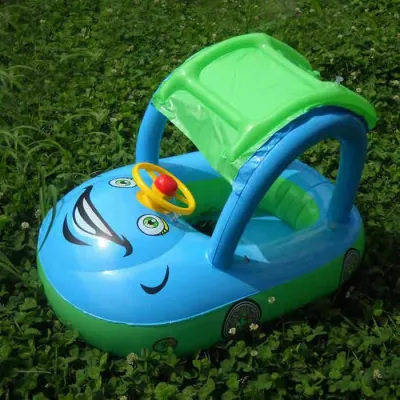

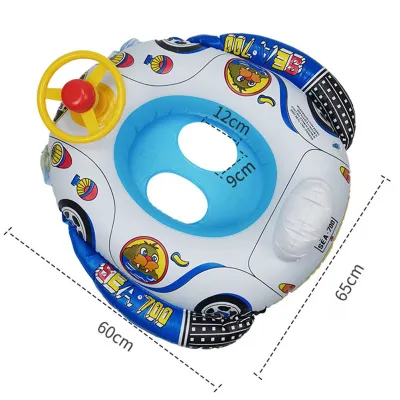
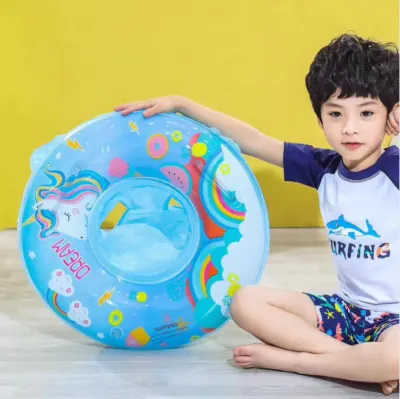
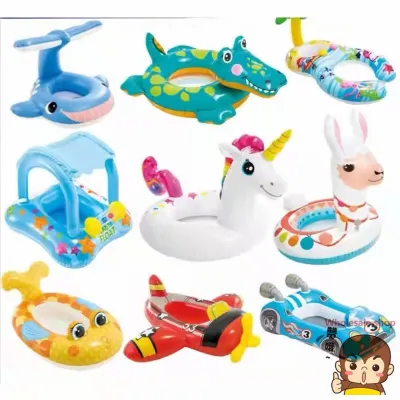

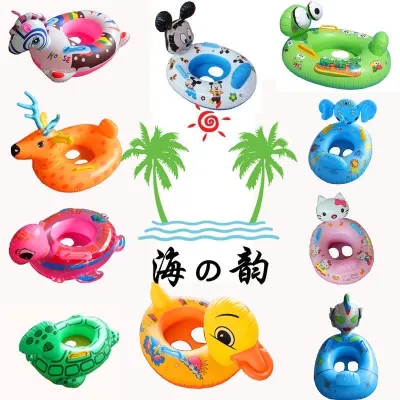
Prices are valid at publication and may change. Please refer to the product page for the latest price.
A safe baby float must have a wide, low-profile base that resists tipping. Floats with a high center of gravity or a narrow diameter are highly unstable and can easily capsize if the baby leans forward or to the side. Look for designs that position the baby’s body low in the water, which naturally lowers the center of gravity and increases stability. Additionally, verify that the float includes sturdy, non-slip handles or grab rings. These points allow you to maintain a secure grip on the float at all times, especially when navigating gentle ripples or moving around the pool.
The durability of the float depends heavily on its material thickness and seam construction. Inspect the product specifications for heavy-duty, puncture-resistant materials such as thick PVC or fabric-coated vinyl. Run your fingers along the welded seams to check for rough, sharp edges that could scratch your baby, as well as any signs of separation or weak bonding. High-quality manufacturing processes produce smooth, flat seams that can withstand the internal pressure of inflation and the external forces of active water play.
Verifying Age, Weight, and Fit Specifications
Every baby swimming float is engineered for a specific developmental stage and weight range. Never rely on general age recommendations alone, as babies grow at vastly different rates. Before purchasing or using a float, locate the manufacturer’s printed safety label on the product or packaging to verify the exact weight limits. Placing a baby who is too light or too heavy into a float compromises its buoyancy and balance, significantly increasing the risk of a sudden capsize.

A proper fit is essential to keep your baby upright and secure. Before entering deep water, perform a dry fit check on a clean, flat surface or in a very shallow wading pool. Place your baby in the seat and observe how they sit. The seat should support their torso comfortably, keeping their chest well above the water line while ensuring their legs cannot slip out of the openings. If the seat is too loose, your baby may slump forward or slide downward, which can restrict their breathing or submerge their face.
Once in the water, closely observe how the float behaves under your baby’s weight. The float should sit level on the water’s surface. If your baby leans heavily to one side, or if the float rides unusually high in the water, the balance is compromised. This imbalance often indicates that the baby is either too light to stabilize the float or too tall, which raises the center of gravity. If you notice any tilting or instability, remove your baby from the float immediately and discontinue its use.
Recognizing Potential Hazards and Usage Boundaries
Even the most stable floats can capsize under certain conditions. Sudden movements by the baby, such as kicking vigorously or reaching for a toy, can shift the weight distribution rapidly. External factors like waves from older children splashing nearby, wind gusts, or pool filtration currents can also destabilize the float. Understanding these risks highlights why you must never leave a baby unattended, even for a split second, as a float can flip silently and trap a child face-down in the water.
It is vital to distinguish recreational baby swimming floats from certified Personal Flotation Devices (PFDs) or life jackets. Floats are designed solely to assist with water familiarity and play under active supervision; they do not possess the self-righting capabilities or safety certifications of life jackets. If you are on a boat, near open water, or in any situation where a fall into the water is possible, your baby must wear a properly fitted, certified life jacket rather than sitting in a recreational float.
Baby swimming floats are strictly intended for calm, controlled environments. Safe usage is limited to shallow, quiet residential or resort pools where there are no active currents, waves, or sudden depth changes. Never use these floats in open water, such as lakes, rivers, or the ocean. Tidal currents, sudden swells, and wind can quickly sweep a lightweight float away from your reach, making rescue operations extremely difficult and dangerous.
Spending time in the water under the intense tropical sun poses a high risk of sunburn and dehydration for infants. When selecting a float, consider models that feature a detachable, adjustable canopy with a high Ultraviolet Protection Factor (UPF) rating. However, a canopy does not offer complete protection from reflected water glare. Limit your baby’s pool time during peak sun hours, typically between 10:00 AM and 4:00 PM, and regularly check their skin for signs of overheating, such as flushing or rapid breathing.
Pre-Use Inspection and Maintenance Checklist
Establish a strict pre-use inspection routine before every single swim session. Fully inflate the float and submerge it in water, or apply a mild soapy water solution to the surface, to check for escaping air bubbles that indicate slow leaks. Pay close attention to the areas around the inflation valves and the welded seams, as these are the most common failure points. Ensure that the safety valves push flush into the float body after inflation so they cannot be accidentally pulled open during play.
Achieving the correct inflation level is a delicate balance. Over-inflating the float stretches the seams, making them highly susceptible to popping under the heat of the sun or the weight of the baby. Conversely, under-inflation reduces the float’s buoyancy and structural rigidity, causing it to sag and increasing the likelihood of tipping. The float should feel firm to the touch but still have a slight amount of give when pressed with your thumb.
Proper maintenance extends the lifespan of the float and prevents health hazards. After each use, rinse the float thoroughly with clean, fresh water to remove chlorine, salt, sunscreen residues, and pool chemicals. These substances can degrade the plastic over time, making it brittle and prone to cracking. Allow the float to dry completely in a shaded, well-ventilated area before deflating and storing it. Storing a damp float in a humid environment promotes the growth of mold and mildew, which can irritate your baby’s skin and respiratory system.
Knowing when to retire a baby float is critical for safety. Inspect the material regularly for signs of wear, such as fading from sun exposure, stiffness, or sticky patches, which indicate that the plastic is breaking down. If you discover a persistent slow leak, a separating seam, or a damaged safety valve, do not attempt to patch or repair the float for continued use. Discard the compromised float immediately and replace it to ensure your baby’s safety is never compromised.
Frequently Asked Questions (FAQ)
Can a baby sleep in a swimming float?
No, a baby must never be allowed to sleep in a swimming float. If your baby begins to show signs of drowsiness, such as rubbing their eyes, yawning, or resting their head on the float, you must immediately and calmly remove them from the water. When a baby falls asleep, their neck muscles relax, causing their head to slump forward or to the side. This position can severely restrict their airway, leading to positional asphyxiation, or cause them to lose balance and slip underwater unnoticed.
At what age can a baby start using a swimming float?
While many manufacturers market floats for infants as young as three months, chronological age is less important than physical development. Before using any float, your baby must have sufficient neck and head control to hold their head upright steadily without assistance. Always consult the specific manufacturer’s minimum weight and age guidelines printed on the product. If your baby cannot yet sit up or support their head, they are not developmentally ready for a swimming float, and you should hold them directly in your arms instead.
Do I need to hold the float even if it has safety features?
Yes, you must always maintain physical contact or remain within arm’s reach of the float at all times, regardless of its safety features. Built-in safety mechanisms like multiple air chambers, wide bases, and secure seats are designed to reduce risks, but they do not eliminate them. A sudden wave, a quick movement, or a minor puncture can cause an emergency in seconds. Active, touch-distance supervision means you are focused entirely on your baby, free from distractions like mobile phones, books, or conversations with others.
Community discussion
Share your experience or ask a question. Comments are reviewed before publication.