
Choosing the right posterior chain equipment depends on your training angle, resistance type, and available floor space. For a compact, core-focused setup, a flat bench is highly efficient. If you want a versatile balance of lower back, glute, and hamstring activation, a 45-degree Roman chair is the standard choice. For advanced lifters looking to progress with heavy external loads, a 90-degree or plate-loaded hyperextension machine is ideal. Before making a purchase, always verify your ceiling height, floor footprint, and the manufacturer’s specified weight limits to ensure a safe workout environment.
Defining the Three Back Extension Designs
Terminology in the fitness industry can be confusing. Manufacturers often use “Roman chair” and “hyperextension bench” interchangeably. To make an informed decision, look past the product name and analyze the actual angle of the pads, the positioning of the ankle rollers, and the overall mechanical design.
Back Extension Bench (Horizontal/Flat)
This design positions your torso parallel to the floor. You lie face down with your hips supported by a flat pad and your ankles secured by rollers at the same height. Because you start in a horizontal position, this setup focuses heavily on the erector spinae and core stabilization without the intense gravitational pull experienced at the bottom of an incline.
Products mentioned in this guide
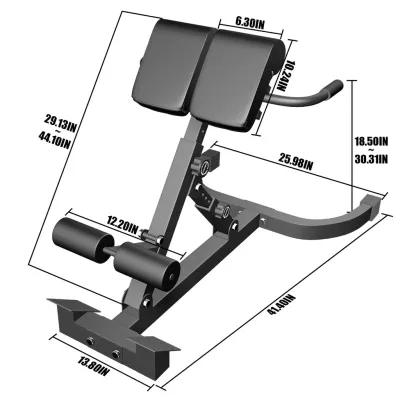
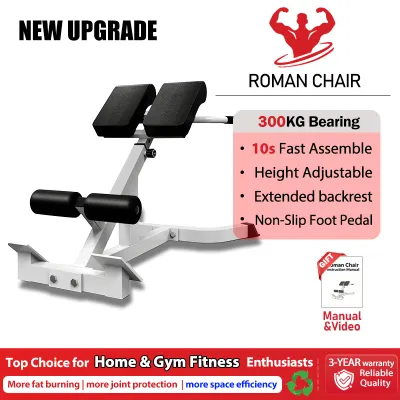
Prices are valid at publication and may change. Please refer to the product page for the latest price.
Many horizontal setups are designed as multi-purpose benches or require a separate, dedicated frame. This makes them highly space-efficient but limits the range of motion compared to angled alternatives.
Roman Chair (45-Degree)
The 45-degree Roman chair features an angled main pad and lower ankle rollers that position your torso at a decline. This specific angle balances lower back engagement with significant glute and hamstring activation. As you hinge at the hips, the resistance curve remains relatively smooth throughout the movement.
It is a highly popular choice for both home gyms and commercial facilities in the Philippines because it offers a comfortable entry point for beginners while remaining challenging enough for experienced fitness enthusiasts.
Hyperextension Machine (90-Degree or Weighted)
This design features a vertical pad setup where your torso starts in a fully upright position and hinges forward to a 90-degree angle. This vertical orientation places the maximum gravitational load on your lower back at the bottom of the movement.
Many commercial-grade variations include built-in weight stacks, plate-loaded pegs, or lever arms to facilitate progressive overload. These machines are typically larger, heavier, and constructed from thick-gauge steel, making them suited for advanced lifters focusing on targeted hypertrophy or maximum strength development.
Key Comparison Dimensions for Your Home Gym
Angles and Muscle Targeting: The angle of the machine dictates which muscles bear the brunt of the load. A horizontal bench keeps the tension relatively constant across the lower back and core. A 45-degree Roman chair shifts a portion of the workload to the glutes and hamstrings, making it an excellent tool for overall posterior chain development. A 90-degree machine maximizes tension at the bottom of the hinge, requiring strong hip extension to return to the starting position.

Resistance and Progression: Bodyweight resistance is often sufficient for beginners, but progressive overload is necessary for long-term strength gains. Flat benches and 45-degree Roman chairs typically rely on body weight, though you can hold a weight plate or dumbbell against your chest. If you plan to lift heavy, verify whether the machine has dedicated weight pegs or a lever-arm system designed to handle external loads safely without compromising stability.
Adjustability and Fit: A proper fit is crucial to prevent joint restriction and ensure you hinge at the hip rather than rounding your lower back. Look for models with adjustable thigh pads and customizable ankle roller positions. The top of the thigh pad should sit just below your hip crease to allow full, unrestricted forward bending. If the pad is too high, it will lock your pelvis and force your lumbar spine to bend, increasing the risk of strain.
Build Quality and Stability: Because these movements involve shifting your body weight beyond the machine’s base of support, stability is paramount. Check the manufacturer’s stated weight capacity and the gauge of the steel frame. A wider base footprint prevents the machine from tipping or rocking during dynamic movements. In humid tropical climates like the Philippines, look for powder-coated steel frames and sweat-resistant, high-density foam padding to prevent rust and premature wear.
Matching Equipment to Your Training Goals and Experience
Rehabilitation and Core Stability: If you are recovering from an injury or focusing on basic core stability, a conservative approach is necessary. Physical therapists often recommend starting with a flat bench or an adjustable 45-degree setup. These designs allow you to perform controlled, low-load spinal extensions without placing excessive shear force on the lumbar spine. Always consult a medical professional before starting a rehabilitation program.
General Fitness and Glute Development: For general fitness, posture improvement, and targeted glute training, the 45-degree Roman chair is highly effective. The angled position allows for a deep stretch at the bottom of the movement and a strong contraction at the top. This makes it a staple for anyone looking to build a strong, functional posterior chain to support daily activities or athletic performance.
Advanced Strength and Heavy Loading: Experienced lifters targeting maximal strength or muscle hypertrophy will benefit most from a 90-degree or plate-loaded machine. These robust units are built to handle heavy external loads safely. The vertical positioning allows you to load the movement pattern intensely, helping powerlifters and strength athletes build the necessary lower back rigidity for heavy squats and deadlifts.
Form and Safety Boundaries: Regardless of the equipment you choose, proper form is your primary line of defense against injury. Focus on maintaining a neutral spine throughout the entire range of motion. Avoid the common mistake of hyperextending or over-arching your back at the top of the movement. Stop the exercise immediately if you experience sharp pain, pinching, or sudden discomfort in your lower back or joints.
Space, Budget, and Setup Considerations
Floor Footprint and Storage: Home gym space is often limited, especially in compact residential layouts. Foldable 45-degree Roman chairs are highly convenient because they can be tucked away in a closet or against a wall when not in use. In contrast, fixed 90-degree machines and heavy plate-loaded units require a permanent footprint. Measure your designated workout area carefully, leaving at least one meter of clear space on all sides for safe mounting and dismounting.
Budget and Value: Prices for back extension equipment in the Philippines vary widely, ranging from budget-friendly foldable frames around ₱4,000 to heavy-duty commercial machines exceeding ₱25,000. When evaluating cost, prioritize structural integrity over extra features. A heavier frame with thick steel tubing and reinforced welds offers better long-term value and safety than a cheaper, lightweight model that wobbles during use.
Floor Protection and Clearance: These machines can be heavy, and adding external weights increases the pressure on your flooring. Always place your equipment on a high-density rubber gym mat to protect your tiles, wood, or concrete floors from scratches and indentation. Additionally, ensure you have adequate ceiling height, particularly for 90-degree machines where your body stands fully upright at the peak of the movement.
Final Decision Framework
To finalize your purchase, evaluate your primary training goals, budget, and available space.
Choose the flat bench if you need a compact, budget-friendly, and core-focused tool that easily integrates into a limited workout space.
Choose the 45-degree Roman chair if you want a versatile, space-efficient staple that balances lower back, glute, and hamstring development for general fitness.
Choose the 90-degree or weighted machine if you have a dedicated gym space, a larger budget, and require a heavy-duty platform to safely progress with heavy external loads.
Before your first workout, carefully read the manufacturer’s user manual, verify all assembly requirements, and double-check that all pins and adjustment knobs are securely locked in place.
Frequently Asked Questions (FAQ)
Can I use a Roman chair for exercises other than back extensions?
Yes, the 45-degree Roman chair is a versatile piece of equipment. You can use it for decline sit-ups, oblique side bends, and isometric holds to target your entire core. Some users also perform targeted glute raises by adjusting their positioning on the pad. Always check the manufacturer’s guidelines to verify the safe weight limits and recommended pad configurations for non-standard movements to prevent tipping.
Is a 90-degree hyperextension machine safe for beginners?
A 90-degree hyperextension machine is generally not recommended for absolute beginners. The vertical starting position places immediate, maximum gravitational load on the lower back at the bottom of the hinge, which requires significant baseline core strength to control. Novice lifters should first master the hip hinge movement pattern on a flat bench or a 45-degree Roman chair before progressing to a vertical machine or adding external weights.
Community discussion
Share your experience or ask a question. Comments are reviewed before publication.