
Choosing the right net for badminton depends entirely on the physical limits of your playing area and how you plan to use the setup. While a standard, tournament-sized net requires a generous amount of open space, compact and portable alternatives allow you to enjoy the game in smaller residential settings. To make an informed purchase, you must evaluate your available width, length, and overhead clearance while ensuring there is enough room for players to move safely.
Selecting an inappropriate net size can lead to a cramped playing experience, damaged equipment, or even physical injuries. By measuring your space beforehand and understanding the differences between official and recreational net dimensions, you can find a setup that fits your environment perfectly. Whether you are setting up a temporary court in a grassy backyard, a concrete driveway, or a high-ceilinged indoor garage, matching the net to your venue is the key to a safe and enjoyable game.
Measuring and Assessing Your Available Space
Before looking at product listings on any online marketplace, you must take precise measurements of your intended playing area. Start by measuring the total length and width of the flat ground where you plan to set up the net. Keep in mind that the net itself is only a single line; you also need to account for the court boundaries on both sides of the net to have a functional game.
Products mentioned in this guide
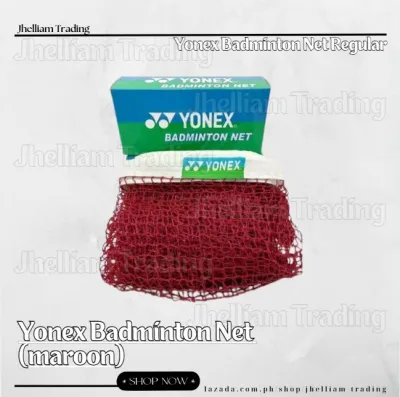
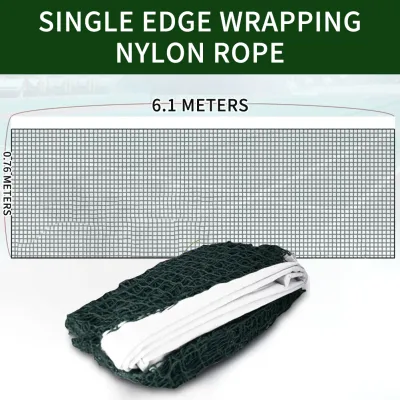

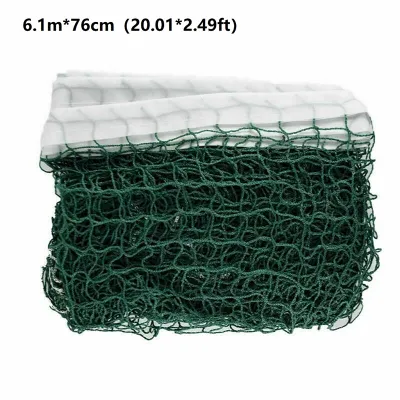

Prices are valid at publication and may change. Please refer to the product page for the latest price.
Overhead clearance is a frequently overlooked factor that can completely ruin a badminton game. In tropical environments like the Philippines, outdoor spaces are often framed by low-hanging tree branches, clotheslines, or overhead utility wires. Indoors, low ceilings, light fixtures, and ceiling fans present similar hazards. For casual play, aim for a minimum vertical clearance of 5 to 6 meters, though official play requires a much higher unobstructed space to accommodate high clears and defensive lifts.
Player movement buffer zones are essential for safety and must be factored into your measurements. When players run, lunge, or jump to return a fast shuttlecock, they inevitably drift beyond the marked court lines. Ensure you have at least 1 to 1.5 meters of clear, unobstructed space behind the back boundary lines and along the sidelines. This buffer zone must be completely free of walls, fences, potted plants, or sharp drop-offs.
Finally, evaluate the ground surface conditions and slope of your chosen area. A flat, level surface is critical for maintaining net stability and preventing players from tripping or twisting their ankles. If you are setting up on grass, check if the soil is soft enough for ground stakes or if you will need a freestanding frame. For concrete driveways or tiled carports, a weighted or freestanding base is necessary since you cannot drive anchors into the ground.
Understanding Standard and Recreational Net Dimensions
To choose the right equipment, you must understand the difference between official tournament specifications and recreational sizes. According to international badminton standards, an official doubles court is 13.4 meters long and 6.1 meters wide, while a singles court is narrower at 5.18 meters. The official net width matches the doubles court width of 6.1 meters, and the net height must stand at exactly 1.55 meters at the posts and 1.524 meters at the center.

If your available space cannot accommodate a full-sized 6.1-meter net, you should look into compact or junior recreational nets. Many portable net systems come in smaller widths, such as 3 meters, 4 meters, or 5 meters. These narrower options are excellent for half-court singles practice, children’s games, or tight spaces like narrow side yards and single-car driveways.
When evaluating a net’s dimensions, pay close attention to the physical width of the entire net frame rather than just the mesh fabric. Many freestanding portable nets feature base legs that extend outward beyond the net’s actual width to provide stability. You must ensure that your available lateral clearance can accommodate these protruding base supports without blocking pathways or pushing the net too close to walls.
Matching the Net to Your Specific Venue
The physical characteristics of your playing venue dictate the type of net system and base design you should select. For backyards, lawns, and public parks with grassy surfaces, a traditional net with ground stakes and guy ropes offers excellent tension and stability. However, if you prefer not to damage your lawn or if the soil is too dry and hard, a freestanding net with a steel or plastic frame is a highly versatile alternative.
Garages, carports, and concrete driveways require a completely different approach since you cannot insert stakes into the ground. For these hard surfaces, look for portable nets with freestanding, interlocking frames or weighted bases that can be filled with water or sand. Ensure the base design is low-profile to minimize the risk of players tripping when chasing a drop shot near the net.
If you are setting up in an indoor gymnasium, a multi-purpose covered court, or a high-ceilinged warehouse, look for tensioned net systems that utilize heavy, non-marking rubber bases or secure floor anchors. Indoor surfaces can be slippery, so the net base must have non-slip pads to prevent it from sliding out of alignment when the net is struck by a racket or a player.
Space Considerations for Setup and Storage
A badminton net is only practical if it is easy to assemble, dismantle, and store when not in use. Before purchasing, check the assembly footprint of the net system, which refers to the space required to lay out all the poles and parts during the setup process. If you have a very tight space, a complicated system with dozens of loose parts can be frustrating and difficult to assemble.
Storage dimensions are equally important, especially if you live in a home with limited storage space. Check the folded or disassembled dimensions of the net system to ensure it fits comfortably in your closet, under a bed, or in your car trunk for trips to the park. Many high-quality portable nets come with dedicated carrying bags that keep all the poles, net mesh, and pegs organized in a compact package.
Material durability is another critical consideration, particularly in humid and tropical climates. If you plan to leave the net set up outdoors for extended periods, it will be exposed to intense sunlight, high humidity, and heavy rain. Look for frames made of rust-resistant powder-coated steel or thick fiberglass, and ensure the net mesh is treated with UV inhibitors to prevent the nylon fibers from becoming brittle and tearing over time.
Common Sizing and Placement Mistakes
One of the most common mistakes is ignoring overhead obstacles when setting up an outdoor or indoor court. A shuttlecock travels in a high arc during serves and clears, meaning low-hanging tree branches, outdoor clotheslines, or low garage ceilings will constantly interrupt your game. Always look up and assess the vertical space before deciding where to position your net.
Another frequent error is placing the net too close to fragile objects, walls, or boundary fences. Players focused on the game can easily lose track of their surroundings and collide with a concrete wall or trip over a garden border. Maintaining a safety buffer of at least 1 meter around the entire playing area is crucial for preventing painful scrapes, sprains, or broken windows.
Finally, avoid the temptation to buy a full-sized professional net if your available space can only accommodate a mini-court. Squeezing a 6.1-meter net into a narrow driveway will leave you with virtually no room to play on the sides, making the game frustrating and unsafe. Opting for a compact 3-meter or 4-meter portable net is a much better solution for tight spaces, allowing you to enjoy active rallies without compromising on safety.
Frequently Asked Questions (FAQ)
Can I use a volleyball or tennis net for badminton?
While you can use a volleyball or tennis net for casual backyard play, they are not ideal for proper badminton practice due to significant differences in height and mesh size. A standard volleyball net is positioned much higher than a badminton net, while a tennis net is set much lower. Additionally, the mesh openings on volleyball and tennis nets are often large enough for a small badminton shuttlecock to fly straight through, which constantly interrupts the flow of the game. If you want a versatile option, look for adjustable multi-sport net systems that allow you to change the height to match different sports.
How much extra space do I need around the actual court lines?
For safe and comfortable play, you should maintain a buffer zone of at least 1.5 meters behind the back boundary lines and 1 meter along the sidelines. This extra space is necessary because badminton is a fast-paced sport that requires sudden lunges, quick backpedaling, and wide lateral movements. If you are playing with young children or beginners who have less control over their movements, expanding this buffer zone even further is highly recommended to prevent accidental collisions with walls, trees, or outdoor furniture.
Community discussion
Share your experience or ask a question. Comments are reviewed before publication.