
Quick Answer: Which Baitcasting Reel Specs Actually Matter?
When choosing a baitcasting reel, the two most critical specifications to focus on are the gear ratio and the braking system. Together, these two features dictate how far you can cast without tangling your line and how efficiently you can retrieve your lure.
Rather than chasing the highest numbers on a marketing sheet, success on the water comes down to matching these specifications to your target species, your typical lure weights, and your personal casting style. A balanced reel that fits your specific fishing environment will always outperform a mismatched high-end model.
Understanding Gear Ratio: Speed vs. Power
Gear ratio is expressed as a set of numbers, such as 6.3:1 or 8.1:1. The first number represents how many times the spool rotates for every single full turn of the handle, while the final number is always one. A higher first number means a faster line retrieval speed, which changes how your lure behaves in the water.
Products mentioned in this guide
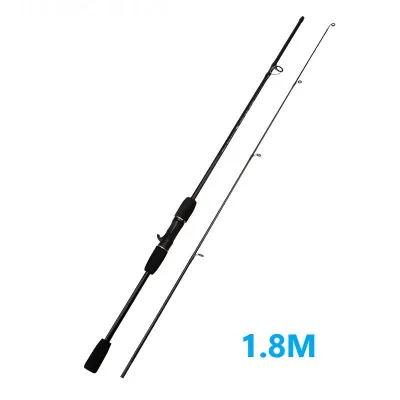
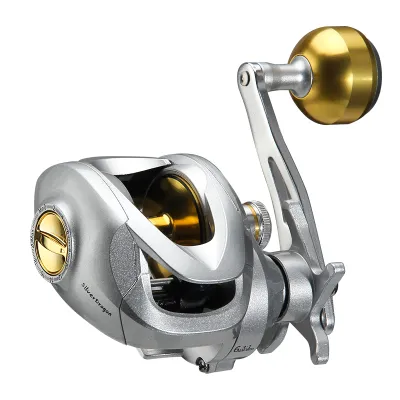
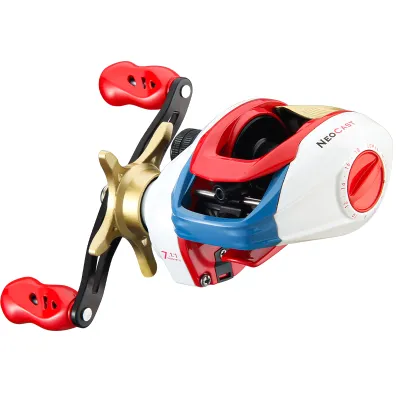
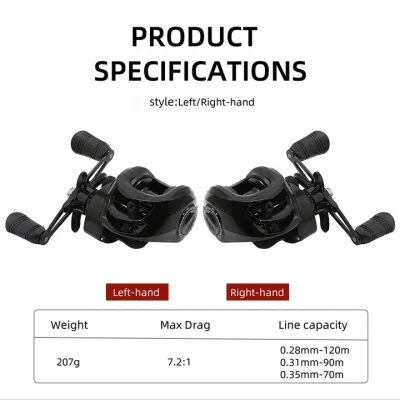
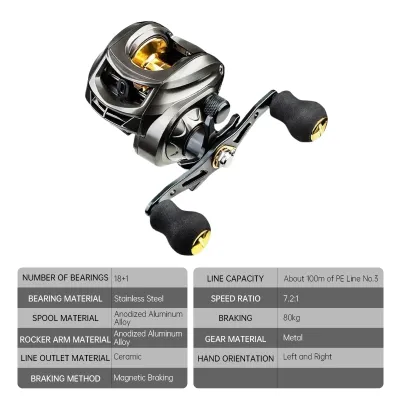
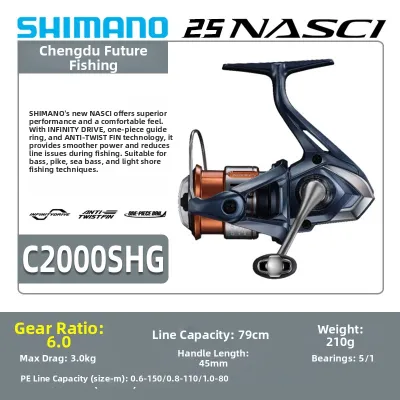
Prices are valid at publication and may change. Please refer to the product page for the latest price.

High-speed gear ratios, typically 7.1:1 and above, are designed for fast-moving lures, topwater baits, and techniques where you need to pick up slack line quickly. If a fish strikes and swims directly toward your boat, a high-speed reel allows you to gather line fast enough to maintain a solid hookset. These fast reels are also excellent for quickly retrieving a lure out of the strike zone to make another cast.
Conversely, low-speed gear ratios, usually 5.8:1 or below, act like the low gear in a four-wheel-drive vehicle. They provide high cranking power, also known as torque, with less physical effort from your hand. This makes low-speed reels ideal for deep-diving crankbaits, large spinnerbaits, and other high-resistance lures that pull hard against the water.
Assuming a higher gear ratio is universally superior is a common mistake. Using a high-speed reel to pull a high-resistance lure will quickly fatigue your wrist and put unnecessary strain on the reel’s internal brass or aluminum gears. Always match the ratio to the resistance of the lure you plan to throw.
Demystifying Brake Systems: Magnetic vs. Centrifugal
Baitcasting reels require a braking system to prevent backlashes, often referred to as a “bird’s nest.” A backlash occurs when the spool spins faster than the line can leave the reel, causing the line to bunch up and tangle. Brakes slow down the spool during the cast to keep its speed synchronized with the flying lure.
Magnetic brakes utilize a series of adjustable magnets to apply a consistent braking force throughout the entire duration of your cast. These systems are adjusted using an external dial on the side plate of the reel, allowing you to make quick changes on the fly. This external adjustability makes magnetic brakes highly user-friendly, especially when you are casting into changing tropical winds or switching between lures of different weights.
Centrifugal brakes rely on small, physical weights inside the side plate that push outward against a brake ring during the high-speed start of a cast. Because they are speed-dependent, they apply the most braking force at the beginning of the cast when the spool is spinning fastest, then gradually release as the spool slows down. While they offer excellent casting distance and control for experienced anglers, adjusting them usually requires opening the reel’s side plate to toggle the individual brake shoes.
Some modern baitcasters feature dual-brake systems that combine both magnetic and centrifugal technologies. These hybrid systems offer the ultimate level of customization, though they require a bit more patience and trial-and-error to tune correctly.
To adjust your brakes effectively on the water, start by setting the spool tension knob so your lure slowly and smoothly falls to the ground when you release the spool clutch. Next, set your brake dial to a high setting and make a few short, gentle casts. Gradually decrease the braking force as you get comfortable with the wind conditions and your casting motion, using your thumb to lightly feather the spool as the lure hits the water.
Secondary Specs: Filtering Out the Marketing Noise
Beyond gear ratios and brakes, manufacturers often highlight secondary specifications that can confuse buyers. Understanding what these specs actually mean helps you avoid paying extra for features that offer little real-world benefit.
Bearings Many brands advertise high bearing counts, such as ten or twelve bearings, as a sign of premium quality. However, retrieval smoothness depends far more on bearing material, manufacturing tolerances, and regular maintenance than the sheer quantity. A reel with five high-quality, shielded stainless steel or ceramic bearings will consistently outperform and outlast a cheap reel packed with ten low-grade steel bearings.
Spool Profile Low-profile spools sit low on the rod, making them easy to palm and comfortable to hold during long days of casting. They are designed for lighter lines and finesse techniques. Round-profile spools are wider and deeper, holding a much larger volume of heavy monofilament or braided line, which is necessary for targeting large, hard-fighting species or trolling in deep water.
Frame Material Under heavy drag loads, a reel’s frame must remain perfectly rigid to keep the internal gears in alignment. Aluminum and high-grade carbon composite frames offer excellent rigidity and durability, especially in humid, tropical environments. Graphite frames are lighter and more affordable but can flex under extreme pressure, so always check the manufacturer’s material descriptions if you plan to target heavy fish.
How to Match Reel Specs to Your Fishing Style
Selecting the right baitcasting reel requires aligning your gear with your primary fishing techniques. If you plan to fish heavy cover with frogs or flip jigs, a high-speed reel with a gear ratio of 7.3:1 or faster, paired with a strong magnetic brake system, will help you pull fish out of thick vegetation before they can wrap your line around structure.
For deep cranking or pulling heavy spinnerbaits through open water, a lower gear ratio between 5.5:1 and 6.3:1 provides the necessary torque to retrieve high-resistance lures without exhausting yourself. Finesse anglers targeting smaller species with light lures should look for specialized shallow spools and highly sensitive magnetic brakes that can control lightweight lines.
Before finalizing a purchase from an online marketplace or local tackle shop, always verify that your chosen reel matches your rod’s line rating and lure weight specifications. A balanced rod and reel setup ensures optimal casting distance, accuracy, and overall performance on the water.
Frequently Asked Questions (FAQ)
What is a good gear ratio for a beginner baitcasting reel?
A mid-range gear ratio between 6.2:1 and 6.8:1 is highly recommended for beginners. This versatile range offers a balanced learning curve, providing enough speed for topwater lures while retaining enough cranking power for moderate-resistance baits, helping you learn spool control without extreme settings.
How do I stop my baitcaster from bird-nesting?
Preventing backlashes requires balancing your spool tension, brake settings, and thumb control. Always adjust the spool tension knob every time you change to a different lure weight. Keep your brakes set high initially, and use your thumb to lightly feather the spool as the lure flies, pressing down firmly just before the lure hits the water.
Community discussion
Share your experience or ask a question. Comments are reviewed before publication.