
Deciding how to introduce your child to two wheels is a major milestone. The choice between a balance bike and a pedal bike with training wheels ultimately depends on your child’s physical development, confidence, and how they process new motor skills. While balance bikes teach the complex art of steering and equilibrium first, training wheels prioritize the mechanics of pedaling while providing artificial stability. For most children between the ages of 2 and 5, starting with a balance bike leads to a faster and more natural transition to a standard bicycle, but training wheels remain a practical option for children who need immediate stability to feel secure.
Assessing Your Child's Readiness and Coordination
To make the right choice, start by observing your child’s gross motor skills during daily play. Watch how they run, jump, and navigate uneven surfaces like grassy parks or slightly sloped concrete driveways. A child who moves with fluid coordination and rarely loses their footing is often an excellent candidate for a balance bike, which requires active physical engagement.
Next, evaluate your child’s emotional readiness and risk tolerance. Some toddlers are naturally adventurous, eager to push boundaries and experience speed, making them highly suited for the quick, dynamic movement of a balance bike. Other children are more cautious, preferring a predictable, stable platform where they do not have to worry about tipping over.
Products mentioned in this guide
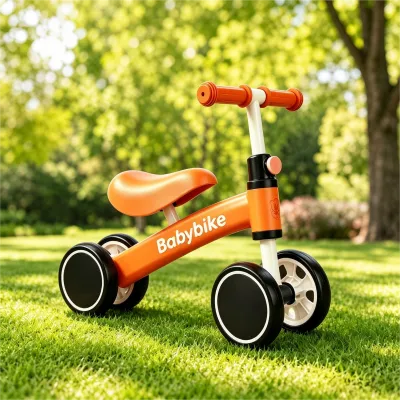
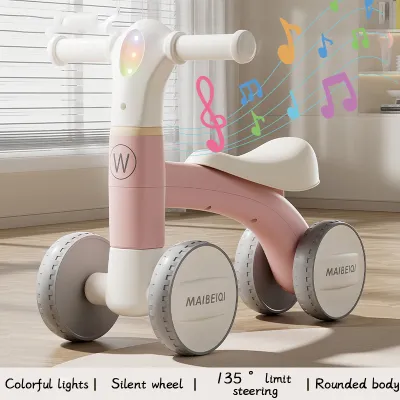
Prices are valid at publication and may change. Please refer to the product page for the latest price.
Finally, take accurate physical measurements rather than relying solely on age charts. To measure your child’s inseam, have them stand against a flat wall wearing their typical riding shoes. Place a hardcover book between their legs, snug against their crotch, and measure the distance from the top of the book to the floor. This measurement determines the necessary standover clearance, ensuring your child can comfortably plant both feet flat on the ground.
Balance Bikes: Building Core Stability First
Balance bikes are simplified, pedal-free bicycles designed to teach steering and weight distribution from day one. Because these bikes have a low center of gravity and allow children to keep their feet in constant contact with the ground, they encourage natural balance development. Children learn to propel themselves by walking or running, and they stop intuitively by putting their feet down.

This approach is highly beneficial for younger toddlers, particularly those aged 2 to 3, as well as children who learn best through intuitive, unstructured play. Without the distraction of pedals, chains, or training wheels, the child can focus entirely on how the bike leans and responds to their body weight.
The transition path from a balance bike is remarkably straightforward. Once a child masters gliding with their feet off the ground, they have already acquired the most difficult part of riding a bicycle. When they eventually transition to a standard pedal bike, they usually skip training wheels entirely, needing only a few hours to learn how to pedal.
Pedal Bikes With Training Wheels: Focusing on Pedaling Mechanics
Pedal bikes equipped with training wheels take the opposite approach by focusing on pedaling mechanics first. This setup provides immediate lateral support, allowing the child to learn how to push the pedals, steer, and use brakes without the fear of falling over.
This option is often suitable for older toddlers or 4-to-5-year-olds who may lack the initial core strength or confidence to balance on their own but are highly motivated by the mechanics of pedaling. It allows them to join older siblings or friends on rides immediately, providing an instant sense of accomplishment.
However, training wheels present distinct developmental challenges. They can teach a false sense of balance, as the child learns to lean away from turns rather than into them to stay upright. On uneven surfaces, such as sloped subdivision roads or cracked pavement, training wheels can lift the rear drive wheel off the ground, causing traction loss or unexpected tipping. When the training wheels are eventually removed, children often face a significant adjustment period, essentially having to relearn how to balance from scratch.
Key Fit and Safety Checks Before You Buy
Regardless of the bike type you choose, ensuring a proper fit is critical for safety and control. For a balance bike, the seat height must allow your child to sit comfortably with both feet planted completely flat on the ground, with a slight bend in their knees. For a pedal bike with training wheels, the child should be able to touch the ground with the balls of their feet when seated, allowing them to stabilize themselves when stopping.
Braking systems also require careful evaluation based on your child’s physical development. Coaster brakes, which engage when pedaling backward, are common on starter pedal bikes and are highly intuitive for young children. Hand brakes require sufficient hand strength and grip size; you should verify that your child can comfortably squeeze the brake levers to a complete stop before allowing them to ride unsupervised.
Safety gear is non-negotiable, especially in tropical climates where outdoor play is common. A properly fitted helmet must sit level on the forehead, covering the top of the skull without tilting backward or shifting side-to-side. Look for lightweight, well-ventilated helmets to keep your child cool during warm rides on the local barangay court. Additionally, sturdy closed-toe shoes are essential to protect small feet, particularly on balance bikes where feet are used for braking, and lightweight knee and elbow pads can prevent painful scrapes on concrete surfaces.
Making the Final Decision: A Quick Comparison
To finalize your choice, compare how each option aligns with your child’s physical traits and your long-term goals.
| Feature | Balance Bike | Pedal Bike with Training Wheels |
|---|---|---|
| Primary Focus | Core balance, steering, and weight distribution | Pedaling mechanics, braking, and basic steering |
| Transition Difficulty | Low; usually transitions directly to a two-wheeler | High; requires relearning balance after removal |
| Ideal Child Profile | Active, adventurous, and younger toddlers (ages 2-3) | Cautious, older toddlers (ages 4-5) motivated by pedaling |
If your child is younger, highly active, and comfortable with a bit of trial and error, a balance bike is almost always the more efficient path to independent riding. If your child is closer to five years old, prefers a highly stable feel, or specifically wants to learn the motion of pedaling, a pedal bike with training wheels can serve as a gentle introduction, provided you actively help them transition to two wheels later on.
Frequently Asked Questions (FAQ)
Can I just take the pedals off a regular bike to make a balance bike?
Dedicated balance bikes are engineered with specific frame geometry, a very low standover height, and an incredibly lightweight chassis that toddlers can easily maneuver. In contrast, standard pedal bikes are significantly heavier and have a higher bottom bracket to allow clearance for rotating pedals. Removing the pedals from a regular bike can work as a temporary training step for an older, taller child, but for a 2-to-3-year-old, the modified bike is usually too heavy, wide, and tall, posing safety and ergonomic risks.
When is the right time to remove training wheels?
You can identify readiness by observing how your child interacts with the training wheels. If you notice them leaning naturally into turns, maintaining a steady speed, and riding with the training wheels lifted slightly off the ground on flat surfaces, their core balance is developing. To ease the transition, try raising the training wheels slightly every few days to allow the bike to sway, encouraging your child to actively balance before you remove the supports entirely.
Community discussion
Share your experience or ask a question. Comments are reviewed before publication.