
Choosing your child’s first ride is an exciting milestone, but the variety of options can make the decision feel overwhelming. The ideal choice depends on your child’s current motor skills, physical size, and the specific environment where they will practice. While a balance bike—often called a bike without pedal—is widely favored for teaching early balance and steering, traditional tricycles and training wheels still offer distinct advantages for introducing pedaling mechanics and building initial confidence.
In the Philippines, young riders often practice on subdivision streets, paved driveways, or local park paths. The tropical climate means outdoor play sessions are best enjoyed during cooler morning or late afternoon hours, making a comfortable and intuitive ride essential for keeping kids motivated. By comparing the core learning mechanics, pros, and cons of each option, you can choose the safest and most effective path for your child’s cycling journey.
How Each Ride Develops Core Cycling Skills
Learning to ride a bicycle requires mastering two distinct physical skills: balancing and pedaling. Traditional teaching methods often focused on pedaling first, but modern developmental approaches highlight the benefits of mastering balance before introducing pedals. Understanding how different rides target these skills helps clarify which option aligns with your child’s current developmental stage.
Products mentioned in this guide
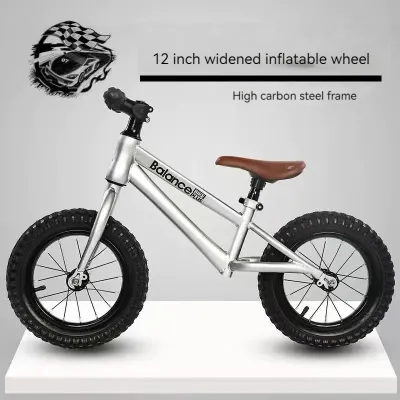
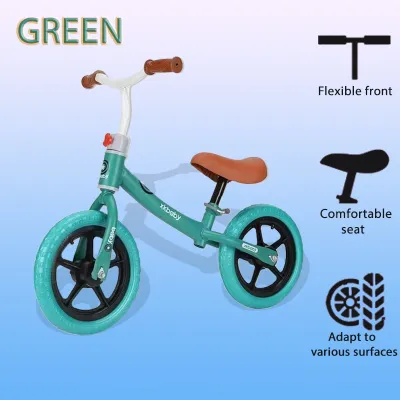
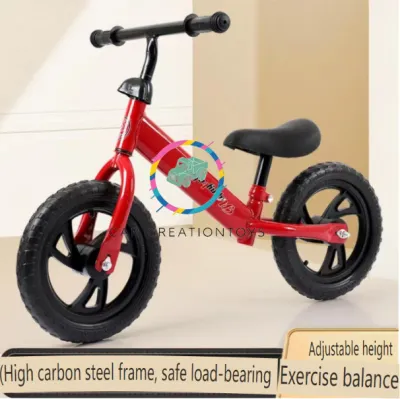
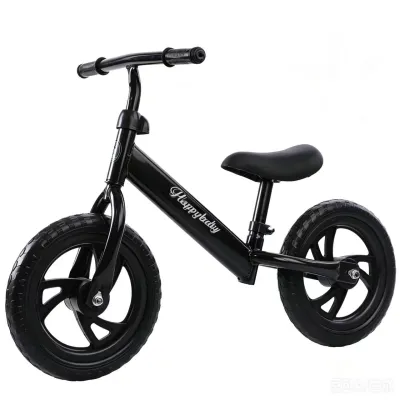
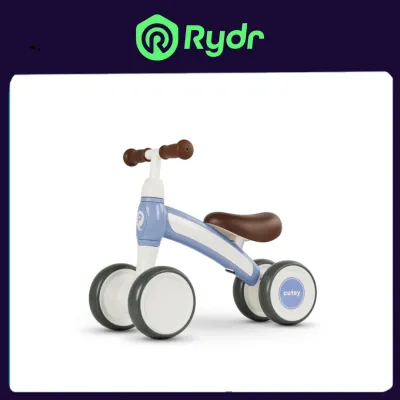
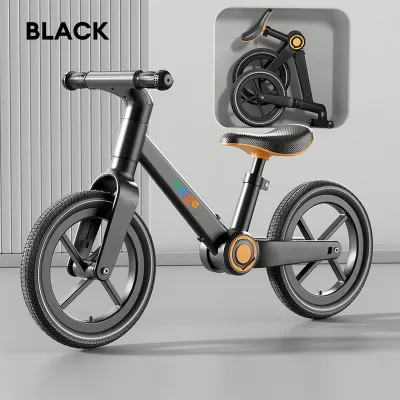
Prices are valid at publication and may change. Please refer to the product page for the latest price.
Balance and steering coordination are the primary focus of pedal-less options. When riding a bike without pedal, a child must constantly make micro-adjustments with their core and arms to keep the frame upright. This active leaning teaches them how steering affects balance, which is the exact physics required to ride a standard two-wheel bicycle. Because their feet remain close to the ground, children can easily stabilize themselves, reducing the fear of falling.
Pedaling mechanics, leg strength, and braking are emphasized in tricycles and training wheels. These options provide a stable, upright platform that eliminates the need to balance, allowing toddlers to focus entirely on the circular motion of pedaling. This builds the necessary quadricep and calf strength required to propel a heavier bicycle frame. Additionally, these rides often introduce mechanical braking systems, such as coaster brakes or hand levers, which require hand-eye coordination.
The typical progression toward a standard two-wheel bicycle varies based on the starting point. Children who begin on pedal-less frames often transition directly to standard bikes at an earlier age because they have already mastered the hardest part of cycling: balance. Conversely, children starting on tricycles or training wheels must eventually undergo a second transition phase where they learn to balance once the stabilizing support is removed.
Balance Bikes (Bikes Without Pedals): Pros, Cons, and Best Fit
A balance bike is a two-wheeled frame designed without pedals, drivetrain, or chains. Children propel themselves by pushing off the ground with their feet and glide once they gain sufficient momentum. This design simplifies the learning process by isolating balance as the primary skill to master.

The advantages of this approach are significant. By learning to balance and steer from the very beginning, children develop spatial awareness and bilateral coordination quickly. These bikes are typically lightweight, making them easy for young children to maneuver and for parents to carry when a toddler tires during a walk. The low seat height ensures that children can plant both feet flat on the ground at any moment, which builds confidence and a sense of security.
However, there are limitations to consider. Because these bikes lack pedals, children do not practice the leg coordination required for pedaling, which must be learned later. Stopping relies primarily on foot braking, which can lead to rapid wear on shoe soles, especially on rough concrete surfaces. While some premium models feature hand brakes, very young toddlers may lack the hand span or grip strength to operate them effectively.
This option is generally the best fit for children aged 18 months to 5 years who exhibit steady walking and running skills. If your child is highly active, enjoys running, and has the coordination to steer while moving, a pedal-less bike can provide an intuitive transition to a standard bicycle. It is particularly suited for neighborhoods with smooth, continuous pavements or parks where children have ample space to glide.
Tricycles: Pros, Cons, and Best Fit
Tricycles feature a classic three-wheeled design with a single front wheel and two rear wheels, typically powered by pedals attached directly to the front axle. This configuration provides a highly stable base that remains upright even when stationary, making it a popular introductory toy for younger toddlers.
The primary benefit of a tricycle is the ease of introducing the pedaling motion. Because the vehicle does not tip over easily at low speeds, toddlers can focus entirely on pushing the pedals without the cognitive load of maintaining balance. This helps build lower-body strength and teaches the concept of cause and effect as they realize that pedaling moves them forward. Tricycles also sit low to the ground, which minimizes the distance of any accidental falls.
Despite their stability, tricycles have notable drawbacks. The steering mechanics differ significantly from a two-wheeled bicycle; instead of leaning into a turn, riders must turn the handlebars sharply, which can cause the tricycle to tip over if done at high speeds. The direct-drive pedals on the front wheel can also be difficult for very young children to push, as the pedal angle changes constantly with the steering. Furthermore, tricycles tend to be bulky and heavy, making them less practical for transport.
This option is ideal for younger toddlers, typically between 2 and 4 years old, who are still developing basic motor skills and leg strength. It is best suited for flat, enclosed areas such as carports, spacious living rooms, or smooth subdivision driveways. If your child is not yet ready for the speed of a two-wheeler but wants an independent way to move around, a tricycle offers a fun, low-stress introduction to pedaling.
Bikes With Training Wheels: Pros, Cons, and Best Fit
A bicycle with training wheels is a standard two-wheeled pedal bike equipped with small auxiliary wheels attached to the rear axle. This traditional setup aims to provide the stability of a tricycle while allowing the child to ride a larger, standard-sized bicycle frame.
The main advantage of training wheels is that they allow older beginners to practice pedaling, steering, and braking simultaneously on a “real” bike. This can be highly motivating for children who want to ride a bike that looks just like those of their older siblings or peers. The added stability helps build initial confidence, allowing children to experience the sensation of riding at moderate speeds without the immediate fear of tipping over.
However, training wheels can hinder the development of proper cycling habits. Because the auxiliary wheels keep the bike upright, children often learn to lean away from turns to maintain stability, which is the opposite of correct cornering technique. This can create a false sense of balance, making the eventual removal of the training wheels a challenging and sometimes frustrating transition. Additionally, training wheels can easily get stuck on uneven terrain, cracked pavement, or transitions between grass and concrete, causing the drive wheel to lose traction.
This option makes sense for older beginners, typically aged 4 to 7, who may have missed the toddler window for a balance bike but still need support to build confidence. It is also suitable for children with specific physical coordination needs who require lateral support to enjoy riding. If you choose this route, adjusting the training wheels slightly upward over time can encourage the child to practice balancing as the bike sways naturally.
Skill Development and Feature Comparison
To help visualize how each option supports your child’s physical development, the table below compares key performance and learning dimensions across all three categories.
| Feature | Balance Bike (Bike Without Pedal) | Tricycle | Bike with Training Wheels |
|---|---|---|---|
| Primary Skill Developed | Balance and active steering | Pedaling and leg strength | Pedaling, braking, and confidence |
| Steering Style | Active leaning (correct physics) | Handlebar turning only | Handlebar turning (can cause counter-leaning) |
| Tipping Risk | Low (feet easily reach ground) | Moderate on sharp, fast turns | Low on flat; moderate on uneven ground |
| Transition Ease | High (often skips training wheels) | Moderate (must still learn balance) | Moderate (must unlearn leaning habits) |
| Best Terrain | Smooth pavement, gentle slopes | Flat, smooth paved areas | Flat pavement, driveways |
Note: Exact ages, heights, and transition timelines depend on individual child development and specific manufacturer specifications. Always consult the manufacturer’s sizing guidelines to ensure a proper fit for your child’s current measurements.
Decision Framework: Which Option Fits Your Child?
Selecting the right ride requires balancing your child’s physical readiness with your local environment. Use this framework to guide your decision based on specific scenarios.
Choose a balance bike if:
- Your primary goal is a fast, natural transition to a standard two-wheel bicycle.
- Your child is between 18 months and 4 years old and already walks and runs with steady coordination.
- You have access to paved parks, smooth subdivision roads, or gentle grassy slopes where your child can safely glide.
- You prefer a lightweight option that is easy to pack into a car trunk or carry home from the park.
Choose a tricycle if:
- Your child is a younger toddler (under 3 years old) who needs to build basic leg strength and coordination.
- You want a stable ride for flat, enclosed spaces like a garage, carport, or smooth patio.
- Your child is not yet comfortable with the speed or balancing requirements of a two-wheeled frame.
- You want a classic, low-to-the-ground toy that encourages independent play at a relaxed pace.
Choose training wheels if:
- Your child is an older beginner (ages 4 and up) who wants the immediate experience of riding a standard pedal bike.
- Your child has already mastered pedaling on a tricycle but lacks the confidence to ride a two-wheeler without support.
- You want to teach hand-braking or coaster-braking mechanics on a larger frame before removing the stabilizers.
- Your child has physical coordination needs that require continuous lateral support to ride safely.
Verify first if:
- You have measured your child's inseam to ensure they can comfortably use the selected ride.
- Your local riding environment is free of steep hills, heavy traffic, or deep drainage grates that could pose hazards.
- The product specifications match your child's current weight and height, leaving room for safe adjustment.
Essential Safety and Sizing Checks Before You Buy
Before purchasing any starter ride, performing a few physical checks ensures your child’s safety and comfort. A poorly sized bike can discourage a child from riding and increase the risk of falls.
To find the correct size, measure your child’s inseam while they are wearing their typical riding shoes. For a balance bike, the seat height should be set approximately 1 to 2.5 cm lower than their inseam, allowing them to bend their knees slightly and plant both feet flat on the ground to push off. For tricycles and training-wheel bikes, ensure your child can comfortably reach the pedals at their lowest point without fully locking their knees or stretching uncomfortably.
Always check the manufacturer’s specified weight limits and frame materials. Lightweight aluminum or high-grade plastics are excellent for younger children, while steel frames offer durability for older, heavier riders. If the bike features hand brakes, verify that the brake levers are adjustable and that your child has the hand span and strength to squeeze them to a complete stop.
Safety gear is non-negotiable for every ride. Ensure your child wears a properly fitted helmet that sits level on their forehead and does not rock side to side. In warm, humid tropical climates, look for helmets with multiple ventilation channels to keep your child cool and comfortable during outdoor play. Always consult the specific product manual for assembly instructions, routine maintenance checks, and safety warnings before letting your child take their first ride.
Frequently Asked Questions (FAQ)
Can a child skip training wheels entirely if they start on a balance bike?
Yes, many children who begin on a balance bike transition directly to a standard pedal bike without ever using training wheels. Because they have already mastered the complex skills of balancing and steering, they only need to learn the mechanical motion of pedaling. However, individual readiness varies, and parents should closely observe their child’s confidence, steering control, and coordination before introducing pedals.
Are tricycles safer than balance bikes for toddlers?
Neither option is universally safer, as they present different safety profiles depending on how and where they are used. Tricycles offer excellent low-speed stability on flat surfaces but can tip over if turned sharply or ridden on sloped driveways. Balance bikes allow children to quickly stabilize themselves with their feet, but they can reach higher speeds on downhills, which increases the risk of falls. Overall safety depends on active adult supervision, choosing appropriate flat terrain, and consistent use of a properly fitted helmet.

Community discussion
Share your experience or ask a question. Comments are reviewed before publication.