
Quick Answer: Which Fishing Swivel Should You Choose?
Choosing the right swivel for fishing can mean the difference between a seamless day on the water and a frustrating mess of tangled lines. If you are setting up a standard bottom rig, targeting reef fish with static bait, or working with a tight budget, a barrel swivel is generally your best option. These classic connectors are compact, cost-effective, and highly efficient for moderate line-twist scenarios.
On the other hand, if your fishing style involves high-speed trolling, casting spinning lures like spoons, or battling fast-running species that twist the line during a fight, a ball bearing swivel is the preferred choice. These premium components are engineered to spin freely even under immense tension, keeping your line straight and manageable. Ultimately, your decision should align with your specific fishing technique, target species, and the water conditions you plan to face.
How Barrel and Ball Bearing Swivels Actually Work
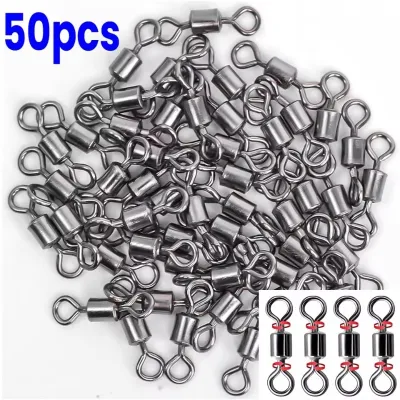
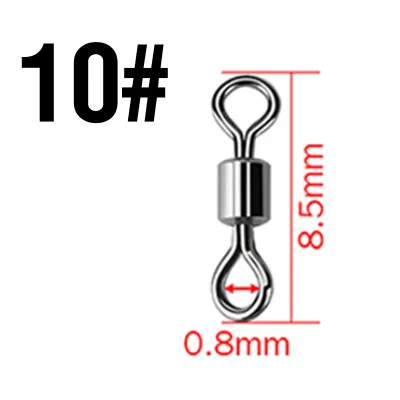
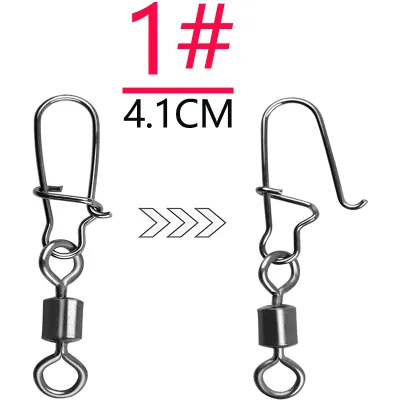
To understand why these two connectors perform so differently, it helps to look closely at their internal anatomy and mechanical design. The barrel swivel features a deceptively simple construction. It consists of a hollow metal barrel with two wire eyelets inserted into either end. The ends of these eyelets are typically headed or flared inside the barrel to keep them from pulling out. This design relies entirely on metal-on-metal contact and physical movement. When there is little to no tension on the line, the eyelets can rotate relatively freely inside the barrel. However, as soon as a fish pulls or a heavy sinker exerts force, the metal surfaces are pressed tightly against each other. This physical friction can cause the swivel to bind, preventing it from rotating when you need it most.
Products mentioned in this guide
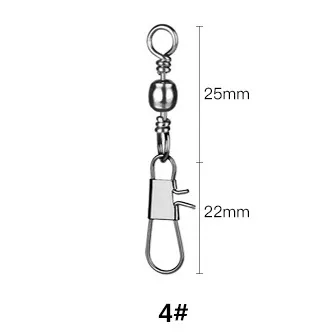
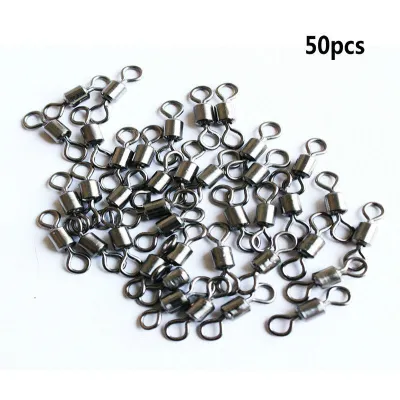
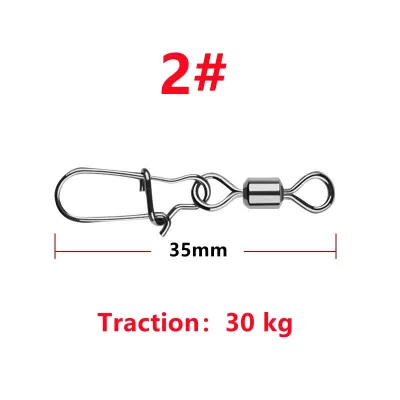
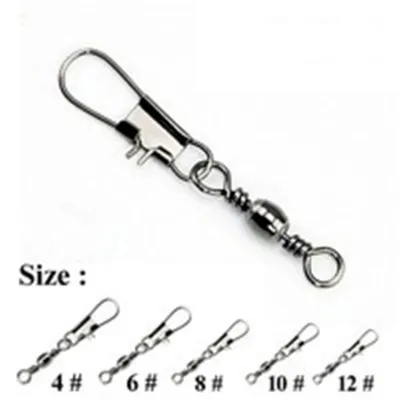
Prices are valid at publication and may change. Please refer to the product page for the latest price.

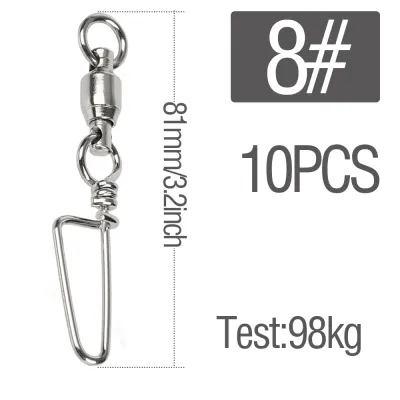
In contrast, a ball bearing swivel is a precision-engineered piece of tackle designed to eliminate friction. Inside its outer housing sits a set of tiny, highly polished stainless steel ball bearings. These bearings sit in a dedicated race or groove, allowing the inner shaft and eyelets to rotate independently with almost zero resistance. Because the load is distributed across these rolling spheres, the swivel can spin smoothly even when subjected to extreme pulling force.
These structural differences directly impact how each swivel behaves in the water. Barrel swivels are inherently lighter, smaller, and more streamlined. This compact profile makes them less visible to wary fish and reduces the overall weight of your rig. Ball bearing swivels, because of their internal components and robust housing, are physically larger, heavier, and have a more noticeable hydrodynamic profile. This extra bulk can create subtle vibrations or bubbles in the water, which is an important factor to consider when planning your presentation.
Comparing Performance: Twist Prevention, Strength, and Drag
Twist Prevention
Line twist is the silent enemy of every angler, leading to wind knots, cast frustration, and weakened line. When evaluating twist prevention, the mechanical superiority of the ball bearing design becomes clear. Under heavy tension—such as when retrieving a fast-spinning lure or fighting a powerful fish in strong currents—a barrel swivel often locks up completely. When the swivel binds, the twisting motion of the lure or fish travels directly up your mainline, causing it to coil and bunch. A ball bearing swivel, however, continues to rotate effortlessly under the exact same load. This continuous rotation ensures that any twist generated by your lure or bait is neutralized before it can travel up your line and compromise your reel spool.
Strength and Durability
When selecting a swivel for fishing, verifying the rated pound test is a critical safety step. Do not assume that two swivels of the same physical size share the same strength. Always check the manufacturer’s packaging for the exact weight rating. Additionally, inspect the construction of the eyelets. High-quality swivels often feature welded rings rather than simple wire loops. Welded rings offer a smoother surface for your knots and eliminate the risk of the wire opening under extreme pressure. In highly humid and saltwater environments, such as the coastal waters of the Philippines, corrosion resistance is paramount. Look for swivels made from high-grade stainless steel or brass with specialized anti-corrosion coatings, and inspect them regularly for signs of rust or structural fatigue.
Water Resistance and Profile
The physical size of your tackle plays a significant role in how natural your bait or lure appears to fish. Barrel swivels offer a distinct advantage here due to their sleek, low-profile design. They glide through the water with minimal resistance, creating very little drag and reducing the likelihood of collecting floating seaweed or debris. This stealthy profile is ideal for clear-water situations where fish are easily spooked by unnatural hardware. Conversely, the bulkier shape of a ball bearing swivel creates more hydrodynamic drag. While this drag is negligible in heavy trolling setups, it can damp the delicate action of lightweight lures or create a visible wake that might deter cautious species.
Matching the Right Swivel to Your Fishing Technique
Lure Fishing and Trolling
If your preferred method involves active casting and retrieving, the choice of swivel can directly impact your success. Spinning lures, inline spinners, and spoons are designed to rotate rapidly to create flash and vibration. This constant rotation generates massive amounts of line twist. For these techniques, a ball bearing swivel is highly recommended. It ensures the lure can spin freely without transferring that rotational energy to your mainline. The same rule applies to trolling, where lures or baits are pulled behind a moving boat for hours. Without the frictionless rotation of a ball bearing swivel, your mainline can quickly become a twisted mess, leading to severe tangles when you attempt to cast or reel in.
Bottom Fishing and Rigging
For stationary techniques, such as bottom fishing with bait, the demands on your swivel are quite different. When targeting bottom-dwelling species like lapu-lapu or snapper, your rig typically sits quietly on the seafloor or drifts slowly with the current. Because the bait is not spinning rapidly, the risk of severe line twist is low. In these scenarios, a simple barrel swivel is more than adequate. It provides a reliable, low-profile connection between your mainline and leader without adding unnecessary bulk or weight. Furthermore, because barrel swivels are much more budget-friendly—often costing only a fraction of the price of premium ball bearing options—they are the practical choice for rigs that are highly likely to get snagged and lost on rocky bottoms or coral reefs.
Leader Connections
Using a swivel to connect your mainline to a fluorocarbon or monofilament leader is a common practice, but it requires careful consideration of visibility and knot integrity. A bulky swivel sitting close to your hook can distract fish or cause them to reject your bait. If you are fishing in clear water or targeting sharp-eyed species, keeping your hardware as small and unobtrusive as possible is essential. A tiny, high-strength barrel swivel allows you to maintain a stealthy presentation while still providing a reliable connection point. However, if you are using heavy leader materials for large pelagic fish, a ball bearing swivel may be necessary to handle the extreme forces and sudden runs of the fish, even if it means sacrificing a bit of stealth.
Final Decision Guide: When to Use Each Swivel Type
To help you finalize your gear selection before your next outing, use this straightforward decision framework to match the right swivel to your specific fishing scenario.
Choose Barrel Swivels if…
- You are bottom fishing: Your technique involves static baits, ledger rigs, or running sinker setups where rapid rotation is not required.
- You need a stealthy presentation: You are fishing in clear water and require the smallest, most low-profile connector possible to avoid spooking fish.
- You are on a budget: You want a cost-effective solution for rigging multiple rods or fishing in snag-heavy areas where gear loss is common.
- You are using non-spinning lures: Your setup features jigs, soft plastics, or swimbaits that do not rotate during retrieve.
Choose Ball Bearing Swivels if…
- You are trolling or using spinning lures: Your technique relies on spoons, inline spinners, or high-speed trolling that generates continuous line twist.
- You are targeting large, fast fish: You expect long, powerful runs from species that twist and turn during the fight.
- You require maximum reliability under load: You need a connector that is guaranteed to spin freely even when subjected to heavy pulling forces.
Verify First if…
- Check manufacturer specifications: Always verify the rated pound test of your swivel against your line's breaking strength.
- Inspect for quality: Look for welded rings and smooth finishes to protect your knots from abrasion.
- Assess your local environment: Consider the salinity and humidity of your fishing venue, opting for corrosion-resistant materials like stainless steel for saltwater outings.
Frequently Asked Questions (FAQ)
How do I choose the correct swivel size for my fishing line?
Selecting the right swivel size requires balancing strength, line diameter, and presentation. As a general rule, you should match the swivel’s rated strength to the breaking strain of your fishing line. For example, if you are using a 15-pound test mainline, choose a swivel rated for at least 15 pounds, though opting for a slightly higher rating provides a safe buffer.
Next, inspect the eyelet size of the swivel. The eyelet must be large enough to accommodate your chosen knot without pinching the line, yet small enough to prevent any beads or sinkers on your rig from sliding over it.
Finally, avoid the temptation to use oversized swivels. While a larger swivel offers more strength, its added weight can dampen the natural action of your lure and its bulk can easily spook fish in clear water. Always choose the smallest swivel that safely meets your strength requirements.
Does the type of swivel affect the knot I should use?
In most cases, standard fishing knots like the Palomar knot, Uni knot, or Improved Clinch knot work exceptionally well for both barrel and ball bearing swivels. The key to a secure connection lies in how the knot interacts with the swivel’s eyelet rather than the internal mechanism of the swivel itself.
Before tying, inspect the eyelet shape and wire thickness. Swivels with thin wire eyelets can sometimes cut into lighter lines under heavy pressure, while thick, welded rings may require a knot that wraps around the ring multiple times for maximum security.
Regardless of the swivel type or knot you choose, always moisten your line with water or saliva before pulling the knot tight. This simple step reduces friction heat, which can severely weaken monofilament and fluorocarbon lines, ensuring your connection remains at its maximum rated strength.
Community discussion
Share your experience or ask a question. Comments are reviewed before publication.