
Choosing the correct basketball hoop height for your child is one of the key decisions you can make for their athletic development and physical safety. Setting the rim at an appropriate level protects their developing shooting form, prevents muscle strain, and builds the confidence needed to enjoy the game. When a rim is too high, children are forced to fling the ball with two hands from their chest or hips, establishing bad habits that are incredibly difficult to break later in life. By matching the hoop height to your child’s physical growth and skill level, you create an encouraging environment where they can master proper mechanics and truly fall in love with the sport.
Standard Basketball Hoop Heights by Age Group
To help parents navigate this process, youth sports organizations have established baseline rim heights tailored to specific age brackets. For children aged 5 to 7, a rim height of 6 to 7 feet is highly recommended. At this early stage, kids are still developing basic motor skills and hand-eye coordination. A lower rim allows them to focus on pushing the ball upward with a natural, fluid motion rather than straining their small muscles just to reach the target.
As children transition to ages 8 and 9, the standard recommended rim height increases to 8 feet. This height is commonly used in local youth leagues and introduces a slightly more vertical shooting trajectory. It challenges players to use more leg power while maintaining their shooting pocket, helping them transition smoothly from casual play to structured team environments.
Products mentioned in this guide
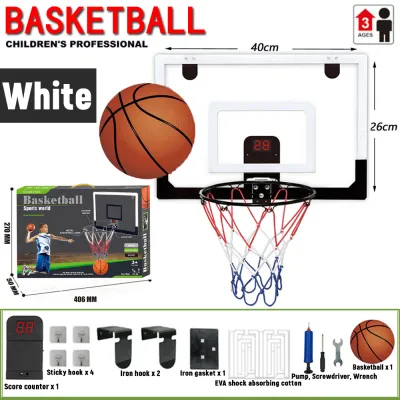
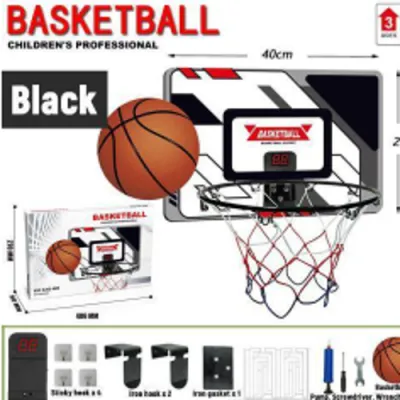
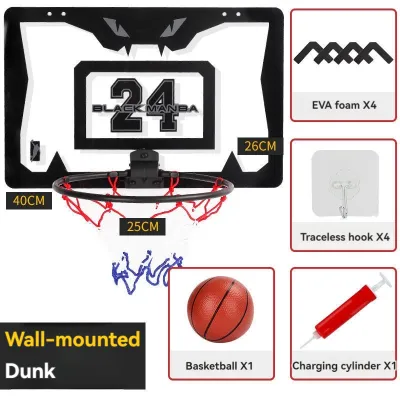
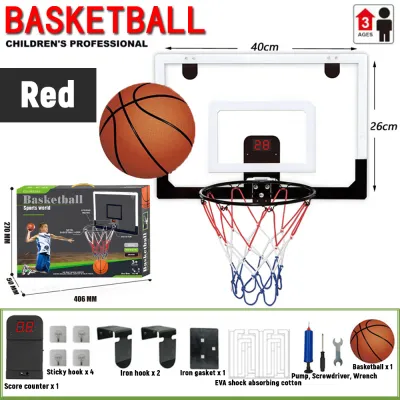
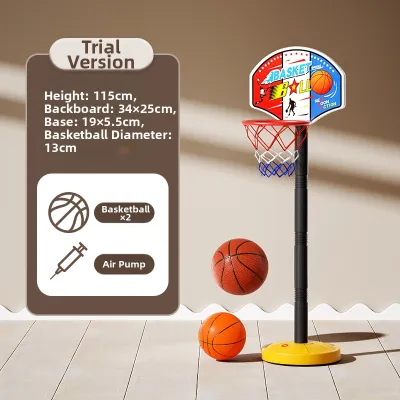
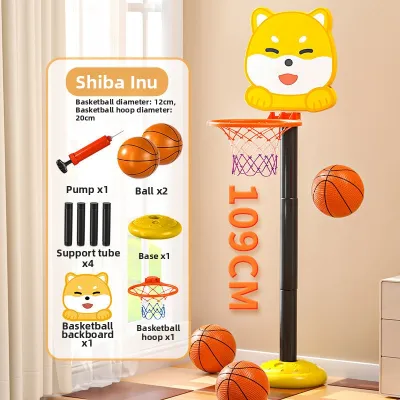
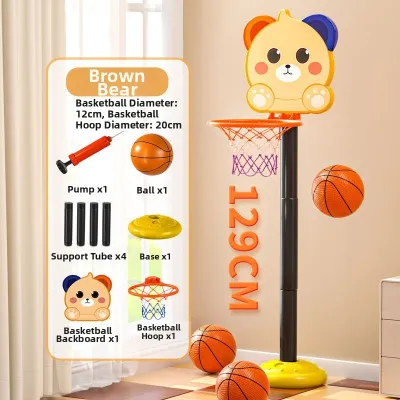
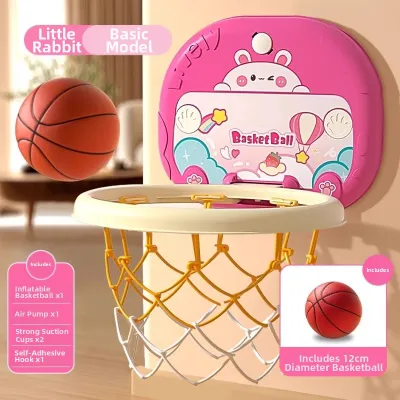
Prices are valid at publication and may change. Please refer to the product page for the latest price.
For players aged 10 and 11, a rim height of 9 feet serves as an excellent transitional stage before they face adult regulation standards. At this age, children are experiencing growth spurts and gaining core strength, allowing them to refine their shooting mechanics, such as elbow alignment and wrist snap. Practicing on a 9-foot rim ensures they do not have to compromise their form to achieve the necessary height and distance.
By the time a child reaches age 12 and older, they are generally ready for the standard 10-foot regulation height. This is the official height used in high school, college, and professional leagues worldwide. Transitioning to 10 feet at this stage aligns with their physical maturity and prepares them for competitive play.
However, these age-based guidelines should serve as a starting point rather than a strict rule. Parents must observe their child’s actual height, physical strength, and current shooting mechanics. If a child is tall for their age but lacks the upper-body strength to reach an 8-foot rim without distorting their form, it is wiser to keep the hoop at 7 or 7.5 feet. The goal is to maintain a smooth, continuous shooting motion where the power originates from the legs and transfers cleanly through the arms. If you notice your child “shot-putting” the ball or leaning backward to launch it, the rim is set too high for their current physical capabilities.
Additionally, pairing the correct rim height with the appropriate youth basketball size is essential for proper skill development. A ball that is too large or heavy will disrupt even the ideal rim height setup. For toddlers and very young children, a Size 3 ball (approximately 22 inches in circumference) is ideal. Children aged 5 to 8 typically benefit from a Size 5 ball (approximately 27.5 inches), which fits their smaller hands and allows for a proper grip. Older youth aged 9 to 11 should transition to a Size 6 ball (approximately 28.5 inches), while players aged 12 and up can safely move to a standard Size 7 ball (approximately 29.5 inches) for boys, or remain with a Size 6 ball for girls.
Adjustable vs. Fixed Hoops: Which Type Fits Your Needs?
When selecting a basketball system for your home, you will primarily choose between adjustable and fixed-height hoops. Adjustable hoops are highly versatile and popular for residential use. These systems typically feature telescoping poles, crank handles, or pneumatic push-button mechanisms that allow you to raise or lower the rim easily. They are ideal for growing children, multi-child households with varying age groups, and shared driveways where players of different skill levels gather. An adjustable system allows the hoop to grow alongside your child, ensuring you do not have to purchase a new system every few years.

In contrast, fixed-height or in-ground hoops offer maximum stability and are designed for dedicated play areas. These systems are permanently anchored into the ground using concrete, which eliminates the shaking, swaying, and vibration common in portable systems. Fixed-height hoops are an excellent choice for older kids, teenagers, and aggressive players who practice high-impact layups or dunks. They provide a highly consistent rebound experience off the backboard, mimicking the feel of a professional indoor court.
Each system comes with distinct trade-offs regarding portability, footprint, and long-term durability. Portable adjustable systems require a large plastic base filled with ballast (water or sand) to remain upright. This base occupies a significant footprint on your driveway or yard, which can limit playing space. While portable hoops are easier to relocate if you move houses, their plastic bases and adjustment joints are more susceptible to wear and tear over years of exposure to tropical weather. In-ground systems have a minimal ground footprint, leaving more room for court markings and active play, but they require a permanent installation and cannot be easily moved once set in concrete.
Before making a purchase, always verify the minimum and maximum height ranges of adjustable models. Some youth-specific models only adjust from 5 to 7 feet, meaning your child will quickly outgrow the system within a couple of years. To maximize the value of your investment, look for adjustable systems that cover a wide range, such as 7.5 feet up to the regulation 10 feet. This ensures the hoop remains useful from late childhood all the way through their teenage years.
Key Features to Check When Buying a Kids' Basketball Hoop
To ensure you select a safe, durable, and high-performing basketball hoop, you must carefully evaluate several product specifications before buying. The primary safety feature to check is base stability. For portable systems, the base serves as the foundation that prevents the entire structure from tipping over. Evaluate the base’s liquid and solid capacity, which is typically specified in gallons or liters. While filling the base with water is convenient and makes the hoop easier to drain and move, water can evaporate over time or leak through small, unnoticed cracks. Sand is significantly denser than water, providing excellent weight distribution and a lower center of gravity, making it the highly recommended ballast for maximum stability.
Next, consider the backboard material and size, as this directly affects both durability and playability. Backboards are generally constructed from polycarbonate, acrylic, or tempered glass. Polycarbonate is highly shatter-resistant and durable, making it an excellent choice for younger children who might throw heavy objects or accidentally strike the board with toys. However, polycarbonate offers a duller bounce. Acrylic backboards provide a cleaner, more professional aesthetic and better rebound performance, though they can scratch over time. Tempered glass is the standard for professional play, offering highly consistent bounce, but it is heavy, expensive, and rarely found on portable youth systems. In humid, tropical climates like the Philippines, it is vital to ensure the backboard frame and mounting brackets are treated with UV-resistant and rust-resistant coatings to prevent rapid degradation from intense sun and seasonal rains.
The rim type is another essential feature to evaluate based on your child’s age and playing style. Standard static rims are bolted directly to the backboard or support pole. While these are well-suited for shooting practice and younger players, they can bend or damage the backboard if a player attempts to hang on them. Breakaway or spring-loaded rims feature enclosed springs that compress under downward pressure, absorbing the impact of dunks or hard layups. This protects both the player’s wrists and the structural integrity of the backboard, making them a safer choice for older, more active players.
Finally, evaluate the price-to-durability ratio within your budget. In the local market, prices can range from around ₱5,000 for basic portable youth models to over ₱30,000 for heavy-duty, semi-professional systems. When comparing options, pay close attention to pole thickness and overall build quality. A thicker, multi-piece steel pole provides much better stability and reduces shaking during play compared to thin, lightweight poles. Additionally, look for packages that include pole padding to protect players from accidental collisions, and verify that all metal components are powder-coated to resist rust and corrosion.
Installation, Safety, and Maintenance Checks
Proper installation and regular maintenance are paramount to keeping your kids’ basketball hoop safe and functional. When assembling a portable hoop, always fill the base to the manufacturer’s specified maximum line immediately after erecting the pole. Never leave an empty or partially filled base unattended, as even a light breeze can tip the heavy structure over and cause severe injury or property damage. Ensure all pole sections are securely locked and aligned according to the instruction manual before allowing children to play.
Routine maintenance is essential, especially in high-humidity environments where metal and plastic degrade more quickly. Regularly inspect the height-adjustment locking mechanisms to ensure they hold the weight of the backboard securely without slipping. Tighten any exposed bolts that may have loosened from the vibration of repeated shots. Check all metal parts for signs of rust, and inspect plastic components for UV degradation, cracking, or brittleness caused by prolonged sun exposure.
Define clear stop-use conditions for your household to prevent accidents. If you notice a cracked base leaking water or sand, a bent support pole, a loose backboard, or a damaged rim mechanism, stop using the hoop immediately until repairs are made. Additionally, during severe weather warnings, such as incoming typhoons or strong winds, play must cease, and the hoop must be secured.
To protect your investment during extreme weather, safely lower adjustable hoops to their lowest height setting to minimize wind resistance. If possible, wheel portable hoops into a garage, carport, or secure indoor area. If the hoop must remain outdoors, anchor it to a secure structure or lay it flat on the ground in a safe direction to prevent it from being blown over and damaged by high winds.
Frequently Asked Questions (FAQ)
Can a toddler use a standard 10-foot hoop?
No, toddlers should not use a standard 10-foot hoop. Attempting to shoot on a regulation-height rim forces very young children to use improper, unsafe shooting mechanics, such as throwing a heavy ball upward with both hands from their chest. This can lead to extreme frustration, muscle strain, and a loss of interest in the sport. Furthermore, throwing a heavy basketball high into the air poses a significant safety risk if the ball falls back down on the child. Instead, introduce toddlers to the game using age-appropriate, plastic mini hoops or highly adjustable toy systems designed specifically for their height and physical capabilities.
How do I know if the base is heavy enough to prevent tipping?
You can verify the stability of your portable hoop’s base by checking the manufacturer’s specified fill capacity and monitoring its behavior during play. A stable base should not lift, wobble, or shift when a basketball strikes the backboard or rim. To maximize stability, fill the base completely with dry play sand rather than water, as sand is roughly 35% denser and will not leak or evaporate. If you must use water, regularly check the water level to ensure no slow leaks have developed. During periods of high winds or storms, always lower the hoop to its lowest height setting to reduce wind resistance and lower the center of gravity.
What size basketball should my child use with their new hoop?
The size of the basketball should directly match your child’s age and hand size to promote proper shooting mechanics and hand-eye coordination. For toddlers and children up to age 4, a mini Size 3 ball is ideal. Children aged 5 to 8 should use a Size 5 ball, which has a circumference of 27.5 inches and is lightweight enough for developing muscles. Players aged 9 to 11 transition to a Size 6 ball (28.5 inches), which is also the standard size for high school, college, and professional female players. Boys aged 12 and older should use the official regulation Size 7 ball (29.5 inches). Using a ball that is too large or heavy will compromise their shooting form and slow down skill development.
Community discussion
Share your experience or ask a question. Comments are reviewed before publication.