
Starting your tennis journey is exciting, but the sheer volume of training gadgets on the market can easily lead to overspending. As a beginner, you do not need high-tech simulators or expensive machinery to build a solid foundation. The most effective tennis training equipment focuses on developing hand-eye coordination, consistent footwork, and a clean swing path. By prioritizing simple, high-return tools, you can accelerate your learning curve while keeping your budget intact for court fees and professional coaching.
Assess Your Readiness: Do You Actually Need Specialized Training Gear?
Before purchasing any specialized training aids, it is important to distinguish between your baseline essentials and auxiliary gear. Every beginner must start with a suitable racket, a few cans of standard tennis balls, and a pair of court-specific shoes. These core items are non-negotiable for safety and basic play. Auxiliary training aids, such as rebounders or agility ladders, are designed to supplement this baseline rather than replace it.
You are ready to invest in training equipment when you can consistently perform a few basic actions on the court. If you can make clean contact with the ball most of the time, understand the difference between basic grips, and sustain a slow, short rally of three to four shots with a partner, you will benefit from targeted training tools. At this stage, solo practice aids help reinforce the muscle memory you are starting to develop.
Products mentioned in this guide
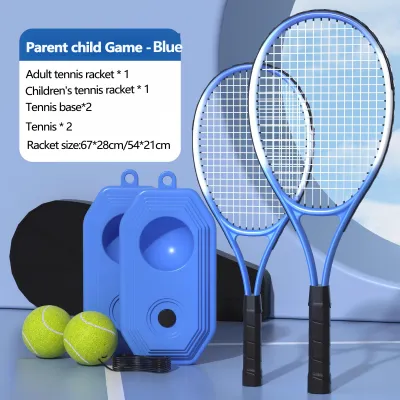
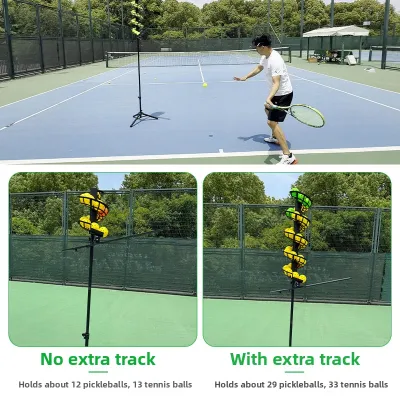
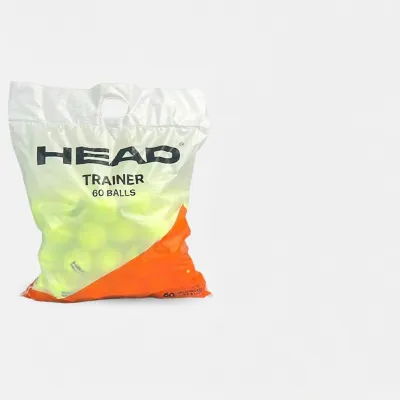
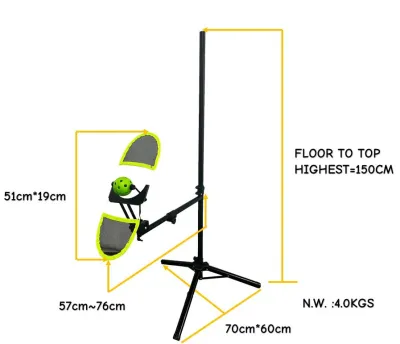
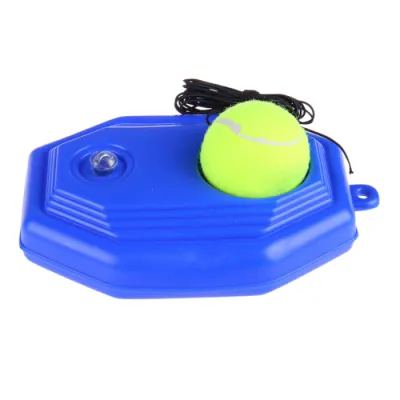
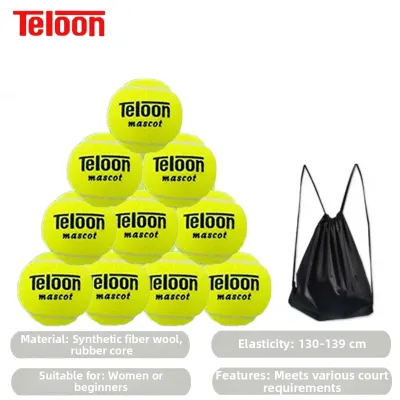
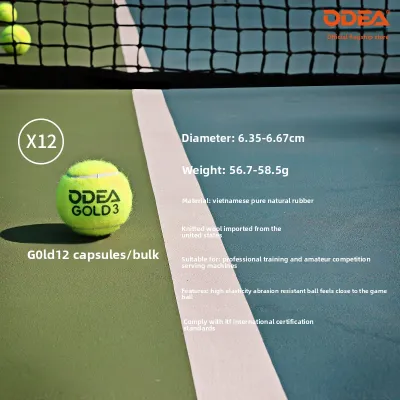
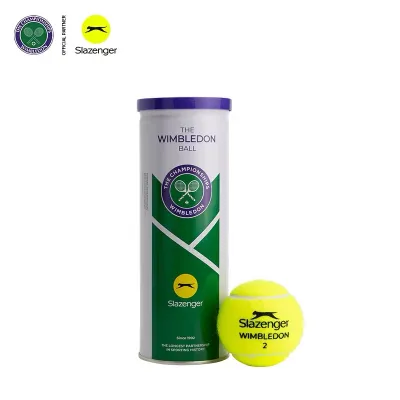
Prices are valid at publication and may change. Please refer to the product page for the latest price.
Conversely, if you are still struggling to coordinate your swing or frequently miss the ball entirely, specialized gadgets can actually hinder your progress. Beginners who cannot yet time a basic bounce are better off spending their time on simple hand-eye coordination drills, working with a coach, or practicing against a flat concrete wall. Investing in gadgets too early often leads to frustration and can entrench poor physical habits.
The core principle of any tennis training equipment is that it should enhance your active court time, not serve as a shortcut. No solo training aid can replicate the unpredictable spin, speed, and tactical placement of a live opponent. Use these tools to refine your mechanics and build physical conditioning, but always keep your ultimate goal focused on playing real matches on a proper court.
High-ROI Training Equipment for Fundamental Skills
When you are ready to expand your gear collection, focusing on high-return-on-investment (ROI) tools ensures you get the most value for your money. The best training aids are those that allow you to practice independently, improve your physical movement, and refine your grip mechanics without requiring a dedicated partner.

Solo Practice and Consistency Aids
A high-quality tennis rebound net is one of the most effective tools for building consistency. Unlike a solid concrete wall, which returns the ball with flat, rapid velocity, a tensioned rebound net absorbs some of the impact and returns the ball with a more realistic, looping trajectory. When selecting a rebound net, look for a powder-coated steel frame that can withstand high humidity and tropical weather conditions, as rust can quickly degrade cheap metals. Adjustable tension and angle settings are also highly beneficial, allowing you to transition between deep groundstroke practice and quick reaction volleys.
A ball hopper is another essential tool that drastically increases your active hitting time. A standard wire or lightweight plastic hopper with a capacity of 50 to 75 balls is ideal for beginners. Hoppers with larger capacities become too heavy to carry comfortably to local municipal courts, while smaller ones require you to stop and collect balls too frequently. Look for a model with convertible handles that fold down to act as sturdy legs, raising the basket to hip height so you do not have to bend over repeatedly during serve practice.
The type of balls you use for practice is just as important as the basket holding them. Beginners should opt for pressureless tennis balls for repetitive solo drills and rebounder sessions. Standard pressurized balls rely on internal gas pressure, which leaks out over a few weeks, leaving the balls flat and useless. Pressureless balls rely on a thicker, highly durable rubber core to generate bounce, meaning they maintain their playability almost indefinitely. While they feel slightly heavier and sound different off the stringbed, their long-term durability makes them incredibly cost-effective for high-repetition training.
Footwork and Court Awareness Tools
Tennis is as much about footwork as it is about hitting the ball, making agility ladders a vital addition to your kit bag. An agility ladder is a simple set of nylon straps and plastic rungs that lies flat on the court surface. Spending ten minutes on footwork drills before your hitting session programs your brain for the split-step—the small, active hop players make just as their opponent strikes the ball. These drills develop the rapid, micro-adjustment steps necessary to position your body perfectly relative to a bouncing ball, preventing you from reaching or lunging.
Cone markers are highly versatile, low-cost tools that help build court awareness and target accuracy. You can place these low-profile plastic discs in the deep corners of the service boxes to serve as visual targets for your serve practice. They can also be set up on your side of the court to mark recovery boundaries, forcing you to run back to a central baseline position after every mock groundstroke. Because they are lightweight and stackable, they take up virtually no space in a standard tennis bag.
Grip and Vibration Management
Overgrips are thin, wrap-around bands applied over your racket’s original factory grip to manage sweat and improve control. In hot, humid tropical climates, sweaty hands can easily cause your racket to twist during off-center hits, which are highly common for beginners. Utilizing a tacky or highly absorbent overgrip ensures a secure hold without requiring you to squeeze the handle too tightly, which can lead to wrist strain. They are inexpensive consumables that allow you to experiment with different textures and grip thicknesses until you find what feels most comfortable.
Vibration dampeners are small silicone or rubber inserts placed between the center strings near the racket throat. While they do not prevent chronic injuries like tennis elbow, they alter the acoustic feedback of the ball strike, transforming a loud, high-pitched ping into a dull, satisfying thud. By reducing the distracting high-frequency vibrations that travel up the arm, dampeners help beginners focus on the physical sensation of clean, centered contact on the stringbed.
Unnecessary or Premature Training Gear to Skip
It is easy to get distracted by advanced, high-tech training gadgets that promise rapid improvement. However, many of these items are either too complex for beginners or carry a high risk of developing poor habits and physical strain.
Automated Ball Machines
While automated ball machines are popular in commercial clubs, they are generally a poor investment for early-stage beginners. A ball machine delivers balls with mechanical consistency, which completely removes the element of anticipation from your practice. In a real game, you must learn to read your opponent’s racket angle, body positioning, and swing speed to predict where the ball will land. A machine provides none of these critical visual cues, leaving you unprepared for live play.
Furthermore, practicing with a machine without a coach present can easily entrench bad mechanical habits. Because the machine feeds the ball directly to a single spot, you can easily stand stationary and swing repeatedly using poor form, building incorrect muscle memory that is difficult to correct later. When you factor in their high cost—often ranging from ₱40,000 to over ₱100,000—and the hassle of transporting and maintaining a heavy battery-powered unit, your budget is far better spent on local court fees and private coaching.
Weighted Rackets and Swing Trainers
Weighted training rackets and heavy wind-resistance fans are designed to build forearm strength and increase swing speed, but they pose a significant injury risk for beginners. A novice player has not yet conditioned their tendons and joints to the specific physical stresses of tennis. Swinging an artificially heavy racket can easily cause lateral epicondylitis, commonly known as tennis elbow, or lead to shoulder and wrist strain.
Beginners do not need raw muscular power to hit a tennis ball effectively; instead, they need to develop a smooth, relaxed kinetic chain where power is generated by the legs and hips, transferring seamlessly through the torso to the arm. If you want to practice your swing path off the court, simple shadow swinging with your standard, unweighted racket in front of a mirror is highly effective and completely safe. For building tennis-specific shoulder stability, a set of light resistance bands used for gentle rotator cuff exercises is a much safer alternative.
Integrating Your Gear: A Realistic Practice Routine for Beginners
To get the most out of your training equipment, you should organize your practice into a structured, efficient routine. A balanced 60-minute solo session allows you to work on your movement, consistency, and serving without physical exhaustion.
Start with a 10-minute warm-up using your agility ladder. Set the ladder up on the court and perform lateral shuffles, quick forward-and-back steps, and split-step simulations to activate your feet and raise your heart rate. Transition to 30 minutes of groundstroke consistency practice using your rebound net or feeding yourself balls from your hopper. Focus on maintaining a relaxed grip and hitting deep, controlled shots, practicing your foot positioning between each stroke. Dedicate the final 20 minutes to serve practice, placing cone markers in the deep corners of the service boxes as targets while utilizing your hopper to collect balls efficiently.
When practicing outdoors in the Philippines, managing the tropical heat and high humidity is essential for safety. Schedule your training sessions during the cooler parts of the day, such as early morning between 6:00 AM and 8:00 AM, or late afternoon from 4:00 PM onwards. Always bring a large insulated water bottle filled with electrolyte-rich water to stay hydrated, as high humidity slows down sweat evaporation and increases the risk of heat exhaustion.
Pay close attention to your physical limits and stop the drill immediately if you begin to feel lightheaded or excessively tired. Practicing while fatigued leads to sloppy mechanics, which defeats the purpose of solo training by reinforcing bad muscle memory. As your skills progress and you can comfortably sustain a 10-shot rally on your rebound net, begin transitioning away from solo aids. Gradually replace your solo sessions with practice matches and hitting sessions with real partners to develop the tactical awareness and adaptability needed for true competitive play.
Frequently Asked Questions (FAQ)
Can I just practice against a wall instead of buying a rebound net?
Yes, a smooth, flat concrete wall is an excellent, free alternative for developing timing and hand-eye coordination. However, a wall returns the ball much faster than a net does, which can rush a beginner’s preparation, and it does not perfectly simulate the natural upward bounce of a tennis court. Additionally, finding a suitable public wall where tennis play is permitted and safe from nearby traffic can be challenging.
How many tennis balls should a beginner buy for a practice hopper?
A beginner should start with 50 to 75 balls to fill their practice hopper. This quantity provides a continuous, high-repetition hitting session without requiring you to stop constantly to gather balls, yet it remains light enough to carry to the court easily. To manage costs, purchase pressureless practice balls in bulk bags rather than buying multiple individual pressurized cans.
Do beginners need specialized tennis shoes for training drills?
Yes, court-specific tennis shoes are highly recommended even when performing basic footwork and agility drills. Running shoes are designed strictly for forward motion and lack the lateral support needed for the sudden stops and side-to-side movements of tennis. Using running shoes during agility ladder or cone drills significantly increases your risk of rolling an ankle on hard court surfaces.
Community discussion
Share your experience or ask a question. Comments are reviewed before publication.