
Finding the right roller skate for kids girl can transform a child’s outdoor play into a lifelong passion for fitness, coordination, and balance. For young beginners, the ideal adjustable roller skates must strike a balance between structural safety, ankle stability, and room to grow. In the Philippines, where young skaters often practice on warm asphalt driveways, subdivision roads, or local multi-purpose courts, choosing a skate that can withstand tropical heat and rougher outdoor surfaces is essential. By selecting a high-quality adjustable model, parents can ensure their child enjoys a comfortable, secure fit that adapts to their rapidly growing feet without compromising on safety.
While the visual appeal of bright colors and flashing lights is often what catches a child’s eye, the technical construction of the skate determines their safety and confidence on the wheels. Proper ankle support prevents painful rolling or strain, while high-quality polyurethane wheels offer the necessary grip to prevent slips on dusty or uneven ground. This guide breaks down why adjustable skates are a smart investment, what key features to look for to ensure stability, and how to properly measure and fit your child’s first pair of skates.
Why Adjustable Skates Are Essential for Growing Beginners
Children’s feet grow at an astonishing rate, often changing by one or two full shoe sizes within a single year. Purchasing fixed-size roller skates for a young beginner usually means the footwear will become uncomfortably tight within a few months, forcing parents to choose between buying another pair or letting their child ride in painful, cramped boots. Adjustable roller skates solve this dilemma by incorporating an expandable toe box that can adjust across three to four distinct shoe sizes, significantly extending the usable lifespan of the equipment.
Products mentioned in this guide
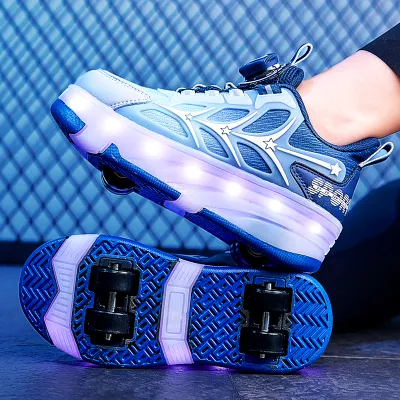
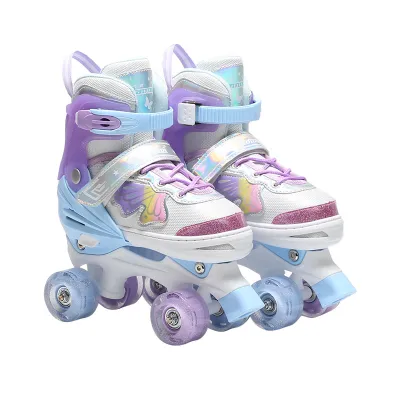
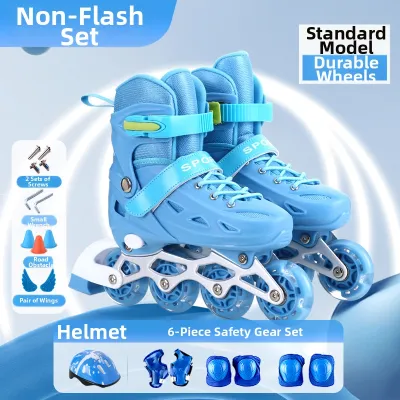
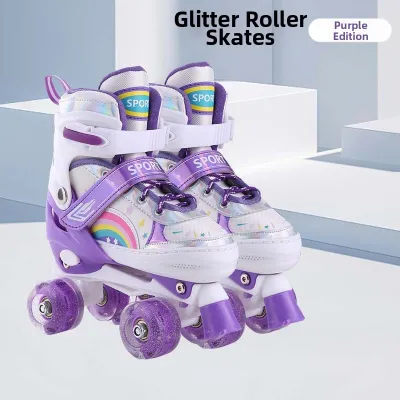
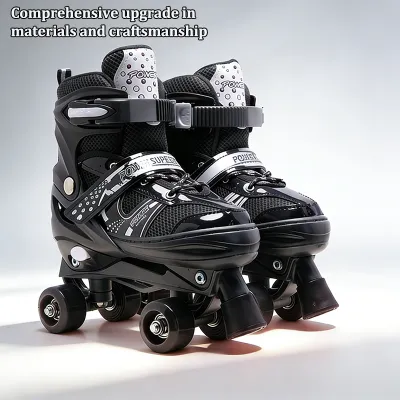
Prices are valid at publication and may change. Please refer to the product page for the latest price.
From a financial perspective, investing in a single pair of high-quality adjustable skates is far more cost-effective than purchasing multiple cheap, fixed-size pairs over a short period. High-quality adjustable models are built with durable materials designed to survive several years of wear and tear, making them a highly economical choice for families. This longevity ensures that your child can progress from their very first shaky steps to confident gliding on the same pair of skates.
Some parents worry that the moving parts in an adjustable skate might compromise its structural integrity or make it less stable than a traditional fixed boot. However, modern adjustable mechanisms from reputable manufacturers are engineered to lock securely into place, maintaining a rigid frame and a stable base. When properly locked, the expanding joint does not wiggle or slide, ensuring that the child’s foot remains fully supported and aligned over the wheels at all times.
When evaluating adjustable skates, parents should focus on three core criteria: robust lateral ankle support, an easy-to-use and secure adjustment mechanism, and a beginner-friendly wheel configuration. These elements work together to build a young skater’s confidence, allowing them to focus on learning balance and basic strides rather than struggling with a loose, uncomfortable, or unstable boot.
Key Features for Ankle Support and Beginner Stability
Boot Construction
The choice between a hard-shell boot and a soft-boot design is one of the most important decisions when selecting a roller skate for kids girl. Hard-shell boots, constructed from rigid plastic, offer maximum lateral support and ankle protection, which is highly beneficial for absolute beginners who have not yet developed their ankle strength. Soft-boot designs, on the other hand, prioritize immediate comfort, breathability, and flexibility, making them lighter and easier to wear for extended periods, though they require internal reinforcement to keep the ankle safe.

Cuff Height and Closure Systems
A high cuff is non-negotiable for beginner skaters because it stabilizes the ankle joint and prevents the foot from rolling inward or outward, a common issue known as pronation. To keep the foot firmly positioned, look for a multi-point closure system that typically includes a top ratcheting buckle, a middle power strap (usually heavy-duty hook-and-loop), and traditional laces. This combination locks the heel securely into the back of the boot, preventing heel lift and ensuring that every movement of the leg translates directly into controlled skate movement.
Wheel and Bearing Configuration
For beginners, a standard quad-wheel setup (two wheels in front, two in back) provides a wider, more stable platform than inline skates, making it easier to stand still and balance. The wheels themselves should be made of high-quality polyurethane with a softer durometer rating, such as 82A, which offers excellent grip and shock absorption on outdoor pavements. Avoid cheap plastic wheels, which slide unpredictably on smooth surfaces and vibrate excessively on rough asphalt, making it difficult for a child to maintain control.
Braking Systems
A reliable braking system is the most critical safety feature on any beginner skate, as it teaches children how to stop safely and independently. Quad skates feature a front toe stop, which should be made of grippy rubber rather than hard plastic to ensure effective stopping power on both indoor and outdoor surfaces. Before every skating session, parents should inspect the brake pad to ensure it is securely attached and has not worn down past the manufacturer’s recommended replacement line.
Top Adjustable Roller Skates for Beginner Girls
Hard-Shell Adjustable Skates for Maximum Ankle Support
Hard-shell adjustable skates are the gold standard for young beginners who need maximum structural assistance to keep their ankles straight. These skates feature a rigid plastic outer skeleton that surrounds the foot and ankle, physically preventing the ankle from bowing inward or outward during strides. This rigid support is especially helpful for younger children or those who may have lower muscle tone in their feet and ankles, as it provides a highly stable platform that builds confidence quickly.
When shopping for hard-shell skates, look for models that feature a thick, removable, and washable padded inner liner to cushion the foot against the hard plastic exterior. The closure system should feature heavy-duty, impact-resistant ratcheting buckles that do not slip or pop open during use. While these skates provide unmatched lateral support, parents should note that they are generally heavier than soft-boot models and offer less ventilation, which can lead to warm feet during hot afternoon sessions in the Philippines.
Before purchasing a hard-shell skate, always consult the manufacturer’s specific size chart and check the maximum weight capacity. Ensure that the adjustment mechanism is simple to operate but locks with a distinct, audible click to guarantee that the shell is secure. Because hard-shell boots do not stretch, verifying that the inner liner matches the shape of your child’s foot is crucial to prevent painful pressure points on the ankles or toes.
Soft-Boot Adjustable Skates for Comfort and Flexibility
Soft-boot adjustable skates are designed for children who prioritize immediate comfort and a lightweight feel. These skates utilize a construction similar to a high-top athletic shoe, featuring breathable mesh panels, padded foam collars, and flexible synthetic fabrics. This design allows for excellent airflow, which is highly beneficial in warm, humid climates, helping to keep the child’s feet cool and dry during long skating sessions at the park.
Despite their flexible appearance, high-quality soft-boot skates are not flimsy; they incorporate a sturdy internal composite frame and a rigid high cuff to provide the necessary ankle support. The key to a safe soft-boot skate is a robust closure system that can be pulled tight enough to compress the soft fabric around the foot, ensuring a snug, secure fit. Parents should avoid ultra-cheap soft boots that lack a rigid plastic cuff, as these will not provide enough support to keep a beginner’s ankles stable.
When choosing a soft-boot model, inspect the heel counter (the back portion of the boot) to ensure it is stiff and reinforced. This reinforcement prevents the heel from sliding sideways inside the boot, which is essential for maintaining balance. Soft boots are highly forgiving and rarely require a break-in period, making them an excellent choice for children who are sensitive to hard materials or prone to blisters.
Light-Up and Themed Skates for Extra Motivation
Many adjustable roller skates designed for young girls feature vibrant color schemes, cartoon themes, or light-up LED wheels. These visual elements can be highly motivational, encouraging children to put on their gear and practice more frequently. Light-up wheels are typically powered by kinetic energy via a magnetic spacer inside the wheel hub, meaning they do not require batteries and will flash automatically as long as the wheels are spinning.
While these aesthetic features are fun and can even increase visibility during late afternoon sessions, they should never take priority over the skate’s structural safety. Parents must carefully inspect the underlying specifications of any themed skate to ensure that the boot, frame, and wheels meet high safety standards. A beautifully decorated skate is useless and dangerous if the boot lacks ankle support or the wheels are made of slippery, brittle plastic.
When evaluating light-up skates, verify that the wheels are made of high-quality polyurethane (PU) rather than polyvinyl chloride (PVC) or cheap plastic. Polyurethane wheels provide the grip and rebound necessary for a smooth, safe ride, whereas plastic wheels can slide out from under the child on smooth tiles or concrete. Always prioritize a supportive boot, a reliable brake, and quality wheels over visual themes or decorative accessories.
How to Measure, Fit, and Adjust the Skates Properly
To ensure a safe and comfortable skating experience, parents must accurately measure their child’s feet before purchasing or adjusting a pair of skates. Never rely solely on your child’s current everyday shoe size, as skate sizing can vary significantly between different brands and manufacturers. Follow these steps to get an accurate measurement:
- Have your child stand flat-footed on a blank sheet of paper placed against a wall, wearing the exact socks they plan to use while skating.
- Use a pencil held vertically to trace the outline of their foot, marking the furthest point of the heel and the tip of the longest toe.
- Measure the distance between these two points in centimeters or millimeters using a ruler.
- Repeat the process for both feet, as one foot is often slightly larger than the other, and use the larger measurement to consult the manufacturer's size chart.
Once you have the correct size range, adjusting the skate to fit your child’s foot is a straightforward process. Most modern adjustable skates utilize a simple push-button mechanism located near the heel or under the arch of the foot. To adjust the size, press and hold the release button, slide the toe box forward or backward to the desired size marker, and release the button. Always pull on the toe box afterward to ensure that the mechanism has clicked firmly and securely into place.
If the adjustment mechanism feels stuck, grinding, or does not click into place smoothly, do not force it. Stop immediately and consult the manufacturer’s instruction manual or contact a professional at a local skate shop. Forcing a jammed mechanism can damage the locking pins, which could cause the skate to unexpectedly compress or expand while your child is riding, leading to a loss of balance and potential injury.
To verify that the skates fit properly, have your child put them on and lace them up securely while sitting down. Once laced, have them stand up and bend their knees slightly; their toes should lightly brush the front of the boot without feeling cramped or curled. Ask your child to lift their heel inside the boot; there should be little to no vertical movement, indicating that the heel is locked securely in place and will not rub or cause blisters during use.
Essential Safety Gear to Pair with First Skates
No matter how high-quality or stable a pair of adjustable skates is, they cannot prevent falls, which are an inevitable part of the learning process. To protect your child from scrapes, bruises, and more serious injuries, they must wear a complete set of safety gear every single time they skate. A standard safety gear set includes a properly fitted helmet, knee pads, elbow pads, and wrist guards, all of which should be worn before the wheels touch the ground.
Wrist guards are arguably the most critical piece of protective gear for beginner skaters, as the natural human instinct during a fall is to reach out with open hands to break the impact. This action puts immense stress on the wrists, making hyperextension and fractures the most common injuries among new skaters. High-quality wrist guards feature rigid plastic splints on the palm and back of the hand to absorb the impact and slide along the pavement, preventing the wrist from bending backward.
When purchasing safety gear, look for products that carry recognized safety certifications (such as EN 14120 for protective gear or CPSC for helmets) printed clearly on the labels. Avoid cheap, uncertified pads that rely on thin foam and flimsy plastic shells, as these can crack or shift out of place during a hard fall. The pads should fit snugly without cutting off circulation, utilizing adjustable elastic straps to keep them securely positioned over the joints.
It is important for parents to remember that safety gear is designed to minimize the severity of injuries, but it does not replace active adult supervision and proper instruction. Always teach your child the correct way to fall—falling forward onto their knee and elbow pads while sliding on their wrist guards, rather than falling backward onto their tailbone or head. Ensure they practice in safe, flat, traffic-free environments, such as closed subdivision roads, empty parking lots, or designated park paths, away from moving vehicles and steep hills.
Frequently Asked Questions (FAQ)
Can adjustable roller skates be used for both indoor and outdoor skating?
Yes, adjustable roller skates can be used for both indoor and outdoor skating, but their performance and safety depend heavily on the type of wheels installed. Outdoor skating requires softer, wider wheels (typically with a durometer rating of 78A to 82A) to absorb shocks from pebbles, cracks, and rough asphalt. If your child plans to transition between indoor rinks and outdoor driveways, verify whether the skates come with hybrid wheels or if you will need to purchase a separate set of outdoor wheels to ensure a smooth, safe ride.
How often should I check the fit of my child's adjustable skates?
Parents should check the fit of their child’s adjustable skates every two to three months, or at the start of every new skating season. Because children’s feet grow rapidly, they may not always realize or communicate that their skates have become too tight until they experience discomfort. Watch for physical signs such as red marks on the feet, complaints of numbness or tingling, or toes curling inside the boot, and adjust the skate size upward immediately if any of these signs appear.
When is it time to upgrade from beginner adjustable skates to advanced ones?
It is time to upgrade to advanced, fixed-size skates when your child has maxed out the largest size setting of their adjustable skates, or when their skill level outgrows the performance limits of beginner gear. Signs of readiness include mastering basic stops, crossovers, and backward skating, or expressing a serious interest in specialized disciplines like artistic skating, speed skating, or roller hockey. Advanced disciplines require highly rigid, non-adjustable boots that offer superior energy transfer and precision, which adjustable skates cannot provide.
Community discussion
Share your experience or ask a question. Comments are reviewed before publication.