
Quick Answer: What to Look for in a Beginner Archery Band
For a beginner in the Philippines, the ideal setup is a lightweight resistance tube with comfortable, ergonomic handles or a specialized archery form trainer. The primary goal of using an archery training band is to build muscle memory, establish proper back tension, and refine drawing mechanics without the physical strain of pulling a real bow.
Beginners should select a band with a resistance level that is 30% to 50% lighter than their target bow draw weight. This lower tension ensures you can focus entirely on your form, skeletal alignment, and release execution. Starting with too much resistance can lead to shoulder injuries or cause you to develop bad habits early in your training.
Why Beginners Need Archery Training Bands
Developing a consistent shot cycle requires precise muscle recruitment that is difficult to master when simultaneously managing the physical weight of a real bow. An archery training band serves as an accessible, low-fatigue tool that allows novices to practice drawing mechanics repeatedly. By removing the pressure of aiming and releasing a live arrow, you can isolate the specific muscle groups needed for a clean shot. This repetitive practice builds the muscle memory required to make the draw sequence feel natural and automatic.
Products mentioned in this guide
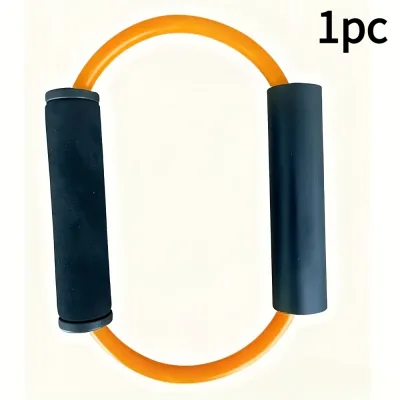

Prices are valid at publication and may change. Please refer to the product page for the latest price.

Specifically, these bands help isolate the rhomboids, middle trapezius, and latissimus dorsi muscles, which are crucial during the scapular retraction phase of the draw. Many beginners mistakenly pull the bowstring using only their arm and shoulder muscles, leading to rapid fatigue and potential rotator cuff strain. Using a light resistance band encourages the correct biomechanical shift, teaching you to pull with your back rather than your biceps. This foundational strength is essential for safely transitioning to higher draw weights later on.
Using a training band also allows you to break down the complex archery shot cycle into distinct, manageable steps. Beginners can practice the setup, where the bow hand and drawing hand are positioned; the draw phase, where the string is drawn back smoothly; the anchor, where the drawing hand finds a consistent reference point on the face; and the transfer, where the holding weight is shifted entirely to the back muscles. Practicing these phases individually with a low-resistance band prevents the cognitive overload that often occurs when a beginner holds a fully loaded, heavy bow on the shooting line.
Additionally, training bands offer unparalleled convenience for indoor practice, which is especially valuable in the Philippines. The local climate often presents challenges for outdoor range sessions, whether due to sudden monsoon downpours during the wet season or extreme heat and humidity in the dry months. A training band allows you to maintain your practice schedule in the comfort of an air-conditioned room or a small living space. This consistency is key to muscle retention and technical progress, ensuring your shooting form does not degrade during long periods away from the range.
Before starting any physical training, understand your physical limits. Training bands are designed to supplement, not replace, professional coaching and proper technique. If you experience sharp joint pain, clicking, or severe fatigue, stop immediately. Always check the manufacturer’s instructions for both your training band and your bow to ensure compatibility and safe usage.
Main Types of Archery Training Bands
When shopping for an archery training band, you will generally encounter three primary designs. Each type offers distinct advantages depending on your specific training goals, budget, and where you plan to practice.
Resistance Tubes with Handles
Resistance tubes are cylindrical bands made of latex or thermoplastic elastomers (TPE) equipped with plastic or foam handles at each end. These are the most common and versatile bands available, serving both general fitness enthusiasts and archers. For archery practice, the handles allow you to mimic the physical sensation of holding a bow grip in your non-dominant hand while pulling the other end with your drawing hand.
The primary benefit of resistance tubes is their wide availability and ease of use. They allow you to simulate a full draw length comfortably, and the handles prevent the band from slipping out of your hands under tension. Many sets come with door anchors, allowing you to secure one end to a door frame to practice specific shoulder-strengthening exercises.
However, resistance tubes have some limitations for dedicated archery practice. The bulky handles do not perfectly replicate the thin, precise feel of a real bowstring or a mechanical release aid. Additionally, if the connection points between the tube and the handle are made of low-quality plastic, they can wear down and present a snapping hazard over time.
Flat Loop and Therapy Bands
Flat loop bands, often referred to as therapy bands, are wide, flat ribbons of rubber or latex. They are commonly sold in continuous loops or long rolls that can be cut to custom lengths. These bands are highly favored by physical therapists for targeted rehabilitation and joint stabilization exercises.
For archers, flat bands are exceptionally useful for warming up the rotator cuff and performing low-resistance scapular squeezes. Because the resistance is distributed across a wider surface area, they place less concentrated pressure on your hands and joints. They are lightweight, highly portable, and can easily be packed into a quiver or bow case.
The main drawback of flat bands is the difficulty of holding them securely during a full-draw simulation. Without handles, you must wrap the flat rubber around your hands or fingers to get a firm grip. This wrapping can restrict local blood circulation, cause discomfort, and make it difficult to maintain a relaxed drawing hand, which is essential for a clean release.
Specialized Archery Form Trainers
Specialized archery form trainers are purpose-built devices designed specifically to replicate the exact feel of a bow’s shot cycle. These trainers typically feature a rigid handle that mimics a recurve or compound bow grip, connected to a resistance band and a simulated string. Some advanced models even include a nocking point or a loop for a mechanical release aid.
The primary advantage of a specialized form trainer is its realism. It allows you to practice your exact finger placement (using a tab or glove) and hand pressure on the grip, which is impossible with standard gym bands. This high level of specificity makes them incredibly effective for refining release mechanics, anchor points, and follow-through consistency.
The trade-off for this specialized design is the cost. These trainers are generally more expensive than standard resistance tubes and are harder to find in general sporting goods stores. They also tend to have a narrower range of adjustable resistance, meaning you may need to purchase additional band attachments as your strength increases.
Essential Features to Check Before Buying
To ensure your training band is safe, durable, and effective for archery-specific movements, you should evaluate several key features before making a purchase.
Material Quality
The choice between natural latex and thermoplastic elastomers (TPE) is highly relevant in the tropical climate of the Philippines. Natural latex offers superior elasticity, a smoother draw curve, and excellent durability under normal conditions. However, latex is highly sensitive to ultraviolet (UV) light, ozone, and extreme heat, which can cause it to become sticky, brittle, and prone to sudden snapping. TPE bands, while slightly stiffer in their stretch profile, are hypoallergenic, highly resistant to UV degradation, and tolerate high humidity and heat much better. If you plan to practice outdoors or store your gear in non-air-conditioned spaces, TPE is often the more practical and long-lasting choice.
Handle Ergonomics
If you choose a band with handles, the design of the grip is critical. Look for handles covered in high-density foam or textured, non-slip rubber. These materials provide a secure, comfortable grip even when your hands sweat in warm weather. Avoid hard, smooth plastic handles, as they can easily slip from your grasp during a draw or cause painful blisters during high-repetition training sessions.
Attachment Points
The connection between the band and the handle or anchor is the most common failure point. Ensure that the band features reinforced sleeve protectors or heavy-duty metal carabiners at the attachment points. Avoid bands where the rubber tube is simply knotted or held by thin plastic clips. A failure at these points under full tension can cause the band to snap back toward your face, posing a serious risk of eye injury.
Color-Coded Resistance
Most reputable manufacturers use a standardized color-coding system to indicate different resistance levels (for example, yellow for extra-light, green for light, red for medium, and blue for heavy). Purchasing a multi-band set with clear color coding allows you to track your progression objectively. It also enables you to use lighter bands for delicate rotator cuff warm-ups and medium bands for strength-building draw cycles.
Matching Resistance to Your Draw Weight
A common mistake among beginner archers is choosing a training band that is too heavy, mistakenly believing that higher resistance will speed up their progress. In archery, technique must always precede physical power.
The golden rule for beginners is that your training band resistance should be 30% to 50% lighter than the actual draw weight of your bow. For instance, if you are training to shoot a 30-pound recurve bow, your training band should offer approximately 15 to 20 pounds of resistance at your full draw length. If you are practicing with a heavier compound bow set at 50 pounds, a band providing 25 to 30 pounds of tension is appropriate.
This lower resistance is essential because it allows you to focus entirely on your biomechanics. When drawing a light band, your muscles do not shake, and you do not have to struggle to reach your anchor point. This calm state allows you to verify your bone alignment, ensure your shoulder blades are properly retracted, and practice a relaxed grip. If the resistance is too high, your body will naturally compensate by using incorrect muscle groups, leading to shrugged shoulders, a bent spine, and ingrained bad habits that are difficult to correct later.
It is also important to consider the type of bow you intend to shoot. Recurve bows feature a linear draw weight curve, meaning the resistance increases steadily the further you draw. For recurve beginners, a continuous-resistance training band is a perfect match. Compound bows, on the other hand, feature a mechanical “let-off” where the draw weight drops significantly at full draw. While standard bands cannot perfectly replicate this let-off sensation, using a light, consistent training band is still highly effective for building the core back strength required to overcome a compound bow’s peak draw weight during the initial draw phase.
To structure your training, adopt a progressive framework:
- Warm-Up Phase: Use an extra-light band (under 10 pounds of tension) to perform high-repetition shoulder rotations and gentle draws to warm up the joints.
- Form and Alignment Phase: Use a light-to-medium band (30% to 50% below bow weight) for slow, deliberate draw cycles, focusing on holding the anchor point and executing a clean release.
- Endurance Phase: Once your form is highly consistent, you can use a heavier band that closely matches your bow's draw weight. Use this band strictly for short endurance holds (holding for 10 to 15 seconds) to build stabilizer muscle stamina, stopping immediately if your form begins to collapse.
Where to Buy Archery Bands in the Philippines
Finding the right archery training band in the Philippines depends on whether you want a specialized archery tool or a versatile fitness band.
Local Archery Shops
For specialized archery form trainers, your best option is to visit a dedicated archery pro shop. Major metropolitan areas like Metro Manila (with shops in Pasig, Quezon City, and Makati), Cebu, and Davao have established archery centers. Visiting a physical shop allows you to seek advice from certified coaches and experienced staff who can help you select a band that matches your specific bow specifications. Many of these shops also allow you to try different trainers before purchasing, ensuring you get the right fit.
Online E-commerce Platforms
If you are looking for standard resistance tube sets, major online marketplaces and sporting goods websites offer a vast selection. These platforms are highly convenient and often provide competitive pricing, with basic resistance tube sets ranging from ₱300 to ₱1,200. When shopping online, always check the seller’s ratings and read customer reviews. Look for reviews that specifically mention using the bands for “archery,” “form practice,” or “shoulder therapy” to verify the quality and elasticity of the rubber.
General Sporting Goods Stores
For immediate, physical purchases of standard fitness bands, large retail sports chains located in major shopping malls across the country are reliable options. These stores stock high-quality resistance tubes and flat bands in their fitness or outdoor sections. While the staff may not have specialized archery expertise, the products they carry are typically manufactured to high safety standards.
Budget Expectations
When planning your purchase, keep these general price bands in mind:
- Standard Flat/Therapy Bands: ₱200 to ₱500. Excellent for budget-conscious beginners and warm-ups.
- Multi-Band Resistance Tube Sets: ₱600 to ₱1,500. Offers great value, versatility, and room for progression.
- Specialized Archery Form Trainers: ₱1,800 to ₱4,500+. A higher initial investment, but highly recommended for serious beginners who want to replicate the exact feel of a bow.
Safety Checks and Daily Maintenance
Because resistance bands store a significant amount of kinetic energy when stretched, maintaining them properly is crucial to prevent sudden snaps that can cause painful injuries.
Pre-Use Inspection
Before every practice session, perform a quick visual and physical inspection of your band. Run your fingers along the entire length of the tube or flat band, feeling for any nicks, cuts, or thin spots. Stretch the band slightly and look closely for micro-tears, discoloration, or white stress marks, especially near the handles and attachment points. If you detect any signs of wear, discard the band immediately and replace it. Never attempt to knot a broken band to continue using it.
Environmental Hazards
Avoid using your training bands near sharp objects, rough concrete surfaces, or metal edges. If you are anchoring the band to a post or door, ensure the contact surface is smooth and free of splinters or sharp corners. Friction against rough surfaces can rapidly wear down the rubber, leading to premature failure.
Proper Storage
The high humidity and heat in the Philippines require careful storage practices. Store your bands indoors in a cool, dry place, away from direct sunlight and heat sources like windows or appliances. Never leave your bands inside a hot car or in a damp gear bag, as extreme heat and moisture accelerate the breakdown of latex and TPE, making them brittle. If the bands get wet from sweat or cleaning, wipe them down with a damp cloth and allow them to air-dry completely in the shade before storing them.
To clean your bands safely, wash them periodically with lukewarm water and a few drops of mild dish soap. Avoid using harsh chemical solvents, alcohol, or abrasive scrubs, as these will degrade the polymer chains of both latex and TPE. After washing, rinse the bands thoroughly with clean water and pat them dry with a soft towel. Let them air-dry completely in a well-ventilated, shaded indoor area. Applying a small amount of talcum powder or cornstarch to latex bands after they are dry can prevent them from sticking to themselves in highly humid tropical environments.
Safe Anchoring and Release
When using a door anchor or securing the band to a fixed object, always verify that the anchor is completely secure before applying tension. Ensure doors are closed fully and locked if possible, so no one opens the door while you are training. Crucially, never release a fully stretched band without a secure grip. “Dry-firing” a training band—releasing it without controlling the contraction—can cause the band or handle to whip back violently, risking severe injury to your face, eyes, or hands.
Frequently Asked Questions (FAQ)
Can I use standard gym resistance bands for archery?
Yes, standard gym resistance tubes with handles are highly effective for building the foundational back strength and shoulder stability required for archery. They are widely available and affordable, making them an excellent starting point for beginners. However, standard gym bands lack the specific finger-grip and string-pressure nuances of a real bow. If your goal is to refine your exact finger release or anchor point, transitioning to a specialized archery form trainer is highly beneficial once you have established basic strength.
How many repetitions should a beginner do daily?
For beginners, focus on quality of movement rather than high volume. Start with 2 to 3 sets of 10 to 15 slow, controlled repetitions, practicing 3 to 4 times a week. Instead of rushing through the movements, hold the full-draw position at your anchor point for 3 to 5 seconds during each repetition. This static hold builds the essential endurance in your stabilizer muscles. Stop immediately if you experience sharp pain, joint clicking, or if muscle fatigue causes your posture to collapse.
When should I replace my archery training band?
You should replace your training band immediately if you observe any visible cracking, deep scratches, permanent stretching (where the band loses its snap-back elasticity), or fraying near the handles. Even if no obvious damage is visible, heavily used latex bands should be proactively replaced every 6 to 12 months. Over time, exposure to sweat, humidity, and stretching weakens the molecular bonds of the rubber, increasing the risk of a sudden, unexpected snap.
Community discussion
Share your experience or ask a question. Comments are reviewed before publication.