
Selecting the right badminton racket—or raketa, as it is locally known in the Philippines—is one of the most critical decisions a player can make. Whether you are stepping onto a polished wooden court in a premier sports complex in Metro Manila or playing a casual match on an outdoor concrete court in your local barangay, your equipment directly dictates your performance, progression, and physical safety. A racket that is too heavy or stiff can lead to rapid fatigue and painful joint injuries, while one that is too light or flexible might limit your power as your skills mature. Understanding your current playing level and matching it with the correct racket specifications is the key to unlocking your full potential on the court.
Key Factors to Consider When Choosing a Badminton Raketa
To make an informed decision, you must first understand the fundamental anatomy of a badminton racket. Manufacturers categorize rackets using standardized metrics for weight, balance, shaft flexibility, and grip size.
Weight is classified using the “U” system. The smaller the number before the U, the heavier the racket. For example, 3U rackets weigh 85 to 89 grams, 4U rackets weigh 80 to 84 grams, and 5U rackets weigh 75 to 79 grams. Heavier rackets (3U) generate more momentum and power behind smashes but require significant arm strength and can cause fatigue over long playing sessions. Lighter rackets (4U and 5U) offer faster swing speeds and quicker defensive reactions, making them highly popular among doubles players and beginners.
Products mentioned in this guide
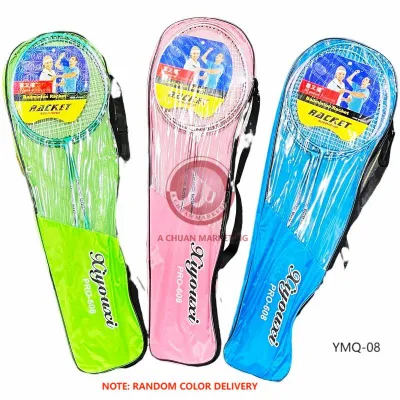
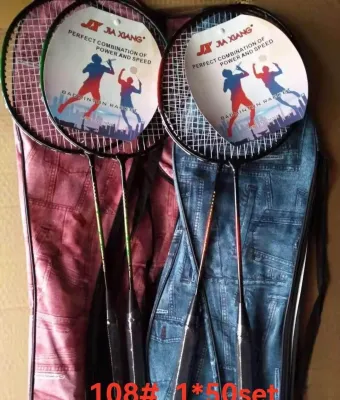
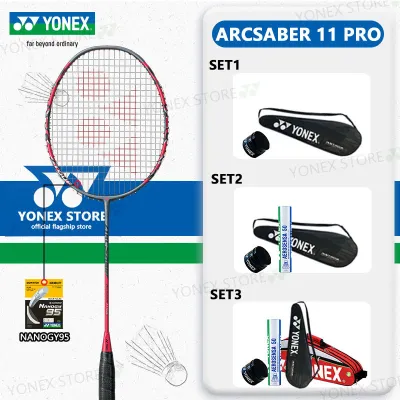
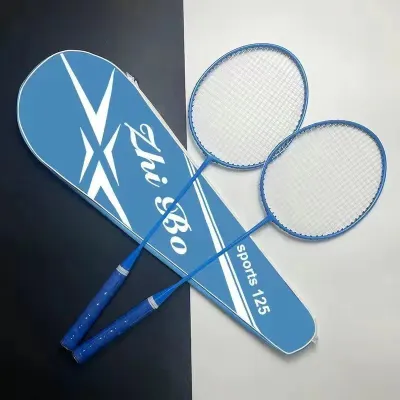
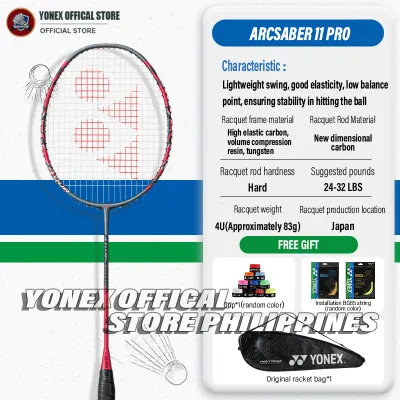
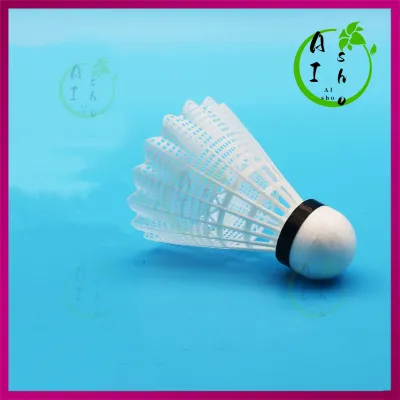
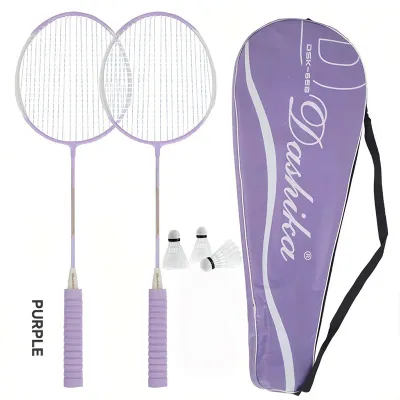
Prices are valid at publication and may change. Please refer to the product page for the latest price.
The balance point of a racket is measured in millimeters from the butt of the handle to the point where the racket balances perfectly. Head-heavy rackets (greater than 295mm) concentrate weight toward the head of the frame. This design acts like a hammer, adding extra momentum to your overhead smashes and clears, making it ideal for offensive players who dominate from the backcourt. Head-light rackets (less than 285mm) concentrate weight in the handle, making the racket feel incredibly light and nimble for rapid defensive blocks, quick net play, and fast-paced drive exchanges. Even-balance rackets (285mm to 295mm) offer a versatile compromise, distributing weight evenly to support both offensive smashes and defensive clears.
Shaft flexibility ranges from highly flexible to extra stiff. A flexible shaft bends easily during a swing, storing elastic energy that snaps forward to launch the shuttlecock. This acts as a catapult, helping players with slower swing speeds or developing techniques to clear the shuttle deep into the opponent’s court. Conversely, a stiff shaft does not bend easily; it requires an explosive, high-speed swing and precise wrist snap to generate power. However, stiff shafts offer unparalleled control and shot placement, as there is minimal twisting or lag during impact.
Grip sizes are indicated by a “G” followed by a number, typically ranging from G4 (larger) to G6 (smaller) in most Asian markets. A smaller grip (G5 or G6) is highly recommended for Asian players as it allows for better finger control and wrist manipulation, which are essential for deceptive net shots and quick changes in racket angles. In the hot and humid tropical climate of the Philippines, sweat can quickly compromise your grip. Adding a high-quality polyurethane (PU) overgrip or a cotton towel grip is essential to maintain a secure hold on your racket and prevent it from slipping out of your hand during high-impact swings.
Top Racket Features for Beginners
When you are starting your badminton journey, your primary focus should be on mastering clean contact, developing proper footwork, and learning the mechanics of a full overhead swing. Your equipment should support this learning curve, not hinder it.

Beginners should look for rackets that are lightweight (typically 4U or 5U) to minimize the risk of shoulder and wrist strain. A head-light or even-balanced racket is ideal because it requires less effort to maneuver, helping you react faster to incoming shots. Furthermore, a flexible shaft is highly beneficial as it assists in generating depth on your clears without requiring flawless, high-speed swing mechanics.
String tension is another critical factor. Beginners should stick to lower string tensions, specifically between 18 to 22 lbs. Lower tension creates a trampoline effect on the string bed, which enlarges the sweet spot and provides easier depth on your shots. It also absorbs more shock upon impact, protecting developing joints from the harsh vibrations that can lead to tennis elbow or shoulder inflammation.
While budget-friendly aluminum-graphite composite rackets exist, it is highly recommended to invest in an entry-level full graphite racket. Graphite absorbs shock much better than aluminum and offers a more consistent feel.
- Yonex Nanoflare 170 Light: This is an exceptional entry-level racket featuring a highly flexible shaft and a head-light balance. It weighs around 5U (approximately 78 grams), making it incredibly easy to swing. It is designed to help beginners execute quick defensive blocks and effortless clears. Price range in the Philippines: ₱2,500 to ₱3,500.
- Li-Ning G-Force Superlight 3700: Built with lightweight carbon fiber, this racket offers a forgiving sweet spot and an even balance. It is highly durable and helps novice players develop consistent timing without tiring their arms. Price range: ₱2,000 to ₱3,000.
- Apacs Vanguard 11: Known for its extreme durability, this racket features a flexible shaft and an even-balance profile. It is a highly cost-effective option for beginners who want a reliable racket that can handle accidental clashes during doubles play. Price range: ₱1,500 to ₱2,200.
Top Racket Features for Intermediate Players
As your technique improves, you will develop faster swing speeds, better court coverage, and a more defined playing style. At this stage, a beginner racket may start to feel too soft or slow, and you will require gear that offers a better balance of power and control.
Intermediate players should transition to medium-weight rackets (typically 3U or 4U) with an even-balance or slightly head-heavy profile. This provides the extra mass needed to execute powerful smashes and deep baseline-to-baseline clears while retaining enough speed for defensive play. A medium-flex shaft is the sweet spot for intermediate players; it offers a crisp response and improved control over shot placement while still providing a touch of elastic assistance for power generation.
String tension should be moderately increased to a range of 22 to 25 lbs. This tighter string bed reduces the trampoline effect, giving you more precise control over the direction and angle of the shuttlecock, though it requires slightly more physical effort to generate depth.
Rackets in this category feature high-modulus graphite frames and advanced isometric head shapes, which expand the sweet spot to ensure off-center hits still travel with decent speed and accuracy.
- Yonex Astrox 88S Game: Designed for intermediate players who enjoy fast-paced doubles play. It features a medium-flex shaft and a slightly head-heavy balance, offering a perfect blend of rapid front-court handling and solid back-court smash power. Price range in the Philippines: ₱4,500 to ₱6,000.
- Victor Thruster K 15 (TK-15): This racket is highly popular in local clubs due to its lightweight (typically 4U) yet head-heavy design. It allows intermediate players to generate impressive smash speeds without putting excessive strain on their shoulders. Price range: ₱3,800 to ₱5,000.
- Li-Ning Windstorm 72: An ultra-lightweight option (72 grams) with a head-heavy balance. It is perfect for intermediate players who want lightning-fast defense and rapid drive exchanges but still want head-weight assistance to execute quick, deceptive drops and smashes. Price range: ₱4,000 to ₱5,500.
Top Racket Features for Advanced Players
Advanced players possess highly refined technique, explosive wrist speed, and excellent physical conditioning. They require specialized, high-performance tools tailored to their specific tactical roles on the court, whether that involves relentless attacking smashes or lightning-fast defensive play.
Advanced rackets are typically heavier (3U for maximum power transfer, or 4U for high-speed versatility) and feature stiff or extra-stiff shafts. A stiff shaft does not flex easily, meaning it relies entirely on the player’s rapid swing speed and precise wrist snap to transfer energy into the shuttlecock. The benefit is absolute precision; the racket head remains incredibly stable during high-impact hits, allowing for pinpoint accuracy.
Advanced players typically string their rackets at 26 lbs or higher. This high tension creates a stiff, board-like string bed that offers instant feedback and maximum control over delicate net shots, tight spinning drops, and steep smashes. However, the sweet spot is significantly smaller, and any off-center hits can send harsh vibrations directly up your arm, requiring flawless technique to prevent injury.
These rackets utilize premium high-modulus graphite, advanced nanocarbon composites, and aerodynamic frame profiles to cut through the air with minimal drag.
- Yonex Astrox 88D Pro: The gold standard for aggressive backcourt players. It features a stiff shaft, a head-heavy balance, and a concentrated sweet spot designed to deliver devastating, steep smashes. Price range in the Philippines: ₱9,500 to ₱12,000.
- Victor AuraSpeed 90K II: A premium choice for speed and drive-oriented players. With a stiff shaft and a slightly head-light to even balance, it is engineered for rapid-fire defensive blocks, quick net interceptions, and high-speed flat exchanges. Price range: ₱8,500 to ₱11,000.
- Li-Ning Tectonic 9: This advanced racket features a unique flexible frame structure at the 5 and 7 o'clock positions, allowing the frame to store and release energy rapidly. It offers incredible bounce and explosive power for advanced offensive players. Price range: ₱9,000 to ₱11,500.
Buying Guide and Authenticity Checks in the Philippines
With the booming popularity of badminton in the Philippines, the market has unfortunately seen an influx of counterfeit rackets. These fake rackets are often constructed from cheap, brittle materials that can easily warp or snap under tension, posing a safety hazard to players on the court. To protect your investment and ensure you are playing with a genuine, high-performance racket, you must perform several key authenticity checks.
First, inspect the hologram sticker. Genuine Yonex rackets, for instance, feature a multi-layered, high-security hologram sticker that is exceptionally difficult to peel off and displays a clear color shift when tilted under light. Second, examine the serial numbers. Authentic rackets have their serial numbers laser-engraved onto the shaft and the cone of the handle. On counterfeit rackets, these numbers are often merely printed on, poorly aligned, or feature incorrect font weights. Third, check the overall build quality. Genuine rackets have flawless paint finishes, perfectly aligned decals, and high-quality, dense plastic grommets. If you notice paint runs, rough edges, or loose grommets, the racket is likely a fake. Finally, inspect the butt cap. The logo should be perfectly centered, and the color should match the official brand specifications exactly.
To guarantee authenticity, strictly avoid purchasing from unverified third-party sellers on e-commerce platforms or informal social media marketplaces offering premium rackets at suspiciously low prices. If a high-end racket that normally retails for ₱10,000 is being sold for ₱1,500, it is guaranteed to be a counterfeit. Always purchase from authorized physical sports dealers, official brand flagship stores, or verified mall stores on major online marketplaces.
Additionally, proper maintenance is crucial to preserve your racket’s structural integrity. Always use a professional stringing service that utilizes electronic stringing machines, as manual or poorly calibrated tensioning can unevenly stress and warp the graphite frame. Before requesting a specific string tension, always check the manufacturer’s maximum recommended tension printed on the cone or shaft of your racket. Exceeding this recommended limit can permanently damage the frame and immediately void your warranty. Regularly inspect the plastic grommets; if they become worn or split, replace them promptly to prevent the thin, high-tension strings from cutting directly into the graphite frame.
Frequently Asked Questions (FAQ)
What string tension should I use for my skill level?
String tension directly affects your racket’s power, control, and sweet spot size. For beginners, a lower tension of 18 to 22 lbs is highly recommended because it offers a larger sweet spot and a trampoline effect that helps generate depth on clears. Intermediate players should aim for 22 to 25 lbs, which provides a balanced mix of control and repulsion power. Advanced players with precise technique can opt for 26 lbs and above to maximize shot control and placement. Keep in mind that the high humidity in the Philippines can cause strings to lose tension faster; storing your racket in a thermal-lined bag when not in use can help mitigate this effect.
How often should I restring my badminton racket?
You should restring your racket whenever your strings lose their elasticity, fray, or snap. Over time, strings undergo tension loss, making your shots feel dull, flat, and lacking in power. A general rule of thumb is to restring your racket as many times in a year as you play in a week (for example, if you play twice a week, aim to restring at least twice a year). However, if you play frequently in hot, humid local courts, the combination of sweat and humidity will degrade string elasticity faster, requiring a restring every 1 to 2 months to maintain peak performance.
Does a more expensive racket automatically make me a better player?
No, a more expensive racket will not automatically improve your game and can actually hinder your progress if it does not match your skill level. Premium, expensive rackets are often designed for advanced players, featuring stiff shafts and head-heavy balances that require high swing speeds and flawless technique to utilize effectively. If a beginner or intermediate player uses an extra-stiff, advanced racket, they will struggle to generate power, and the lack of flex can transmit harsh vibrations directly into their joints, potentially causing painful shoulder or elbow injuries. It is far better to choose a racket based on its weight, balance, and flexibility rather than its price tag.
Community discussion
Share your experience or ask a question. Comments are reviewed before publication.