
To combat sweaty hands during intense badminton sessions in the Philippines, the ideal solution is a high-tack, perforated polyurethane (PU) badminton rubber grip. In tropical conditions where humidity regularly exceeds 80 percent, standard flat grips quickly turn slick, compromising your control and safety. A high-quality rubber grip with physical textures, such as ridges or micro-perforations, channels sweat away from your palm, allowing you to maintain a firm hold on your racket without over-squeezing.
How the Philippine Climate Affects Your Badminton Grip
The tropical climate of the Philippines presents a unique challenge for badminton players. Whether you are playing in a modern sports complex in Metro Manila or a local barangay covered court, the combination of high ambient temperatures and elevated relative humidity creates an environment where heavy sweating is inevitable. When sweat runs down your forearm or accumulates in your palm, it forms a micro-layer of moisture on your racket handle. On a standard, smooth grip, this moisture acts as a lubricant, drastically reducing the friction between your skin and the polyurethane surface.
A slipping grip during fast-paced rallies is more than just a minor inconvenience; it is a significant performance and safety hazard. When your racket slips, the face of the racket can twist slightly upon impact with the shuttlecock, leading to mistimed shots, poor accuracy, and unforced errors. To compensate for this lack of traction, players often unconsciously squeeze the handle much harder than necessary. This chronic over-gripping places immense strain on the muscles of the forearm and the tendons of the wrist, which can rapidly lead to fatigue, reduced wrist snap, and long-term injuries like tendonitis or tennis elbow.
Products mentioned in this guide
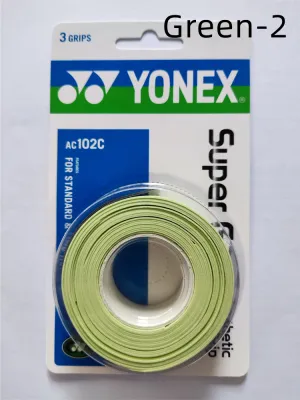
![[ Buy 2 Take 2 ] Yonex AC102EX Overgrip Yonex Thin Grip Belt Pickleball Tennis Badminton Racket Sweat-absorbent Belt Feather Racket Wrapped Belt Hand Rubbe Tennis Badminton Overgrip Grips Tapes](https://img.lazcdn.com/g/p/cf3d0be0e804a079d742737a426c4aee.jpg_400x400q80.jpg_.webp)
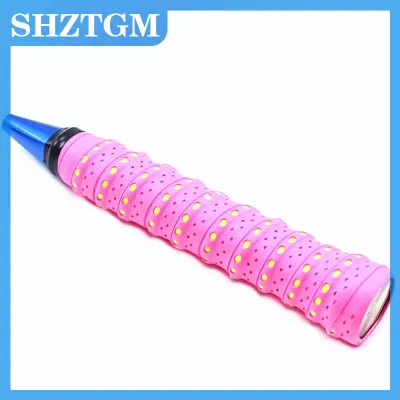
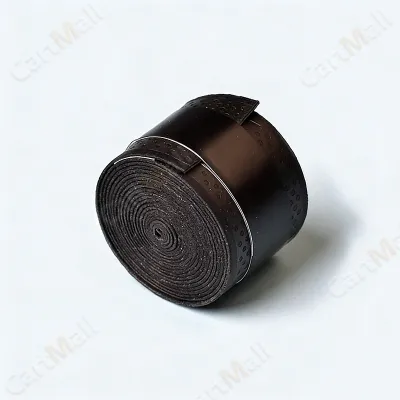
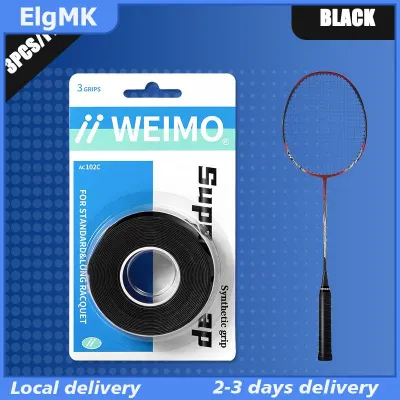

Prices are valid at publication and may change. Please refer to the product page for the latest price.
Many dry-feel grips are designed primarily for temperate climates or fully air-conditioned indoor arenas where sweat evaporates quickly. In a typical Philippine sports hall without climate control, the air is already saturated with moisture, meaning sweat cannot evaporate from the grip surface. Consequently, these dry-feel models quickly become saturated and slick. To maintain peak performance, local players must rely on grips specifically engineered to manage liquid moisture actively, either by channeling it away or by utilizing advanced chemical formulations that remain tacky when wet.
What to Look for in a Rubber Grip for Sweaty Hands
Surface Texture and Pattern
When shopping for a badminton rubber grip to handle heavy sweat, the physical texture of the surface is your first line of defense. Look for grips featuring micro-perforations—hundreds of tiny holes punched throughout the material. These perforations act as drainage channels, allowing sweat to pass through the outer layer instead of pooling on the surface where your hand makes contact. Additionally, grips with raised ridges, ribbed profiles, or wave patterns provide physical contours that lock into the creases of your fingers. This mechanical interlocking grip ensures that even if the rubber surface becomes damp, your fingers have physical barriers to prevent the racket from sliding out of your hand during high-speed smashes.

Material Density and Tackiness
The chemical composition of the rubber or polyurethane determines its inherent tackiness. High-tack rubber grips are formulated with specialized polymers that offer a sticky, adhesive-like feel right out of the package. This tackiness is crucial for sweaty hands because the chemical formulation is designed to maintain high friction coefficients even when exposed to moisture. In contrast, dry-feel or “soft-touch” synthetic grips rely on a velvety, matte finish that feels comfortable when dry but loses its grip entirely once wet. For humid environments, always prioritize a high-tack, wet-friction polyurethane formulation that grips your skin actively rather than relying on a dry, powdery texture.
Thickness and Shock Absorption
The thickness of your grip significantly influences both sweat management and racket control. Thicker grips, ranging from 1.5mm to 2.0mm, are typically replacement grips that offer excellent shock absorption and can absorb a modest amount of moisture into their cushioned inner layers. However, they also increase the overall circumference of the handle, which may not suit players with smaller hands or those who prefer a highly responsive feel of the racket’s wooden bevels. Thinner overgrips, usually measuring between 0.5mm and 0.7mm, offer maximum feel and quick maneuverability but saturate much faster. If you opt for a thin grip, you must be prepared to replace it more frequently to maintain its moisture-wicking properties.
Edge Sealing and Durability
The high humidity and constant friction of badminton play in the Philippines can quickly cause poorly constructed grips to unravel. When evaluating a grip, look for tapered edges that allow for a smooth, overlapping wrap without creating bulky bumps. Furthermore, the quality of the finishing tape included in the package is a key indicator of overall durability. Cheap adhesives will quickly liquefy when exposed to sweat and high temperatures, causing the top of the grip to peel away from the shaft. High-quality grips feature robust, heat-resistant finishing tape that keeps the wrap secure even during multi-hour sessions in non-air-conditioned gyms.
Overgrip vs. Replacement Grip: Choosing the Right Layer for Humid Courts
Overgrips
An overgrip is a thin layer of polyurethane wrapped directly over your racket’s existing base grip. The primary advantage of an overgrip is its convenience and cost-effectiveness; in the Philippines, a single overgrip typically costs between ₱50 and ₱150, making it highly affordable to swap out regularly. Overgrips provide an immediate boost in tackiness and allow you to customize the feel of your racket handle without adding significant weight. However, because they are thin, they offer minimal additional cushioning and can quickly become waterlogged if you sweat heavily. If the base grip underneath is already worn out, moldy, or compressed, an overgrip will not fix the underlying structural issues and may slide around the handle.
Replacement Grips
Replacement grips are thicker, cushioned wraps designed to be applied directly to the bare wooden handle of your racket. They serve as a complete renewal of your racket’s handle system, offering superior shock absorption and a clean, hygienic surface. A high-quality replacement grip provides an excellent moisture barrier, preventing sweat from seeping into the wooden handle, which can cause the wood to rot, weaken, or emit unpleasant odors over time. The downsides are that replacement grips are more expensive, usually ranging from ₱200 to ₱400 or more, and they require more time and precision to wrap correctly. They also increase the handle size, which can alter the balance point of your racket.
Decision Framework
To choose the right option for your needs, evaluate your playing frequency, sweat volume, and the current state of your racket handle:
- Choose an overgrip if: You play once or twice a week, prefer a thin handle that allows you to feel the bevels of the wood for precise finger placement, and want a cost-effective solution that you can change every few sessions.
- Choose a replacement grip if: Your current factory grip is peeling, smells bad, or has flattened completely, or if you require maximum cushioning to alleviate wrist and elbow strain during long, intensive matches.
How to Maintain Grip Tackiness in a Tropical Climate
Post-Play Drying
Proper maintenance is essential to prolonging the life of your badminton rubber grip in a tropical climate. Immediately after your session, use a dry microfiber towel to thoroughly wipe down the grip. This simple step removes the acidic sweat, salt crystals, and skin oils that accumulate during play. If left on the grip, these substances will chemically break down the polyurethane material, causing it to lose its tackiness, turn slick, and degrade prematurely.
Air Circulation
Never leave your racket inside a closed, damp sports bag after playing. The trapped humidity creates a breeding ground for bacteria and mold, which will ruin the grip’s material and cause a persistent foul odor. Instead, take your racket out of the bag as soon as you get home and place it in a well-ventilated, shaded indoor area to air-dry. Warning: Avoid exposing the grip to direct sunlight or leaving it in a hot car trunk, as extreme heat will bake the rubber, causing it to dry out, crack, or become permanently sticky and unusable.
Using Grip Powder or Rosin
If you find your hands slipping during a long match, applying a small amount of badminton-specific grip powder or rosin can temporarily restore your hold. These powders work by absorbing excess surface moisture instantly. However, use them sparingly; applying too much powder can create a thick, pasty buildup when mixed with sweat, which actually reduces friction and ruins the natural tackiness of the rubber. Apply a light dusting to your hands or the grip, and wipe away any excess before stepping back onto the court.
Rotation Strategy
If you play multiple matches in a single day or participate in long tournaments, consider carrying at least two rackets with identical grip setups. Rotating between your rackets every one or two sets allows the saturated grip of the first racket to dry out naturally while you play with the second. This rotation strategy prevents any single grip from becoming completely waterlogged, preserving the integrity of the polyurethane and ensuring you always have a reliable, high-traction surface ready.
When to Replace Your Badminton Rubber Grip
Visual Cues
Knowing when to replace your grip is key to maintaining consistent performance and preventing injuries. Visually inspect your grip regularly for signs of wear. If you notice the surface texture has flattened out where your thumb and fingers rest, or if there is visible tearing, peeling edges, or fraying, the grip is past its prime. Another clear visual indicator is permanent discoloration or white, crusty patches caused by dried sweat salts that cannot be wiped away.
Tactile Cues
Pay close attention to how the grip feels when it is completely dry. If the rubber feels unusually hard, stiff, or has a smooth, plastic-like texture, the polyurethane has oxidized and lost its elastic properties. Conversely, if the grip feels excessively mushy, sticky like wet glue, or begins leaving colored or black rubber residue on your hands during play, the material is actively disintegrating and must be stripped off immediately.
Performance Cues
Your performance on the court will often tell you when a grip change is overdue. If you find yourself constantly adjusting your hand position or wiping your hands on your shirt mid-rally, your grip is no longer doing its job. A critical warning sign is when the racket twists in your hand during off-center hits or fast defensive blocks. If you cannot maintain a secure hold with a relaxed hand, replace the grip before your next session to protect your wrist and restore your control.
Frequently Asked Questions (FAQ)
Can I use a towel grip instead of a rubber grip for sweaty hands?
Towel grips made of cotton are highly effective at absorbing massive amounts of sweat, functioning much like a sponge. However, they lack the natural tackiness of rubber and offer almost no shock absorption. When a towel grip becomes fully saturated, it becomes heavy, soggy, and rough, which can cause blisters and require you to change it very frequently—often after every single playing session—to prevent bacterial growth and foul odors. For players who prefer a consistent, sticky feel and low maintenance, a textured rubber grip is generally the better choice.
Does grip color affect how fast it degrades in sweat?
The color of your grip does not influence its chemical durability or how quickly it degrades when exposed to sweat. The degradation rate is determined entirely by the quality of the polyurethane compound, its density, and how well you maintain it after play. While lighter colors like white, yellow, or pink will show dirt, sweat stains, and physical wear much faster than darker colors like black or navy, their performance and lifespan remain identical if they are made from the same material.
Should I use electrical tape to secure the top of the grip?
You should avoid using electrical tape or standard household adhesives to secure the top of your grip. Electrical tape is designed for electrical insulation and does not handle the high heat and humidity of Philippine sports halls well; its adhesive will melt over time, leaving a sticky, stubborn residue on your racket shaft. Always use the dedicated finishing tape provided in your grip package, as it is engineered to resist moisture and can be removed cleanly without tearing the rubber or damaging your racket’s paint.
Community discussion
Share your experience or ask a question. Comments are reviewed before publication.