
Finding the ideal basketball stand for home practice in the Philippines requires balancing available space, local weather conditions, and player skill levels. Because residential layouts in local subdivisions and urban areas often feature compact driveways or shared street spaces, a one-size-fits-all solution does not exist. The best system is one that fits your physical footprint, withstands intense tropical humidity and seasonal typhoons, and matches your household’s budget.
How to Choose the Right Basketball Stand for Your Space
Before purchasing any equipment, you must carefully measure your outdoor or semi-outdoor areas. Many homes in the Philippines feature narrow driveways, low-hanging carports, or shared street access. Measure the depth of your driveway and check for overhead obstructions like tree branches, power lines, or garage ceilings. If your playing area is a shared street or a tight subdivision road, you must ensure the stand’s base does not block pedestrian pathways or vehicle traffic when in use.
The age and skill level of the primary players will dictate the structural requirements of your system. For households with growing children, an adjustable height mechanism is essential, allowing the rim to transition from lower heights up to the standard ten feet. Conversely, older teenagers and adults practicing aggressive drives, layups, or high-impact shots will require a heavier, more rigid system that minimizes vibration and resists tipping.
Products mentioned in this guide
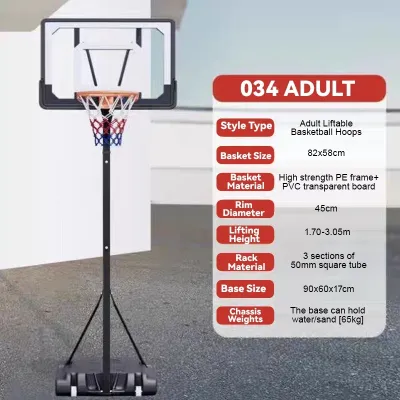
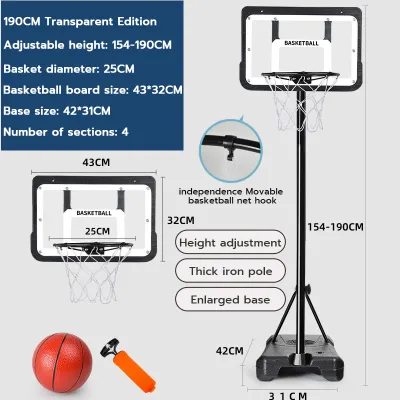
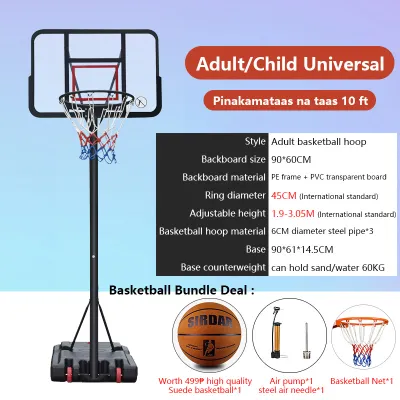
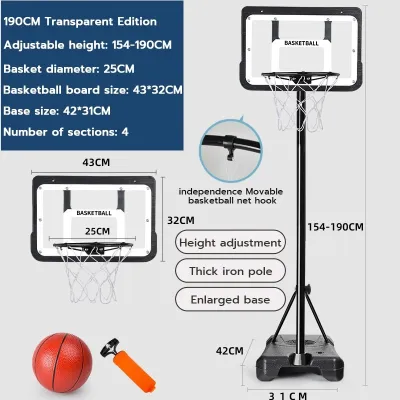
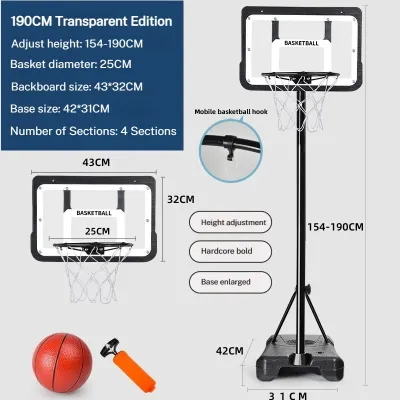
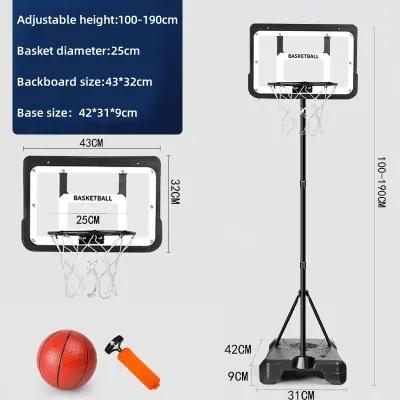
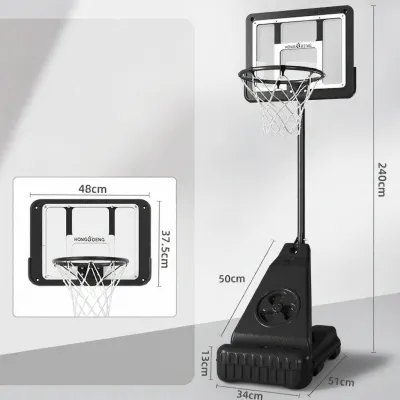
Prices are valid at publication and may change. Please refer to the product page for the latest price.
Budget and longevity represent a critical trade-off when selecting materials. Lightweight, entry-level systems constructed primarily of plastic and thin steel are highly affordable but may degrade quickly under intense sun and rain. Investing in heavier steel systems with robust weather-resistant coatings ensures the structure remains safe and stable over years of regular use. Ultimately, the best basketball stand is one that safely fits your available footprint without creating a hazard for your family or neighbors.
Best Basketball Stand Types for Philippine Homes
Selecting the right installation type is the most critical decision in your buying journey. Different residential setups—such as rented townhouses, permanent suburban homes, or houses with covered carports—demand distinct structural designs to ensure safety and usability.

Portable Basketball Hoops (Best for Flexibility and Renters)
Portable systems are the most popular choice for households requiring flexibility. If you rent your home, share a driveway, or need to clear the court space to park a vehicle, a wheeled, base-weighted system is highly practical. These units can be rolled into a garage or backyard when not in use, keeping your front driveway clear.
The stability of a portable unit depends entirely on its base ballast, which is typically filled with either water or sand. Sand is significantly heavier and provides superior stability against strong winds, but it is difficult to fill and nearly impossible to drain quickly if you need to move the stand. Water is highly convenient to fill and drain, but it is lighter and prone to evaporation or slow leaks over time.
Tall portable hoops are highly vulnerable to strong wind gusts, which can easily tip them over and damage property or cause injury. When selecting a portable model, look for designs featuring a wide, low-profile base that keeps the center of gravity as low as possible.
Keep in mind that moving a fully weighted portable stand requires significant physical effort, even when equipped with built-in wheels. If you plan to move the unit frequently, ensure you have a flat, paved surface and at least one other person to help balance the weight during transport.
Wall-Mounted Basketball Hoops (Best for Garages and Covered Areas)
Wall-mounted systems are an excellent alternative for homes with limited ground space, such as those with covered carports, garages, or solid exterior concrete walls. By mounting the backboard directly to an existing structure, you eliminate the bulky base of a portable unit, removing a major tripping hazard and keeping the playing surface completely clear.
Before choosing this option, you must perform a crucial safety check on the intended mounting surface. The wall must consist of solid concrete, reinforced masonry, or heavy-duty structural steel. You must never mount a basketball hoop on hollow concrete blocks (CHB) without proper reinforcement, drywall, or weak wooden fascias. The dynamic force of a basketball hitting the backboard, combined with the weight of the rim, can easily rip the mounting brackets out of a weak wall, causing catastrophic structural failure.
When properly installed on a solid wall, these systems offer a much cleaner playing area and significantly higher stability than portable units. The lack of a pole directly behind the backboard allows for a more natural playing experience under the basket.
To ensure player safety, look for wall-mounted systems that include extension arms. These arms create a safe buffer distance between the backboard and the wall, preventing players from colliding with the concrete structure during high-speed layups or rebounds.
In-Ground Basketball Systems (Best for Permanent Driveways)
For homeowners with dedicated, permanent outdoor space, an in-ground system offers the ultimate playing experience. These systems provide a professional-level rebound, minimal vibration, and unmatched structural stability because the main pole is anchored directly into the ground.
The installation process is highly demanding, requiring you to dig a deep hole—often three to four feet deep—and pour a solid concrete footing around the mounting pole or anchor plate. This creates a permanent fixture that cannot be easily moved or adjusted once the concrete cures.
Because of the permanent nature of this installation, you must verify local regulations before breaking ground. Check with your barangay office or homeowners association (HOA) to ensure the structure complies with property line setbacks, easement rules, and neighborhood aesthetic guidelines.
To guarantee safety and structural integrity, it is highly recommended to hire qualified professionals for the excavation and concrete pouring. A professional installer will ensure the pole is perfectly plumb, the concrete mix is correct, and the system is securely anchored to withstand years of intense play and weather exposure.
Durability Features for Tropical Weather
The tropical climate of the Philippines presents severe challenges for outdoor sports equipment. High humidity, intense UV exposure, coastal salt air, and heavy seasonal rainfall can rapidly degrade inferior materials, leading to structural failure.
Rust prevention is the most critical factor for any metal components, especially the main support pole and rim hardware. Look for systems featuring multi-layer powder-coated steel or hot-dip galvanized components. UV-treated plastics are also essential for the base and adjustment mechanisms, as untreated plastics will become brittle and crack under prolonged exposure to the intense tropical sun.
The choice of backboard material directly impacts both performance and durability:
- Polycarbonate: This material is virtually indestructible and highly impact-resistant, making it excellent for households with active players. However, polycarbonate tends to yellow and cloud over time when exposed to intense outdoor UV radiation.
- Acrylic: Acrylic backboards offer a clearer, more professional appearance and a better rebound than polycarbonate. They resist UV yellowing well but are more prone to scratching and minor cracking over years of heavy use.
- Tempered Glass: Offering the best rebound performance and a true professional feel, tempered glass is the premium choice. However, it is exceptionally heavy, expensive, and carries a risk of shattering if struck by hard, stray objects or flying debris during severe storms.
The rim and net hardware must also be selected with weather resistance in mind. Opt for breakaway rims equipped with enclosed, rust-resistant steel springs to prevent moisture accumulation. For the net, heavy-duty nylon or weather-treated polyester is highly recommended, as standard cotton or untreated cloth nets will quickly rot, mold, and tear after a few weeks of heavy monsoon rains.
Always review the manufacturer’s warranty terms regarding outdoor and tropical use. Some brands void their warranties if the product is left exposed to extreme weather conditions, so look for manufacturers that explicitly cover outdoor installation and offer rust-resistant guarantees.
Installation Safety and Routine Maintenance
Ensuring the safety of your basketball stand requires strict adherence to installation guidelines and a commitment to regular maintenance. Because these structures are heavy and subjected to constant physical impact, neglect can lead to serious accidents.
When setting up a portable unit, you must strictly follow the manufacturer’s specified sand-to-water ratios and fill lines. Underfilling the base compromises the unit’s stability, making it highly susceptible to tipping over during play or high winds. Conversely, overfilling or using unauthorized materials can crack the plastic base, voiding your warranty and creating a safety hazard.
Establish a routine maintenance schedule, ideally every three months, to inspect the entire system. Check and tighten all bolts, nuts, and mounting brackets, as the continuous vibrations from basketball impacts and temperature fluctuations will naturally loosen hardware over time. Look closely at the joint sections of multi-piece poles, as these are common areas for moisture accumulation and early rust formation.
Proper surface care will significantly extend the lifespan of your equipment. Wipe down the backboard and metal pole after heavy rains to prevent water spotting and accelerate drying. If you spot early signs of rust or paint chipping, immediately sand the area smooth and apply a high-quality, rust-inhibiting touch-up paint to prevent the corrosion from spreading.
Finally, establish clear usage boundaries for everyone using the hoop. Explicitly warn players against hanging or dunking on the rim unless the specific model is engineered and rated for dunking. Standard home stands, especially portable ones, are not designed to support a person’s body weight; hanging on the rim can cause the entire system to collapse or tip forward, resulting in severe physical injury.
Buying Guide and Local Availability
Navigating the purchasing process in the Philippines involves understanding local pricing tiers, identifying reliable retail sources, and planning for complex logistics.
Pricing for basketball stands generally falls into three broad categories:
- Entry-Level (Under ₱15,000): These systems typically feature lightweight plastic bases, smaller polycarbonate or plastic backboards, and thinner steel poles. They are ideal for young children and casual shooting practice.
- Mid-Range (₱15,000 to ₱40,000): Offering a balance of durability and performance, these units feature larger acrylic or thick polycarbonate backboards, sturdier steel poles, and basic breakaway rims. They are suitable for active teenagers and regular backyard play.
- Premium/Prosumer (Over ₱40,000): These high-end systems feature large tempered glass or heavy-duty acrylic backboards, thick one-piece steel poles, and professional-grade breakaway rims. They offer maximum stability and a true court-like experience.
You can purchase these systems through local sporting goods stores, specialized fitness and outdoor equipment retailers, or major online marketplaces. When buying online, pay close attention to seller ratings and customer feedback regarding packaging and delivery completeness.
Logistics and delivery require careful planning because basketball stands are oversized and extremely heavy. Verify the shipping fees before finalizing your purchase, as delivery costs for bulky items can be substantial. Be aware that many delivery services only offer ground-floor drop-off; ensure you have adequate manpower or equipment to safely move the heavy boxes from the drop-off point to your assembly site.
Upon delivery, perform a thorough post-purchase verification. Open the boxes and check every component against the parts list in the instruction manual before starting assembly. If any hardware or brackets are missing, contact the retailer immediately to secure replacements before attempting to erect the stand.
Frequently Asked Questions (FAQ)
Can I leave a portable basketball hoop outside during typhoons?
You should never leave a tall portable basketball hoop fully upright and exposed during a typhoon or high-wind warning. The extreme wind speeds can easily blow the unit over, causing severe damage to the stand, your home, or nearby property. Before a storm hits, lower the hoop to its lowest height setting to reduce wind resistance, and move it into a secure garage, carport, or sheltered area. If you must leave it outdoors, lay the unit down flat on the ground in a safe area where it cannot roll or cause damage, and secure it with heavy straps or sandbags.
Is a glass backboard worth the extra cost for home use?
For most casual home driveways in the Philippines, a tempered glass backboard is generally not worth the extra cost and potential risk. While glass provides the best rebound performance and a professional aesthetic, it is exceptionally heavy, requiring a massive, expensive support structure or a permanent in-ground pole. Furthermore, glass can shatter if struck by hard, stray objects, flying debris during typhoons, or accidental rock impacts. High-quality polycarbonate or acrylic backboards offer excellent durability, safety, and performance for everyday residential practice.
Community discussion
Share your experience or ask a question. Comments are reviewed before publication.