
Selecting the best beginner roller skate for teens girls in the Philippines requires balancing immediate stability, structural ankle support, and wheel specifications tailored to local tropical conditions. Beginners should choose high-top quad skates if they prioritize immediate balance on flat surfaces, or structured, soft-boot inline skates if they plan to cruise on outdoor pavements. Because high-quality skates represent a significant investment—often ranging from ₱3,500 to ₱8,000—understanding key technical specifications ensures a safe, durable, and comfortable introduction to the sport.
In the Philippines, skating environments vary from smooth indoor mall rinks to rough subdivision asphalt and concrete barangay basketball courts. These diverse surfaces, combined with high humidity and tropical heat, directly affect how skate materials perform. Choosing a model with breathable liners, rust-resistant bearings, and the correct wheel durometer will prevent premature wear and keep the skater motivated.
Key Features to Prioritize for Teen Beginners
Ankle Support and Boot Material
A supportive boot is the foundation of safety and confidence for any new skater. When learning to balance, a teen’s ankles are subjected to lateral forces they are not accustomed to. High-top boots for quad skates or structured plastic cuffs for inline skates provide the external bracing needed to prevent the ankles from rolling inward or outward.
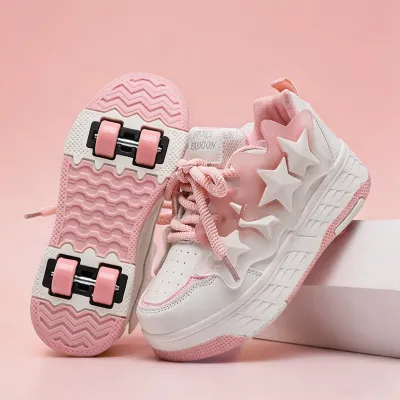
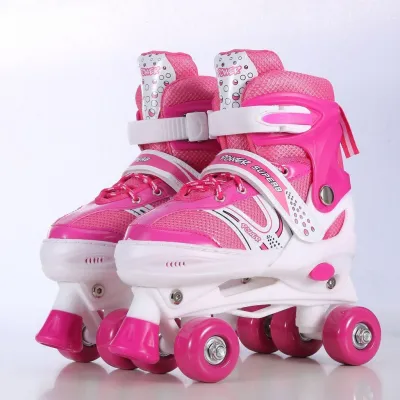
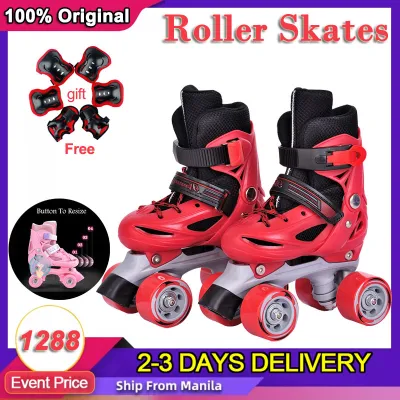
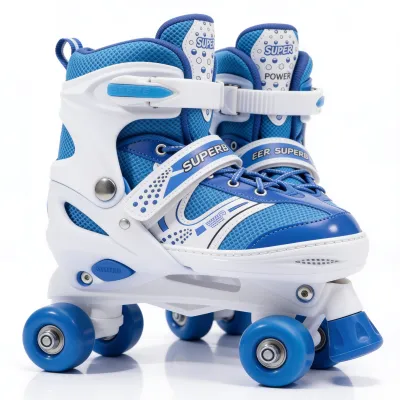
Products mentioned in this guide
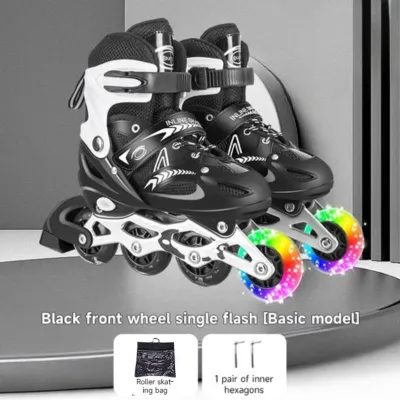
![[Free Shipping + One Year Warranty] Double Row Roller Skates Skates Suitable For Beginners 4 wheel roller skates Roller Skates Skates Suitable For Beginners Roller skates](https://img.lazcdn.com/g/p/35c68f501d1e277727f272da6b40cfc4.png_400x400q80.png_.webp)
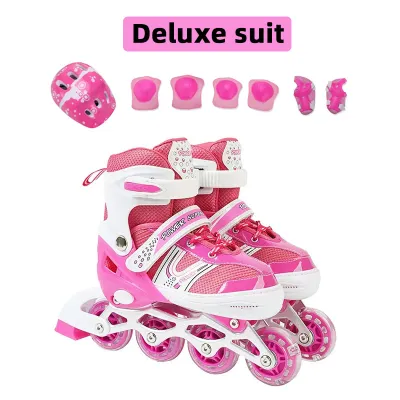
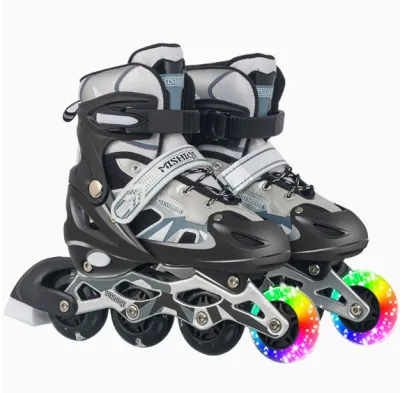
Prices are valid at publication and may change. Please refer to the product page for the latest price.
For beginners, boots made from reinforced synthetic leather or molded plastic offer the best lateral stability. While soft, low-cut lifestyle skates may look appealing, they lack the structural stiffness required to help a beginner maintain a straight, upright posture. A stiff upper boot holds the ankle securely, allowing the skater to focus on learning basic strides, crossovers, and stops without straining their joints.
Adjustability for Growing Feet
Teenagers often experience rapid growth spurts, which can make fixed-size footwear impractical. Adjustable roller skates feature an internal sliding mechanism that allows the toe cap of the boot to expand forward, typically covering three to four standard shoe sizes. This feature significantly extends the lifespan of the equipment, providing parents with better long-term value.
To adjust these skates, you simply press a push-button or release a locking lever near the heel and slide the toe box to the desired size marking. When choosing adjustable skates, verify that the locking mechanism is robust and does not slip under pressure. It is also important to check that the frame remains centered under the foot when the boot is fully extended, as an misaligned frame can compromise balance.
Wheel Hardness (Durometer)
Wheel hardness is measured on the Durometer A scale, ranging from soft (78A) to hard (103A). For beginners in the Philippines, wheel selection is critical because most initial practice occurs outdoors on uneven concrete or asphalt. Softer wheels, ranging from 78A to 85A, provide superior grip and shock absorption, cushioning the skater against vibrations from rough roads and small pebbles.
Conversely, harder wheels (90A and above) offer less rolling resistance and are much faster, but they slide easily and transmit every vibration directly to the skater’s feet. Harder wheels are strictly suited for smooth, covered indoor rinks or polished concrete parks. Beginners should start with softer wheels to maintain traction and control, swapping to harder wheels only when they transition to indoor venues or advanced technical disciplines.
Closure Systems
A secure closure system keeps the foot locked into the heel pocket of the skate, which is essential for precise steering and preventing blisters. The most reliable beginner skates utilize a triple-closure system consisting of traditional laces, a 45-degree instep strap, and an adjustable cuff buckle. Each component serves a distinct purpose in securing the foot.
Traditional laces allow the skater to customize the tightness across the top of the foot, accommodating different foot widths. The 45-degree strap (usually Velcro or a ratchet buckle) pulls the heel back into the rear pocket of the boot, preventing the heel from lifting during strides. Finally, the upper cuff buckle locks the ankle in place, providing the structural support needed to balance safely.
Bearing Ratings and Plate Materials
Bearings control how smoothly the wheels spin and are typically rated using the ABEC scale (1, 3, 5, 7, or 9). For beginners, ABEC 5 or ABEC 7 bearings offer the ideal balance of smoothness and controlled speed. Avoid extremely cheap skates with unrated bearings, as they can seize up or create excessive friction, making it difficult to maintain momentum.
Plate materials—the chassis attached to the bottom of the boot—are generally made of nylon or aluminum. Nylon composite plates are lightweight, affordable, and excellent at absorbing road vibrations, making them perfect for lightweight teen beginners. Aluminum plates are stiffer, heavier, and more responsive, which is beneficial for heavier skaters or those transitioning to high-speed disciplines.
Quad vs. Inline Skates: Choosing the Right Style
Choosing between quad skates and inline skates depends on where the teen plans to skate and their personal stylistic preferences. Quad skates feature four wheels arranged in a two-by-two configuration, providing a wide, stable platform when standing still. This makes them highly approachable for absolute beginners who feel anxious about balancing.

Inline skates feature three or four wheels arranged in a single straight line. While they require more lateral ankle strength to stand upright initially, they are highly efficient for traveling longer distances. Their narrow profile allows them to roll over cracks, twigs, and rough asphalt much more easily than quad skates, making them the superior choice for outdoor fitness.
| Feature | Quad Skates | Inline Skates |
|---|---|---|
| Wheel Configuration | Four wheels in a 2×2 grid | Three or four wheels in a single line |
| Initial Balance | High stability when standing still | Requires active lateral ankle stabilization |
| Outdoor Performance | Best on very smooth concrete or rinks | Excellent for rough asphalt, paths, and parks |
| Maneuverability | Agile for dance, spins, and tight turns | Fast, efficient for long-distance cruising |
| Braking System | Front-mounted toe stop | Rear-mounted heel brake (usually right skate) |
When deciding, consider the local infrastructure. If the teen will primarily practice in a spacious, smooth garage, a barangay basketball court, or an indoor mall rink, quad skates are an excellent, stylish choice. If they plan to skate along paved park paths, subdivision roads, or beachside boardwalks, inline skates will provide a much smoother, less frustrating experience.
Recommended Skate Categories for Different Skating Goals
Best for Maximum Stability and Rink Skating (Quad Skates)
For teen girls who want to focus on classic roller skating, rink sessions, or learning roller dance, traditional quad skates are the ideal category. When selecting a quad skate, prioritize models with high-top synthetic leather boots, metal lace hooks, and adjustable toe stops. The high-top design provides the necessary ankle stiffness, while an adjustable toe stop allows the skater to customize the brake height as it wears down.
Reputable heritage brands such as Roller Derby and Chicago Skates offer reliable, entry-level quad models designed specifically for beginners. These brands use durable chassis materials and polyurethane wheels that grip indoor surfaces well. When purchasing, look for packages that specify polyurethane wheels rather than cheap plastic (PVC) wheels, as plastic wheels lack grip and will slide dangerously on smooth floors.
Before finalizing a purchase, check with local sports specialty stores or official online brand shops to verify local size availability. Because sizing standards can differ between American, European, and Asian manufacturers, always cross-reference the teen’s foot measurement in centimeters with the brand’s specific size chart. Ensure the wheels installed on the skate are appropriate for the intended skating surface, or budget for an extra set of outdoor wheels if planning to skate on local concrete.
Best for Outdoor Paths and Fitness (Entry-Level Inline Skates)
If the primary goal is outdoor fitness, cruising through parks, or joining local skating communities, entry-level inline skates are the most practical option. Beginners should look for inline skates that feature a supportive composite plastic shell, a thick padded liner, and a reliable heel brake. A soft-boot construction with mesh panels is highly recommended for the Philippine climate, as it allows heat and moisture to escape during long afternoon sessions.
Established brands like K2 and Roces are widely recognized for producing high-quality, comfortable recreational inline skates. These brands design their entry-level models with soft-boot technology that conforms to the foot, minimizing break-in pain and hot spots. They also feature durable aluminum or reinforced composite frames that keep the wheels perfectly aligned for efficient power transfer.
Before taking these skates outdoors, verify the wheel hardness rating printed on the side of the wheels. Many entry-level inline skates come stock with medium-hard wheels (around 82A to 84A), which perform well on smooth concrete but can feel harsh on rough subdivision asphalt. If the local roads are particularly bumpy, consider swapping the stock wheels for softer 78A outdoor wheels to ensure a smoother, safer ride.
Best for Growing Feet (Adjustable Skates)
For parents seeking a cost-effective solution that accommodates growing feet without compromising structural safety, adjustable skates are the optimal choice. These skates feature a reinforced plastic frame and an expandable boot that adjusts across multiple sizes with the press of a button. This category is highly popular for younger teens who are transitioning between child and adult shoe sizes.
While adjustable skates offer excellent economic value, they do involve certain structural trade-offs. The sliding mechanism adds slightly more weight to the boot compared to fixed-size models, and the internal liner may feel slightly less seamless when fully extended. However, for recreational beginners, these differences are minimal and are easily outweighed by the convenience of size flexibility.
When evaluating adjustable skates, carefully inspect the locking mechanism to ensure it clicks firmly into place and cannot be accidentally disengaged while skating. Check the maximum weight limit specified by the manufacturer to ensure it accommodates the teen’s build. Additionally, verify that the frame length provides adequate stability; if the boot is extended to its maximum size but the frame remains short, the skate may feel back-heavy, increasing the risk of falling backward.
Essential Safety Gear and First-Time Setup
Mandatory Protective Gear
Equipment cannot replace proper training and judgment, but high-quality protective gear is non-negotiable for preventing injuries. Every beginner, regardless of skill level, must wear a properly fitted helmet, wrist guards, knee pads, and elbow pads. Wrist guards are particularly critical, as the instinctive reaction during a fall is to reach out with the hands, making wrist fractures the most common beginner injury.
- Helmet: Must fit snugly on the head without rocking side to side, sitting low on the forehead to protect the frontal lobe. Look for helmets certified for skating or cycling.
- Wrist Guards: Ensure the hard plastic splint is positioned on the palm side to absorb impact and slide along the ground.
- Knee and Elbow Pads: Should feature thick foam padding and a hard plastic cap. Secure the straps tightly enough to prevent the pads from slipping down during a slide, but not so tight that they restrict blood circulation.
Pre-Skate Maintenance Checks
Before every skating session, perform a quick mechanical inspection of the skates to ensure all components are secure. This routine maintenance takes less than five minutes but prevents mechanical failures that could lead to serious falls. Carry a universal skate tool (Y-tool) in your gear bag to make adjustments on the go.
- Wheel Spin Test: Spin each wheel with your hand. They should spin freely and quietly for several seconds. If a wheel wobbles or stops immediately, the axle nut may be too tight, or the bearings may need cleaning.
- Axle Nut Tightness: Ensure the axle nuts holding the wheels to the frame are snug. They should be tight enough to prevent lateral wheel play, but not so tight that they compress the bearings and stop the wheel from spinning.
- Toe Stop and Brake Check: For quad skates, verify that the toe stop is screwed securely into the plate and does not wiggle. For inline skates, inspect the rear rubber brake pad for wear and ensure the mounting bolt is tight.
- Closure System Inspection: Check that all laces are free of frays, Velcro straps grip firmly, and plastic buckles click securely into their receivers.
Safety Boundaries and Learning to Fall
Beginners must practice in controlled, flat environments away from vehicular traffic, steep hills, and wet or dusty surfaces. Empty basketball courts, dedicated park paths, or quiet cul-de-sacs are ideal learning environments. High tropical humidity and sudden rain showers in the Philippines can make outdoor surfaces slick; avoid skating on wet concrete, as polyurethane wheels lose all traction on wet surfaces.
Before practicing strides, beginners should learn how to fall safely. The correct technique involves bending the knees deeply to lower the center of gravity and falling forward onto the knee pads, followed by the elbow pads and wrist guards, sliding to a stop. Never try to catch yourself by falling backward, as this can lead to tailbone injuries or head impacts. If you lose balance and feel yourself falling backward, tuck your chin to your chest and try to roll onto your side.
Frequently Asked Questions (FAQ)
How do I know what size roller skates to buy for my teen?
To find the correct skate size, measure the teen’s foot length in centimeters by placing their heel against a wall and measuring to the tip of their longest toe. Do not rely on standard shoe sizes, as skate sizing varies significantly between brands and is often different from regular footwear. Compare the centimeter measurement directly to the manufacturer’s specific size chart to find the corresponding size.
Skates should fit snugly around the entire foot with minimal negative space, ensuring that the foot does not slide inside the boot, which causes painful blisters and reduces control. The toes should lightly touch the end of the toe box when standing upright, but they should not curl or feel cramped when the knees are bent into a skating stance. If the teen is between sizes, it is generally safer to size up slightly and wear thicker athletic socks, or select an adjustable model.
Can beginner roller skates be used both indoors and outdoors?
Yes, beginner roller skates can be used in both indoor and outdoor environments, but the overall experience and safety will depend entirely on the wheels. The boot, frame, and bearings remain the same, but the hardness of the wheels dictates how the skate interacts with different surfaces. Beginners should start with wheels that match their primary skating environment to ensure a safe and comfortable learning curve.
If a teen plans to split their time between outdoor pavements and indoor rinks, they can purchase a single pair of skates and swap the wheels as needed. Soft outdoor wheels (78A to 82A) are required to absorb shocks on rough asphalt, while hard indoor wheels (90A to 97A) are necessary for smooth rink floors to prevent the skates from feeling sluggish. When swapping wheels, always use a dedicated skate tool and ensure the bearings are seated correctly in the new wheels before skating.
Community discussion
Share your experience or ask a question. Comments are reviewed before publication.