
Selecting the best biceps workout equipment for a home gym in the Philippines depends heavily on your available space, budget, and training goals. For most fitness enthusiasts and condo dwellers, adjustable dumbbells offer the ultimate balance of muscle isolation, progressive overload, and space efficiency. If you are on a tight budget or travel frequently, high-quality resistance bands with door anchors provide a highly portable and joint-friendly alternative. For those who prefer functional, compound movements, a heavy-duty pull-up bar is an exceptional addition that targets both the back and the arms.
In a tropical climate like the Philippines, high humidity levels require careful consideration of equipment materials to prevent rust and degradation. Whether you are setting up a dedicated workout corner in a garage or utilizing a small corner of your air-conditioned bedroom, understanding how each tool works will help you make an informed investment. Below, we break down the key factors to consider and the top equipment types to help you build stronger biceps at home.
Key Factors for Choosing Home Biceps Equipment
Space Constraints and Storage
Living spaces in major Philippine metropolitan areas, such as Metro Manila or Cebu, often come with premium footprints. Traditional dumbbell racks with multiple fixed weights are highly impractical for apartments, townhouses, or shared rooms. When selecting gear, prioritize compact or collapsible designs that can easily slide under a bed, fit inside a wardrobe, or hang behind a door. Minimizing the physical footprint of your fitness gear ensures your living area remains uncluttered when you are not training.
Products mentioned in this guide
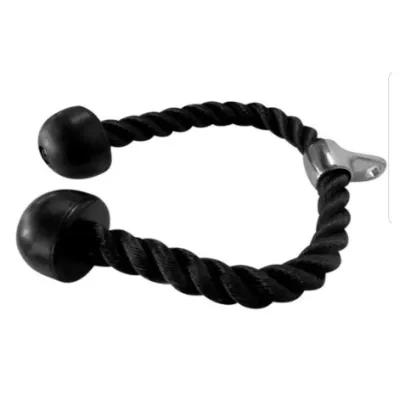
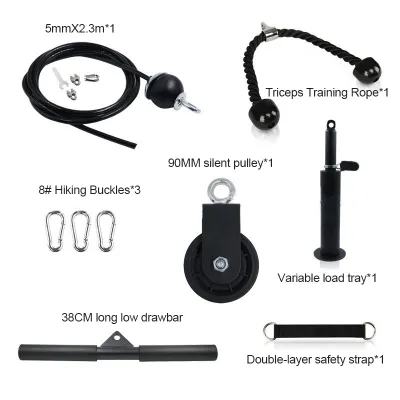
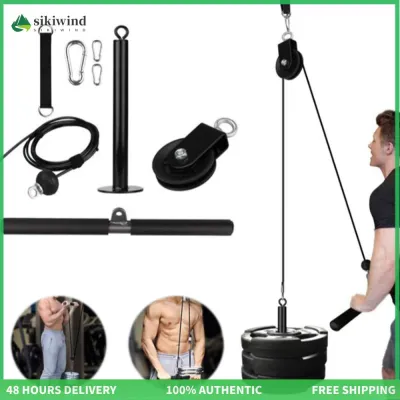
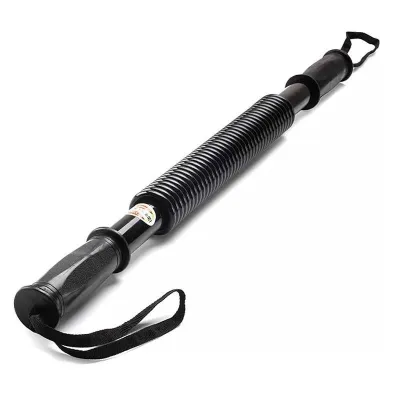
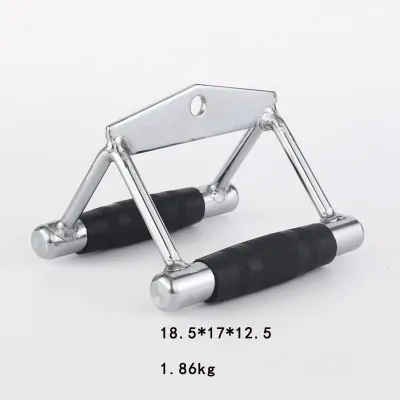
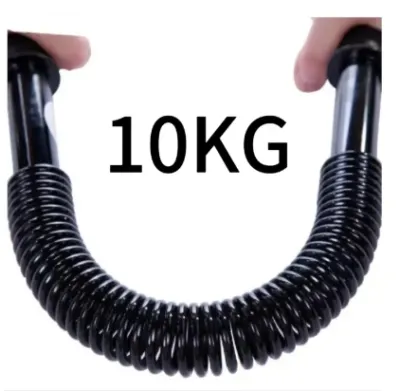
Prices are valid at publication and may change. Please refer to the product page for the latest price.
Budget and Long-Term Value
Building a home gym requires balancing upfront costs with long-term durability. While budget-friendly plastic or cement-filled weights are readily available on online marketplaces, they tend to leak, crack, or wear out quickly under regular use. Investing in solid cast iron, steel, or high-grade rubber-coated equipment generally offers better value over time. High-quality gear resists wear from sweat and humidity, ensuring your investment lasts for years rather than months.
Resistance Type and Progressive Overload
To stimulate muscle growth in the biceps, you must consistently challenge the muscle fibers through progressive overload. Free weights like dumbbells provide constant gravitational resistance, which is highly effective for traditional strength curves. On the other hand, resistance bands offer variable tension that increases as the band stretches, peaking at the top of the curl. Understanding how these resistance types affect your muscles allows you to structure your workouts for maximum hypertrophy.
User Experience and Skill Level
Your current fitness level dictates which tools are safest and most effective for your training. Beginners should start with equipment that is easy to control, such as resistance bands or lighter dumbbells, to establish a strong mind-muscle connection. Advanced lifters may require heavier, specialized equipment like bicep blasters or pull-up bars to provide the mechanical tension needed to break through plateaus. Selecting gear that matches your skill level reduces the risk of injury and ensures steady progress.
Top Biceps Workout Equipment Types for Home Use
Adjustable Dumbbells and Kettlebells
Adjustable dumbbells are widely considered the gold standard for home strength training. These systems allow you to change the weight of a single dumbbell handle using a dial, pin, or plate-loading mechanism, effectively replacing an entire rack of fixed weights in the space of a single pair.

- Applicability: Excellent for classic bicep isolation movements, including standard bicep curls, hammer curls, concentration curls, and incline dumbbell curls.
- Space-Saving Benefits: By condensing multiple weight increments into a single pair, adjustable dumbbells save valuable floor space in small apartments or condos.
- Limitations: High-quality selectorized dumbbells require a significant initial financial investment, often ranging from ₱5,000 to over ₱15,000. They also feature delicate internal locking mechanisms that can break if dropped, making a protective floor mat essential.
Resistance Bands and Tubes
Resistance bands and tube sets with handles are incredibly versatile, lightweight, and affordable. They rely on elastic tension rather than gravity to provide resistance, making them exceptionally gentle on the joints while still delivering an intense muscle pump.
- Applicability: Ideal for beginners, frequent travelers, or individuals recovering from joint strain. They allow you to perform standing curls, hammer curls, and high-cable style curls when anchored.
- Versatility: By using a simple door anchor, you can attach resistance bands at various heights to mimic the movement patterns of a commercial cable machine.
- Limitations: Tracking exact progressive overload is more difficult with bands compared to iron weights, as tension levels are categorized in broad color-coded ranges. Additionally, natural latex can dry out and degrade over time when exposed to the high heat and humidity of tropical environments.
Pull-Up Bars and Suspension Trainers
If you prefer bodyweight training or calisthenics, a pull-up bar or suspension trainer is a must-have. These tools leverage your own body weight to build upper-body strength, heavily recruiting the biceps during compound pulling movements.
- Applicability: Perfect for executing underhand-grip chin-ups and inverted rows, which are highly effective compound exercises for building thick, powerful biceps.
- Setup Options: You can choose between doorway tension bars, which require no drilling, or wall-mounted pull-up bars that bolt directly into concrete walls for maximum stability.
- Limitations: Bodyweight exercises have a steep learning curve and can be incredibly difficult for beginners to execute without the assistance of resistance bands. Doorway bars also require compatible, sturdy door frames to prevent structural damage or accidental falls.
Home Cable Machines and Bicep Blasters
For fitness enthusiasts with larger budgets and dedicated workout spaces, home cable pulley systems and isolation accessories offer a commercial-gym experience at home. These tools are designed to maximize muscle isolation and maintain constant tension.
- Applicability: Wall-mounted pulley systems provide constant tension throughout the entire range of motion of a curl, eliminating the dead zones that occur at the bottom and top of a free-weight curl.
- Specialized Gear: A bicep blaster—a curved metal harness worn across the chest—is a compact, budget-friendly accessory that locks your elbows in place, preventing momentum or shoulder movement from taking over during curls.
- Limitations: Full cable machines require a permanent wall mount and a large physical footprint, making them impractical for temporary living situations. Portable pulley systems are cheaper but require a highly stable overhead anchor point, such as a heavy-duty pull-up bar, to operate safely.
Comparing Home Biceps Equipment: Space, Cost, and Use Case
To help you determine which equipment fits your living space and budget, use the comparison matrix below to evaluate your options.
| Equipment Type | Space Requirement | Relative Budget | Best For | Key Limitation |
|---|---|---|---|---|
| Adjustable Dumbbells | Minimal (under-bed) | High | Traditional isolation curls & progressive overload | High upfront cost; fragile mechanism if dropped |
| Resistance Bands | Extremely low (drawer) | Low | Joint-friendly training, travel, and variable tension | Hard to track exact resistance; latex degrades in heat |
| Pull-Up Bars | Low (doorway or wall) | Medium | Functional compound pull movements (chin-ups) | High entry strength barrier; requires solid mounting |
| Cable Pulley Systems | Medium (wall-mounted) | Medium to High | Constant tension throughout the movement | Setup time; requires a sturdy high anchor point |
For a highly effective and budget-friendly home arm routine, consider combining complementary tools rather than relying on just one. For example, pairing a doorway pull-up bar with a set of loop resistance bands allows you to perform heavy compound chin-ups (using the bands for assistance if needed) and then transition immediately to high-volume, isolated band curls to fully fatigue the biceps.
Purchasing Checklist
Before finalizing your purchase and checking out your online shopping cart, verify these essential details:
- Measure your door frames or walls: If buying a pull-up bar, ensure your door frame depth matches the product specifications, or verify that your walls are solid concrete rather than hollow drywall.
- Check the weight increments: Ensure your adjustable dumbbells offer small weight steps (such as 1 kg to 2 kg increments) so you can gradually increase the load without hitting a plateau.
- Verify material specifications: Look for rust-resistant powder coatings on steel bars, and multi-layered latex or fabric-covered sleeves on resistance bands to withstand tropical humidity.
- Confirm weight capacities: Check the maximum load rating for pull-up bars, suspension trainers, and adjustable dumbbell handles to ensure they safely support your body weight or training targets.
Safety Checks and Setup Tips for Home Arm Training
Verify Structural Integrity
Before installing any wall-mounted pull-up bar, suspension trainer, or heavy cable pulley system, verify the structural capacity of your home’s walls. Many modern apartments and subdivision houses in the Philippines use lightweight fiber-cement boards or hollow concrete blocks for interior partition walls. These materials cannot support the dynamic weight of a human body. Always mount heavy equipment directly into solid concrete walls or load-bearing wooden studs using appropriate expansion bolts or heavy-duty screws.
Inspect Your Equipment Regularly
Perform routine safety checks on your fitness gear at least once a month to prevent sudden equipment failure. Inspect resistance bands for micro-tears, discoloration, or dry rot, which are often accelerated by exposure to heat and sweat. If you notice any whitening or small cracks, discard the band immediately to avoid painful snaps. For adjustable dumbbells, ensure the selector pins click locked and the plates do not wobble before lifting them over your body.
Protect Your Floors and Environment
Dropping heavy iron weights on ceramic tiles, marble, or polished concrete floors can cause expensive structural cracks. Always place a high-density rubber gym mat (at least 10mm to 15mm thick) in your training area. A high-quality rubber mat not only protects your floor tiles but also provides a stable, non-slip surface that prevents your feet from sliding when you sweat during intense workouts.
Prioritize Form Over Weight
When training at home without a coach or gym partner, safety must be your top priority. Avoid the temptation to use excessive weight that forces you to swing your hips or arch your lower back to complete a curl. This “ego lifting” shifts the tension away from your biceps and places dangerous stress on your lower back, shoulders, and elbow tendons. Focus on controlled, slow eccentric (lowering) phases of 2 to 3 seconds to maximize muscle stimulation safely.
Frequently Asked Questions (FAQ)
Can I build significant muscle using only resistance bands at home?
Yes, you can build significant biceps muscle using only resistance bands. Muscle hypertrophy is driven by mechanical tension, metabolic stress, and progressive overload, all of which bands can provide. To ensure continuous growth, you must systematically increase the tension by stepping further away from the anchor point, using thicker bands, or combining multiple bands as your strength increases.
Are adjustable dumbbells worth the investment for a small apartment?
For small apartments or condos, adjustable dumbbells are highly worth the investment. Although the initial cost is higher than a single pair of fixed dumbbells, they replace up to 15 individual pairs of weights, saving an immense amount of floor space. Ensure you select a reputable model with a secure, metal-reinforced locking mechanism to guarantee long-term safety and durability.
How often should I train my biceps at home for optimal growth?
For optimal biceps growth, train them directly 2 to 3 times per week. Because the biceps are a relatively small muscle group, they recover faster than larger muscle groups like the legs or back. However, since they are heavily involved in compound pulling movements like rows and pull-ups, ensure you allow at least 48 hours of recovery between intense arm-focused sessions to prevent overtraining.
Community discussion
Share your experience or ask a question. Comments are reviewed before publication.