
To carry a large smartphone (such as a 6.7-inch or 6.9-inch device) without bouncing, you need a specialized belt bag for running that features a wide band, high-elasticity compression materials, and a snug fit against your pelvic bone. Standard loose pouches or thin-strap bags inevitably bounce due to the phone’s heavy weight and the vertical forces of running. A dedicated stretch tubular belt or a wide, adjustable compression wrap keeps the phone completely stable by distributing its weight evenly around your hips.
Why Large Phones Cause Running Belts to Bounce
Modern smartphones have grown significantly in both screen size and physical weight. A typical flagship phone with a screen size of 6.7 to 6.9 inches often weighs between 200 and 240 grams. When you add a heavy-duty protective case, the total weight can easily exceed a quarter of a kilogram. Carrying this concentrated mass during a high-impact activity like running presents a unique mechanical challenge that standard waist packs simply cannot handle.
During a run, your body experiences continuous vertical oscillation. With every single stride, your torso and hips move upward and downward by approximately 5 to 10 centimeters. This vertical movement, combined with the force of gravity, creates a dynamic load that is several times the static weight of the phone. For a phone weighing 220 grams, the peak force during a hard foot strike can feel like nearly a kilogram of downward pull.
Products mentioned in this guide
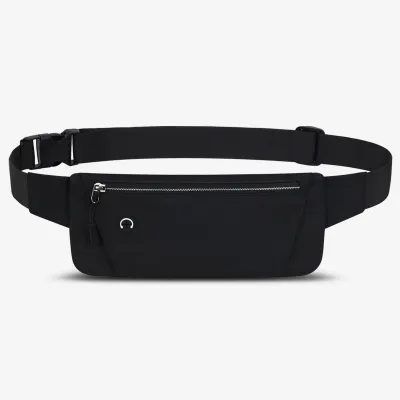
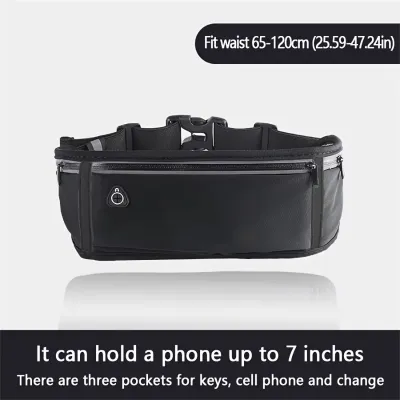
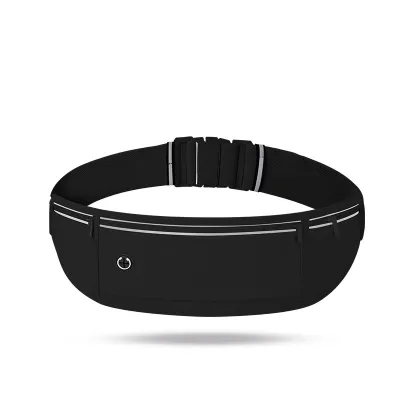
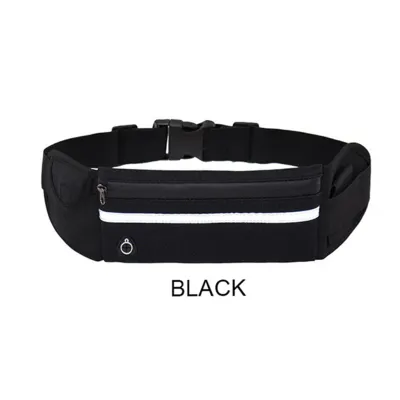
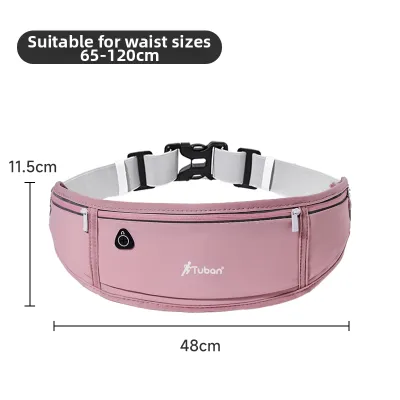
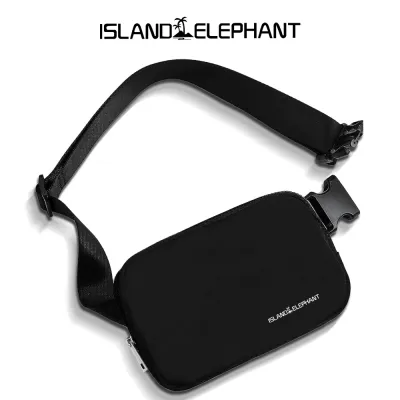
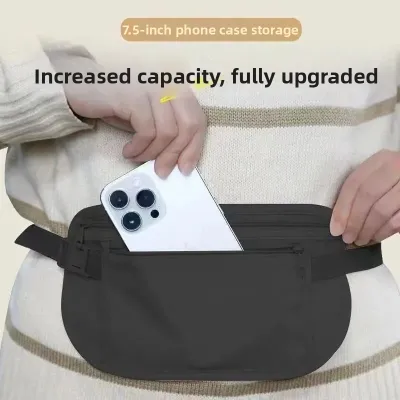
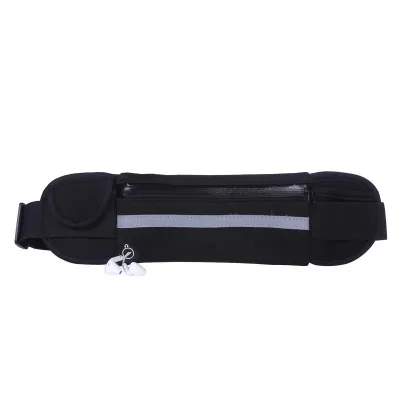
Prices are valid at publication and may change. Please refer to the product page for the latest price.
This dynamic load triggers what physicists call the pendulum effect. When a heavy phone is housed in a loose, stretchy, or poorly structured pocket, it behaves like a suspended mass. As your hips move upward, the phone lags behind due to inertia, stretching the fabric downward. As you begin to descend, the stretched fabric snaps back, launching the phone upward. This out-of-sync movement creates a chaotic, rhythmic bouncing cycle that disrupts your running form and causes physical discomfort.
Most generic waist bags fail because of basic design flaws. Narrow elastic bands (often less than 1.5 inches wide) concentrate all the weight on a tiny surface area, causing the band to dig into your skin or slide upward. Weak plastic buckles slip under tension, gradually loosening the belt over the course of a few kilometers. Furthermore, poorly placed pockets position the phone away from your center of gravity, creating a fulcrum point where the bag tilts forward and flops against your abdomen.
The stability requirements of high-impact running are vastly different from those of walking or light jogging. Walking involves minimal vertical displacement and low impact forces, meaning almost any basic waist pouch will remain relatively still. Running, however, requires continuous, active compression that binds the phone’s mass directly to your skeletal structure—specifically the pelvis—to eliminate independent movement and ensure a completely bounce-free experience.
Essential Features for a Bounce-Free Belt Bag for Running
To find a belt bag for running that truly eliminates bounce, you must look beyond basic aesthetics and evaluate specific engineering features. A high-quality running belt is a piece of technical equipment designed to manage load distribution, friction, and tension under high-impact conditions.

Belt Width and Surface Area
The width of the belt is one of the most critical factors in weight distribution. According to the physics of pressure distribution, a wider band distributes the downward force of a heavy phone over a much larger surface area on your hips. This reduces localized pressure points, preventing the belt from digging into your skin or rolling up into a tight cord. A band that is 3 to 4 inches wide provides a stable platform that resists twisting and folding, keeping the phone flat against your body.
Material and Inner Grip
The fabric must balance high elasticity with excellent structural recovery. Look for heavy-duty spandex, nylon-elastane blends, or polyester-elastane matrices that provide firm compression without restricting your movement. In the hot and humid climate of the Philippines, breathability and moisture-wicking properties are essential. If a belt traps sweat, the moisture acts as a lubricant, causing the fabric to slip against your clothing. To combat this, high-quality belts feature integrated silicone wave prints or textured inner linings that grip your running shorts or tights, locking the belt in place even during intense, sweaty workouts.
Pocket Placement and Architecture
How the pocket is constructed determines how the phone behaves inside the belt. A dedicated, tight-fitting sleeve is far superior to a loose, zippered pouch. The sleeve should hold the phone flat against your body, preferably at the small of your back (the lumbar region) or directly over your center of pelvis in the front. Gusseted designs or internal dividers are excellent because they isolate the heavy phone from other items like keys or coins, preventing the device from shifting laterally or tilting.
Closure Systems
Runners must choose between seamless tubular designs and adjustable buckle systems. Seamless tubular belts are continuous loops of elastic fabric that you step into and pull up to your hips. They have no hardware, buckles, or Velcro, which completely eliminates the risk of chafing and plastic breakage. However, they rely entirely on the fabric’s elasticity and must be sized perfectly to your body. Adjustable buckle systems use a strap and a plastic tension buckle or Velcro overlap, allowing you to customize the tightness depending on what you are wearing. Look for low-profile, flat buckles positioned on the side rather than directly on the spine or stomach to avoid pressure sores during core movements or long distances.
Top Running Belt Designs for Large Smartphones
Different runners have different preferences regarding storage capacity, accessibility, and adjustability. In the Philippines, high-quality running belts typically fall into broad price bands, ranging from budget-friendly options around ₱500 to premium, highly durable technical gear costing up to ₱2,000 or more. Understanding the three primary running belt designs will help you choose the best option for your specific training needs and phone size.
Tubular Stretch Belts
Tubular stretch belts are seamless loops of high-performance elastic fabric that you pull up over your legs and position on your hips. Because they have no buckles or adjustment straps, they offer a completely uniform, low-profile fit that conforms closely to your body’s contours. The entire circumference of the belt acts as a compression sleeve, distributing the phone’s weight around your entire hip structure and virtually eliminating the pendulum effect.
Most tubular belts feature multiple entry points around the loop, allowing you to slide in your phone, keys, soft flasks, and energy gels. However, because the fit is highly compressed, retrieving your phone mid-run to check a map or change a song can be slightly awkward and may require two hands. Sizing is absolutely critical for these belts; since there are no adjustment buckles, you must measure your hips accurately at the widest point where you plan to wear the belt. If you are between sizes, it is generally recommended to size down for a tighter, bounce-free fit.
These belts comfortably accommodate modern large smartphones up to 170 mm in length and 80 mm in width, even with a slim protective case. If you use a thick, heavy-duty armor case, you may need to upsize the belt or remove the case to ensure a smooth, bounce-free fit.
Wide Elastic Wrap Belts
Wide elastic wrap belts feature an adjustable design, typically utilizing a secure hook-and-loop (Velcro) closure or a low-profile flat buckle system. These belts are usually constructed from heavy-duty elastic webbing or neoprene-like materials that provide structured support and customizable compression.
Unlike tubular belts, wrap belts allow you to customize the tension on the fly. You can pull the strap tight to lock down a heavy phone during a fast interval session, and loosen it slightly during a walking recovery. The wide band (often 3.5 to 4.5 inches) acts almost like a mild lumbar support belt, stabilizing both your lower back and the items carried within. These belts are highly effective for runners whose body shapes make tubular belts prone to riding up, as the adjustable tension allows you to anchor the belt firmly below the iliac crest (the hip bones).
These structured belts easily hold large phones up to 7.0 inches. Because the pocket is often dedicated and reinforced, it can handle thicker phone cases without stretching out of shape or putting excessive pressure on the screen.
Multi-Pocket Zippered Belts
Multi-pocket zippered belts are designed for long-distance runners, trail runners, and marathoners who need to carry a heavy smartphone alongside hydration, nutrition, and safety gear. These belts feature a structured, non-stretch or semi-stretch main body with multiple independent pockets.
To prevent bouncing, the phone compartment is typically isolated from other gear and positioned centrally against the lumbar spine. This placement aligns the phone’s mass with your body’s vertical axis of rotation, minimizing lateral sway. By separating your phone from your keys, trail whistle, and energy gels, these belts prevent the heavy device from shifting the belt’s center of gravity. The phone pocket is often lined with water-resistant materials to protect your electronics from sweat and unexpected tropical downpours.
These belts rely on robust, adjustable tension straps. Look for models with dual-side adjustments, which allow you to keep the main pockets perfectly centered on your back. The straps should be made of soft, non-chafing webbing to prevent skin irritation during long, hot runs in high humidity. These pockets are spacious enough for large smartphones up to 6.9 inches, including bulky rugged cases.
How to Wear and Adjust Your Belt to Prevent Shifting
Even the best belt bag for running will bounce if it is worn incorrectly. Proper fitment, adjustment, and weight distribution are essential to achieving a completely stable, bounce-free experience.
Optimal Placement
Many runners instinctively place their running belt around their natural waist, near the belly button. This is a mistake. The waist is soft and constantly expands and contracts as you breathe, which causes the belt to loosen and slide up. Instead, wear the belt low on your hips, directly over your pelvic bones (the iliac crest). This skeletal structure provides a solid, non-moving anchor point that naturally prevents the belt from sliding down, while the wider hip shape prevents it from riding up.
Tightness and Compression
The belt must be tight enough to compress the phone against your body, but not so tight that it restricts your breathing or causes stomach cramping. Use the “two-finger” rule: you should be able to slide two fingers flat between the belt and your body. If you feel the belt restricting your deep diaphragmatic breathing, loosen it slightly. If the phone sways when you jump in place, tighten it.
Clothing Considerations
The fabric of your running apparel plays a major role in belt stability. Slippery polyester or nylon running tights offer very little friction, making it easier for a belt to slide upward. If you wear slippery fabrics, choose a belt with internal silicone grips, or wear the belt directly against your skin under your shirt. Conversely, cotton or textured synthetic shorts provide excellent natural grip. In the hot and humid Philippine climate, wearing the belt under your shirt can protect it from external rain, but it will be exposed to heavy sweat, so ensure your phone is in a water-resistant sleeve.
Loading Strategy
To maintain balance, distribute your gear symmetrically. Place your heaviest item—the large smartphone—in the center back or center front pocket. If you carry keys, energy gels, or a small soft flask, place them on the opposite side or distribute them evenly to the left and right. Symmetrical loading prevents the belt from twisting, tilting, or pulling to one side as you run, keeping the phone locked securely in place.
Safety and Stop Conditions
When running on public roads or during heavy rain, safety must always come first. No running belt or waterproof pouch can replace situational awareness. If you are running in low-visibility conditions or heavy traffic, ensure your belt does not block reflective elements on your clothing, and always keep your phone accessible in case of emergencies. If weather conditions become severe, such as during a sudden tropical thunderstorm, stop your run, seek shelter, and check that your electronic devices are properly sealed. Equipment is a tool, but your judgment and awareness are what keep you safe.
Frequently Asked Questions (FAQ)
Can I use a regular fanny pack for running with a large phone?
Traditional fanny packs and casual waist bags are designed for walking, travel, or light leisure activities, not high-impact running. They typically feature loose, unstructured compartments and thin, non-elastic nylon straps with bulky plastic buckles. When you run with a heavy, large smartphone in a standard fanny pack, the lack of compression allows the phone to bounce violently inside the pouch. This movement causes the thin strap to slide up to your waist, dig into your skin, and chafe. Additionally, the constant friction can damage your clothing and cause painful skin irritation. For running, a dedicated compression belt is essential to lock the phone’s mass against your body.
Will a tight running belt damage my large smartphone?
No, a high-quality running belt will not damage your smartphone. Modern mobile devices are highly durable and engineered to withstand standard compression forces. The elastic tension from a tubular or wrap belt is distributed evenly across the phone’s flat surface, which is far below the threshold that could bend the frame or crack the screen. However, you must avoid placing hard, sharp objects like house keys, coins, or multi-tools in the exact same pocket compartment as your phone. The compression will press these hard objects directly against your phone’s screen or glass back, which can cause deep scratches or cracks. Always use a belt with separate, isolated compartments to keep your screen protected.
Are running belt bags sweatproof and safe for heavy rain?
Most running belts are labeled as sweat-resistant or water-resistant, meaning they use synthetic fabrics like neoprene or treated nylon to block light moisture and sweat. However, very few fabric belts are completely waterproof. In tropical regions like the Philippines, heavy sweat from high humidity or sudden monsoon downpours can easily saturate standard fabrics and seep through seams or zippers. To protect your expensive smartphone, always check the manufacturer’s specific water-resistance rating. If you frequently run in heavy rain or sweat heavily, place your phone inside a simple, lightweight zip-top plastic bag before sliding it into your running belt. This provides an inexpensive, foolproof waterproof barrier without adding bulk or weight.
Community discussion
Share your experience or ask a question. Comments are reviewed before publication.