
Roller skating is a timeless, active pastime that has captured the hearts of generations of Filipino children. Whether gliding along the smooth concrete of a neighborhood subdivision, practicing turns on a local barangay basketball court, or exploring wide-open spaces in public parks, skating offers an exceptional way for kids to develop balance, coordination, and physical endurance. For parents, however, the primary concern is always safety. Finding high-quality rollerskates for kids with complete accesories is the most efficient way to ensure your child is fully protected from head to toe without the hassle of purchasing individual pieces of safety gear from different brands.
A complete bundle typically includes the roller skates themselves, a protective helmet, knee pads, elbow pads, and wrist guards. Buying these items as a single package not only saves time but also ensures that the protective gear is sized appropriately to match the skates. With the wide variety of choices available on local ecommerce platforms, selecting a set that balances affordability with robust safety standards is crucial for preventing injuries and building your child’s confidence on wheels.
How to Choose Rollerskates for Kids with Complete Accesories
When shopping for a complete skate package, the first step is verifying what actually comes inside the box. A true complete set must leave no safety gaps; it should always consist of the skates, a dedicated safety helmet, two knee pads, two elbow pads, and two wrist guards. Some budget listings online may use misleading titles, offering only the skates and a pair of cheap plastic guards while omitting the helmet or knee protection entirely. Parents must carefully read the product specifications and packing lists to confirm that all six protective pieces are included.
Products mentioned in this guide
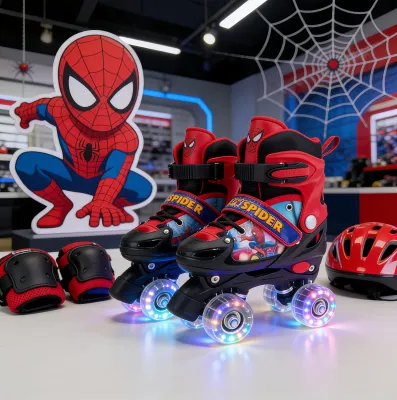
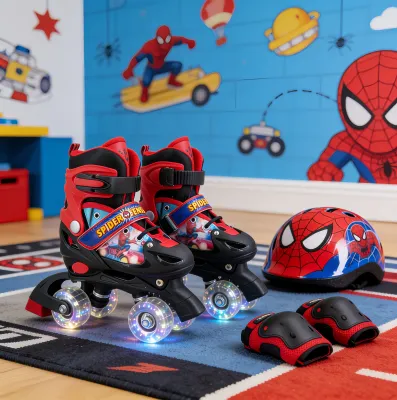
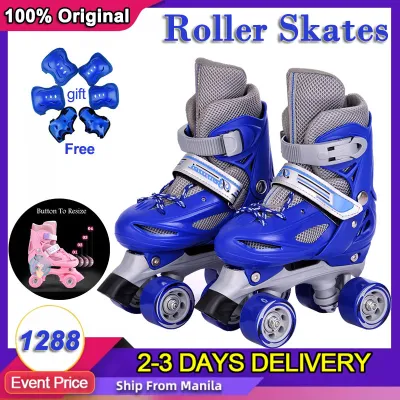
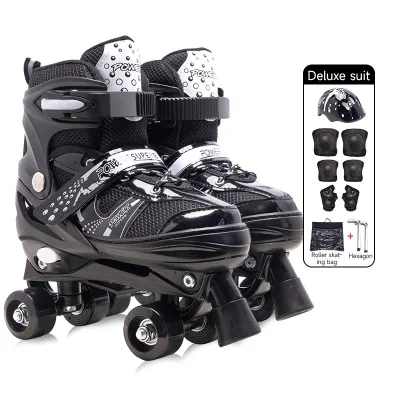
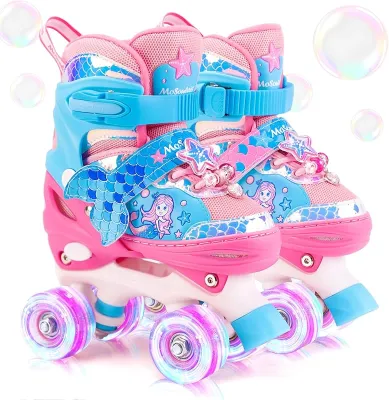
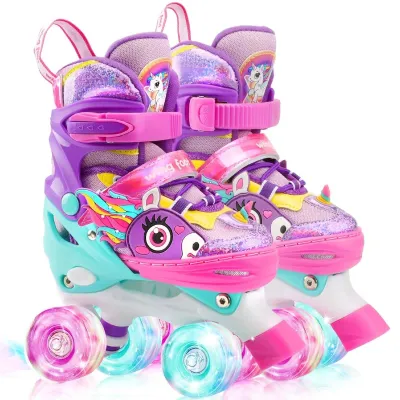
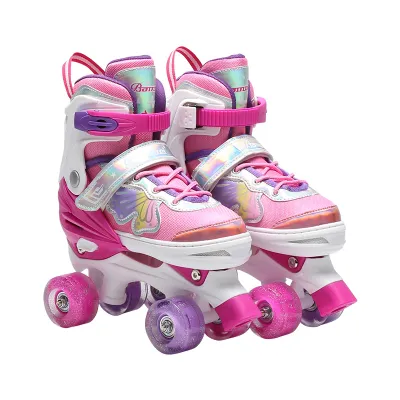
Prices are valid at publication and may change. Please refer to the product page for the latest price.
Price is often a major deciding factor for families in the Philippines, with complete bundles ranging anywhere from ₱1,200 to over ₱5,000. While it is tempting to opt for the cheapest available option, ultra-low-cost sets frequently compromise on the quality of the protective gear. Cheap bundles often include helmets made of thin, easily cracked plastic shells lined with low-density packaging foam, which offers virtually no protection during a hard fall. Investing a bit more in a reputable brand ensures that the safety gear is constructed from impact-resistant materials designed to absorb and dissipate force.
To ensure you are buying a safe product, look for recognized safety certification labels on both the skates and the protective gear. Reliable equipment often carries standard markings such as EN 14120 (the European standard for protective gear) or EN 13899 (the standard for roller sports equipment). These certifications indicate that the products have undergone rigorous impact and durability testing. Avoid purchasing sets that feature no safety labels or those that rely solely on generic marketing claims of being “heavy-duty” without any official certification to back them up.
Finally, user reviews on local online marketplaces are invaluable resources for assessing real-world performance. Look past the initial five-star ratings and focus on detailed reviews written after several weeks of use. Pay close attention to comments regarding the durability of the plastic buckles, the quality of the stitching on the pads, and whether the sizing runs small or large. If multiple buyers report that the straps frayed quickly or that the helmet adjustment wheel broke on the first day, it is wise to steer clear and choose a different bundle.
Recommended Types of Skate Sets by Skill Level
Children progress at different rates, and their equipment should reflect their current physical capabilities and experience. Matching the skate design to your child’s skill level ensures they have enough stability to learn the basics without becoming frustrated, while also providing room for growth as they gain confidence.

Beginner Bundles for First-Time Skaters
For children who have never stepped onto wheels before, quad skates are highly recommended. Featuring four wheels arranged in a stable two-by-two rectangular configuration, quad skates provide a wide base of support that makes standing and maintaining balance much easier for beginners. This design minimizes the lateral ankle rolling that often discourages first-time skaters, allowing them to focus on the basic mechanics of pushing off and stopping.
When examining beginner quad skates, pay close attention to the wheel material. Look for soft, wide polyurethane (PU) wheels with a durometer rating between 78A and 82A. These wheels are soft enough to absorb the vibrations and minor shocks caused by rough asphalt, small pebbles, and uneven concrete surfaces, which are common in Philippine subdivisions and parks. Avoid hard plastic wheels, often found on very cheap toy skates, as they slide unpredictably on smooth tiles or dusty concrete, increasing the risk of sudden slips and falls.
The protective gear included in beginner bundles should prioritize comfort and ease of use. If the pads are scratchy, excessively heavy, or difficult to put on, children will likely resist wearing them. Look for pads with soft, breathable mesh linings that help manage heat in our tropical climate, along with simple, wide hook-and-loop straps that kids can adjust themselves. Encouraging a positive association with safety gear from day one establishes a lifelong habit of safe skating.
Intermediate Sets for Growing Confidence
As children master basic balance and start craving more speed and maneuverability, they may be ready to transition to inline skates or high-performance quad setups. Inline skates, which feature wheels arranged in a single straight line, allow for faster glides, tighter turns, and a more dynamic skating experience. However, they require greater ankle strength and core stability, making them better suited for kids who have already spent several months practicing on quads.
Ankle support becomes critical at this stage because higher speeds place greater lateral stress on the joints. Look for intermediate bundles that feature a rigid, high-impact polyurethane outer cuff or boot shell. This rigid structure holds the ankle firmly in place, preventing painful inward or outward rolling during fast turns. Avoid soft-boot inline designs that lack a hard plastic outer skeleton, as they do not provide the structural integrity needed for intermediate maneuvers.
The quality of the wheel bearings also plays a major role in how smoothly the skates roll. Bearings are rated using the ABEC scale, where higher numbers (such as ABEC-5, ABEC-7, or ABEC-9) indicate tighter manufacturing tolerances and less rolling resistance. For intermediate skaters, ABEC-5 or ABEC-7 bearings offer the perfect balance of smooth rolling and controllable speed. High-performance bearings allow the child to glide further with less effort, making long skating sessions in local parks much more enjoyable.
Because intermediate skaters move faster, their falls can be more high-impact. Consequently, the protective gear in these bundles must feature thicker, high-density EVA foam padding. This specialized foam is excellent at absorbing heavy impacts and preventing deep bruising. Ensure the knee and elbow pads have secure sleeve designs in addition to straps, which keeps the pads from sliding out of place during a high-speed tumble.
Evaluating the Protective Gear in Complete Sets
A complete skate bundle is only as good as the protective accessories it contains. Parents must act as safety inspectors, carefully evaluating each piece of gear to ensure it offers genuine protection rather than just cosmetic appeal.
Helmets: The helmet is the single most critical piece of safety equipment. To provide adequate protection, it must sit level on the child’s head, covering the forehead and resting approximately two finger-widths above the eyebrows. It should never tilt backward to expose the forehead or forward to obstruct the child’s vision. Inspect the adjustment dial at the back of the helmet, which allows for a snug, customized fit, and verify that the side straps form a clean “V” shape just below the ears. Given the intense heat in the Philippines, look for helmets with multiple ventilation channels to keep your child’s head cool and dry.
Knee and Elbow Pads: When evaluating pads, look for hard-shell plastic caps made of acrylonitrile butadiene styrene (ABS) or high-impact polyethylene. These hard caps are designed to slide along concrete or asphalt during a fall. Sliding is highly beneficial because it disperses the kinetic energy of the impact, reducing the direct force transmitted to the child’s joints. Soft, fabric-only pads do not slide; instead, they grip the pavement, which can cause the child to tumble forward violently and increase the risk of joint sprains.
Wrist Guards: Wrist fractures are the most common injury among young skaters, as children naturally extend their hands to break a fall. A proper wrist guard must feature rigid, contoured plastic splints on both the palm side and the back of the hand. The palm splint absorbs the impact and slides along the ground, while the rear splint prevents the wrist from bending backward (hyperextending). Ensure the wrist guards fit snugly and are secured by at least three wide, adjustable straps to prevent them from slipping off during an impact.
Upon receiving your complete skate bundle, perform a thorough physical inspection of all the protective gear before allowing your child to use it. Check for loose stitching along the seams of the pads, test the elasticity and grip of the velcro straps, and inspect the plastic shells for any hairline cracks or manufacturing defects. If you discover any structural weaknesses, return the set immediately for a replacement.
Sizing, Adjustability, and Fit for Kids
Buying footwear for growing children is always a challenge, but roller skates require an exceptionally precise fit to ensure safety and control. Fortunately, most modern complete skate bundles feature push-button adjustable mechanisms that allow the boots to expand as your child’s feet grow.
These adjustable mechanisms typically operate via a spring-loaded button located near the heel or midfoot of the skate. When pressed, the button releases the locking pin, allowing the toe cap of the boot to slide forward or backward along a set of pre-determined tracks. These skates are usually categorized into size ranges, such as Small (fitting local shoe sizes 28 to 31), Medium (sizes 32 to 35), and Large (sizes 36 to 39). This adjustability ensures that a single pair of skates can comfortably last a child for two to three years, making them a highly cost-effective investment for parents.
To determine the correct size range for your child, do not rely solely on their current school shoe size, as sizing standards vary significantly between different manufacturers. Instead, follow this step-by-step measurement guide:
- Place a blank sheet of paper flat on the floor, hard against a wall.
- Have your child stand barefoot or wearing their skating socks on the paper, with their heel resting firmly against the wall.
- Use a pencil to mark the furthest point of their longest toe on the paper, keeping the pencil completely vertical.
- Measure the distance from the edge of the paper to the toe mark in centimeters.
- Compare this precise measurement against the manufacturer's specific size chart to select the appropriate skate size.
A common mistake among parents is purchasing skates that are one or two sizes too large, with the expectation that the child will “grow into them.” This practice is highly dangerous. If a skate boot has excess space inside, the child’s foot will slide forward and backward, causing painful friction blisters. More importantly, loose boots fail to provide necessary lateral ankle support. Without tight support, the ankle can easily roll inward or outward, leading to severe joint strain, loss of balance, and a significantly higher risk of falls and injuries.
When trying on the skates for the first time, have your child wear the exact socks they plan to use while skating. Opt for thick, moisture-wicking athletic socks rather than thin school socks. Thick socks provide additional cushioning against the rigid plastic shell of the skate, help absorb sweat in hot weather, and fill up any minor gaps inside the boot to ensure a perfectly snug, secure fit.
Safety Checks and Maintenance in Humid Climates
The tropical climate of the Philippines, characterized by high relative humidity, intense sun, and sudden heavy rain showers, presents unique challenges for maintaining roller skates. Consistent care and preventative maintenance are essential for ensuring the equipment remains safe to use and lasts for years.
Before every skating session, establish a quick five-minute visual inspection routine. Use the hex keys or tools included in your bundle to check that all wheel axle bolts are tight, as vibrations from skating can slowly loosen them over time. Inspect the polyurethane wheels for uneven wear; if one side of a wheel is significantly shaved down, rotate the wheels to different positions to ensure even performance. Finally, verify that the helmet buckles click securely and that the adjustment straps have not slipped or loosened.
Moisture is the ultimate enemy of skate bearings and metal frames. High humidity can cause steel bearings to rust, leading to friction, squeaking, and eventually seizing up entirely. After every outdoor session, use a dry microfiber cloth to wipe down the metal frames, buckles, and outer boot shells to remove sweat, dust, and moisture. If your child accidentally rolls through a puddle or gets caught in a sudden tropical downpour, remove the wheels as soon as you get home, wipe the bearings dry, and allow them to air dry completely.
Proper storage is equally vital for preserving the integrity of the materials. Always store the skates and protective gear in a dry, well-ventilated indoor space. Avoid leaving them in damp garages, outdoor storage bins, or the trunk of a car, where extreme heat can build up. Intense heat and direct ultraviolet (UV) sunlight accelerate the degradation of plastic shells, weaken the adhesives holding the boot liners together, and cause the foam padding in the helmet and pads to become brittle and lose its shock-absorbing capabilities.
Always consult the manufacturer’s specific care instructions before applying any cleaning agents or lubricants. If the bearings require lubrication to roll smoothly, use a dedicated light speed cream or sewing machine oil rather than multi-purpose household sprays like WD-40, which can actually strip away essential grease and attract destructive dirt and grime. Additionally, check if the fabric liners of the protective pads are machine washable or if they should be hand-washed with mild soap and air-dried to maintain their shape and elasticity.
Frequently Asked Questions (FAQ)
Are adjustable roller skates safe for kids?
Yes, high-quality adjustable roller skates are completely safe for children, provided they feature a robust, double-locking mechanism. This system typically pairs a spring-loaded metal push-button pin with secure ankle buckles and heavy-duty straps to ensure the boot remains rigid and locked in place during use. Parents should avoid ultra-cheap adjustable models that utilize flimsy plastic locking tabs, as these can flex, wobble, or slip under the child’s weight, compromising stability and increasing the risk of ankle injuries.
What is the most important piece of protective gear?
The safety helmet is the absolute priority, as it protects the child from severe and potentially life-threatening head injuries during a fall. Close behind the helmet are wrist guards. Falling forward onto outstretched hands is a natural human reflex, making wrist fractures and sprains the most common injuries among beginner skaters. Wearing wrist guards with rigid plastic splints ensures that the impact is absorbed and allowed to slide, protecting the delicate bones of the wrist.
Can I replace the wheels and bearings on a beginner bundle?
Yes, most standard complete roller skate bundles are designed with replaceable parts, allowing parents to upgrade the wheels and bearings as their child’s skills improve. Upgrading to higher-quality polyurethane wheels and smoother bearings (such as ABEC-7) is a highly cost-effective way to enhance performance without buying an entirely new pair of skates. Before purchasing aftermarket replacements, always check the manufacturer’s specifications to verify the axle diameter (typically 6mm or 8mm) and frame width to ensure compatibility.
Community discussion
Share your experience or ask a question. Comments are reviewed before publication.