
Choosing the right decathlon towel for your child’s swimming lessons or weekend water play involves balancing drying speed, packability, and comfort. Decathlon offers several distinct categories of towels designed specifically for water sports, ranging from ultra-compact microfiber sheets to cozy cotton hooded ponchos. The ideal choice depends heavily on your child’s specific activity, how often they swim, and the environment they are in. For instance, a child attending daily swim training at a local sports complex requires a very different towel than a toddler splashing in the surf during a family weekend trip. By matching the towel’s material, size, and design to your child’s routine, you can ensure they stay warm, dry, and comfortable without overloading your wet bag.
Quick Guide: Matching Towel Types to Kids' Water Activities
To simplify your shopping experience, it helps to categorize the Decathlon towel lineup into three primary types: microfiber swim towels, hooded towel ponchos, and traditional cotton or fleece beach towels. Each category serves a distinct purpose, and understanding these divisions allows you to choose a product that aligns perfectly with your child’s needs.
Microfiber swim towels are the ultimate utility option. They are engineered for high-performance drying, packing down to a fraction of the size of a standard towel. If your child is enrolled in competitive swim training, goes to school swim modules, or if you frequently travel where luggage space is limited, microfiber is the most practical choice. It absorbs water rapidly and dries in a fraction of the time of natural fibers, making it ideal for back-to-back sessions.
Products mentioned in this guide
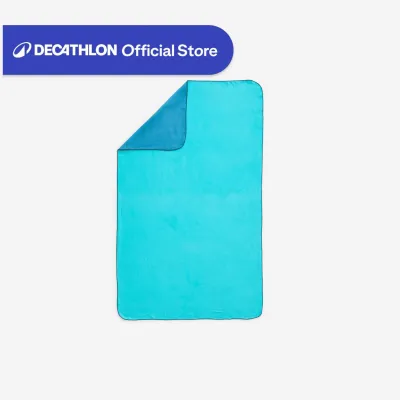
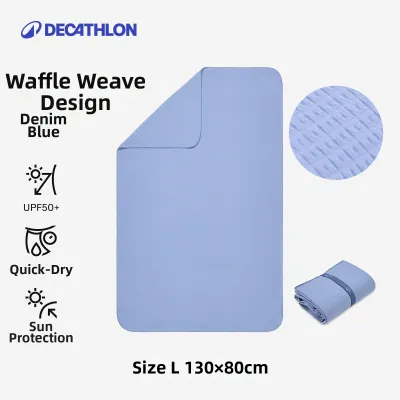
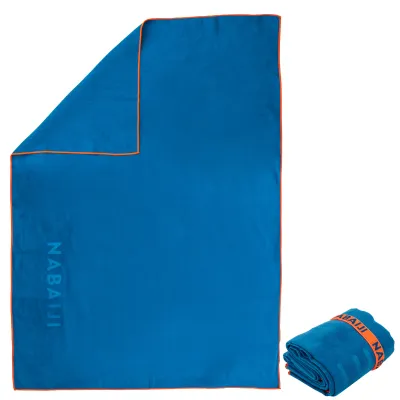
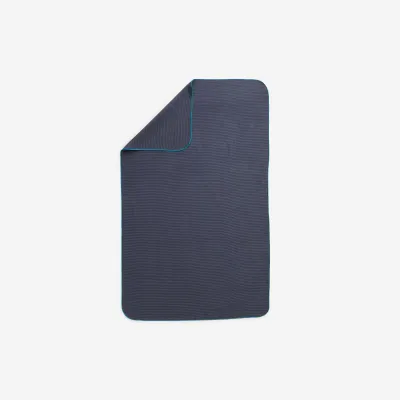
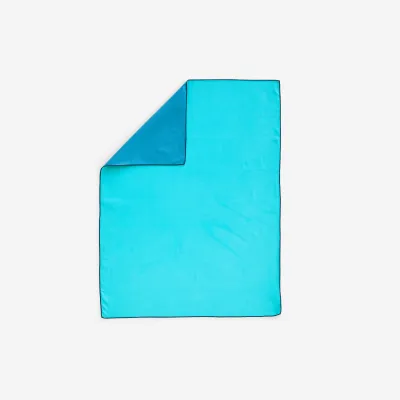
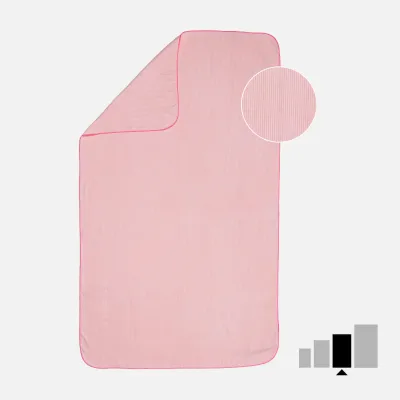

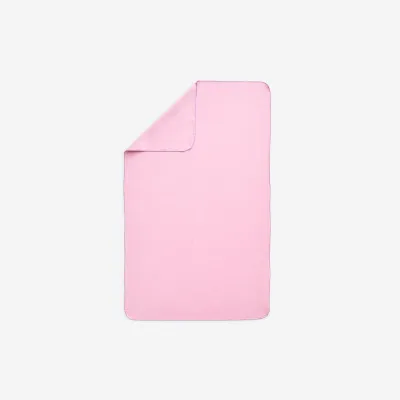
Prices are valid at publication and may change. Please refer to the product page for the latest price.
Hooded towel ponchos are designed with play and independence in mind. These towels slip over the child’s head, keeping their hands free to carry toys, eat snacks, or run around without the towel slipping off. They are particularly valuable for beach outings, outdoor resort pools, and open-air changing areas. The built-in hood protects damp hair from cool breezes, while the loose drape provides a portable, private changing space for slipping out of wet swimwear.
Cotton and fleece beach towels are the classic choice for leisure and comfort. If your child’s water activities consist of casual pool lounging, weekend staycations, or backyard splash parties, these towels provide a plush, comforting barrier against cold water. They are excellent for wrapping up a shivering child after a long swim, offering immediate warmth that synthetic materials struggle to replicate.
Ultimately, the best towel is the one that fits seamlessly into your family’s routine. Many active families find that a combination of these types—such as a compact microfiber towel for school swim bags and a cozy hooded poncho for beach holidays—provides the most versatile solution.
Key Features to Evaluate Before Buying
Before making a purchase, parents should look past attractive patterns and colors to evaluate the functional aspects of a decathlon towel. Focusing on specific criteria ensures the towel performs well under real-world conditions.

Size and Coverage Selecting the correct dimensions is crucial for both warmth and utility. Decathlon typically labels its towels by size categories (such as S, M, L, and XL) or suggests age ranges, but these can be misleading depending on your child’s growth rate. Instead of relying solely on age recommendations, check the exact measurements printed on the product label. For toddlers and younger children, a smaller towel (around 55 x 110 cm) is often sufficient to dry off without dragging on the wet ground. Older children and pre-teens need larger options (such as 80 x 130 cm or more) to achieve full-body wrap coverage, which is essential for trapping body heat when stepping out of air-conditioned indoor pools or windy beachside areas.
Material and Absorbency The battle between synthetic and natural fibers comes down to a trade-off between convenience and comfort. Microfiber is exceptionally lightweight, highly packable, and dries rapidly, making it the champion of convenience. However, its texture can feel unusual to some children, as it tends to cling to the skin rather than glide smoothly. Cotton, on the other hand, is highly absorbent, pulling moisture away from the skin effortlessly while providing a soft, familiar feel. The trade-off is weight and bulk; cotton towels hold onto water, becoming heavy when wet and taking significantly longer to dry, especially in humid environments.
Kid-Friendly Designs Encouraging children to dry themselves independently is much easier when the towel features thoughtful design elements. Look for towels equipped with integrated hoods to dry wet hair quickly and prevent heat loss from the head. Snap buttons along the sides of ponchos or towels can transform a flat sheet into a secure wrap, preventing it from falling into the dirt or pool water. Easy-grip loops or integrated elastic bands make it simple for small hands to hang the towel on pegs or roll it up tightly for packing.
Portability and Packability For parents managing swim gear for multiple children, bag space is a premium resource. A single cotton bath towel can easily fill half a standard backpack. Microfiber options roll up into compact bundles, often secured by built-in elastic bands, allowing you to pack towels for the entire family into a single, modest-sized tote. Consider the carrying method and the total weight of your gear when deciding how much bulk you are willing to transport. In terms of budget, compact microfiber options generally fit into a highly accessible bracket of ₱150 to ₱400, while larger hooded ponchos and premium cotton beach towels typically range from ₱500 to ₱1,200.
Recommended Decathlon Towel Categories for Kids
Decathlon’s swim and water play range features specialized designs tailored to different age groups and water environments. By analyzing each category, you can identify the exact model type that matches your child’s lifestyle.
Microfiber Swim Towels
Microfiber towels are the workhorses of the Decathlon swim line. Made from a blend of polyester and polyamide, these towels are engineered to absorb several times their weight in water while remaining incredibly thin.
The primary benefit of microfiber is its rapid drying capability. In tropical climates, a microfiber towel hung in a well-ventilated area can dry completely in a couple of hours, ensuring it is ready for the next swim session. Additionally, the smooth surface of microfiber does not trap sand, making it easy to shake off beach debris before packing up. They are also highly resistant to mildew, which is a common issue when damp items are temporarily forgotten in school lockers or car trunks.
However, microfiber does have limitations that parents should consider. The texture can feel sticky or clingy to children who are accustomed to plush cotton bath towels. Instead of wiping the skin, microfiber works best when patted gently against the body, a technique that younger children may need to learn. Some low-cost microfiber towels can also feel incredibly thin, leading to concerns about durability.
When shopping, always verify the fabric weight, measured in grams per square meter (GSM), and the exact dimensions on the product tag. A higher GSM indicates a denser, more absorbent microfiber that feels slightly softer and more substantial, while a lower GSM prioritizes ultra-lightweight packability. Ensure the physical dimensions are long enough to wrap around your child’s torso securely.
Hooded Towel Ponchos
Hooded ponchos represent a hybrid solution that combines the drying efficiency of a towel with the wearability of a garment. Decathlon offers these in both microfiber and cotton-rich blends, catering to different environmental needs.
The standout feature of a hooded poncho is the hands-free experience. Once slipped over the head, the poncho stays securely in place, allowing children to play, run, or rest without parents constantly readjusting a slipping towel. This design is incredibly practical for public beaches or busy community pools where changing rooms are crowded or unavailable. The poncho acts as a mobile changing tent, allowing kids to pull their arms inside and change out of wet swimwear with complete privacy.
When selecting a hooded poncho, sizing requires careful attention. The hem of the poncho should ideally reach just below the child’s knees. If it is too long, it poses a tripping hazard, especially on wet, slippery pool decks; if it is too short, it fails to provide adequate coverage and privacy for changing. The armholes must be wide enough to allow unrestricted movement but not so loose that they expose the child’s torso.
Additionally, check the hood size to ensure it fits comfortably over damp hair without sliding down over the eyes and obstructing vision. Verify the material composition on the inner label: microfiber-blend ponchos are excellent for quick drying and light packing, while 100% cotton ponchos offer superior warmth and comfort for windy beach afternoons.
Cotton and Fleece Beach Towels
For many children, nothing beats the comforting embrace of a traditional cotton or fleece beach towel after spending hours in the water. Decathlon’s cotton range focuses on high-loop terry fabrics that maximize softness and warmth.
The primary advantage of cotton and fleece is their superior tactile comfort. When children emerge from cold water, especially on overcast days or in air-conditioned indoor facilities, their body temperature can drop quickly. A thick cotton towel acts as an immediate insulator, absorbing water rapidly while trapping body heat to prevent shivering. The soft texture is also highly gentle on delicate skin, making it a preferred choice for infants and toddlers.
The drawbacks, however, are significant when it comes to logistics. Cotton towels are bulky and heavy, taking up substantial space in swim bags. Once wet, they absorb a massive amount of water, significantly increasing the weight of your gear. They also act like a magnet for sand, which can get trapped deep within the cotton loops and prove difficult to shake out.
In highly humid tropical climates, such as the Philippines, thick cotton towels present a specific maintenance challenge. Because the air is saturated with moisture, heavy cotton fabrics require a long time to dry completely. If they are not hung in direct sunlight or a highly ventilated space, they can easily develop unpleasant musty odors and harbor mildew. This makes them less ideal for daily swim practices or multi-day beach trips unless you have reliable access to a clothes dryer or laundry facilities.
Care and Maintenance Tips for Humid Climates
Maintaining the performance and hygiene of your decathlon towel requires proper care, particularly when dealing with the high humidity and warm temperatures characteristic of tropical environments. Neglecting proper maintenance can lead to reduced absorbency, fiber degradation, and persistent odors.
Immediate Rinsing After every swim session, make it a habit to rinse your child’s towel in clean, fresh water as soon as possible. Chlorine from swimming pools and salt from the ocean are highly abrasive. If left on the fabric, they break down the synthetic fibers of microfiber and degrade the natural fibers of cotton, leading to premature wearing, stiffening, and loss of absorbency. A quick rinse under a tap at the shower station is often enough to flush out these elements along with any trapped sand or dirt.
Washing Instructions When it comes to washing sports towels, less is often more. Always use a mild detergent and avoid using fabric softeners entirely, especially on microfiber towels. Fabric softeners work by depositing a thin, waxy chemical coating over the fibers to make them feel softer. While this might feel pleasant on standard clothing, it clogs the microscopic channels in microfiber and coats the loops of cotton, drastically reducing their ability to absorb water. Over time, softeners can render a highly absorbent towel virtually useless, causing water to bead up and roll off the fabric rather than being absorbed.
Drying and Storage To prevent mildew and the dreaded musty “kulob” odor, towels must dry completely before being stored. Never leave a damp towel bundled up inside a plastic bag or a dark swim backpack for extended periods. This dark, warm, and moist environment is the perfect breeding ground for bacteria and mold. As soon as you return home, hang the towel on a wide hanger or a clothesline in a well-ventilated area, preferably in direct sunlight. If drying indoors, utilize a room with good air circulation or a fan to speed up the process.
Label Verification Before tossing any towel into the washing machine or dryer, always consult the manufacturer’s care label sewn into the seam. Decathlon towels have specific temperature limits—typically 30°C or 40°C for microfiber to prevent heat damage to the synthetic polymers. Some microfiber towels should never be tumble-dried or ironed, as high heat can melt the fine fibers, permanently ruining their texture and absorbency.
Frequently Asked Questions (FAQ)
Can I use a regular bath towel for my child's swimming lessons?
While you can use a regular household bath towel, it is generally impractical for regular swim lessons. Standard bath towels are made of thick cotton, which is bulky to pack, heavy when wet, and slow to dry. Carrying a sodden bath towel in a school bag can make the load uncomfortably heavy for a child and can easily soak through to their schoolbooks or clothes. Purpose-built swim towels, especially microfiber options, are designed to dry quickly, pack down small, and resist odors, making them far more convenient for active routines.
How do I know if a microfiber towel is absorbent enough?
To evaluate a microfiber towel’s absorbency, look at its fabric specifications, specifically the weight or thickness. High-quality microfiber towels feel slightly more substantial to the touch and have a tight weave that drinks up water instantly rather than simply pushing it across the skin. You can also check verified user feedback on the product page to see how well it performs after multiple washes. If a microfiber towel feels paper-thin and slick, it may have lower absorbency and require multiple pats to dry the skin.
Are Decathlon towels safe for kids with sensitive skin?
Decathlon’s swim towels are generally safe for standard use, but children with highly sensitive skin, eczema, or specific synthetic allergies require extra consideration. Microfiber is made of polyester and polyamide, which can sometimes feel irritating or too dry on highly sensitive skin due to its clingy texture. If your child has sensitive skin, look for 100% cotton towels or hooded ponchos, which offer a gentler, non-abrasive touch. Always check the material composition label on the product, and consider washing new towels with a hypoallergenic, fragrance-free detergent before the first use. If your child has severe, diagnosed skin conditions, consult a pediatrician regarding the best fabric choices.
Community discussion
Share your experience or ask a question. Comments are reviewed before publication.