
Selecting the right electric mountain bike (e-MTB) for navigating the diverse off-road terrain in the Philippines requires balancing raw power, battery efficiency, and robust structural design. The country’s trails range from the steep, clay-heavy climbs of Rizal and the rocky descents of Benguet to the technical, root-filled singletracks of Laguna. Because e-MTBs carry the added weight of a motor and battery, standard mountain bike considerations must be re-evaluated. To find a bike that handles these demanding conditions safely, riders must prioritize mid-drive motor systems, robust suspension configurations, and reliable local service support.
Unlike traditional mountain bikes, an e-MTB’s performance is heavily dictated by how its electrical and mechanical components interact with the trail. A bike that excels on flat, dry gravel paths may quickly falter when faced with a slick, vertical climb in a tropical rainforest. By understanding the core technical specifications and matching them to local trail conditions, you can make an informed investment that ensures both safety and long-term riding enjoyment.
Key Criteria for Trail Riding e-MTBs in the Philippines
Evaluating an e-MTB for rugged trail use requires looking closely at motor placement, torque, battery capacity, suspension, and frame geometry. These five elements determine how well the bike climbs, descends, and handles technical obstacles under the added weight of the electric drive system.
Products mentioned in this guide
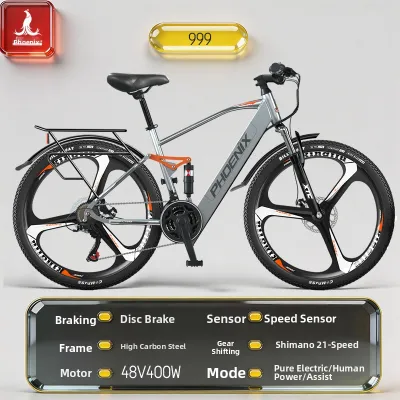
4 Lazada user ratings
This bike is really impressive; the photos don't do it justice, but the texture and style feel very high-end and it looks great while riding…Read full reviewShow less
This bike is really impressive; the photos don't do it justice, but the texture and style feel very high-end and it looks great while riding. The customer service was very helpful in providing video guides to assist with the initial setup, making it easy to get everything perfectly adjusted. The gear shifts are smooth and the brakes are powerful, making for a wonderful experience.
I've been using this for a while now before writing this. The display focuses purely on the battery level, which keeps things simple, and ev…Read full reviewShow less
I've been using this for a while now before writing this. The display focuses purely on the battery level, which keeps things simple, and everything else works quite well.
It's a great ride. The pedal assist is powerful, and the pure electric mode is fast too. It's a large bike, so it's perfect for tall riders.…Read full reviewShow less
It's a great ride. The pedal assist is powerful, and the pure electric mode is fast too. It's a large bike, so it's perfect for tall riders. Overall, a great product.
This electric bike looks amazing. The extra rear shock absorber makes the ride so smooth and comfortable. It is a great value.
Prices are valid at publication and may change. Please refer to the product page for the latest price.
Motor placement is the most critical factor for trail riding. Mid-drive motors, which are positioned at the bottom bracket between the pedals, keep the bike’s center of gravity low and centered. This placement provides a natural riding feel and ensures balanced weight distribution, which is essential when navigating tight switchbacks or lifting the front wheel over obstacles. Hub-driven motors, located in the rear wheel, disrupt this balance and are generally unsuitable for technical off-road trails.
Torque, measured in Newton-meters (Nm), determines the motor’s ability to assist you up steep, loose inclines. For challenging trail riding, a motor with a torque rating between 70Nm and 90Nm is highly recommended. This level of power allows you to maintain momentum on slippery clay or loose volcanic soil without stalling. Lower torque ratings may require excessive physical effort on steep climbs, defeating the purpose of pedal assist on demanding terrain.
Battery capacity, measured in Watt-hours (Wh), directly impacts your riding range, especially when climbing. Elevation gain drains batteries much faster than flat riding. In mountainous regions, a battery capacity of 625Wh to 750Wh is ideal to ensure you have enough power to complete long rides. While a smaller 500Wh battery may suffice for shorter, flatter trail loops, it can leave you stranded on long, remote climbs where charging infrastructure does not exist.
Suspension travel is another key consideration for managing rider fatigue and maintaining traction. For versatile trail riding, a bike with 130mm to 150mm of front and rear travel offers a balanced mix of climbing efficiency and descending control. If your local trails consist of highly technical descents with large rocks and drops, opting for an enduro-focused setup with 160mm or more of travel will provide better impact absorption.
Finally, frame geometry dictates how stable the bike feels at speed. A slacker head tube angle (around 64 to 66 degrees) pushes the front wheel further forward, providing stability on steep, rocky descents. Conversely, a steep seat tube angle (75 to 77 degrees) keeps your body weight centered over the pedals, preventing the front wheel from lifting off the ground during steep, technical climbs.
Types of Electric Mountain Bikes for Philippine Trails
Electric mountain bikes are generally categorized into three main types, each suited to different riding styles, skill levels, and trail difficulties. Understanding these categories helps you select a bike that matches your typical riding environment.

Trail e-MTBs are the most versatile option for all-mountain riding. Featuring moderate suspension travel (130mm to 150mm) and balanced geometry, these bikes are designed to climb efficiently while still offering plenty of capability on technical descents. They are highly suitable for riders who enjoy a mix of flowing singletrack, moderate rock gardens, and long exploratory rides. However, they may require a more cautious approach on extremely steep, high-speed downhill runs.
Enduro and All-Mountain e-MTBs are built specifically for aggressive descents and highly technical terrain. With longer suspension travel (160mm to 180mm), robust frames, and slacker geometry, these bikes excel at absorbing heavy impacts from drops, jumps, and deep rock gardens. The trade-off is that they are generally heavier and can feel sluggish on flatter trails or tight, low-speed climbing routes where quick handling is required.
Hardtail e-MTBs feature front suspension forks but have rigid rear frames. These bikes are lighter, mechanically simpler, and more affordable than full-suspension models. They are highly efficient on fire roads, gravel paths, and smooth, flowing trails. However, the lack of rear suspension significantly limits their performance on rough, root-strewn, or rocky descents, where the rear wheel can easily lose traction and bounce, increasing rider fatigue and the risk of damage.
When choosing between these types, consider the impact of extreme mud and wet weather. Full-suspension bikes have multiple pivot points and linkages that can collect thick clay, requiring diligent cleaning to prevent premature wear. Hardtails have fewer moving parts to maintain in wet conditions but offer less rear-wheel traction on slippery, muddy climbs, making power delivery harder to manage without spinning out.
Matching Motor and Battery Specs to Your Riding Style
To get the most out of your e-MTB, you must match the motor and battery specifications to your typical ride duration, physical fitness, and the elevation profile of your local routes.
Mid-drive motors deliver power proportionally to your pedaling input, creating a seamless extension of your own strength. This natural power delivery is crucial on technical climbs, where sudden surges of power from a less sophisticated motor can cause the rear tire to spin out on wet roots or loose gravel. Look for systems from reputable manufacturers that offer customizable assist modes via a smartphone app, allowing you to tune the power delivery to match your riding style.
Your choice of torque should reflect the steepness of your local terrain. If your rides consist of rolling hills and moderate fire roads, a lighter motor with 50Nm to 60Nm of torque may be sufficient and will extend your battery life. However, if you regularly tackle steep, technical mountain trails, a high-torque motor (85Nm or more) is necessary to help you clear sudden obstacles from a near-standstill.
Calculating your realistic battery range requires looking beyond the manufacturer’s estimated distance. Heavy rider weight, high assist modes, muddy terrain, and steep climbs all accelerate battery drain. If you plan to ride in remote areas with significant elevation gain, consider purchasing a bike that is compatible with a range extender—an auxiliary battery that fits into the water bottle cage—or carry a secondary battery in a dedicated e-bike backpack.
Essential Features and Upgrades for Rough Terrain
Because e-MTBs are significantly heavier than traditional mountain bikes, they subject components to much higher forces. Certain features are essential for maintaining safety, control, and durability on rugged off-road trails.
Powerful braking systems are non-negotiable. Stopping a heavy e-MTB on a steep descent requires immense stopping power. Look for four-piston hydraulic disc brakes paired with large rotors (at least 200mm in diameter both front and rear). Smaller two-piston brakes or smaller rotors can quickly overheat on long descents, leading to brake fade and a dangerous loss of stopping power.
Wheel size and tire clearance also play a major role in handling. 29-inch wheels offer excellent rollover capability, allowing you to maintain speed over rocks and roots. Alternatively, a “mullet” configuration—featuring a 29-inch wheel in the front for rollover and a 27.5-inch wheel in the rear for agility—is highly popular on e-MTBs, as it allows for shorter chainstays and nimbler handling in tight corners.
Dropper seatposts are essential for safety on technical descents. With the push of a handlebar lever, a dropper post lowers your saddle, allowing you to shift your body weight backward and downward. This lower center of gravity prevents you from being pitched over the handlebars when negotiating steep drops or rolling over large obstacles.
Finally, setting up your tires tubeless is highly recommended for trail riding. Tubeless systems allow you to run lower tire pressures, which dramatically increases grip on wet, slippery surfaces. Because of the extra weight of the bike, ensure your tires feature reinforced casings (often labeled as downhill, enduro, or e-bike specific casings) to prevent sidewall tears and pinch flats when striking sharp rocks.
Where to Buy and How to Verify Local Support
Purchasing an e-MTB is a significant financial investment, making after-sales support and warranty coverage just as important as the bike’s specifications.
While online marketplaces may offer lower initial prices, purchasing from an authorized local bike shop is highly recommended. E-MTBs feature complex electrical systems, motors, and batteries that require specialized diagnostic software and certified technicians to service. A local shop can also assist with professional fitting, suspension setup, and handling initial warranty claims directly with the manufacturer.
Before finalizing your purchase, verify the local availability of authorized service centers for the specific motor and battery brand on the bike. If a motor controller or battery fails, shipping these heavy, hazardous-material-rated components abroad for warranty service can be incredibly expensive and can leave you without a bike for months. Ensure the shop you buy from has direct access to replacement parts and diagnostic tools.
Carefully review the warranty terms before buying. Frame warranties often extend for five years or a lifetime, but electrical components (motor, battery, and display) typically carry a separate, shorter warranty of two years. Additionally, ask about the battery degradation policy; most reputable brands guarantee that the battery will retain a certain percentage of its original capacity (usually 60% to 70%) after a set number of charge cycles.
Whenever possible, arrange a test ride on the bike you are considering. A test ride allows you to assess how the frame fits your body, how smoothly the motor engages and disengages, and how the bike handles when pedaling without assistance. This hands-on evaluation is the best way to ensure the bike’s geometry and power delivery match your personal riding preferences.
Frequently Asked Questions (FAQ)
Are electric mountain bikes allowed on all trails in the Philippines?
Trail access for e-MTBs varies depending on the location and local regulations. While many commercial bike parks and popular trail networks welcome pedal-assist e-MTBs, some public forest reserves, national parks, or community-built singletracks may restrict motorized vehicles, including electric bikes. Always check with local government units (LGUs), private landowners, or local trail advocacy groups before riding. Respecting local access rules and trail-builder guidelines is essential for maintaining positive relationships within the outdoor community.
How do I maintain an e-MTB in a humid and muddy climate?
Maintaining an e-MTB in humid and muddy conditions requires consistent care to protect sensitive electronics and mechanical parts. After muddy rides, wash the bike using low-pressure water from a garden hose; never use a high-pressure power washer, as it can force water past bearing seals, battery compartments, and motor housings. Use a dedicated drivetrain degreaser and apply a high-quality wet lube to prevent chain rust. Regularly clean and dry the battery contact points, and apply dielectric grease if recommended by the manufacturer to prevent corrosion. Inspect suspension seals frequently and wipe away grit to prevent stanchion wear.
What is the realistic budget for a reliable trail e-MTB?
A reliable trail e-MTB requires a significant investment due to the cost of high-quality motors, batteries, and heavy-duty components. Entry-level hardtail e-MTBs with reputable mid-drive systems generally start around ₱120,000 to ₱180,000. Mid-range full-suspension trail e-MTBs, which offer better traction and comfort on technical terrain, typically range from ₱200,000 to ₱350,000. Premium enduro e-MTBs featuring carbon fiber frames, top-tier suspension, and high-capacity batteries can exceed ₱400,000. Investing in a reputable brand with local warranty support saves money on long-term repairs.
Community discussion
Share your experience or ask a question. Comments are reviewed before publication.