
A reliable fishing scissors clipper is one of the most critical yet frequently overlooked tools in an angler’s kit. In the tropical environment of the Philippines, where high relative humidity and constant exposure to warm saltwater create highly corrosive conditions, a standard cutting tool will quickly fail. Selecting the right tool requires understanding how different materials and blade designs interact with modern fishing lines, from slick braided PE lines to stiff fluorocarbon leaders. By matching your cutting tool to your specific angling style, you ensure clean, effortless rigging and prevent frustrating line frays when it matters most.
How to Choose the Right Fishing Cutting Tool
Selecting the perfect fishing cutting tool involves evaluating several technical specifications that directly impact performance and longevity on the water.
Material and Corrosion Resistance
The primary enemy of any metal tool in tropical climates is rust. Warm saltwater and humid air accelerate oxidation, which can ruin a blade’s edge in a matter of days. Anglers should prioritize tools constructed from high-grade marine stainless steel, specifically from the 400 series, such as 420 or 440 stainless steel. These alloys offer an optimal balance of carbon for edge retention and chromium for corrosion resistance. For ultimate durability, look for blades with a titanium-bonded or titanium nitride (TiN) coating, which provides a hard, inert physical barrier against saltwater. High-carbon steel blades, while incredibly sharp, are highly susceptible to rust and require meticulous maintenance, making them less practical for general marine use.
Products mentioned in this guide
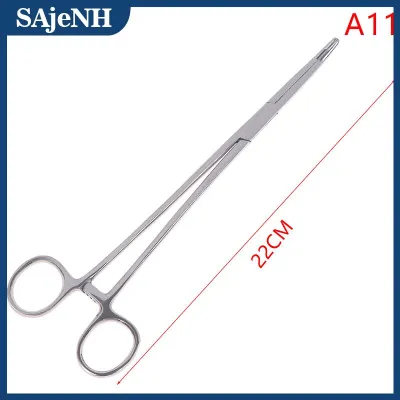
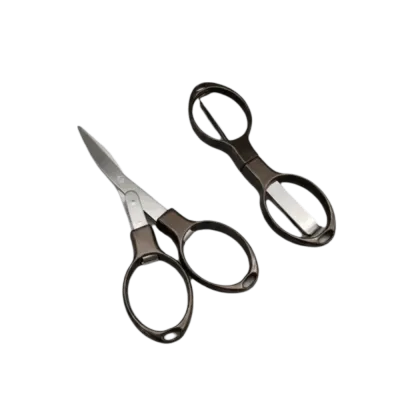
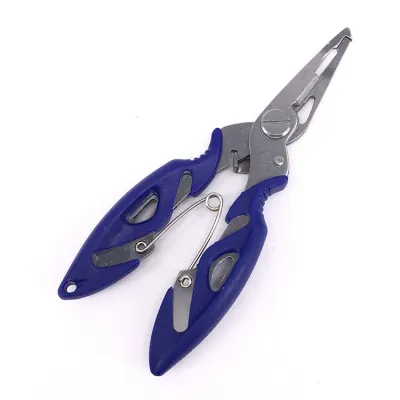
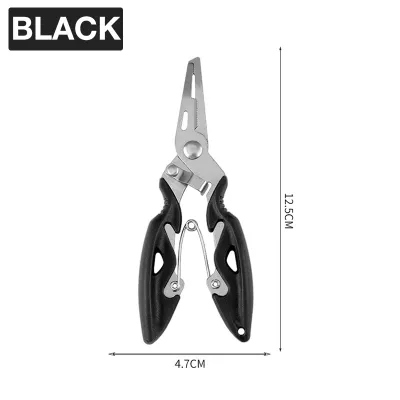
![[COD] SHGMYD Curved Mouthed Fishing Pliers Stainless Steel Powerful Horse Fish Line Scissors Multifunctional Road Pliers](https://img.lazcdn.com/g/p/e28d31d9d9941df352bef62358fc3aa7.jpg_400x400q80.jpg_.webp)
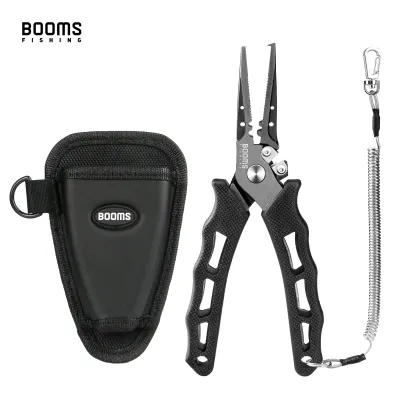
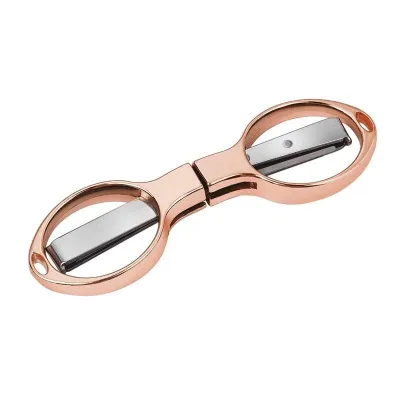
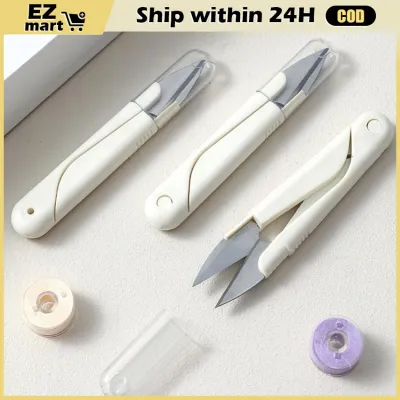
Prices are valid at publication and may change. Please refer to the product page for the latest price.
Blade Design and Edge Type
Different line materials require distinct cutting mechanics. Monofilament and fluorocarbon lines are relatively stiff and can be sliced cleanly with a straight-edged blade. Modern braided lines (PE lines), however, are composed of multiple woven micro-fibers that are incredibly limp and slick. When you attempt to cut braid with a standard straight blade, the line tends to slide forward along the edge rather than being sheared, resulting in a frayed, messy end that is nearly impossible to thread through a hook eye or a tiny guide. To solve this, specialized braid scissors utilize micro-serrated edges. These tiny teeth grip the slippery fibers, holding the line firmly in place so the opposing blade can make a clean, instantaneous cut. Additionally, blunt or rounded tips are highly recommended for safety, preventing accidental punctures to inflatable kayak hulls, boat seats, or your own hands when working on a moving deck.
Ergonomics and Handling
A cutting tool must be easy and safe to operate under less-than-ideal conditions. When your hands are wet, slimy from handling fish, or covered in sunscreen, a slippery handle can lead to dropped tools or accidental cuts. Look for ergonomic handles with oversized finger loops or non-slip rubberized grips made from thermoplastic elastomer (TPE). Spring-loaded designs are particularly advantageous for rapid, one-handed operation. These tools automatically spring back to the open position after each cut, allowing you to quickly snip a line and return to fishing without having to manually pry the handles apart with your fingers.
Safety and Retention
Given the dynamic nature of fishing from a boat, kayak, or slippery shoreline, dropping gear overboard is a constant risk. High-quality fishing scissors and clippers must feature robust retention options, such as integrated lanyard holes or heavy-duty attachment loops. These allow you to secure the tool to a retractable zinger, a coiled lanyard, or your fishing personal flotation device (PFD). Furthermore, look for built-in locking mechanisms on spring-loaded tools to keep the sharp blades safely closed when stored in your pocket or tackle bag, preventing accidental cuts when reaching for gear.
Recommended Tool Types for Different Fishing Styles
No single cutting tool is perfect for every angling scenario. To achieve the best results, you should select a tool tailored to your primary fishing environment and target species.

Saltwater and Offshore Fishing (Heavy-Duty Braid Scissors)
Saltwater angling in the Philippines—whether popping for giant trevally (talakitok) in the reef passes of Siargao, trolling for tanguigue (Spanish mackerel) in the Verde Island Passage, or deep-drop jigging for yellowfin tuna in Sarangani Bay—demands heavy-duty gear. Anglers in these environments routinely use high-test braided PE lines (often PE 4 to PE 8 or higher) paired with thick fluorocarbon shock leaders ranging from 80lb to 150lb test.
For these demanding applications, the recommended tool is a pair of heavy-duty, micro-serrated braid scissors. These tools feature thick, robust blades and reinforced pivot joints designed to withstand high shear forces without flexing. The micro-serrations grip the heavy braided line, allowing you to cut through thick PE lines and heavy leader materials with minimal effort. The extended handles provide maximum leverage, which is essential when your hands are tired after hours of fighting strong pelagic fish.
However, these heavy-duty tools have clear limitations. Their bulky profile and weight make them unsuitable for delicate, high-precision tasks or ultra-light finesse rigging. They are too large to fit comfortably in a small pocket and must be carried in a dedicated sheath or secured to a heavy-duty lanyard on your bag or boat console. They also require rigorous post-trip maintenance, as the complex pivot joints and serrations can trap saltwater and debris, leading to localized corrosion if left uncleaned.
When purchasing heavy-duty braid scissors, verify the specific grade of stainless steel used. Look for reputable manufacturers that explicitly state the use of 420 or 440 stainless steel, or those featuring genuine titanium nitride coatings. Avoid cheap models that rely on colorful cosmetic paint or plastic coatings on the blades, as these decorative layers will quickly wear away under heavy use, exposing the vulnerable metal underneath to rapid rust.
Freshwater and Bass Fishing (Compact Line Clippers)
Freshwater fishing in the Philippines often centers around inland lakes and reservoirs, such as Caliraya Lake, Pantabangan Lake, and Lumot Lake. Anglers in these areas target species like largemouth bass, snakehead (haruan), and peacock bass using finesse techniques, topwater lures, and soft plastics. These setups typically utilize lighter monofilament, fluorocarbon, or low-diameter braided lines, rarely exceeding 20lb test.
For this style of fishing, a compact, spring-loaded nail-style clipper or a multi-function mini plier with an integrated line cutter is the ideal choice. These pocket-sized tools are designed for rapid, one-handed operation, allowing you to quickly trim tag ends close to the knot after changing lures. They are incredibly lightweight and can be clipped directly to your shirt collar, a lightweight neck lanyard, or a retractable zinger on your chest, keeping them within arm’s reach at all times. Many high-quality clippers also feature an integrated hook eye cleaner—a small needle-like tool used to clear dried paint or debris from the eyelet of a new jig head or lure.
The primary limitation of compact clippers is their lack of cutting power. They are designed strictly for light-to-medium lines and will struggle to cut through heavy braided lines or thick shock leaders. Attempting to force a compact clipper through thick wire or heavy fluorocarbon will quickly dull the cutting edges, dent the jaws, or bend the spring mechanism, rendering the tool useless.
Before buying, verify the alignment and sharpness of the cutting jaws. Hold the clipper up to the light and close it slowly; the two cutting edges must meet perfectly flush along their entire length without any visible gaps. If the jaws do not align perfectly, the tool will pinch and bend the line instead of cutting it cleanly, leading to frayed knots and wasted time on the water.
Fly Fishing and Finesse Techniques (Precision Micro Scissors)
Fly fishing and ultra-light finesse angling are highly specialized disciplines that require meticulous attention to detail. Whether you are casting tiny wet flies for local stream species in mountainous regions or targeting wary fish on shallow coastal flats, your rigging must be flawless.
The recommended tool for this style of angling is a pair of precision micro scissors. These tools feature extremely thin, straight-edge blades and fine, sharp tips. They are designed to make highly precise, flush cuts on ultra-thin tippets and leaders (often down to 2lb or 4lb test) without leaving any excess tag end that could spook wary fish or collect floating debris. They are also indispensable for on-the-water fly modifications, allowing you to trim excess feathers, synthetic fibers, or weed guards with surgical precision.
Because of their delicate construction, precision micro scissors have significant limitations. They are highly fragile and completely unsuitable for cutting heavy lines, thick leaders, or metal wire. Dropping these scissors onto a hard boat deck, rocks, or concrete can easily bend the fine tips or misalign the pivot joint, permanently ruining their cutting capability.
When selecting micro scissors, inspect the blade alignment under good lighting. Ensure that the blades slide past each other smoothly without catching and that the tips meet precisely at the very end of the closing stroke. Look for models with comfortable, rubber-lined finger loops that provide a secure grip, even when performing delicate trimming with wet fingers.
Essential Features to Verify Before Purchasing
Before investing in a new fishing cutting tool, it is crucial to perform a few practical checks to ensure you are getting a durable, high-performing product.
The Paper and Braid Test
The most reliable way to test the quality of any fishing scissors or clipper is to conduct a simple cutting test. If you are purchasing from a local tackle shop, ask to test the tool on a scrap piece of limp, braided line or a single sheet of thin paper. A high-quality tool should slice through the material effortlessly and cleanly at any point along the blade—from the pivot joint all the way to the very tip. If the line or paper folds, slides forward, or frays instead of shearing instantly, the blade tension is too loose, or the cutting edges are poorly ground.
Coating vs. Finish
It is important to distinguish between a functional protective coating and a cheap cosmetic finish. High-quality tools feature functional coatings like polytetrafluoroethylene (PTFE) or titanium nitride, which are chemically bonded to the metal. These coatings reduce friction during cutting and provide a genuine, long-lasting barrier against saltwater corrosion. Conversely, cheap tools often use cosmetic finishes, such as painted patterns or thin chrome plating, which quickly scratch, chip, and flake off under normal use. Once the finish is compromised, moisture becomes trapped underneath, accelerating localized rust and seizing the tool.
Attachment and Tethering
Dropping your tools into the water is one of the most common mistakes on a boat or kayak. To prevent this costly loss, ensure the tool has a reliable, reinforced attachment point. This should be a physical hole molded directly into the steel frame or a heavy-duty metal loop. Avoid tools that rely on flimsy plastic clips or thin key rings, as these can easily bend open or break under tension. A secure attachment point allows you to connect the tool to a high-quality retractable zinger or a coiled safety lanyard.
Tension Adjustment
Over time, the constant shearing force of cutting tough lines can cause the pivot point of scissors to loosen. High-quality fishing scissors often feature an adjustable pivot screw or bolt rather than a permanent rivet. This adjustable design allows you to fine-tune the blade tension as the tool wears in, ensuring you can maintain perfect blade alignment and cutting performance for years to come.
Maintenance and Care for Tropical Climates
The combination of high heat, intense humidity, and salt air in the Philippines is incredibly destructive to metal tools. Implementing a simple, consistent maintenance routine will significantly extend the lifespan of your fishing cutting tools.
Post-Trip Cleaning
After every single fishing trip—regardless of whether you fished in saltwater or freshwater—you must rinse your cutting tools thoroughly under clean, running fresh water. Saltwater leaves behind microscopic salt crystals that attract moisture and initiate pitting corrosion, while freshwater environments can leave dirt, algae, and organic residue that trap moisture against the metal. A quick rinse immediately halts the corrosion process and removes harmful debris.
Drying and Lubrication
Never store a wet or damp tool in your tackle box. After rinsing, dry the tool completely with a clean, dry cloth, paying close attention to the pivot joint, spring mechanism, and blade edges. Once the tool is dry, apply a single drop of high-quality reel oil, mineral oil, or a dedicated marine corrosion inhibitor to the pivot point. Work the action a few times to distribute the lubricant, then wipe a very thin film of oil over the blades to protect them from humid air.
Storage Advice
Store your cutting tools in a dry, well-ventilated compartment of your tackle bag or box. Avoid leaving them exposed to humid air in an open boat console, kayak hatch, or damp garage. Placing a few silica gel packets or rust-preventative tabs inside your tackle compartments is a highly effective way to absorb residual moisture and protect all your metal gear in the humid Philippine climate.
Sharpening Limits
Knowing when to maintain your tools and when to replace them is key to safety and efficiency. Straight-edged blades can be easily honed using a fine-grit diamond sharpener or a specialized whetstone. However, micro-serrated braid scissors and precision micro scissors are extremely difficult to sharpen at home without destroying the specialized edge geometry. When these tools lose their edge and begin to fold or fray lines, it is generally best to replace them to ensure reliable, safe performance on your next outing.
Frequently Asked Questions (FAQ)
Can I use regular household scissors for cutting fishing line?
Household scissors are not designed to handle the unique physical properties of modern fishing lines. They lack the micro-serrations required to grip and shear slippery braided lines, which typically causes the line to slide along the blade and fray. Additionally, household scissors are usually constructed from lower-grade steel that lacks marine-grade corrosion resistance, causing them to rust and seize rapidly when exposed to the humid, salty environments encountered while angling.
How do I cut thick wire leaders without ruining my clippers?
Standard fishing scissors, line clippers, and multi-tool cutters are designed exclusively for soft monofilament, fluorocarbon, and braided lines. Attempting to cut stainless steel or titanium wire leaders with these tools will instantly chip, dent, or permanently misalign the cutting edges. To cut wire safely and preserve your line cutters, always use dedicated heavy-duty wire cutters or flush-cut side cutters specifically rated for the wire’s gauge.
Community discussion
Share your experience or ask a question. Comments are reviewed before publication.