
Building a functional home gym in the Philippines often comes down to a battle for square footage. In dense urban areas like Metro Manila, Cebu, or Davao, where condominiums and townhouse units dominate the residential landscape, dedicating an entire room to fitness equipment is a luxury few can afford. A foldable bench press solves this spatial dilemma by providing a robust, stable platform for strength training that can be packed away in seconds. This allows you to perform high-quality compound lifts without permanently sacrificing your living room or bedroom floor space to bulky, commercial-grade iron.
The primary appeal of a folding weight bench lies in its dual-purpose engineering. When fully deployed, it must mimic the rigid, unyielding feel of a standard utility bench, giving you the confidence to press heavy weights overhead or over your chest. Once your workout is complete, a series of quick-release pins or hinges allows the frame to collapse into a highly compact profile. This flattened unit can easily slide under a standard bed frame, stand upright behind a door, or slip into a narrow utility closet, completely reclaiming your living area for daily household activities.
Modern fitness engineering has closed the gap between stationary gym benches and space-saving alternatives. Older folding designs often suffered from a reputation of being wobbly or structurally suspect, but contemporary models utilize reinforced joints, high-tensile steel pins, and wider base stabilizers to ensure safety. By selecting a well-designed folding bench, you can confidently execute flat presses, incline work, and seated dumbbell exercises while maintaining a clean, clutter-free home environment.
Products mentioned in this guide
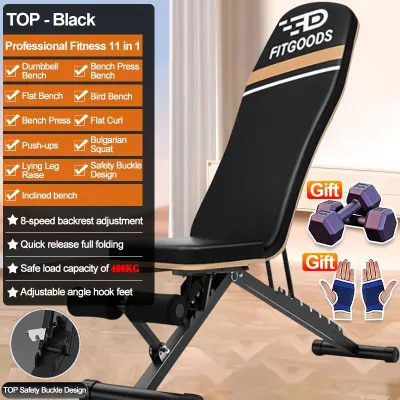
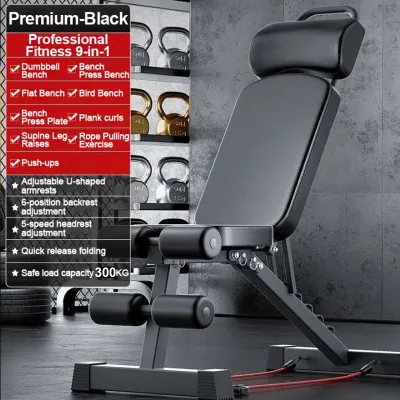
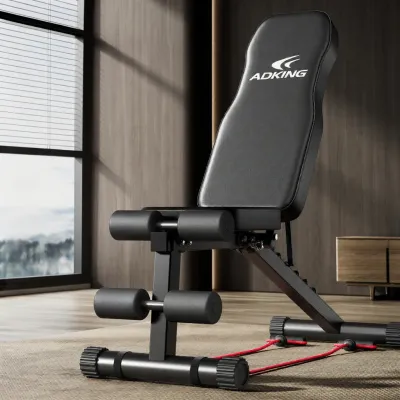
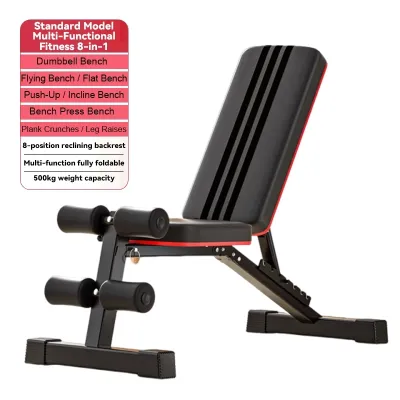
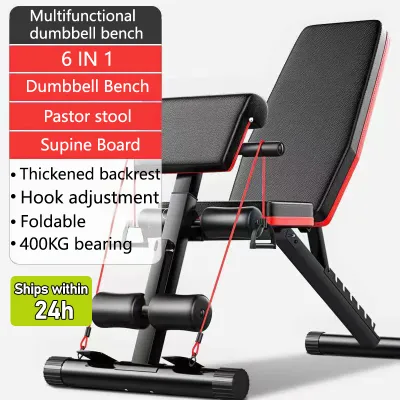
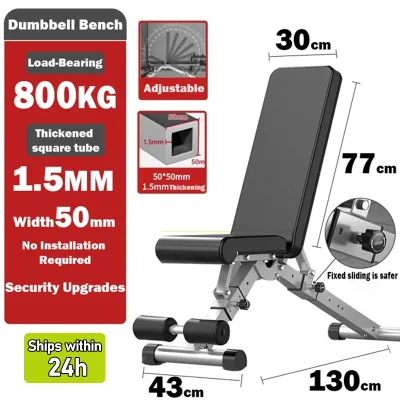
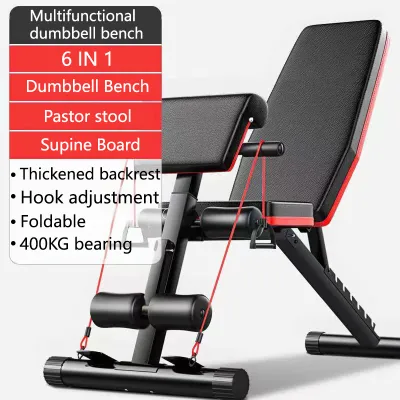
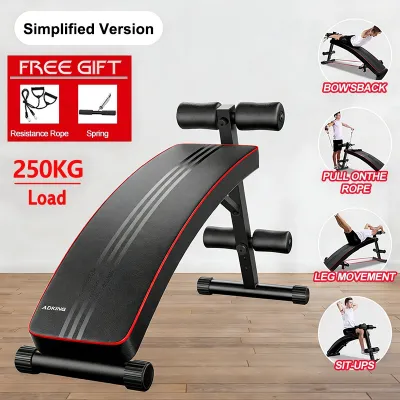
Prices are valid at publication and may change. Please refer to the product page for the latest price.
Essential Criteria for Evaluating Foldable Benches
Selecting the right foldable bench press requires looking beyond aesthetics and focusing on structural specifications. Because a folding bench relies on moving joints and locking mechanisms, it is subject to mechanical stresses that static benches do not experience. To make an informed purchase from local sports outlets or online marketplaces, you must know how to evaluate the engineering details that separate a safe, durable bench from a flimsy one. Let us break down the critical performance indicators you should verify before making an investment.
Weight Capacity and Frame Stability
The absolute first specification to verify is the manufacturer’s certified maximum weight capacity. This rating is not just for your body weight; it represents the combined total of your body weight plus the barbell, dumbbells, and plates you intend to lift. For example, if you weigh 80 kilograms and plan to bench press 100 kilograms, your bench must have a verified capacity of at least 180 kilograms to ensure structural safety. It is always wise to choose a bench with a capacity that exceeds your current lifting limits by a wide margin to accommodate future strength gains and provide an extra safety buffer.
To assess the frame’s inherent stability, look closely at the steel specifications in the product description. High-quality benches typically feature frames constructed from heavy-duty steel tubing, often measured in gauges. In steel manufacturing, a lower gauge number indicates thicker, stronger metal; for instance, 11-gauge or 12-gauge steel is significantly thicker and more rigid than 14-gauge steel. While manufacturers do not always list the exact gauge, you can look for terms like “thickened steel alloy” or check the overall shipping weight of the product, as a heavier bench generally points to a more substantial, stable metal frame.
Never assume that every foldable bench sold online is designed to handle heavy powerlifting or intense barbell training. Many lightweight folding benches are engineered primarily for dumbbell exercises or bodyweight calisthenics and may flex or wobble under the sudden, heavy load of a loaded barbell. If your training routine involves heavy bench presses using a squat stand or a rack, you must verify that the bench’s structural joints are reinforced with thick gusset plates and that the frame is rated for heavy-duty loads.
Folding Mechanism and Locking Pins
The safety of any foldable bench hinges entirely on the design of its folding mechanism and locking components. High-quality models utilize thick steel locking pins, safety latches, or heavy-duty quick-release pull pins that physically pass through the frame to lock the joints in place. Avoid benches that rely solely on friction-based dials or thin, plastic-capped pins, as these can wear down or fail under repeated stress, potentially causing the bench to collapse mid-set. Look for double-locking mechanisms or safety cotter pins that provide an extra layer of physical backup.
Evaluating how easily the bench transitions between its active and folded states will dictate how often you actually use it. A mechanism that requires you to unscrew multiple bolts with hand tools every time you want to pack it away will quickly become a chore, leading you to leave the bench permanently unfolded. Read product descriptions and user feedback to find designs that feature intuitive pull-pins or single-action folding hinges. The transition should take no more than a minute and should not require excessive physical straining or complex realignment of the frame parts.
Another critical safety aspect is the width of the base stabilizers when the bench is fully deployed. A foldable bench must have wide, horizontal feet at both ends to prevent lateral tipping, especially when you are mounting or dismounting the bench with heavy weights in hand. Check the product specifications for the width of the front and rear stabilizer bars; a wider footprint provides a much more stable foundation. Additionally, look for triangular frame geometry or angled support struts near the main hinge points, as these shapes naturally distribute downward force and resist side-to-side wobbling.
Pad Density and Upholstery
The foam pad of your bench is your direct interface with the machine, playing a vital role in both comfort and lifting mechanics. When performing heavy presses, you need a firm, high-density foam pad that supports your shoulder blades and spine without bottoming out against the underlying wooden or metal board. If the foam is too soft, your body will sink into it, which reduces shoulder stability, compromises your lifting posture, and increases the risk of joint strain. Press your thumb firmly into the pad before buying, or check reviews to confirm that the foam is described as supportive, dense, and resilient.
In the tropical, high-humidity climate of the Philippines, the choice of upholstery material is paramount for longevity. Sweat and ambient moisture are the primary enemies of gym equipment, quickly degrading cheap fabrics and causing low-grade synthetic leathers to crack, peel, or smell. Opt for benches wrapped in thick, commercial-grade vinyl or high-quality polyurethane (PU) leather. These materials are highly water-resistant, meaning sweat will pool on the surface rather than soaking into the inner foam, allowing you to easily wipe the bench dry after every training session.
Furthermore, pay attention to the stitching and the underside construction of the pad. Double-stitched seams are much less likely to split under the pressure of your body weight and movement. The upholstery should be securely stapled or bolted to a thick, multi-ply wooden backing board rather than a thin piece of particleboard. A sturdy backing board ensures that the pad remains flat and does not warp or flex over time, preserving the structural alignment of your spine during heavy training.
Recommended Foldable Bench Types for Different Fitness Goals
To find the perfect foldable bench press for your home setup, you must align the equipment’s design with your specific training goals. There is no single “best” bench for everyone; a powerlifter requires different features than someone focused on general fitness or high-intensity interval training. By understanding the three primary categories of foldable benches available on the market, you can make a targeted decision that maximizes both your budget and your workout efficiency.

Flat-Only Foldable Benches
- Best for: Beginners starting their strength journey, lifters who strictly perform flat barbell or dumbbell presses, and anyone dealing with extreme storage limitations.
- Pros: These benches feature the simplest mechanical design, which translates to a highly stable platform with fewer moving parts to wear out. Because they do not require complex adjustment hinges for incline or decline angles, they are generally lighter, easier to carry, and fold down to an incredibly flat profile. They are also typically the most budget-friendly option, making them an excellent entry point for home fitness.
- Cons/Limitations: The obvious drawback is the complete lack of versatility. You cannot adjust the backrest to perform incline presses for the upper chest, decline presses, or seated shoulder presses. This limits your exercise selection primarily to flat presses, rows, and core work, which may eventually hinder your muscle development if you seek a highly varied training routine.
- Buying Check: When shopping for a flat-only bench, pay close attention to the width and length of the pad to ensure your shoulders are fully supported. Additionally, verify that the folding legs lock securely in the open position with high-tensile pins, and check that the overall height of the bench from the floor is standard (typically around 43 to 45 centimeters) to allow for proper leg drive during your lifts.
Adjustable Foldable Benches (FID)
- Best for: Intermediate to advanced lifters who require a wide variety of pressing angles (Flat, Incline, Decline) to target different muscle groups, but still need to reclaim floor space after training.
- Pros: The FID bench is the ultimate tool for versatility in a home gym. With a single piece of equipment, you can adjust the backrest from a steep incline for shoulder presses, through various moderate angles for chest work, down to a flat position, and even into a decline for core and lower-chest exercises. Many models also feature adjustable seat angles to prevent you from sliding forward when the backrest is inclined.
- Cons/Limitations: Because of the multiple hinges, adjustment arcs, and moving support bars, FID benches are inherently heavier and bulkier than flat benches. The folding mechanism must accommodate these extra parts, which sometimes results in a slightly larger folded footprint. Furthermore, poorly engineered models can suffer from a noticeable "pad gap" between the seat and the backrest, or exhibit a slight wobble at the adjustment joints when under heavy loads.
- Buying Check: Always verify the number of available angle adjustments and ensure the adjustment mechanism (such as a ladder-style rack or a pin-lock system) is robust and quick to operate. Look for models that minimize the gap between the seat and backrest pads to ensure comfort during flat presses, and check that the locking pins for both the backrest and the folding legs are heavy-duty steel.
Ultra-Compact and Travel-Friendly Benches
- Best for: Residents of micro-apartments or studio condos, students in dorm rooms, or individuals who move frequently and need highly portable fitness gear.
- Pros: These benches are engineered with extreme space efficiency in mind, often featuring a unique split-pad design that allows the entire bench to fold completely in half, resembling a small suitcase. They are incredibly lightweight, easy to lift with one hand, and can fit into the smallest storage spaces imaginable, including shallow shelves or the trunk of a compact car.
- Cons/Limitations: To achieve such a light and compact design, manufacturers must use thinner steel tubing and narrower base stabilizers. This significantly reduces the overall weight capacity, making these benches unsuitable for heavy barbell training or high-impact workouts. They can also feel slightly less stable on uneven floors and may have shorter pads that do not comfortably accommodate taller lifters.
- Buying Check: If you choose this category, you must strictly adhere to the manufacturer's lower weight limits to prevent structural failure. Check the dimensions of the bench when fully extended to ensure your head and hips are fully supported, and look for models that include a built-in carrying handle or a dedicated travel bag to make transportation even easier.
Safety Checks and Maintenance for Humid Environments
Owning a foldable bench press in the Philippines means protecting your investment against the relentless tropical heat and high humidity. Moisture in the air can accelerate rust on exposed steel, degrade synthetic fabrics, and weaken mechanical joints over time. By implementing a consistent safety check and maintenance routine, you can ensure your bench remains safe to use and lasts for years to come.
- Pre-Workout Safety Check: Before you lie down under a loaded barbell, take thirty seconds to perform a physical and visual inspection of your bench. Verify that all locking pins, safety latches, and adjustment pins are fully inserted and locked into their respective holes. Give the bench a firm shake from side to side and end to end to ensure there is no unusual play or wobbling in the hinges. If any part feels loose or if a pin is not fully engaged, do not attempt to lift on the bench until it is corrected.
- Hardware Maintenance: The physical vibrations and forces generated during strength training can cause bolts and nuts to slowly back out over time. Every month, use a wrench or the assembly tools provided by the manufacturer to check all connecting hardware. Tighten any loose bolts, paying close attention to the main pivot hinges where the frame folds. Be careful not to over-tighten pivot bolts, as this can crush the frame tubing or make the folding mechanism difficult to operate; they should be snug enough to eliminate wobble while still allowing the joint to rotate.
- Rust Prevention: High humidity, especially during the rainy season, can quickly cause rust to form on unpainted steel parts, inside bolt holes, and along folding hinges. To prevent this, apply a light coat of a manufacturer-approved lubricant or a rust-inhibiting spray to the moving joints, hinges, and exposed metal pins every few months. Use a clean cloth to wipe away any excess lubricant to prevent it from dripping onto your floor or upholstery. Keeping these moving parts lubricated also ensures that the folding mechanism operates smoothly without annoying squeaks.
- Upholstery Care: Sweat contains salt and acids that can slowly eat away at vinyl and PU leather, causing the material to harden, crack, and eventually tear. After every single workout, wipe down the entire pad with a clean, dry towel to remove sweat. For deeper cleaning, use a damp cloth with a mild, non-abrasive soap solution to clean the surface, then dry it thoroughly with a separate towel. Avoid using harsh chemical solvents, bleach, or alcohol-based cleaners, as these will strip the protective oils from the synthetic leather and accelerate its degradation.
- Stop Condition: Your safety must always come first when lifting weights at home. If you notice any hairline cracks in the steel welds, bending in the frame tubes, stripped threads on critical bolts, or a locking mechanism that fails to engage securely, you must stop using the bench immediately. Do not attempt to patch up a structurally compromised bench with tape or makeshift pins. Contact the manufacturer for replacement parts, or consult a qualified professional welder or repair technician to assess whether the bench can be safely repaired.
Frequently Asked Questions (FAQ)
Can a foldable bench handle heavy barbell lifts?
Whether a foldable bench can handle heavy barbell lifting depends entirely on the specific model’s engineering, steel thickness, and certified weight capacity. Many heavy-duty folding benches are constructed with thick steel frames and robust locking pins that can safely support combined loads of 250 to 300 kilograms, making them perfectly suitable for serious barbell training. However, lighter utility benches are often rated only for dumbbell or bodyweight exercises. Always check the manufacturer’s official specifications and ensure the total weight of your body plus the loaded barbell remains well below the rated limit.
How do I prevent my foldable bench from sliding on smooth tiles?
Smooth ceramic or porcelain tiles, which are highly common in Philippine homes, can cause a bench to slide or shift during dynamic exercises. To prevent this, first check if your bench is equipped with non-slip rubber or plastic foot caps on the stabilizer bars. If sliding remains an issue, or if you want to protect your tiles from scratches and impact damage, place a high-density rubber workout mat or interlocking foam tiles underneath the bench. This drastically increases friction, dampens noise, and provides a stable, slip-free foundation for your workouts.
Is assembly required for foldable benches?
Most foldable benches require some level of basic assembly upon unboxing, though the primary frame and folding hinges are usually pre-assembled at the factory to guarantee proper alignment. Typically, you will need to bolt on the front and rear stabilizer feet, attach the backrest and seat pads, and insert the locking pins. Manufacturers include basic assembly tools and an instruction manual in the box. When assembling, follow the manufacturer’s instructions carefully, ensuring all bolts are tightened to the recommended torque without over-tightening, which could damage the frame.
Community discussion
Share your experience or ask a question. Comments are reviewed before publication.