
Finding the best golf travel bag for air travel in the Philippines requires balancing robust physical protection with smart weight management. Whether you are flying from Manila to the world-class fairways of Boracay, heading to Davao for a weekend tournament, or packing your gear for an international golf getaway, your clubs face a gauntlet of baggage carousels, tarmac transfers, and tight cargo holds. A reliable golf travel bag is your primary line of defense against bent shafts, shattered driver heads, and torn pockets.
To make an informed decision, you must consider the unique challenges of flying within and out of the Philippines. Local airlines enforce strict baggage weight limits, and tropical humidity means you need materials that resist moisture and mold. Navigating crowded terminals like NAIA or Mactan-Cebu International Airport demands a bag with exceptional mobility and durable handles. By understanding the key features of flight-ready travel cases, you can protect your valuable investment and enjoy a stress-free journey to your next tee time.
What to Look for in a Flight-Ready Golf Travel Bag
When selecting a golf travel bag, you cannot simply pick the largest or most padded option without looking at the specifications. Airlines calculate baggage dimensions using total linear measurements, which is the sum of the bag’s length, width, and height. Most international and domestic carriers set a standard limit of 158 centimeters (62 inches) for regular checked luggage. While sports equipment policies sometimes allow for larger dimensions, exceeding these limits without checking your carrier’s specific rules beforehand can result in unexpected, heavy oversized baggage fees at the check-in counter.
Products mentioned in this guide
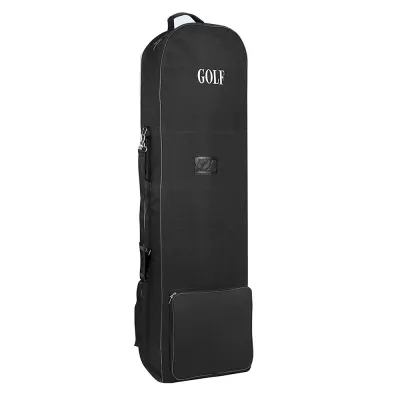
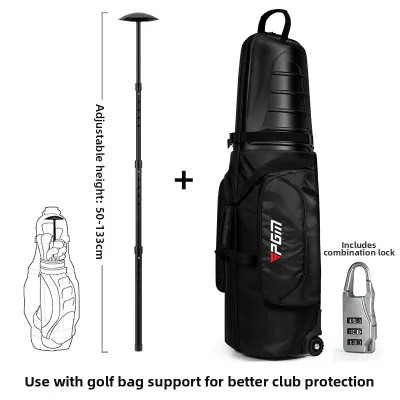
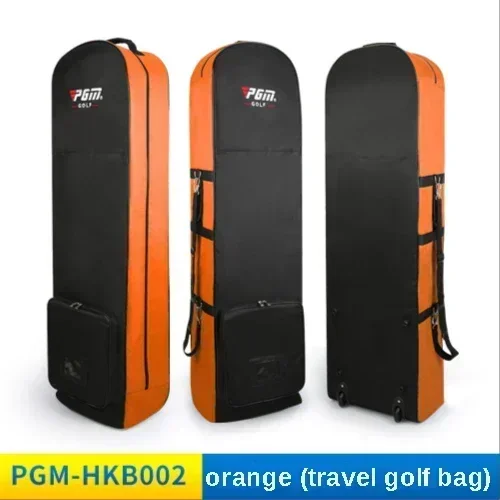
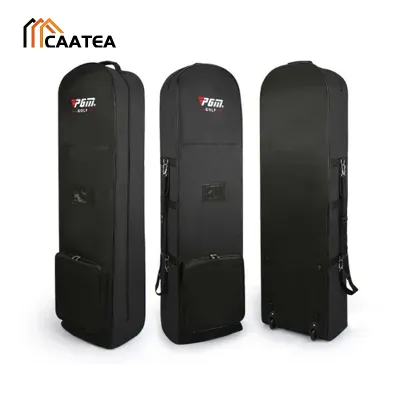
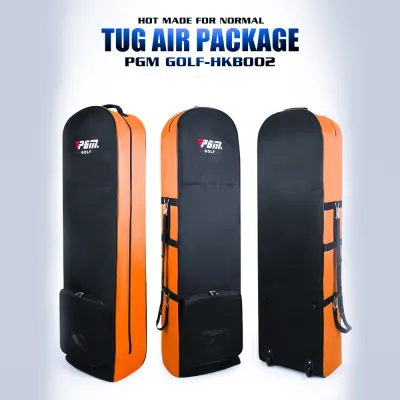
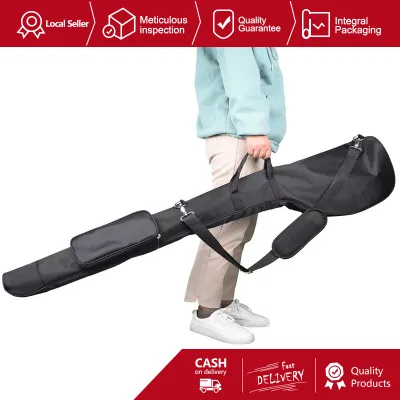
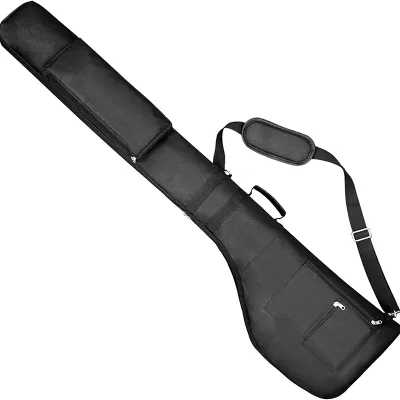
Prices are valid at publication and may change. Please refer to the product page for the latest price.
The trade-off between structural protection and overall weight is another critical factor to analyze. Heavy-duty travel cases provide peace of mind but can weigh up to 8 kilograms when empty. Since domestic flights in the Philippines often enforce a standard 20-kilogram weight limit per passenger, a heavy travel bag leaves you with very little allowance for your actual clubs, golf bag, shoes, and accessories. Opting for lightweight yet highly durable materials ensures you stay under the weight limit while still shielding your clubs from impact.
Mobility and airport handling are equally important when traversing expansive terminal buildings. Look for a wheel system that matches your physical strength and travel style. High-quality inline skate wheels are highly durable and roll smoothly over uneven surfaces, but they require you to tilt and pull the weight of the bag behind you. Multi-directional spinner wheels allow the bag to stand upright and slide effortlessly alongside you, which is incredibly helpful when waiting in long check-in queues. Additionally, ensure the bag features reinforced, riveted grab handles at multiple points to help baggage handlers lift and stack your gear safely.
Hard, Soft, or Hybrid: Which Golf Case Type Suits Your Trip?
Hard-Shell Cases: Maximum Protection for Fragile Clubs
Hard-shell travel cases are constructed from rigid materials such as molded polyethylene, ABS plastic, or polycarbonate. These cases act as a protective suit of armor for your golf equipment, making them virtually crush-proof and highly resistant to punctures. If you travel with expensive custom-fit clubs, delicate graphite shafts, or frequently fly on international routes with multiple layovers, a hard-shell case offers the highest level of security against rough baggage handling and heavy stacked luggage.

However, this maximum protection comes with clear physical trade-offs. Hard-shell cases are inherently heavier than other options, which can quickly consume your airline weight allowance. Their rigid structure also makes them highly inflexible; they do not bend or compress, making it difficult to fit them into the trunks of standard Philippine taxis, ride-sharing sedans, or compact rental cars. Additionally, storing a bulky, non-collapsible hard case at home or in a hotel room requires significant storage space.
Padded Soft-Shell Cases: Lightweight and Flexible
Padded soft-shell cases are made from heavy-duty, high-denier fabrics such as 900D or 1680D polyester or nylon. These bags rely on thick foam padding wrapped around the top section to cushion the clubheads from external impacts. The primary advantage of a soft-shell bag is its lightweight construction, which maximizes your available weight limit for clubs, shoes, and extra apparel. This flexibility makes soft bags much easier to pack into smaller vehicles and simple to fold up and store in a closet when not in use.
Despite their convenience, soft-shell cases have inherent limitations in structural strength. They cannot support vertical loads, meaning if a heavy suitcase is stacked directly on top of your soft bag in the cargo hold, your club shafts bear the brunt of the pressure. To prevent catastrophic damage, using a soft-shell bag requires you to invest in an internal support rod and pack your gear with extra care. They are best suited for direct domestic flights or travelers who prioritize ease of storage and transport.
Hybrid Cases: Balancing Protection and Portability
Hybrid golf travel cases represent a modern compromise, combining a rigid, molded plastic top or base with a durable fabric body. The hard top section completely encloses and shields your fragile clubheads and upper shafts from crushing forces, while the soft fabric midsection reduces the bag’s overall weight and allows for a degree of flexibility. This design provides the targeted protection of a hard case where it matters most, without the extreme weight and bulk of a fully rigid container.
For frequent flyers who want a versatile, middle-ground solution, hybrid cases are highly effective. Many hybrid models are designed so that the soft body can collapse and fold directly inside the hard top shell, making them significantly easier to store than traditional hard cases. While they are slightly heavier than pure soft-shell options, the added peace of mind and simplified transport make them an excellent investment for golfers who regularly travel to different islands in the Philippines.
Must-Have Features for Airline Travel and Airport Handling
To ensure your golf gear survives the journey intact, look for specific design elements that enhance security and ease of use. Internal compression straps are essential for keeping your golf stand or cart bag firmly anchored inside the travel cover. Without these straps, your golf bag will slide back and forth during transit, causing your clubheads to repeatedly slam against the top of the case. High-quality travel bags feature thick, adjustable straps that wrap tightly around the middle and base of your golf bag to eliminate any internal movement.
An adjustable, telescoping internal support rod—often referred to as a stiff arm—is a critical accessory for any soft or hybrid travel cover. This aluminum rod is placed inside your golf bag and extended so that its durable, mushroom-shaped top cap sits slightly higher than your longest club (usually your driver). If the travel bag is dropped upside down or subjected to top-down pressure, the metal rod absorbs the impact instead of your fragile club shafts. Many premium travel bags include a support rod, but you can also purchase one separately as a vital safety measure.
Exterior pockets provide valuable extra storage space and help you organize your gear efficiently. Look for compartments designed to hold bulky items like golf shoes, rain jackets, and extra balls, which helps keep dirty items separate from your clean golf bag. However, be mindful of how you distribute this weight; placing too many heavy items in the outer pockets can make the bag unbalanced and prone to tipping over when standing upright. Ensure all exterior pockets are equipped with heavy-duty, lockable zippers to prevent theft.
Security and warranty coverage are final key considerations when evaluating travel bags. Ensure the main compartments feature robust, puncture-resistant zippers (such as YKK size 10) that can be locked together using a TSA-approved padlock. Additionally, check the manufacturer’s warranty policy before purchasing. Some premium brands offer comprehensive warranties that cover damage caused by airline baggage handlers, which is an invaluable benefit given the rigorous wear and tear your bag will experience at busy airport terminals.
Step-by-Step Guide to Packing Your Clubs Safely
Packing your golf clubs properly is just as important as choosing the right travel bag. Before you begin, take the time to prepare your clubs to minimize the risk of structural damage. If you use adjustable woods or a driver, use your adjustment tool to unscrew the clubheads from the shafts. Label each head, wrap them in bubble wrap or thick headcovers, and pack them securely inside your carry-on luggage or an interior pocket of your golf bag. If your clubheads cannot be removed, wrap the heads and upper shafts individually in thick towels or bubble wrap to prevent them from rubbing or snapping during transit.
Next, place your prepared golf bag inside the travel cover and secure the internal compression straps. Pull the straps as tight as possible to prevent the golf bag from shifting. To add an extra layer of protection, stuff any empty spaces inside the travel cover with soft items such as golf towels, rain gear, windbreakers, or extra clothing. This not only provides excellent shock absorption around your clubs but also helps you save space in your primary suitcase.
If you are using a soft-shell or hybrid bag, install your telescoping stiff arm now. Extend the rod so that it is roughly 2 to 3 inches taller than your longest remaining club, lock it securely in place, and slide it down into the center of your golf bag. Ensure the wide protective cap sits directly above your clubheads, forming a protective canopy that will bear the brunt of any vertical impacts.
Final checks are essential before zipping the bag closed. Double-check that all zippers are pulled tight and locked with a TSA-approved lock to secure your gear. Tighten the exterior compression straps to streamline the bag’s profile, making it easier to handle and less likely to snag on baggage carousel belts. Lastly, ensure a durable, clearly written luggage tag with your contact details is firmly attached, and remove any old barcode stickers from previous flights to prevent your bag from being misrouted.
Managing Airline Baggage Rules and Oversized Fees in the Philippines
Navigating the baggage policies of airlines operating in the Philippines is crucial to avoiding unexpected expenses at the airport. Full-service carriers like Philippine Airlines (PAL) and low-cost carriers like Cebu Pacific and AirAsia have distinct rules regarding sports equipment. PAL generally allows golf clubs to be checked as part of your standard baggage allowance, provided the total weight stays within your ticket’s limit. However, low-cost carriers usually require you to purchase a dedicated “Sports Equipment” baggage option, which is handled separately from regular checked suitcases.
Understanding weight limits is essential because golf gear is notoriously heavy. A standard cart bag filled with clubs, balls, shoes, and accessories, combined with a padded travel cover, can easily weigh between 18 and 25 kilograms. If your airline’s standard domestic baggage allowance is capped at 20 kilograms, you run a high risk of exceeding the limit. Exceeding your pre-booked weight allowance will result in steep per-kilogram excess baggage fees at the check-in desk, which can significantly increase the cost of your golf trip.
To keep your travel costs manageable, always pre-book your sports equipment or extra weight allowance online at least 24 hours before your scheduled departure. Purchasing additional baggage allowance through the airline’s website or mobile app is significantly cheaper than paying walk-up rates at check-in counters at NAIA, Mactan-Cebu, or other domestic airports. Taking this simple step ensures a smooth check-in process and protects your travel budget from unnecessary fees.
Frequently Asked Questions (FAQ)
Can I pack clothes and shoes in my golf travel bag?
Yes, packing soft clothing items, rain jackets, and golf towels inside your golf travel bag is highly recommended. Wrapping these items around your clubheads and filling empty spaces provides excellent additional padding and shock absorption. However, you must carefully monitor the total weight of the bag. Use a portable digital luggage scale at home to ensure the combined weight of your clubs, bag, shoes, and extra clothing does not exceed your pre-booked airline weight limit.
Do airlines count golf bags as standard checked luggage?
This policy varies depending on the airline you fly with. Full-service carriers like Philippine Airlines may allow you to check a golf bag as part of your standard baggage allowance, as long as it meets their weight and dimensional criteria. Conversely, low-cost carriers like Cebu Pacific and AirAsia typically classify golf bags as oversized sports equipment, requiring you to purchase a specific sports equipment baggage handling fee. Always review your specific carrier’s sports baggage policy before heading to the airport.
What should I do if my golf clubs are damaged during a flight?
If you discover that your travel bag or golf clubs have been damaged during transit, you must act immediately before leaving the airport terminal. Locate the airline’s baggage service desk near the baggage claim carousel and file a formal Property Irregularity Report (PIR). Take clear, high-resolution photographs of the damage, your travel bag, and the attached baggage tags. Keep your boarding pass, baggage claim receipts, and the PIR copy safe, as these documents are mandatory when filing a compensation claim with the airline or your travel insurance provider.
Community discussion
Share your experience or ask a question. Comments are reviewed before publication.