
Finding the right indoor bike exercise machine for a small condominium in the Philippines requires balancing your fitness goals with the realities of compact urban living. Whether you reside in a cozy studio in Metro Manila or a high-rise unit with limited floor area, choosing the wrong equipment can quickly turn a health investment into stressful household clutter. The ideal choice depends on how much physical space you can permanently dedicate to a workout setup versus how easily you need to stow the machine away after a training session.
For most condo residents, the decision comes down to three distinct designs: foldable bikes that tuck into closets, compact upright bikes that occupy a permanent but minimal footprint, and mini under-desk pedal exercisers that require no dedicated floor space at all. By matching your fitness intensity, body size, and layout constraints to the right frame style, you can maintain a consistent cardio routine without sacrificing your living room’s comfort or style.
How to Measure Your Condo Space for an Indoor Bike
Before browsing online marketplaces or visiting local fitness showrooms, you must accurately assess the physical boundaries of your condo layout. Many buyers make the mistake of measuring only the static dimensions of the machine as listed on the box. In practice, you must account for both the static storage footprint and the active footprint required when the machine is in full operation.
Products mentioned in this guide
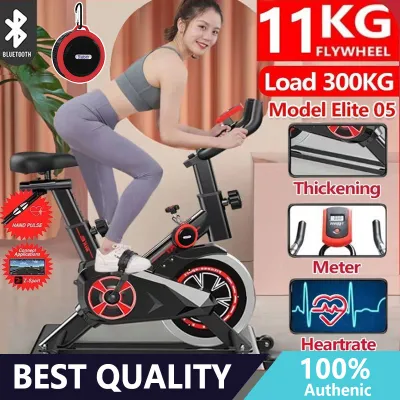
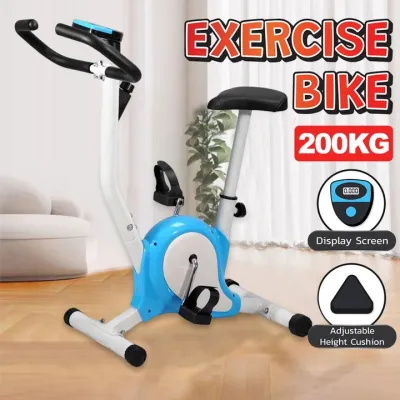
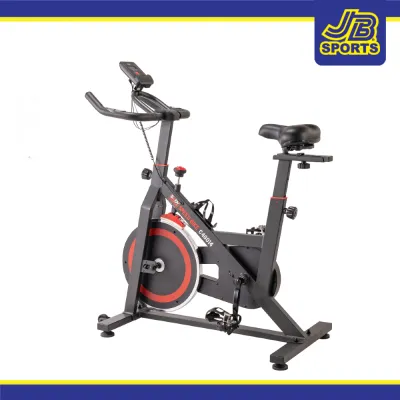
Prices are valid at publication and may change. Please refer to the product page for the latest price.
The active footprint represents the total area needed while you are actively pedaling. This includes the lateral space your knees and elbows occupy as they move, as well as the clearance required to safely mount and dismount the bike. For a standard indoor bike exercise machine, you should plan for at least 50 to 60 centimeters of clear space on all sides of the unit to prevent your limbs from striking nearby furniture, walls, or glass sliding doors during a high-energy workout.
Vertical clearance is equally critical, particularly in Philippine condos with dropped ceilings or low-hanging light fixtures. When you ride an upright bike, your head sits significantly higher than your standing height, especially if you stand up on the pedals during high-intensity intervals. Measure your ceiling height and compare it to the combined height of the bike’s saddle at its highest adjustment and your own torso length.
Additionally, measure the width of your doorways, hallway corners, and elevator entrances. If you plan to store a foldable or lightweight bike in a bedroom closet but exercise in the living room, the machine must navigate these tight transitions daily without scratching your paintwork.
Finally, evaluate your flooring material. High-density living means vibrations travel easily through concrete slabs. Placing a heavy steel frame directly onto delicate vinyl planks, engineered wood, or ceramic tiles can cause permanent dents, scratches, and moisture damage from sweat. Always plan to place a high-density rubber equipment mat beneath the machine to distribute the weight evenly, catch perspiration, and dampen structural noise.
Foldable vs. Compact Upright vs. Mini: Which Bike Type Fits Best?
Choosing the right indoor bike exercise machine involves balancing physical space savings against the intensity of your workouts. Each of the three main space-saving designs serves a specific type of user, offering distinct advantages and structural limitations.

To help you visualize how these options compare within a typical condo setting, consider the following structural breakdown:
- Foldable Bikes: Best for moderate cardio, easily stowed in closets, occupies minimal storage space, but offers lower stability.
- Compact Upright Bikes: Best for high-intensity training, sits permanently in a small corner, highly stable, but cannot be folded away.
- Mini Exercise Bikes: Best for passive movement or multi-tasking, fits under desks or sofas, extremely portable, but lacks a built-in seat and high-resistance capabilities.
Understanding these trade-offs is the key to preventing your new fitness purchase from becoming an expensive clothes rack.
Foldable Exercise Bikes
Foldable exercise bikes utilize an X-frame design that allows the center of the machine to collapse inward, bringing the front and rear stabilizers close together. This mechanical action can reduce the machine’s storage footprint by 50% or more, allowing you to slide the unit into a narrow utility closet, behind a bedroom door, or next to a wardrobe when your workout is complete.
However, this convenient folding mechanism introduces specific structural trade-offs. To remain lightweight and easy to fold, these machines typically feature thinner steel tubing and smaller stabilizers, resulting in a lower maximum user weight capacity—often capped around 100 to 110 kilograms.
Furthermore, the hinged X-frame naturally has more flex than a solid, welded frame. If you attempt high-intensity, out-of-saddle climbing workouts, you will likely experience noticeable swaying or wobbling. The daily physical effort required to unfold, set up, and fold the unit back down can also become a psychological barrier to exercising regularly.
Compact Upright Bikes
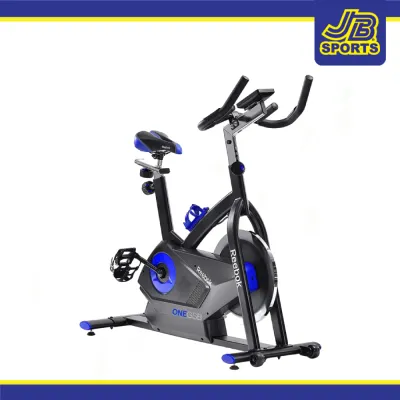
Compact upright bikes are non-folding machines designed with a shortened wheelbase and a narrow handlebar profile to minimize their physical presence. Unlike standard commercial gym bikes, these space-saving models prioritize a vertical layout, keeping the flywheel and frame tightly aligned beneath the rider’s center of gravity.
The primary benefit of a compact upright model is its structural integrity. Because the frame is solid and welded without folding joints, it offers a highly stable platform that can support heavier user weights and tolerate vigorous, high-resistance pedaling.
The trade-off is that a compact upright bike requires a permanent or semi-permanent home in your condo. Even if the unit has transport wheels, it cannot be compressed or hidden out of sight easily. This style is best suited for dedicated fitness enthusiasts who are willing to sacrifice a fixed 1.2-meter by 0.6-meter patch of floor space in exchange for a realistic, high-performance road-riding feel.
Mini Exercise Bikes
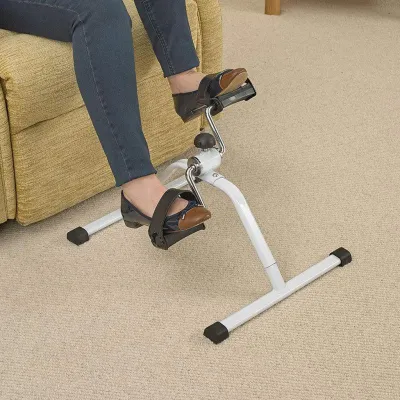
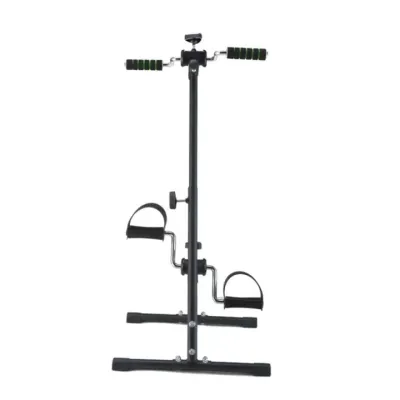
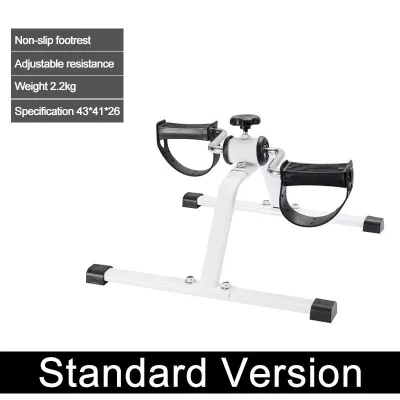
Mini exercise bikes, also known as pedal exercisers, consist solely of a compact base housing a small flywheel, magnetic resistance mechanism, and two pedals. They completely eliminate the traditional bike seat, upright frame, and handlebars, making them the ultimate space-saving solution for micro-condos and studio units.
To use a mini bike, you simply place the unit on the floor in front of your favorite sofa, armchair, or office desk chair and pedal while seated. When your session is finished, the entire unit can be picked up by a built-in handle and tucked under a bed, inside a deep drawer, or beneath a coffee table.
While highly convenient, mini bikes are not designed for intense athletic training. They lack the ergonomic geometry needed for high-resistance lower-body conditioning, making them better suited for low-impact recovery, boosting circulation during long work-from-home hours, or maintaining light daily mobility.
Additionally, because there is no rider weight pressing directly down on a frame, mini bikes have a tendency to slide forward on smooth condo floors like polished tiles or laminate wood. You will need to secure the unit against a wall, use a high-grip non-slip mat, or utilize an anchor strap connected to your chair to keep it stable during use.
Essential Features for Condo-Friendly Exercise Machines
When living in close proximity to neighbors, your choice of fitness equipment directly impacts your relationship with those around you. To keep your home peaceful and functional, look for specific features designed for shared-wall environments.
Noise and Drive System The drive system is the single most important factor determining how quiet your indoor bike exercise machine will be. Always prioritize models that feature magnetic resistance paired with a belt-drive system. Magnetic resistance uses adjustable magnets to create tension against the spinning flywheel without ever making physical contact, resulting in near-silent operation. In contrast, cheaper friction-resistance models use felt or leather pads that rub directly against the flywheel, producing a continuous hissing sound and wearing down over time. Similarly, choose a belt-drive system over a metal chain drive; belt drives operate silently and require no messy lubrication, whereas chain drives emit a metallic clicking noise that can easily vibrate through thin condo walls.
Mobility and Portability A condo-friendly bike must be easy to reposition. Look for units equipped with heavy-duty transport wheels integrated into the front stabilizer bar. This allows you to tilt the bike forward and roll it effortlessly across your floor rather than lifting the entire weight of the machine. The overall weight of the bike should also be manageable. While heavier flywheels provide a smoother pedaling motion, a total machine weight of 20 to 30 kilograms strikes a practical balance between riding stability and portability for the average condo dweller.
Adjustability and Multi-User Ergonomics If you share your condo with a partner or family members, the bike must quickly adapt to different body proportions. Look for a model that offers multi-way adjustability, meaning you can adjust both the seat height (vertical) and seat position (horizontal/fore-aft), as well as the handlebar height. Proper adjustability ensures that every user can maintain correct joint alignment, reducing the risk of knee or lower back strain. Quick-release adjustment knobs allow you to change these settings in seconds, making transition times seamless during shared workout windows.
Common Sizing and Placement Mistakes to Avoid
Setting up an indoor gym in a limited space often comes with unexpected logistical challenges. Avoiding these common placement errors will protect your property and keep your home environment harmonious.
Ignoring Pedal Clearance When measuring your workout zone, do not just look at the frame’s footprint. Pay close attention to the outermost path of the pedals and your feet. If you place your indoor bike exercise machine too close to a painted wall, a glass balcony door, or a fabric sofa, your shoes or the pedal crank arms can easily scuff the paint, shatter glass, or tear upholstery at the lowest point of your pedal stroke.
Overlooking Vibration Transfer Many condo owners assume that because their magnetic bike is whisper-quiet to their own ears, it cannot be heard by neighbors. However, the rapid spinning of a heavy flywheel generates low-frequency vibrations that travel down through the bike’s frame and directly into the concrete floor slab. This structural vibration can manifest as an annoying, low-pitched hum in the apartment directly below yours. Always decouple your machine from the building structure by placing a thick, high-density rubber mat underneath it.
Buying for Aesthetics Over Ergonomics It is tempting to purchase an ultra-minimalist, sleekly designed bike simply because it matches your Scandinavian or modern industrial condo interior. However, if the machine lacks sufficient seat cushioning, proper handlebar grips, or a challenging range of resistance, you will quickly find the workouts uncomfortable. An uncomfortable exercise bike inevitably becomes an expensive rack for drying laundry, contributing to the very household clutter you sought to avoid.
Frequently Asked Questions (FAQ)
Can I keep an indoor exercise bike on a condo balcony?
It is highly discouraged to store or use a standard indoor bike exercise machine on an open condo balcony in the Philippines. The country’s intense tropical humidity, salty sea air in coastal cities, and sudden heavy rain showers will quickly corrode steel frames, rust internal bearings, and destroy electronic consoles. This environmental damage will void your manufacturer’s warranty. If balcony placement is your only option, you must purchase a marine-grade, rust-resistant outdoor bike or use a heavy-duty, waterproof weather cover when the machine is not in use.
Do foldable bikes offer the same resistance as standard upright bikes?
While many modern foldable bikes utilize magnetic resistance systems similar to standard upright models, they generally cannot match the maximum resistance levels or overall stability of their non-folding counterparts. The lighter flywheels and flexible X-frame joints of foldable models are designed for steady-state, moderate-intensity cardiovascular workouts. Attempting high-resistance hill climbs or standing sprints on a foldable bike can cause the frame to flex and wobble, making it less effective for advanced strength training or high-intensity interval training (HIIT).
Community discussion
Share your experience or ask a question. Comments are reviewed before publication.