
Selecting the right kids’ swimming poncho in the Philippines requires matching the fabric and design to your child’s specific water activities. For sandy beach trips along the coasts of Batangas or Boracay, a lightweight, sand-resistant microfiber poncho is highly effective. For active pool sessions, swim lessons, or resort weekends, a thick, highly absorbent cotton terry cloth poncho provides immediate warmth and comfort. For water parks or island-hopping tours where quick outfit changes are necessary, a compact changing robe with side snaps offers the best balance of privacy and mobility.
The high humidity and intense tropical sun in the Philippines mean that drying times, fabric breathability, and UV protection are critical factors. A poncho that works well in a dry climate might stay damp and develop mildew in Manila’s humid air. Therefore, understanding the trade-offs between different materials and designs is essential for keeping your child comfortable and safe.
What to Look for When Choosing a Kids Swimming Poncho
When shopping for a kids’ swimming poncho, the primary decision factor is the fabric. Microfiber and cotton terry cloth are the two most common materials, each serving different needs. Microfiber is a synthetic blend, typically polyester and nylon, known for being incredibly lightweight and quick-drying. It packs down to a fraction of the size of a standard towel, making it excellent for travel. However, microfiber has a flat, suede-like texture that does not feel as plush or cozy as traditional cotton.
Products mentioned in this guide
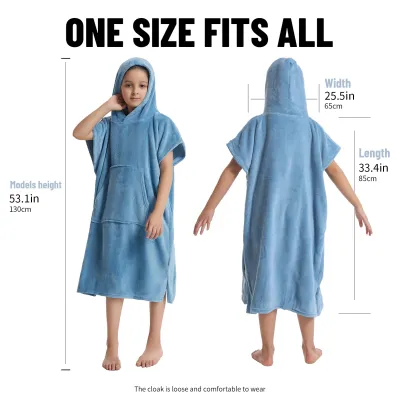
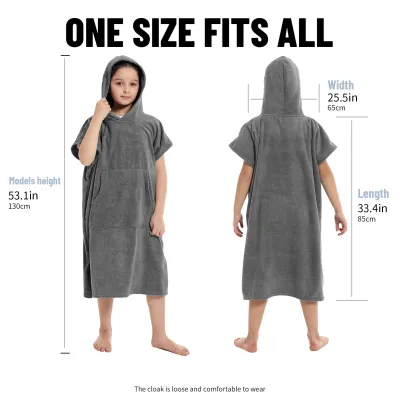
Prices are valid at publication and may change. Please refer to the product page for the latest price.
Terry cloth and cotton blends, on the other hand, are highly absorbent and feel soft against the skin. They are excellent for wrapping up a shivering child immediately after they exit the water. The main drawback of cotton is its weight and bulk. Wet cotton holds onto water, making the poncho heavy and slow to dry, especially in humid tropical environments.
Length and mobility are critical safety considerations. A proper swimming poncho should cover the torso and upper legs, ending around the mid-thigh or just above the knee. If a poncho is too long, it becomes a severe tripping hazard on wet, slippery surfaces like pool decks, tiled resort walkways, or boat docks. Conversely, if it is too short, it will not provide adequate coverage for changing or warmth.
The design of the hood is another important feature. A well-designed hood helps dry wet hair quickly and protects your child’s head and neck from cool breezes or direct sunlight. Look for hoods with adjustable toggles or a slightly structured peak visor. These features help keep the hood secure on windy beaches and prevent wet fabric from falling over your child’s eyes, ensuring they can see clearly while walking.
Sun protection is a major concern under the Philippine sun. While all fabrics block some UV rays, look for verified UPF (Ultraviolet Protection Factor) ratings on the product label. A UPF 50+ rating means the fabric blocks 98% of UV radiation. Keep in mind that fabric density, weave tightness, and darker or more vibrant colors generally offer better natural UV blockage than thin, light-colored, loosely woven materials.
Finally, consider portability. If you are packing for a family trip to El Nido or a day at a water park, space in your dry bag is at a premium. Microfiber ponchos roll up tightly and often come with their own mesh carrying pouches, whereas heavy cotton ponchos can take up half a backpack.
Recommended Poncho Types for Beach, Pool, and Water Parks
No single swimming poncho is perfect for every scenario. The best choice depends on whether your priority is wind protection, maximum water absorption, or active mobility. Matching the poncho’s material and design to your specific destination ensures your child stays comfortable, dry, and safe. The following sections break down the best options for different water environments.

Best for Beach Trips: Sand-Resistant & Quick-Dry Microfiber
Beach trips in the Philippines expose children to a combination of fine sand, salty water, strong sea breezes, and intense sunlight. For these conditions, sand-repellent microfiber ponchos are the superior choice. The flat, tight weave of microfiber prevents sand particles from getting trapped in the loops of the fabric. A simple shake is usually enough to remove all the sand, keeping your car and beach bag clean.
Another benefit of microfiber is its wind-blocking capability. When children step out of the ocean, the sea breeze can quickly cause them to shiver, even in warm tropical weather. The tight weave of microfiber acts as a barrier against the wind, helping to retain body heat.
Many high-quality microfiber ponchos are treated or woven to provide UPF 50+ protection. Always verify these claims by checking the physical product tag or the manufacturer’s official specifications. Brands like Dock & Bay, as well as local surf and outdoor lifestyle brands, offer excellent microfiber options designed specifically for beach use. When shopping, check official brand websites or authorized sports retailers in the Philippines to verify current sizing, color availability, and exact UV certifications.
However, microfiber does have limitations. It has a distinct, suede-like texture that some children find less appealing than fluffy cotton. It also does not absorb water with a simple pat; it requires more of a wiping motion, and it does not provide the heavy, insulating warmth needed on rare cool, overcast days or during late-afternoon monsoon drizzles.
Best for Pool Sessions: Highly Absorbent Terry or Cotton Blends
For regular swimming lessons, resort pool weekends, or backyard pool play, water absorption and immediate warmth are the top priorities. High-GSM (grams per square meter) terry cloth or cotton-blend ponchos are unmatched in this category. A GSM of 350 to 500 indicates a thick, plush fabric that rapidly pulls moisture away from the skin, drying your child off almost instantly.
When choosing a pool poncho, opt for bright, high-visibility colors like neon orange, bright yellow, or vibrant pink. These shades make it much easier for parents to spot their children in crowded public pools or busy resort areas, adding an extra layer of visual safety.
The primary trade-off with cotton terry cloth is its weight and bulk. Once wet, a high-GSM cotton poncho becomes significantly heavier and takes a long time to dry, especially in the high humidity of the Philippines. It is bulky to pack, making it more suitable for short car rides home from the local sports club rather than long-distance travel.
Additionally, parents should carefully inspect the neckline and hood construction. Heavy, wet cotton can pull back on a child’s neck, causing discomfort or restriction. Look for wide neck openings, flexible V-necks, or designs with button closures that distribute the weight evenly across the shoulders.
Best for Water Parks: Lightweight & Compact Changing Robes
Water parks require a high degree of mobility, frequent transitions between wet and dry areas, and quick changes in crowded public restrooms. Lightweight changing robes or hybrid ponchos equipped with side snaps, poppers, or wide armholes are designed specifically for these high-activity environments.
The key feature of a changing robe is its ability to act as a mobile changing cabin. By undoing the side snaps or utilizing the wide armholes, children can easily pull their arms inside the poncho, wriggle out of wet swimwear, and pull on dry clothes without exposing themselves in public. This is incredibly convenient in busy water parks where changing room lines are long.
Because water park lockers are often small and expensive to rent, a compact fold size is essential. Look for lightweight hybrid materials—such as thin cotton-polyester blends or advanced lightweight microfiber—that offer a balance of moderate absorbency and compact packability.
Durability is another crucial factor. Active children will pull, stretch, and run in these robes. Inspect the stitching around the snaps, armholes, and side seams. Reinforced double-stitching or taped seams prevent the fabric from tearing when kids are changing in a hurry. Always consult the manufacturer’s specific size chart rather than relying solely on generic age ranges, as water park robes need to be roomy enough for changing but not so large that they drag on the ground.
Comparing Poncho Materials: Which One Fits Your Child's Needs?
To help you make the final decision, the table below outlines the key differences, ideal environments, and critical labels to check for each major poncho type.
| Material/Type | Best Environment | Key Pros | Main Cons | Crucial Label to Check |
|---|---|---|---|---|
| Microfiber | Beach & Travel | Quick-drying, sand-resistant, lightweight, compact | Less plush, feels cool when wet, requires wiping motion | UPF Rating & Sizing |
| Terry Cloth / Cotton | Pool Sessions & Swim Lessons | Highly absorbent, very warm, soft and plush on skin | Heavy when wet, slow to dry in humidity, bulky to pack | Fabric Weight (GSM) & Neckline |
| Hybrid / Nylon-Shell | Water Parks & Windy Days | Windproof exterior, side snaps for easy changing, durable | Less absorbent without inner lining, can feel stiff | Snap/Armhole Durability & Size Chart |
If your child is highly active and participates in both beach trips and weekly pool sessions, it is often practical to invest in two different types of ponchos. A lightweight microfiber poncho can live permanently in your travel or beach bag, while a plush cotton terry poncho can be reserved for home use and local pool outings.
Sizing, Safety Boundaries, and Care Tips for Tropical Weather
When selecting a swimming poncho, proper sizing is a critical safety factor, not just a matter of comfort. The poncho should ideally end around the mid-thigh or just above the knee. While it is tempting to buy a larger size so your child can “grow into” it, an oversized poncho is highly dangerous. Excess fabric hanging down to the calves or ankles acts as a tripping hazard, particularly on wet, slippery pool decks, tiled resort walkways, or unstable boat docks.
It is vital to remember that a swimming poncho is strictly a post-swim drying, warming, and changing accessory. It is not a flotation device or a life jacket. A poncho must never be worn while your child is actively swimming, wading in deep water, or participating in water sports like kayaking or paddleboarding. If a child falls into the water while wearing a poncho, the heavy fabric will quickly absorb water, weigh them down, and severely restrict their arm and leg movements. Additionally, while UPF-rated fabrics provide excellent sun protection for the areas they cover, they do not replace broad-spectrum sunscreen. Always apply sunscreen to exposed skin, including the face, neck, arms, and legs.
The tropical climate of the Philippines requires specific care routines to prevent mold, mildew, and fabric degradation. For microfiber ponchos, always wash them in cold water and strictly avoid fabric softeners. Fabric softeners leave a thin, waxy chemical coating on the synthetic fibers, which clogs the micro-channels and permanently destroys the material’s water absorbency.
For cotton and terry cloth ponchos, thorough drying is essential. Never leave a damp cotton poncho crumpled up inside a plastic bag or at the bottom of a swim bag. In our high humidity, mildew and unpleasant odors can develop in as little as a few hours. Hang the poncho to dry in a well-ventilated, sunny area immediately after use. If you are drying indoors, utilize a fan or dehumidifier to ensure the fabric dries completely before it is folded and stored in your closet.
Frequently Asked Questions (FAQ)
Can a swimming poncho replace a rash guard for sun protection?
No, a swimming poncho cannot replace a rash guard. While a UPF-rated poncho offers excellent sun protection while your child is resting, playing in the sand, or eating lunch on the shore, it is not designed for active in-water wear. A rash guard is form-fitting, lightweight, and specifically engineered to remain comfortable and safe while submerged in water. It covers the arms and torso snugly, preventing chafing and offering continuous UV protection during active swimming, which a loose, heavy poncho cannot do.
How do I remove stubborn chlorine or saltwater smells from a terry poncho?
To eliminate persistent chlorine or salty odors from a cotton terry poncho, add half a cup of white vinegar to your washing machine’s rinse cycle. White vinegar is a natural, low-risk deodorizer that breaks down chemical residues and mineral buildup without damaging the cotton fibers. Always check the manufacturer’s care label first. Avoid using harsh chlorine bleach, as it can weaken the fabric fibers over time, reduce absorbency, and cause vibrant colors to fade or spot.
Community discussion
Share your experience or ask a question. Comments are reviewed before publication.