
Planning a family getaway to the scenic coastlines of the Philippines—whether it is the powdery white sands of Boracay, the surf-beaten shores of Zambales, or the serene coves of Batangas—demands activities that bring everyone together. Flying a saranggola na malaki (large kite) is an exceptional way to engage the whole family, combining outdoor physical play with a spectacular visual display. Unlike small, fragile plastic toys that flutter wildly and crash in the first stiff sea breeze, a large, well-designed kite harnesses the steady coastal winds to deliver a stable, majestic flight.
To ensure a successful beach launch, you need to understand which structural designs excel in marine environments. The most reliable options for family beach trips fall into three primary categories: Delta kites, Parafoil (soft) kites, and massive Octopus or show kites. Each type offers distinct flight characteristics, wind ranges, and setup requirements. However, flying these large-scale sails comes with a primary safety rule: their immense surface area generates substantial aerodynamic pull. To manage this force safely, you must equip your family with high-strength lines, heavy-duty winder reels, and protective flying gloves to prevent painful line burns.
Why Size and Stability Matter for Beach Environments
Coastal areas in the Philippines present unique meteorological conditions that directly affect how a kite behaves. As the tropical sun heats the sandy shoreline, warm air rises rapidly, drawing in cooler, denser air from the ocean. This interaction creates a constant onshore breeze, but it also generates turbulent thermal updrafts and unpredictable micro-gusts near the ground.
Products mentioned in this guide
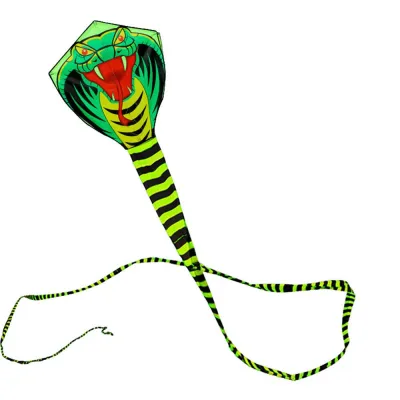
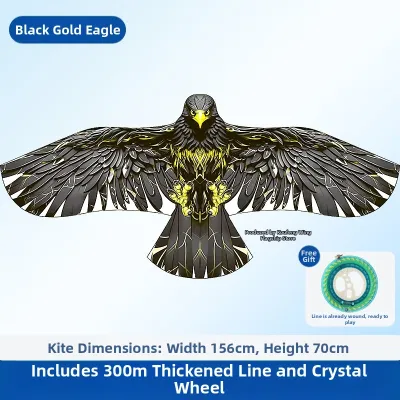
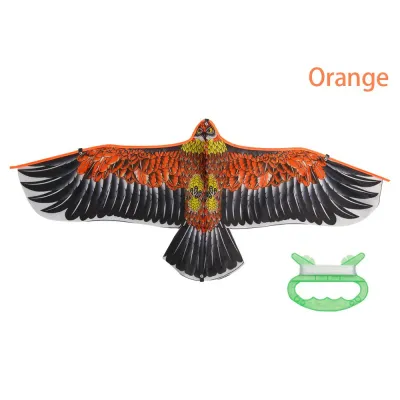
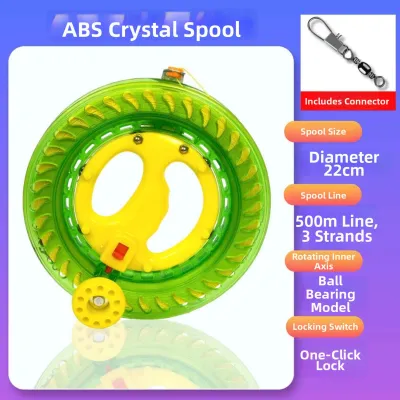
Prices are valid at publication and may change. Please refer to the product page for the latest price.
Wind Capture and Gust Handling. Small kites possess very low mass and limited surface area, making them highly susceptible to these low-altitude wind shears. When a sudden gust hits a small kite, it often responds with high-frequency oscillations, darting erratically before nose-diving into the sand. In contrast, a saranggola na malaki acts as a highly efficient aerodynamic sail. The expansive surface area smooths out turbulent air currents, absorbing the energy of sudden gusts and converting it into steady, upward lift. Once a large kite penetrates the turbulent boundary layer near the ground and reaches higher altitudes, it locks into the smooth, laminar wind streams of the upper sky, remaining parked in place with minimal adjustment.
Visibility and Engagement. The vast, bright tropical skies of the Philippines can easily swallow up small beach toys. A large wingspan—often measuring two meters or more—provides the visual presence necessary to stand out against intense sunlight, high-altitude clouds, and the deep blue ocean backdrop. High-contrast color patterns, such as vibrant neon yellows, deep oranges, and stark blacks, ensure that family members can easily track the kite’s position from hundreds of meters away. This high visibility keeps younger children visually engaged and excited, even if they are sitting back on a beach mat rather than actively holding the reel.
Group Dynamics. Flying a standard small kite is typically a solitary, short-lived activity. A large kite, however, transforms the experience into a collaborative, multi-generational family project. Because of the substantial lift generated by a large wingspan, launching and managing the flight requires teamwork. Younger children can assist by holding the tail or helping to launch the sail from a safe distance downwind, while older siblings and parents manage the high-tension line and the heavy-duty reel. It becomes a shared physical challenge, teaching children about wind dynamics, physics, and cooperative effort while creating lasting memories against the backdrop of the sea.
Recommended Types of Large Kites for Families
Selecting the right structural design is critical to matching your family’s skill level and the specific wind conditions of your chosen beach. Rather than focusing on temporary brand names or shifting online inventories, you should evaluate kites based on their core aerodynamic shapes.

Delta Kites
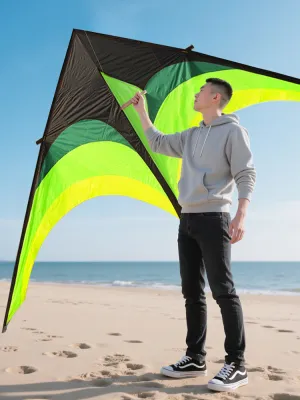
Delta kites feature a classic triangular silhouette reminiscent of a stealth glider, supported by a rigid frame and a single-point bridle system. This design is widely regarded as the most versatile and beginner-friendly option for family beach trips. The wide, sweeping wings of a Delta kite allow it to catch light to moderate thermal breezes (ranging from 6 to 12 miles per hour) with ease, making it highly efficient even on calmer beach mornings.
One of the greatest operational advantages of a large Delta kite is its ease of relaunching. If a sudden drop in wind causes the kite to descend to the sand, you can often relaunch it single-handedly without walking over to it. By gently tugging on the line, the triangular frame naturally tips to one side, catching the incoming breeze and soaring back into the sky.
However, large Deltas do have specific structural limitations. In strong, turbulent coastal winds exceeding 15 miles per hour, the rigid frame can become over-stressed, causing the kite to spin or loop. To counter this, you must attach long, flowing streamer tails to the keel. These tails add aerodynamic drag to the bottom of the kite, pulling the nose upward and restoring stability. This balance of easy launching and manageable pull makes the Delta kite ideal for parents and older children to operate together.
Parafoil (Soft) Kites
Parafoil kites, often referred to as soft kites, are completely devoid of rigid frames, spars, or sticks. Instead, they utilize an airfoil design featuring open cells on the leading edge. As the wind blows, it inflates these cells, creating a semi-rigid wing structure similar to a paraglider.
The absence of a rigid frame makes the Parafoil exceptionally durable. When a framed kite crashes onto hard-packed wet sand or into the ocean surf, there is a high risk of the fiberglass or carbon fiber spars snapping. A Parafoil, however, simply deflates upon impact, sustaining zero structural damage. This resilience makes it an incredibly forgiving choice for beginners who are still learning to navigate shifting beach winds.
Additionally, Parafoils offer unmatched portability. Because they contain no solid parts, you can fold a massive two-meter Parafoil down into a compact, lightweight pouch no larger than a water bottle. This makes them the ultimate travel-friendly option for packing into tight luggage when heading to remote island destinations like Siargao or Batanes.
The primary trade-off with Parafoil kites is the immense line tension they generate. Because their entire surface area is designed to trap and hold the wind, they pull much harder than framed kites of a similar size. This strong, relentless pull can quickly fatigue younger children. Consequently, Parafoils are best suited for teenagers and adults, and using heavy-duty flying gloves is highly recommended to maintain control safely.
Octopus and Show Kites
For families seeking the ultimate visual spectacle, large Octopus and inflatable show kites are unmatched. These massive, frameless designs feature a bulbous, air-filled head that leads into long, flowing tentacles that can stretch anywhere from three to ten meters in length.
Unlike Deltas, which rely on a rigid frame to maintain their shape, Octopus kites are entirely ram-air inflated. The wind enters the head through specialized valves, inflating the body while the long tentacles trail behind, acting as built-in, highly effective stabilizing tails. This unique design eliminates the need for complex bridle adjustments or additional tail attachments, as the physical drag of the tentacles naturally keeps the kite oriented correctly in the wind stream.
To launch an Octopus kite successfully, you require a steady, consistent breeze of at least 10 to 18 miles per hour. Because of their sheer volume and weight, they cannot fly in light, patchy winds. However, once a steady coastal breeze inflates the body and lifts it into the air, the Octopus kite becomes incredibly stable, parking itself high in the sky with very little active steering required.
These kites serve as the perfect centerpiece for a family beach gathering. They require minimal active intervention once launched, allowing you to secure the line to a sturdy sand anchor and enjoy the visual awe of a giant sea creature swimming through the tropical sky.
Key Specifications to Check Before Buying
When shopping for a saranggola na malaki, relying solely on product photos can be misleading. To ensure your investment survives the demanding, corrosive environment of a tropical beach, you must carefully verify several technical specifications on the product label.
Wingspan and Surface Area. To qualify as a true large kite capable of stable beach flight, look for a wingspan of at least 1.8 to 2.4 meters (approximately six to eight feet). Kites within this size range possess the necessary surface area to generate consistent lift in standard coastal breezes. Keep in mind that as the surface area increases, the wind range of the kite shifts; larger kites require less wind to stay aloft but generate exponentially more pull as wind speeds rise.
Sail Material (Ripstop Nylon vs. Plastic). The material of the sail determines how many beach trips your kite will survive.
- Ripstop Nylon: This is the gold standard for outdoor sports equipment. It is woven using a special reinforcing technique where thick threads are interwoven at regular intervals in a crosshatch pattern. This grid prevents small punctures—caused by sharp shells, dry beach grass, or twigs—from tearing open under high wind pressure. Furthermore, high-quality ripstop nylon is treated with UV-resistant coatings, preventing the fabric from becoming brittle and fading under the intense Philippine sun, and it resists damage from salty sea spray.
- Polyester and Plastic Films: Cheap, low-end kites often use thin plastic or basic polyester sheets. These materials lack structural reinforcement, meaning a single tiny tear will rapidly rip across the entire sail under tension. They also degrade quickly when exposed to heat and UV radiation, often cracking or stretching out of shape after just one or two outings.
Frame Materials. If you choose a framed design like a Delta, the composition of the spars is crucial for durability and performance.
- Fiberglass: This is the highly recommended choice for family beach use. Fiberglass rods are incredibly flexible, allowing them to bend and absorb the shock of sudden wind gusts or hard crashes onto the sand without breaking. They are also highly resistant to saltwater corrosion and are relatively inexpensive to replace if damaged.
- Carbon Fiber: Carbon fiber spars are exceptionally lightweight and stiff, making them popular for high-performance or competitive stunt kites. However, they are highly brittle. A sharp impact on hard-packed sand can cause a carbon rod to shatter into sharp, dangerous splinters. For recreational family trips, the forgiving nature of fiberglass is far superior.
Line and Reel Strength. The line is the only link between you and your kite; if it fails, your kite will drift out to sea. Standard sewing thread or thin nylon string will snap instantly under the load of a large kite in beach winds.
- Line Material: Look for braided Dacron or Kevlar lines. These materials offer high tensile strength with minimal stretch, allowing for precise control. For a kite with a wingspan over two meters, select a line rated for at least 100 to 150 pounds of pulling force.
- Reel Design: Avoid simple flat plastic winders, which can cause severe hand fatigue and line tangles. Instead, invest in a large hoop winder or a lockable, ball-bearing reel made of impact-resistant ABS plastic. These reels allow you to let out and retrieve hundreds of feet of line smoothly and quickly, which is essential when responding to changing wind conditions.
Safety and Setup Rules for Windy Beaches
Flying a large kite in a public beach setting is an active sport that requires strict adherence to safety protocols. Because of the high forces involved, negligent operation can lead to equipment damage, environmental hazards, or physical injury to your family and other beachgoers.
Launching and Landing. Always select an open, uncrowded section of the beach, far away from sunbathers, swimmers, and picnic setups.
- The Long Line Launch: Avoid trying to throw the kite into the air from a short distance. Instead, have one family member hold the reel while another walks the kite 30 to 50 meters downwind. Once the line is taut and the kite is oriented directly into the wind, the launcher holds it upward by the frame or keel. When a steady breeze is felt, the launcher gently releases the kite while the flyer pulls the line to generate immediate lift.
- Sand Anchors: If you plan to anchor a large kite, do not tie it to light beach chairs or coolers, which can easily be dragged across the sand. Use a dedicated sand anchor bag—a heavy-duty canvas bag filled with damp sand—or a deep-driven spiral sand stake. Always monitor an anchored kite; never leave it completely unattended.
Line Cut Hazards. Under high winds, a taut kite line acts like a high-speed saw. A thin, high-tension line can cause deep, severe lacerations or friction burns if it slides across bare skin.
- Protective Gear: Never fly a large kite without heavy-duty canvas or leather flying gloves. These gloves protect your palms and fingers when letting out line rapidly or managing a strong pull.
- Clear Zone: Instruct children and bystanders to never run across, jump over, or touch a taut kite line. Keep the line far away from your neck, face, and bare legs. If the kite begins to crash, do not attempt to grab the moving line with bare hands to stop it; let the reel spin or release the line if safety dictates.
Environmental Awareness. Before launching, perform a thorough 360-degree sweep of your surroundings.
- Power Lines and Obstacles: Never fly a kite near overhead power lines, busy coastal roads, parking lots, or tall coconut trees. If your kite becomes entangled in a power line, do not attempt to retrieve it yourself; contact the local utility company immediately.
- Weather Monitoring: Tropical weather in the Philippines can change rapidly. Keep a close eye on the horizon for dark, towering cumulonimbus clouds, which signal approaching squalls or thunderstorms. If you hear thunder or see lightning, reel in your kite immediately. Wet kite lines can conduct electricity, posing a severe lightning strike hazard.
- Wind Limits: Know the upper wind limit of your equipment. If the wind speeds exceed 20 to 25 miles per hour, or if the kite’s frame is bending excessively, abort the flight and pack the gear away to prevent structural failure.
Sun and Hydration. Flying a large kite is an immersive activity that often keeps you standing in direct sunlight for hours.
- Protection: Wear a wide-brimmed hat, polarized sunglasses to reduce the intense glare reflecting off the water and sand, and apply a broad-spectrum, water-resistant sunscreen.
- Hydration: Keep a cooler stocked with fresh water and electrolyte drinks. The combination of physical exertion, coastal winds, and high tropical humidity can lead to rapid dehydration without active prevention.
Frequently Asked Questions (FAQ)
What wind speed is best for flying a large kite?
Most large kites fly exceptionally well in moderate, steady winds ranging from 8 to 15 miles per hour (approximately 13 to 24 kilometers per hour). Because of their expansive surface area, large kites do not require gale-force winds to generate lift; indeed, lighter breezes are often safer and more manageable for families. However, coastal winds can be highly unpredictable. Always check the manufacturer’s specific wind rating for your kite model, and avoid flying in winds that exceed 20 miles per hour to prevent frame damage, line breakage, or loss of physical control.
Do large kites need tails?
Whether a large kite requires a tail depends entirely on its structural design. Classic Delta and diamond-shaped kites rely on rigid frames and have a higher center of gravity, making them prone to spinning or looping in turbulent coastal gusts. For these designs, adding a long, lightweight streamer tail is highly beneficial, as it provides necessary aerodynamic drag that pulls the tail downward and keeps the nose pointed into the wind. Conversely, modern Parafoil and Octopus kites are designed with integrated air vents, hollow cells, or trailing tentacles that inherently stabilize the structure, meaning they rarely require additional external tails to maintain a steady flight.
Community discussion
Share your experience or ask a question. Comments are reviewed before publication.