
Choosing the right lumbar back stretcher can significantly improve your comfort and posture when dealing with the physical strain of prolonged desk work. For office workers in the Philippines, finding relief from lower back pain requires a tool that not only fits your physical stature but also withstands daily use in a warm, humid climate. The ideal lumbar stretcher is one that matches your spine’s natural curvature, offers adjustable progression to accommodate varying levels of daily muscle stiffness, and features durable, moisture-resistant materials that are easy to clean.
Rather than relying on a single universal design, selecting the most effective device involves evaluating specific ergonomic features, material densities, and space limitations. By understanding how different stretchers function, you can safely integrate targeted decompression into your daily office routine without risking further strain or injury.
Essential Features for Relieving Desk-Induced Lower Back Pain
To find a lumbar back stretcher that effectively counteracts the slouched posture associated with long hours at a computer, you must look closely at its structural design. The primary goal of a stretcher is to support passive spinal extension, which helps decompress the intervertebral discs and relax tight postural muscles. However, a poorly designed or improperly sized device can exacerbate your discomfort rather than relieve it.
Products mentioned in this guide
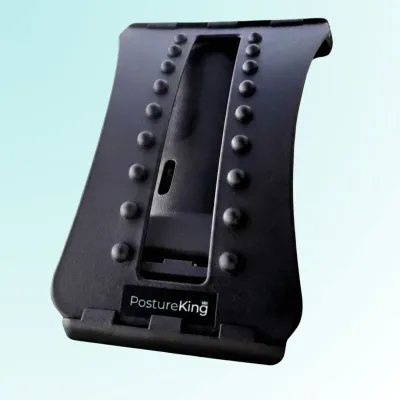
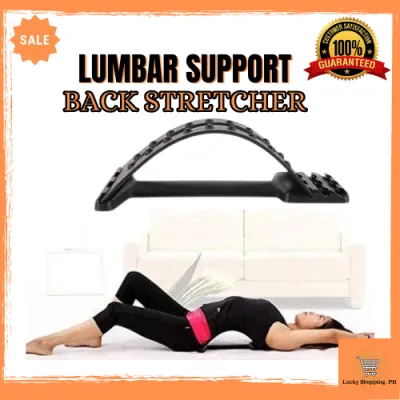
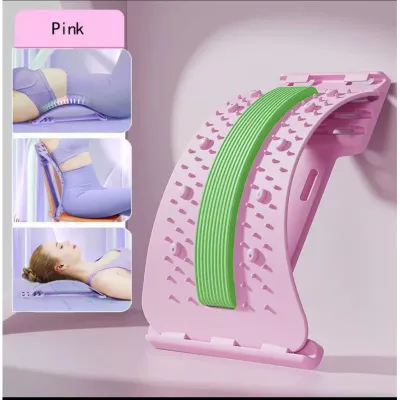
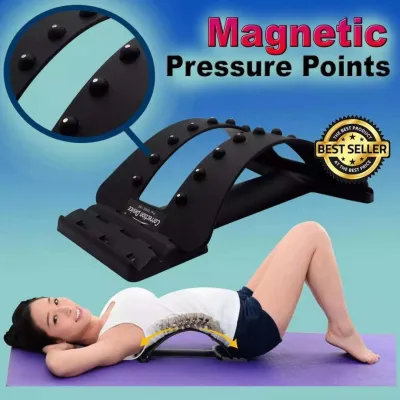
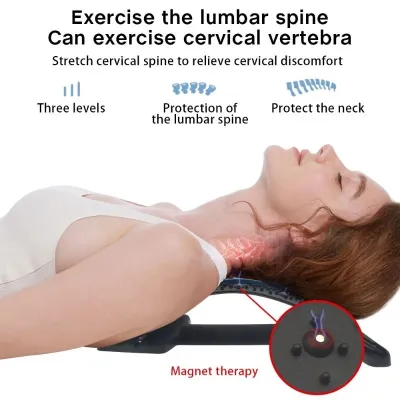
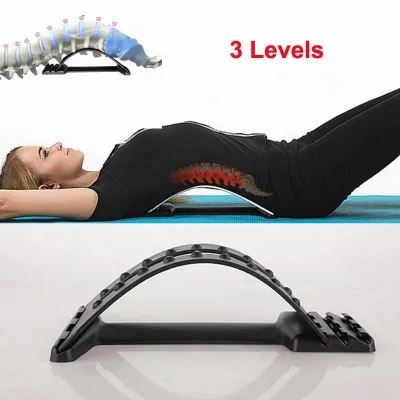
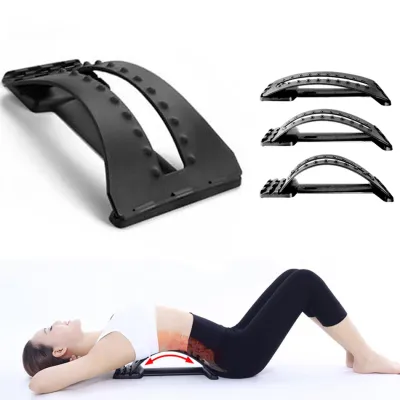
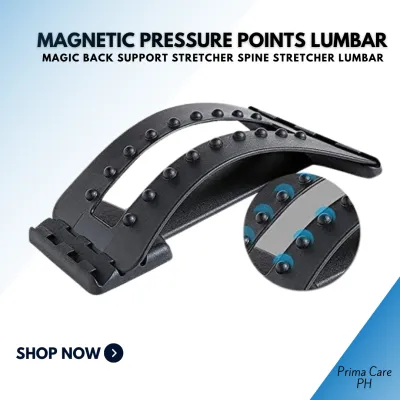
Prices are valid at publication and may change. Please refer to the product page for the latest price.
Evaluating Ergonomic Curve Alignment
The human spine possesses a natural inward curve at the lower back, known as the lumbar lordosis. An effective back stretcher must mimic this natural trajectory to provide balanced support. When shopping for a device, look for an arch that rises gradually rather than abruptly. A curve that is too steep or aggressive can force your facet joints into hyperextension, leading to localized pinching and muscle guarding. Conversely, a curve that is too flat will fail to provide the necessary lift to decompress the spine. The arch should distribute your body weight evenly across the entire lumbar region, allowing the surrounding muscles to relax over the support.
Assessing Material Firmness and Density
The materials used in a lumbar stretcher determine both its comfort level and its therapeutic effectiveness. Most stretchers are constructed from rigid plastics, high-density foam, or a combination of both.
- Rigid Plastics (such as ABS): These provide unyielding structural support, ensuring the arch does not flatten under your body weight. However, bare plastic can feel uncomfortable against the spinous processes of your vertebrae.
- High-Density EVA Foam: This material offers a cushioned surface that contours slightly to your body while maintaining enough firmness to support your spine.
In the tropical climate of the Philippines, high humidity and ambient heat can cause low-quality, open-cell foams to absorb sweat and moisture rapidly. This can lead to material degradation, unpleasant odors, and hygiene issues over time. Opting for closed-cell EVA foam or medical-grade plastics with smooth, non-porous surfaces is highly recommended, as these materials can be easily wiped clean with a damp cloth and mild disinfectant after each session.
Checking Adjustability Options
Your back stiffness is rarely constant; it changes based on your daily activity levels, stress, and how long you have been sitting. A fixed-height stretcher limits your ability to progress or adapt the stretch to your current physical state. Multi-level stretchers feature adjustable slots or arch heights, allowing you to start at a gentle, low-angle setting and gradually increase the height as your flexibility improves. This adjustability is crucial for office workers who may experience acute tightness on some days and require a gentler, more passive stretch, while needing deeper traction on days when their mobility is better.
Verifying Weight Capacity Limits
Before purchasing any back stretcher, always verify the manufacturer’s rated weight capacity. Because you lie flat on the device, it must bear a significant portion of your upper body weight. A stretcher made from thin, low-grade plastic can flex excessively or crack under load, presenting a serious safety hazard. A sudden structural failure while your spine is in an extended, vulnerable position can lead to acute muscle spasms or impact injuries. Look for reinforced base plates and thick structural ribs on the underside of plastic models to ensure long-term structural integrity.
Lumbar Stretcher Types for Office Use
Understanding the different categories of lumbar stretchers allows you to match the physical tool to your specific pain profile, workspace layout, and daily routine. Each design offers distinct advantages and trade-offs regarding portability, intensity, and ease of use.

Rigid Arch and Foam Curve Stretchers
Rigid arch and solid foam curve stretchers are designed for passive, static stretching during short breaks. These devices are typically one-piece molded structures that require no assembly, making them highly reliable and durable.
- Single-Curve vs. Multi-Point Designs: Simple single-curve stretchers focus purely on spinal alignment and decompression. Multi-point designs incorporate raised plastic nodes or textured foam ridges along the arch. These nodes are intended to target trigger points along the erector spinae muscles, mimicking the sensation of an acupressure massage. If you have highly sensitive skin or localized muscle tenderness, a smooth, single-curve foam stretcher is generally more comfortable, whereas those with chronic, dull muscle tightness may benefit from the targeted pressure of massage nodes.
- Floor Space Footprint: To use a rigid arch stretcher, you must lie flat on your back on a level surface. This requires a clear floor space of at least two meters in length. In a compact cubicle or shared office, finding this space can be challenging. You may need to utilize a break room, a private office, or a dedicated wellness space within your building to perform your stretching sessions comfortably.
- Material Suitability: Rigid plastic arches provide deep, unyielding traction that is highly effective for users with moderate flexibility who require significant decompression. However, if you are new to back stretching or have a highly sensitive lower back, a solid foam curve is a safer, gentler starting point. The foam compresses slightly under your weight, reducing the intensity of the stretch and preventing sudden joint irritation.
Multi-Level Traction and Decompression Boards
Multi-level traction boards consist of a flexible plastic arch plate that slots into a rigid base plate. By bending the arch plate and inserting it into different slots, you can manually adjust the height and curvature of the device.
- Locking Mechanisms and Height Adjustments: These boards typically offer three or four levels of adjustment. It is vital to inspect the locking slots to ensure they are deep and secure. When the arch plate is bent under tension, it exerts significant outward force; a shallow or worn slot can cause the plate to slip out suddenly, collapsing the device while you are lying on it. Always verify that the plate is fully seated in the slot before lowering your body onto the stretcher.
- Base Stability and Non-Slip Features: Because these boards are often used on smooth office flooring—such as polished tile, vinyl, or low-pile carpet common in Philippine commercial buildings—base stability is critical. Look for models equipped with rubberized grip pads or non-slip silicone strips on the bottom of the base plate. A sliding base can cause you to lose your balance mid-stretch, straining your back muscles as they contract to stabilize your body.
- Learning Curve and Physical Effort: Adjusting a multi-level board requires a certain amount of physical strength and dexterity. Bending the resilient plastic arch plate to lock it into the higher slots can be difficult for individuals with limited hand strength or acute back pain. If you find manual adjustment challenging, a pre-set foam arch or an inflatable model may be a more practical alternative.
Inflatable and Foldable Portable Stretchers
For hybrid workers who split their time between a home office and a corporate workspace, portability is a primary consideration. Inflatable and foldable stretchers offer a compact solution that fits easily into a daily commute.
- Inflation Controls and Pressure Management: Inflatable stretchers utilize a manual hand pump to fill internal air chambers, allowing you to customize the height and firmness of the lumbar support to the exact millimeter. This precise control makes it easy to avoid overextending your spine. However, you must be careful not to over-inflate the device, as an overly firm, balloon-like surface can roll or shift under your back, reducing stability.
- Storage and Portability: When deflated or folded, these stretchers lay completely flat, making them easy to slide into a desk drawer, a laptop bag, or a backpack. This is particularly convenient for commuting via public transit in busy metropolitan areas, where carrying bulky fitness equipment is impractical.
- Durability and Puncture Risks: The primary trade-off with inflatable stretchers is their vulnerability to damage. In an office environment, sharp objects like pens, paperclips, or desk corners can puncture the air bladder. Additionally, prolonged exposure to heat and humidity can weaken the adhesive seams of vinyl or PVC air bladders, leading to slow air leaks. To maximize longevity, store inflatable stretchers in a protective sleeve and keep them away from direct sunlight and sharp office supplies.
Navigating Space Limits and Budget Constraints
Integrating a lumbar back stretcher into your workday requires balancing physical space limitations with your financial budget. You do not need to spend an excessive amount of money to get high-quality relief, but understanding where to invest your budget can prevent premature product failure.
Measuring Storage and Workspace Clearance
Before purchasing a stretcher, measure the storage spaces available at your desk. If you plan to store the device in a desk drawer, check the drawer’s depth and width against the product’s dimensions. Rigid plastic arches typically require a clearance height of at least 10 to 15 centimeters, which may not fit in standard shallow office drawers. If space is exceptionally tight, look for foldable models or slim, multi-functional designs that can be stored vertically next to your computer tower or inside a filing cabinet.
Material Longevity vs. Upfront Costs
While budget-friendly stretchers are widely available on local online marketplaces, extremely cheap models often compromise on material quality. Low-cost plastics can become brittle over time, especially when exposed to fluctuating temperatures in offices where air conditioning is turned off overnight. Investing slightly more in a stretcher made from high-grade ABS plastic or dense, closed-cell EVA foam ensures the device retains its shape and structural safety for years. Look for products that offer clear manufacturer warranties or structural guarantees, as this indicates confidence in the material’s durability.
Multi-Functional Designs for Small Workspaces
To maximize the value of your purchase, consider a multi-functional lumbar stretcher that doubles as a seated back support. Some models are designed with flat bases and securing straps, allowing you to attach them to your office chair during working hours to promote active sitting posture. When it is time for a break, you can untie the device, place it on the floor, and use it for passive decompression. This dual-purpose design is highly efficient for small cubicles where storing multiple ergonomic accessories is not feasible.
Safety Boundaries and Usage Limits for Office Workers
Using a lumbar back stretcher can be highly beneficial, but it must be done with caution. Because your back muscles and ligaments are often fatigued from hours of sitting, introducing sudden, deep extension can lead to injury if not managed carefully.
Setting Reasonable Time Limits
When starting out, limit your stretching sessions to 3 to 5 minutes once or twice a day. It is common to assume that longer stretches yield better results, but overextending your ligaments for prolonged periods can lead to joint instability and rebound muscle spasms. As your body adapts and your flexibility increases, you can gradually extend your sessions to a maximum of 10 minutes. Avoid lying on a back stretcher for extended periods or falling asleep on the device, as this can place excessive static stress on your spinal discs.
Distinguishing Normal Release from Sharp Pain
It is essential to listen to your body’s signals during a stretching session.
- Normal Sensations: You should feel a dull, deep pull across your lower abdomen, hips, and lower back. This may be accompanied by a mild, pressure-like sensation as your spine gently decompresses.
- Abnormal Sensations: If you experience sharp, shooting, stabbing, or radiating pain that travels down your buttocks, thighs, or legs, stop using the device immediately. These symptoms suggest nerve compression or irritation, which can be worsened by forced spinal extension.
Recognizing When to Seek Professional Help
Self-treatment with a lumbar back stretcher is intended for mild, posture-related muscle tightness and fatigue. It is not a cure for structural spinal conditions. If you have a history of herniated discs, spondylolisthesis, spinal stenosis, osteoporosis, or acute sciatica, do not use a back stretcher without direct clearance from a physical therapist or orthopedic specialist. If your lower back pain persists for more than a few weeks despite regular stretching and ergonomic adjustments, or if it is accompanied by numbness, tingling, or weakness in your legs, consult a qualified healthcare professional for a comprehensive evaluation.
Frequently Asked Questions (FAQ)
Can I use a lumbar stretcher while sitting at my desk?
Most dedicated lumbar back stretchers are designed strictly for use on a flat, horizontal surface where your body weight can be distributed evenly to facilitate passive decompression. Using a rigid, high-arch floor stretcher while sitting in an office chair can force your pelvis into an unnatural tilt and place excessive, concentrated pressure on a small area of your spine. If you require support while sitting, look for a product specifically labeled as a dual-use lumbar support cushion or a dedicated ergonomic chair insert. These seated supports are designed to gently maintain your lumbar curve without forcing the deep extension that floor-based traction boards provide.
How long should I stretch my lower back during a workday?
For safe and effective relief during a standard eight-hour workday, aim for short, consistent sessions rather than one long stretch. A single session of 5 to 10 minutes during your lunch break or mid-afternoon slump is generally sufficient to relieve accumulated muscle tension. You can easily integrate this into your regular screen-break routine. To prepare your body, stand up and walk around for a minute or two to warm up your muscles before lying down on the stretcher. After completing your stretch, roll gently onto your side and use your arms to push yourself up to a seated position, avoiding any sudden twisting or bending movements immediately after decompression.
Community discussion
Share your experience or ask a question. Comments are reviewed before publication.