
Quick Answer: The Best Material Depends on Your Practice
Selecting the right material for an extra wide yoga mat is not a matter of finding a single universal winner. Instead, the ideal choice depends on your specific practice style, joint sensitivity, and portability needs. Because extra wide mats feature a significantly larger surface area than standard models, the physical properties of each material—such as weight, density, and grip—become highly pronounced.
Natural rubber is the premier choice for practitioners who prioritize ultimate slip resistance, heavy sweat absorption, and rock-solid stability during standing poses. Thermoplastic Elastomer (TPE) serves as the best lightweight, budget-friendly, and highly portable option for general fitness and light studio commuting. Nitrile Butadiene Rubber (NBR) offers unmatched, pillowy joint cushioning for restorative practices and floor-based workouts, though it sacrifices the stability required for standing balance poses.
Why Material Choice Is Critical for Extra Wide Mats
Extra wide yoga mats, which typically measure between 80cm and 100cm in width compared to the standard 61cm, offer a liberating amount of space. However, this expanded footprint introduces unique physical challenges. When you increase the width of a mat, you also increase its total volume and weight by 30% to 65%. A dense material that feels manageable in a standard size can quickly become incredibly heavy and cumbersome to transport when scaled up to an extra wide format.
Products mentioned in this guide
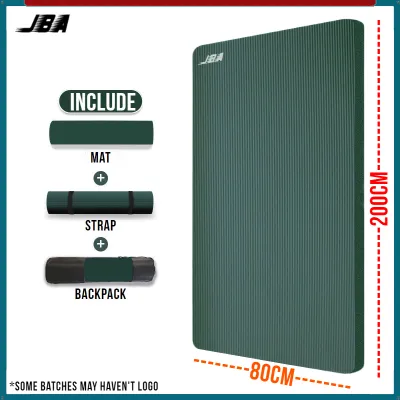
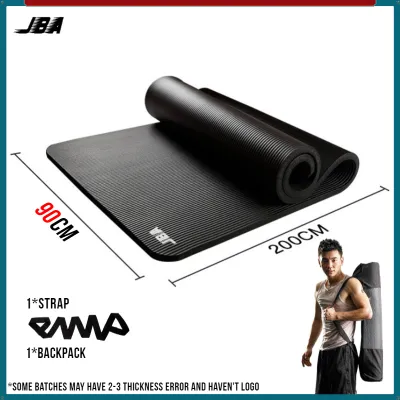
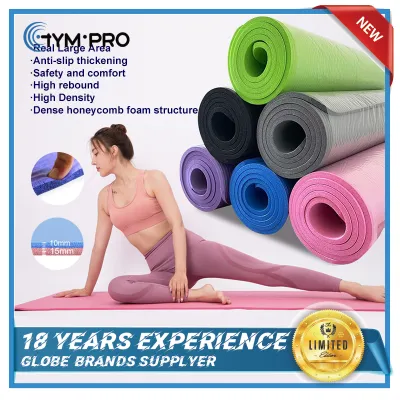
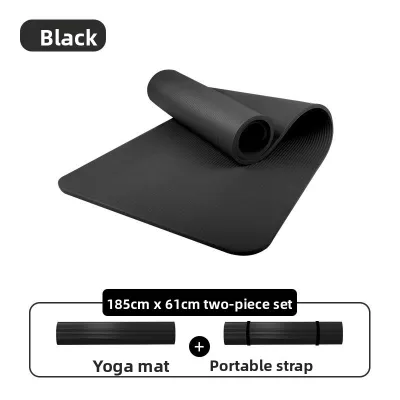
Prices are valid at publication and may change. Please refer to the product page for the latest price.

Another physical challenge unique to larger mats is the “edge curling” effect. Because extra wide mats contain more material across their horizontal axis, they are highly susceptible to retaining structural memory from being rolled. If a wide mat lacks sufficient structural integrity or weight at its outer edges, those corners will curl upward during your practice, creating persistent tripping hazards and reducing your usable floor space.
Environmental factors also play a massive role in how these materials perform at larger scales. In tropical climates characterized by high ambient temperatures and elevated humidity, the expansive surface of an extra wide mat acts as a large collector for sweat and moisture. High humidity can cause certain synthetic materials to slick over rapidly, while natural materials may degrade faster if they are constantly exposed to moisture and heat without proper ventilation.
TPE vs NBR vs Natural Rubber: Core Performance Compared
To make an informed investment in an extra wide yoga mat, you must understand how these three primary materials perform under real-world conditions. Each material behaves differently when subjected to moisture, body weight, and daily wear.
Grip and Traction in Humid Conditions
Natural rubber excels in high-humidity environments due to its open-cell molecular structure. This porous construction acts like a micro-sponge, absorbing tiny amounts of moisture instantly to keep the top surface dry. As you sweat, the natural rubber surface actually becomes more slip-resistant, providing an incredibly secure grip for dynamic sequences like Vinyasa or Ashtanga. This makes it highly dependable for hot, humid climates where sweat is guaranteed.
Thermoplastic Elastomer (TPE) features a closed-cell structure, meaning it does not absorb moisture. Instead, TPE relies on physical surface textures—such as embossed patterns or grain finishes—to provide traction. While TPE offers excellent, tacky dry grip, its performance drops when wet. If sweat pools on the surface, the moisture has nowhere to go, creating a slippery film that can cause your hands and feet to slide during weight-bearing poses.
Nitrile Butadiene Rubber (NBR) is also a closed-cell material, but it has a much smoother, foam-like finish than TPE. Because NBR completely repels water, sweat pools rapidly on its surface. When wet, NBR becomes exceptionally slick, offering almost no traction. If you choose an extra wide NBR mat for an active or warm practice, you will almost certainly need to overlay it with a full-sized microfiber yoga towel to prevent slipping.
Comfort, Cushioning, and Standing Stability
NBR is the undisputed champion of plush comfort. Typically manufactured in thicknesses ranging from 10mm to 15mm, NBR is incredibly soft and highly elastic. It excels at absorbing impact and protecting sensitive joints, making it perfect for floor-based Pilates, yin yoga, or physical therapy. However, this softness comes at a cost: when you attempt standing balance poses like Tree Pose, your feet sink completely through the foam to the hard floor, destroying your stability.
TPE offers a balanced, medium-density compromise. Usually available in thicknesses of 6mm to 8mm, TPE provides a springy, resilient cushion that absorbs joint pressure without bottoming out. When you stand on a TPE mat, the material compresses slightly but maintains enough structural resistance to support your balance, making it a highly versatile option for general fitness routines.
Natural rubber is a very dense, heavy material that is typically kept thin, usually between 3mm and 5mm. It provides a firm, grounded connection to the earth, offering unmatched stability for complex standing postures and transitions. The high density means the mat will not compress or slide under lateral force. However, because it is so firm, it offers very little “give” for sensitive knees or wrists unless you purchase a specialized, extra-thick (and heavy) version.
Durability, Weight, and Everyday Handling
Weight is a critical consideration for any extra wide mat. Natural rubber is by far the heaviest material; an extra wide natural rubber mat can easily weigh between 3.5kg and 5kg. Lugging this weight to a local studio can be exhausting. TPE is remarkably lightweight, often weighing under 1.5kg even at extra wide dimensions, making it incredibly easy to carry. NBR is also relatively light but highly bulky, resulting in a massive rolled diameter that is difficult to fit into standard carrying bags.
In terms of lifespan, natural rubber is highly durable and resistant to tearing, but it is biodegradable. Over time, exposure to oxygen, sweat acids, and UV light will cause natural rubber to oxidize, eventually making it dry, brittle, or sticky. TPE is highly resilient, resists tearing, and does not degrade in sunlight as quickly as rubber, though it can be punctured by sharp objects like pet claws.
NBR is the least durable of the three options. Because it is a soft, low-density foam, NBR is highly susceptible to surface gouging, scuffing, and tearing. Over months of regular use, the friction from your feet can cause the surface of an NBR mat to flake, peel, or tear, especially along the heavily stressed fold and roll lines of an extra wide profile.
Quick Comparison: TPE vs NBR vs Natural Rubber
| Performance Dimension | TPE (Thermoplastic Elastomer) | NBR (Nitrile Butadiene Rubber) | Natural Rubber |
|---|---|---|---|
| Dry Grip | High | Medium | Excellent |
| Wet Grip | Moderate | Low | Excellent |
| Cushioning & Comfort | Medium (Springy) | High (Plush) | Low to Medium (Firm) |
| Standing Stability | High | Low | Excellent |
| Weight & Portability | Lightweight (Easy) | Light but Bulky (Moderate) | Very Heavy (Difficult) |
| Durability | High | Low to Moderate | High (Degrades in UV) |
| Best Suited For | General yoga, commuting, home fitness | Restorative yoga, floor Pilates, joint pain | Hot yoga, active Vinyasa, home studios |
Decision Guide: Which Material Fits Your Routine?
To choose the perfect extra wide mat, map your selection directly to your physical environment, health profile, and daily routine.
Choose Natural Rubber if:
- You practice high-intensity, sweat-inducing yoga styles like Vinyasa, Power, or Hot Yoga.
- You require absolute stability and grounding for advanced standing balance postures.
- You plan to keep the mat in a dedicated home studio space where its heavy weight is not a transport issue.
- Allergy Check: Always verify if you have a latex allergy before purchasing, as natural rubber is harvested from rubber trees and contains natural latex proteins that can trigger allergic reactions.
Choose TPE if:
- You need an all-purpose, extra wide mat for a mix of yoga, bodyweight strength training, and stretching.
- You commute to local studios or parks and need a lightweight mat that will not strain your shoulders.
- You want a highly durable, low-maintenance mat that fits a moderate budget.
- You have a latex allergy and require a safe, synthetic, non-toxic alternative to natural rubber.
Choose NBR if:
- Your practice consists almost entirely of floor-based, restorative, or yin yoga.
- You have highly sensitive joints, knees, or wrists that require deep, pillowy impact protection.
- You are setting up a budget-friendly home workout space primarily for stretching and core exercises.
- Portability Warning: Before buying an extra wide NBR mat, check its rolled diameter. Ensure you have a storage space or a specialized extra-large carrying strap, as these mats roll up into very thick, unwieldy cylinders.
Maintenance and Storage for Longevity
Proper care is essential to prevent your extra wide mat from degrading prematurely, curling at the edges, or harboring bacteria. Always refer to your specific product’s care label and the manufacturer’s cleaning instructions first, as formulas and material blends can vary.
To combat the “edge curling” effect common to wider mats, always roll your mat with the top practice side facing outward. This forces the material memory to curve downward toward the floor when unrolled, ensuring the corners lay flat and stable during your practice.
For TPE and NBR mats, clean the surface after every few sessions by wiping it down with a soft microfiber cloth dampened with warm water and a tiny drop of mild, pH-neutral dish soap. Avoid harsh chemical sprays, alcohol, or bleach, as these solvents will dry out the synthetic compounds, causing NBR to flake and TPE to lose its tacky texture.
Natural rubber requires specialized care. Because of its open-cell structure, you must never submerge or soak a natural rubber mat in water, as it will absorb the liquid like a sponge, become waterlogged, and rot from the inside. Instead, wipe it down with a highly diluted solution of water and white vinegar (a 1:3 ratio) or a dedicated, manufacturer-approved rubber mat wash.
Always store all three types of mats in a cool, dry place away from direct sunlight. This is especially critical in tropical regions; leaving a natural rubber or NBR mat in a hot car trunk or exposed to harsh UV rays on a balcony will rapidly melt, discolor, or dry out the material, rendering it unusable.
Frequently Asked Questions (FAQ)
Is an extra wide yoga mat too heavy to carry to the studio?
Whether an extra wide mat is too heavy depends entirely on the material you choose. An extra wide TPE mat typically weighs under 1.5kg, making it highly portable and easy to carry on public transport or walks. Conversely, an extra wide natural rubber mat can easily exceed 3.5kg to 5kg. If you plan to commute frequently with a natural rubber mat, you should invest in a heavy-duty, wide-set carrying strap or a dedicated duffle bag designed specifically for wider dimensions to distribute the weight comfortably across your shoulder.
Can I use a natural rubber mat if I have a latex allergy?
No, you should avoid natural rubber mats if you have a latex allergy. Natural rubber is harvested directly from the sap of the Hevea brasiliensis tree and retains natural latex proteins that can trigger contact dermatitis or more severe allergic reactions during skin contact. If you have a latex sensitivity, Thermoplastic Elastomer (TPE) is an excellent, completely synthetic, and latex-free alternative that still provides great dry grip and reliable durability without any allergen risks.
Community discussion
Share your experience or ask a question. Comments are reviewed before publication.