
Finding the best mermaid roller skates for beginners in the Philippines requires balancing eye-catching aesthetics—such as iridescent pastel scales and shimmering finishes—with essential safety features like ankle support, durable chassis plates, and outdoor-friendly wheels. While visual design makes skating exciting, your physical safety depends entirely on the structural integrity of the boot and the quality of the hardware. Beginners must prioritize functional sports engineering over pure visual appeal to ensure a safe, enjoyable learning experience on local pavements.
Before taking your first stride, it is crucial to recognize your own physical limits. Roller skating is a high-risk sport that requires balance, core strength, and proper falling techniques. No piece of equipment, regardless of its quality or safety certifications, can replace structured training, consistent practice, and sound personal judgment. Always inspect your gear before every session, check for loose hardware, and stop skating immediately if you experience pain, mechanical instability, or wet, hazardous weather conditions.
Core Criteria for Choosing Mermaid Roller Skates
In the modern skating market, a “mermaid-themed” skate typically features iridescent vinyl uppers, scale-patterned stitching, pastel mint and lilac colorways, or shimmering wheel hubs. Some reputable brands offer specific ocean-inspired or pastel-hued models that fit this aesthetic beautifully. However, as a beginner, you must look past the glittering exterior and evaluate the skate as a piece of athletic equipment. A high-quality skate must support your body weight, hold your ankle upright, and roll smoothly over uneven surfaces without flexing or buckling.
Products mentioned in this guide
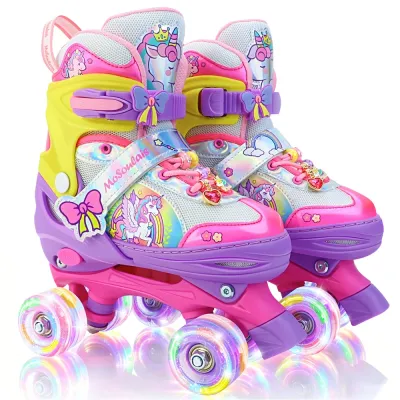
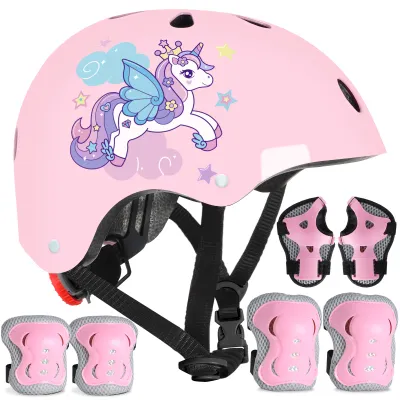
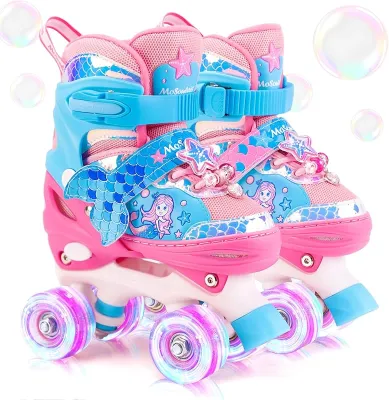
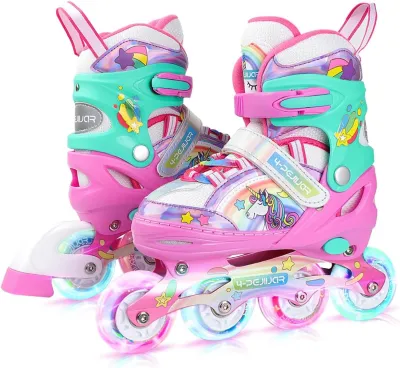
Prices are valid at publication and may change. Please refer to the product page for the latest price.
Many cheap, unbranded options sold in toy sections or unverified online shops are “toy-grade” skates rather than functional sporting goods. Toy-grade skates are designed as costumes or light novelty toys; they are often constructed from brittle, thin plastics, feature hard PVC wheels with zero grip, and lack any internal structural reinforcement. Using these skates for actual athletic practice poses a severe safety risk, as the plastic chassis can crack under pressure, and the slippery wheels can cause sudden, uncontrollable falls.
To distinguish functional sports equipment from dangerous toys, verify the materials used in construction. A real beginner skate features a reinforced synthetic leather or high-impact composite boot, a solid aluminum or reinforced nylon plate (chassis), and genuine polyurethane (PU) wheels. Always check the manufacturer’s specified weight limits and safety certifications. If a product listing focuses entirely on its cute design and fails to provide technical specifications regarding plate material, wheel durometer, or bearing ratings, it is highly likely a toy-grade product that should be avoided.
Best Skate Types and Configurations for Beginners
Quad Skates vs. Inline Skates for Stability
Quad skates, which feature four wheels arranged in a two-by-two configuration, are highly recommended for absolute beginners. This wheel layout provides a wide, rectangular base of support that makes standing still and finding your center of gravity much easier than on inline skates. The lateral stability of quad skates helps beginners build confidence quickly, allowing them to focus on basic stride mechanics, posture, and stopping techniques without constantly fighting to keep their ankles upright.

Another significant advantage of quad skates is their ease of customization. The wide front toe stop and the spacious layout of the underside make it simple to add decorative mermaid accessories without interfering with the mechanical movement of the wheels or trucks. You can easily install custom pastel toe guards, holographic laces, or decorative wheel charms. While inline skates are excellent for long-distance outdoor skating or speed, their narrow single-line wheel configuration makes balance more challenging for novices and limits thematic customization options.
Adjustable vs. Fixed-Size Boots
Adjustable skates are a highly practical, cost-effective option for growing children. These boots feature an internal sliding mechanism, usually controlled by a push-button or lever, that allows the toe cap to expand across three to four standard shoe sizes. While highly convenient for parents, adjustable skates tend to have a bulkier plastic profile, lower weight capacities, and slightly less precise ankle support due to the moving parts of the shell. Always check the manufacturer’s maximum weight limit before purchasing adjustable models.
For adult beginners and older teenagers, fixed-size boots are the superior choice. Because fixed-size boots do not have moving adjustment joints, they offer maximum structural rigidity, excellent heel lock, and highly efficient power transfer from your feet to the wheels. A fixed-size boot wraps the contours of your foot precisely, reducing internal friction and minimizing the risk of blisters. If you are committed to learning proper skating techniques as an adult, investing in a dedicated, fixed-size boot will provide the stability and durability needed for long-term progression.
Essential Safety and Performance Specs to Verify
Wheel Hardness and Bearings for Smooth Rides
When evaluating mermaid roller skates, always check the wheel durometer, which is represented by a number followed by the letter “A”. For outdoor skating in the Philippines—where you will primarily skate on rough concrete barangay courts, public plazas, or uneven subdivision roads—look for soft wheels rated between 78A and 85A. Soft polyurethane wheels absorb vibrations from rough ground, maintain a strong grip on the pavement, and roll safely over small pebbles, twigs, and cracks without stopping abruptly.
Avoid hard plastic or low-grade PVC wheels at all costs. These materials have virtually no grip on smooth tiles or concrete, causing the skates to slide out from under you during basic turns or pushes. For indoor rink skating, harder wheels (90A to 98A) are acceptable as they allow for smooth gliding on polished wood or concrete floors, but they are highly dangerous for outdoor use.
Bearings are rated using the ABEC scale, typically ranging from ABEC-5 to ABEC-9. A higher number indicates tighter manufacturing tolerances and a smoother, more efficient roll. For beginners, ABEC-5 or ABEC-7 bearings provide the perfect balance of control and smooth rolling. In the tropical, high-humidity climate of the Philippines, ensure the bearings are shielded or sealed to prevent dust, sand, and moisture from entering the casing, which can lead to premature rust and wheel lock.
Ankle Support and Boot Construction
Proper ankle support is the single most important factor in preventing painful strains and sprains. A beginner skate must feature a high-top boot design with a stiff, reinforced heel counter (the structural cup at the back of the heel) and a padded collar that cushions the Achilles tendon. You can test the ankle support of a skate by squeezing the ankle area of the boot with your hands; if the material collapses easily or bends completely flat, it will not provide enough lateral support to keep your ankles straight while skating.
Additionally, verify that the closure system is secure and reliable. A high-quality beginner skate should utilize a combination of traditional heavy-duty laces and a secondary fastening system, such as a Velcro power strap across the ankle or a ratcheting buckle at the top of the cuff. This multi-point closure system locks your heel firmly into the back of the boot, preventing your foot from sliding forward or lifting inside the skate, which is a common cause of loss of control and foot fatigue.
How to Measure and Ensure the Perfect Fit
Never purchase roller skates based solely on your standard local shoe size, as skate sizing varies dramatically between different brands and manufacturers. To find your true size, place a blank sheet of paper flat against a wall, stand on it with your heel touching the wall, and trace the outline of your foot. Measure the distance from the back of the heel to the tip of your longest toe in centimeters. Repeat this process for both feet, as one foot is often slightly larger than the other, and use the larger measurement.
Compare your centimeter measurement directly to the manufacturer’s official size chart to select the correct boot size. When you try on the skates, follow the “snug but not painful” rule. Your toes should gently brush the inside front of the toe box when standing upright, but they must not curl, cramp, or feel pinched. When you bend your knees into a deep skating stance, your toes should slide slightly back, and your heel must remain locked flat against the sole without lifting or shifting side-to-side.
If you find yourself between sizes or experience minor pressure points, you can make small adjustments to optimize the fit. Wearing thick, moisture-wicking athletic socks can fill up minor excess space and protect your skin from friction blisters. Alternatively, inserting a high-quality aftermarket orthotic insole can improve arch support and lock your heel more securely in place. Avoid the temptation to buy skates that are intentionally one or two sizes too large to “grow into,” as loose boots lead to severe blisters, poor steering control, and an increased risk of ankle rolling.
Must-Have Protective Gear for Safe Skating
No matter how beautiful or stylish your mermaid roller skates are, they cannot protect your body from the impact of a fall. Every beginner, regardless of age or confidence level, must wear a complete set of high-quality protective gear. This essential safety kit includes:
- Wrist Guards: These are the most critical pieces of protective gear, as natural human reflexes cause us to put our hands out during a fall. Wrist guards feature rigid plastic splints on the palm and back of the hand that absorb the impact and allow you to slide along the ground, preventing severe wrist fractures and joint injuries.
- Knee Pads and Elbow Pads: Look for pads with thick, shock-absorbing EVA foam and hard plastic caps. These caps protect your joints from direct impact and allow you to slide out of a fall safely on your knees rather than absorbing the shock directly through your bones.
- Certified Helmet: A multi-impact helmet is non-negotiable. Ensure the helmet carries recognized safety certifications (such as CPSC, ASTM, or EN 1078) and fits snugly around your head without shifting when you shake your head. The helmet should sit level on your forehead, approximately two finger-widths above your eyebrows, to protect your frontal lobe.
Fortunately, you do not have to sacrifice your mermaid aesthetic to stay safe on the pavement. Many reputable skate brands manufacture high-quality protective gear sets in matching pastel, holographic, or iridescent finishes that complement your skates perfectly. When shopping, always prioritize safety certifications and structural padding over color; never purchase cheap, uncertified decorative plastic pads that offer no real impact protection.
Smart Buying Tips and Verification in the Philippines
To avoid purchasing dangerous, low-quality counterfeit skates, always buy from official brand stores, authorized sporting goods retailers, or highly rated online mall sellers. Be highly skeptical of online listings that use generic, unbranded stock photos or offer “mermaid skates” at prices that seem too good to be true (such as under ₱1,200). Authentic, entry-level beginner skates from reputable brands typically range from ₱3,500 to ₱8,000, reflecting the cost of safe materials, certified hardware, and proper quality control.
When shopping on online marketplaces, read user reviews carefully. Filter the reviews to look for specific mentions of “stability,” “ankle stiffness,” “wheel grip,” and “bearing smoothness.” Avoid products where the reviews only praise the “cute color” or “fast delivery” without commenting on the actual performance, durability, or safety of the skates during use. If possible, ask the seller for real, unedited photos of the skates’ chassis, trucks, and wheels to verify their quality before purchasing.
Always verify the seller’s return and exchange policy before finalizing your purchase. Because a precise, snug fit is absolutely essential for safe skating, you must have the option to exchange the skates for a different size if the initial fit is incorrect. When your skates arrive, try them on indoors on a clean, carpeted surface to test the fit. Keep all original packaging, tags, and receipts intact until you are completely satisfied with the fit and structural integrity of the skates.
Frequently Asked Questions (FAQ)
Can I add mermaid accessories to regular beginner skates?
Yes, customizing a plain, high-quality beginner skate is an excellent and often safer alternative if pre-styled mermaid skates are unavailable or lack the necessary structural support. You can easily transform any standard skate by swapping out plain laces for iridescent or pastel-colored ones, adding holographic toe guards to protect the leather from scuffs, or installing pastel-colored light-up wheels. However, you must prioritize safety when accessorizing. Never attach loose ribbons, long fabrics, or hanging charms near the wheels, axles, or trucks. These items can easily wrap around moving parts, instantly locking the wheels and causing a severe fall.
Are mermaid roller skates suitable for outdoor use?
Whether a mermaid-themed skate is suitable for outdoor use depends entirely on its mechanical specifications, not its visual design. To skate safely on outdoor surfaces in the Philippines—such as concrete barangay courts, park asphalt, or subdivision roads—the skates must be equipped with soft, wide outdoor wheels, typically rated between 78A and 82A durometer. These soft wheels absorb vibrations from rough surfaces and roll safely over small pebbles and cracks. If your chosen mermaid skates come with hard indoor wheels (90A or higher) or cheap, slippery plastic wheels, you must replace them with proper outdoor polyurethane wheels before attempting to skate outside.
Community discussion
Share your experience or ask a question. Comments are reviewed before publication.