
Choosing the right net for basketball ring setups depends on where you play and how much exposure the hoop has to the elements. In the Philippines, where intense tropical heat, high humidity, and heavy seasonal downpours are the norm, a standard indoor net will quickly rot and tear if left outdoors. For indoor gyms or covered home courts, a classic nylon net provides the iconic auditory “swish” and soft ball return that players love. For outdoor residential driveways, a UV-treated polyester net offers the ideal balance of weather resistance and traditional playability. Meanwhile, high-traffic public barangay courts require the extreme durability of heavy-duty, anti-whip polyester or galvanized steel chain nets to withstand continuous daily use and aggressive play. By matching your net material to your specific environmental conditions, you can avoid the frustration of frequent replacements and ensure a consistent playing experience.
Quick Decision Matrix: Net Materials by Court Type
Selecting a replacement net requires balancing durability, cost, and the physical feel of the game. Outdoor hoops exposed to direct sunlight and rain degrade far faster than those in covered or indoor areas. Similarly, public community hoops demand materials that can survive constant friction and rough handling without fraying within a few weeks. The following matrix simplifies this decision by matching the three primary net materials to their ideal playing environments, highlighting key trade-offs and typical price ranges in the local market.
| Net Material | Ideal Environment | Key Advantages | Primary Trade-offs | Price Range (PHP) |
|---|---|---|---|---|
| Nylon | Indoor gyms, covered home courts | Soft touch, classic "swish" sound, highly flexible | Absorbs water, degrades quickly under UV rays | ₱150 – ₱400 |
| Polyester | Outdoor driveways, backyard hoops | Weather-resistant, resists water absorption, durable | Slightly stiffer than nylon, can feel rough initially | ₱250 – ₱600 |
| Steel Chain | Public barangay courts, parks | Virtually indestructible, vandal-resistant | Loud metallic noise, can scuff basketballs, rust risk | ₱500 – ₱1,200 |
While price is an important consideration, investing in a material designed for your specific court type saves money over time by reducing the frequency of replacements. For instance, putting a cheap nylon net on an open-air driveway hoop often results in dry rot and tearing within a single rainy season, whereas a proper polyester or steel net can last for years under the same conditions.
Products mentioned in this guide
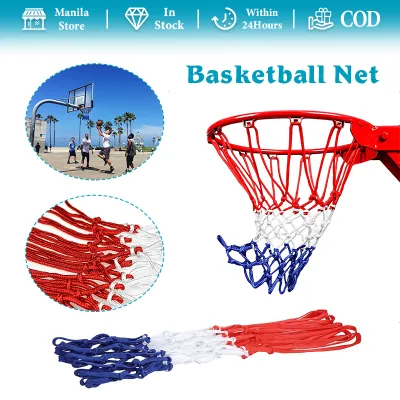
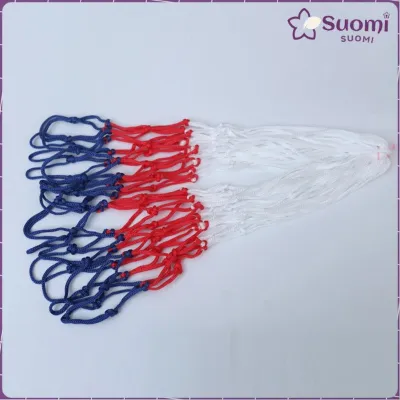
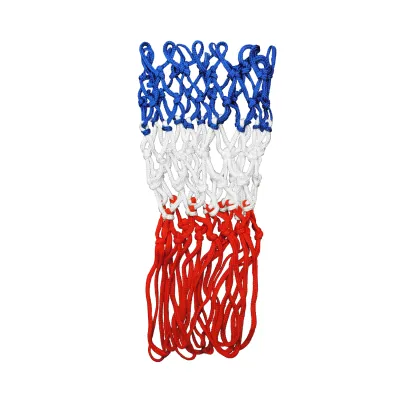
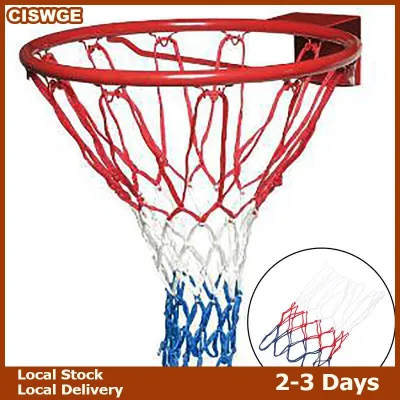
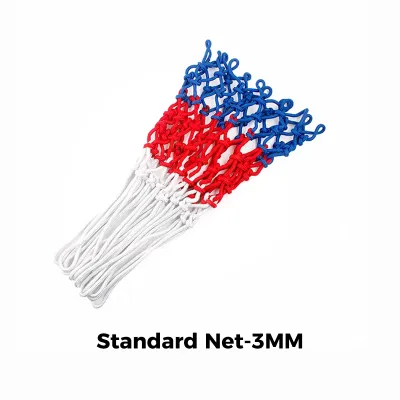
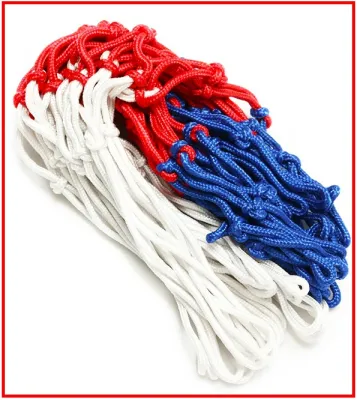
Prices are valid at publication and may change. Please refer to the product page for the latest price.
Comparing Basketball Net Materials: Nylon, Polyester, and Steel
To make the best choice, it is essential to understand how these materials behave under mechanical stress and environmental exposure. Each material has distinct physical properties that affect how the ball travels through the rim, how long the net lasts, and how it sounds when you make a shot.

Nylon Nets (The Classic Choice)
Nylon is the traditional standard for basketball nets worldwide, prized for its excellent elasticity and soft texture. When a basketball passes through a nylon net, the fibers stretch slightly to cushion the ball, slowing it down just enough to drop straight down rather than bouncing away. This material also produces the highly satisfying, crisp “swish” sound that serves as instant auditory feedback for a perfect shot.
However, nylon is highly hygroscopic, meaning it readily absorbs moisture from the air. In humid tropical climates, a nylon net left outdoors will absorb dampness, making it heavy, saggy, and prone to mold. Furthermore, ultraviolet (UV) radiation from intense sunlight breaks down the chemical bonds in standard nylon, causing the fibers to become brittle, yellowed, and easily frayed. Consequently, standard nylon nets are best reserved for climate-controlled indoor gyms or fully covered outdoor courts where rain and direct sunlight cannot reach them.
Polyester Nets (The All-Weather Workhorse)
Polyester has emerged as the premier material for outdoor residential basketball hoops due to its superior resistance to environmental degradation. Unlike nylon, polyester fibers are hydrophobic, meaning they resist water absorption and dry quickly after heavy downpours. This prevents the net from becoming waterlogged, heavy, or susceptible to rot and mildew during the wet season.
Polyester also boasts significantly higher UV resistance than standard nylon, allowing it to withstand prolonged exposure to intense sunlight without losing its structural integrity. While polyester nets are slightly stiffer than nylon—which can result in a firmer ball release and a slightly different acoustic feedback—high-quality outdoor polyester nets are often treated with specialized weather-resistant coatings to mimic the softness of nylon while retaining their rugged durability. When shopping, check product packaging or descriptions for labels indicating UV stabilization or weather-proofing, as untreated low-grade polyester may still degrade prematurely.
Steel Chain Nets (The Heavy-Duty Option)
Steel chain nets represent the ultimate in durability and are specifically designed to withstand the harshest outdoor conditions and heavy physical abuse. Constructed from interlocking metal links, these nets are virtually impossible to tear, cut, or wear down through regular play. They are the standard choice for unsupervised public parks and community play areas where fabric nets would be quickly damaged or stolen.
The primary trade-off with steel chain nets is their impact on playability and equipment. The metallic clink of a successful shot is loud, which may not be ideal for quiet residential neighborhoods. Additionally, the hard steel links can scuff, scratch, or prematurely wear down the leather or composite covers of high-end basketballs. Over time, exposure to moisture can also lead to rust if the protective finish is compromised. To prevent this, look for steel chain nets that feature galvanized zinc coatings or powder-coated finishes, which protect the underlying metal from moisture and humidity.
Matching the Net to Your Specific Playing Environment
Every basketball hoop has a unique setting, and choosing the right net means analyzing the specific conditions of that space. Let us look at how to match these materials to the three most common playing environments.
Indoor Home Hoops and Gyms
Indoor courts offer a controlled environment free from rain, wind, and extreme temperature fluctuations. Because weather resistance is not a factor, your primary focus should be on playability, sound, and ball control. Standard nylon or soft, premium polyester nets are the ideal choices for these setups.
In an indoor gym, the classic acoustic feedback of a nylon net enhances the playing experience, providing that clean, satisfying sound with every successful shot. Because the net does not have to deal with moisture or UV rays, even a lightweight nylon net can last for several years of consistent play. Additionally, the soft texture of nylon ensures that your basketballs remain free of scuffs, preserving the grip of premium indoor leather balls.
Outdoor Driveway and Backyard Courts
Residential outdoor hoops are exposed to the full force of the weather, from scorching midday heat to sudden tropical downpours. For these setups, a heavy-duty, UV-treated polyester net is the most practical and reliable option. It provides the perfect middle ground, offering excellent weather resistance without sacrificing the traditional feel of a fabric net.
An outdoor driveway net must be able to dry quickly to prevent mold growth and maintain its shape despite constant temperature changes. Standard nylon will quickly stretch out of shape and rot under these conditions, while a steel chain net might be too noisy for a residential area and could damage the composite balls commonly used for outdoor play. A thick, weather-resistant polyester net ensures that your backyard hoop remains ready for action year-round, requiring minimal maintenance and fewer replacements.
Public Barangay Courts and High-Traffic Areas
Public courts in local barangays and community parks present a unique challenge. These hoops are subjected to near-constant use, aggressive play, and exposure to the elements without regular maintenance. For these high-traffic areas, you need a net that can handle extreme wear and tear, such as heavy-duty anti-whip polyester or galvanized steel chains.
On public courts, standard nets often get tangled up over the rim during windy days or after high-velocity shots—a problem known as “whipping.” To prevent this, choose thick polyester nets featuring anti-whip technology, which utilizes rigid, stiffened loops at the top of the net to keep it hanging straight down. If the court is completely unsupervised and prone to vandalism, a galvanized steel chain net is the most cost-effective long-term solution, as it cannot be easily cut or torn down, ensuring the court remains playable for the entire community.
Key Specifications to Check Before Buying a Net for Basketball Ring Setups
Not all basketball nets are created equal, and purchasing the wrong size or style can lead to compatibility issues or premature wear. Before buying a net for basketball ring setups, review the product specifications on the packaging or online listing to ensure a perfect fit.
- Hook Count: The vast majority of regulation basketball rims feature a 12-loop configuration, which means they require a net with 12 attachment loops. Before purchasing, count the metal hooks (also called rams-horns) on your existing rim. While 12 is the standard for regulation hoops, some recreational, youth, or mini-hoops may feature 8, 10, or even fewer hooks, requiring a specialized net.
- Net Length: Standard regulation basketball nets measure between 15 and 18 inches (approximately 38 to 45 centimeters) in length when hung. This length is designed to briefly slow the ball as it passes through, giving players a clear visual target and ensuring the ball drops predictably beneath the hoop. Avoid excessively long nets, which can cause the ball to get stuck, or overly short nets, which fail to slow the ball down effectively.
- Cord Thickness (Thread Count): Fabric nets are measured by their thread count or cord thickness, typically ranging from 120 grams to over 500 grams. Thicker cords (often labeled as heavy-duty or professional grade) offer much greater durability and resistance to fraying, making them ideal for outdoor use. However, extremely thick cords can make the net stiffer, slightly altering how the ball bounces off the rim during a shot.
- Rim Compatibility: Ensure that the net's top loops are compatible with your rim's attachment system. Most standard rims use open metal hooks where the net loops are simply slipped on. However, some heavy-duty breakaway rims use a chain-link attachment or a secure, hookless tube system that requires threading a wire through the net loops. Always verify how your net attaches to your specific rim model before buying.
Installation, Maintenance, and Replacement Signals
Proper installation and regular maintenance can significantly extend the lifespan of your basketball net, ensuring safety and optimal playability.
- Safe Installation: When installing a new net, safety should always be your top priority. Ensure the basketball system is stable, and use a sturdy, level A-frame ladder placed on flat ground rather than climbing on unstable chairs or hanging from the rim. When attaching the loops to the rim hooks, pull them down firmly but avoid overstretching or twisting the material, which can weaken the fibers or cause uneven hanging. For steel chain nets, ensure each S-hook or connector is fully closed using pliers to prevent the chain from detaching during play.
- Maintenance: Synthetic fabric nets require very little maintenance, but keeping them clean can prevent premature wear. Periodically rinse outdoor polyester nets with clean water to remove accumulated dust, dirt, and pollen, which can act as abrasives on the fibers. Avoid using harsh chemical detergents or bleach, as these can break down the UV-resistant coatings. For steel chain nets, regularly inspect the links for signs of surface rust, especially around the connection points, and wipe them down with a damp cloth to remove debris.
- Replacement Signals: No basketball net lasts forever, and playing with a damaged net can ruin the flow of the game. Replace your fabric net immediately if you notice frayed bottom loops, torn sections, or if the net has stretched so much that it no longer slows the ball down. For steel chain nets, look out for severely rusted links that could stain the ball or break during play, as well as bent or open connection hooks that pose a safety hazard to players' fingers.
Frequently Asked Questions (FAQ)
Does a basketball net actually improve shooting accuracy?
A basketball net does not physically guide the ball into the hoop, but it plays a crucial psychological and visual role in shooting accuracy. The net provides a clear, highly visible target in the center of the rim, helping shooters gauge distance and angle more effectively than aiming at an empty metal ring. Additionally, the physical slowing of the ball and the auditory feedback of a successful shot help players adjust their shooting form and build muscle memory over time.
Can I use a standard 12-hook net on a mini indoor hoop?
No, standard 12-hook nets are designed for regulation 18-inch rims and are too large for mini indoor hoops. Mini hoops typically use smaller rims with 6, 8, or 10 hooks and require a much shorter, narrower net. Attempting to force a regulation net onto a mini hoop will result in loose, sagging loops that can interfere with the ball’s movement and easily get tangled. Always check your mini hoop’s manufacturer instructions to find the correct replacement net size.
How do I stop a steel chain net from rusting?
To prevent a steel chain net from rusting, ensure you purchase one with a galvanized zinc or powder-coated finish, which provides a protective barrier against moisture and oxygen. If you notice minor surface rust developing, gently scrub the affected areas with a wire brush and apply a thin coat of rust-inhibiting spray paint or outdoor clear coat. Regularly checking the connection points and keeping the court area clear of standing water will also help preserve the structural integrity and appearance of the metal links.
Community discussion
Share your experience or ask a question. Comments are reviewed before publication.