
Choosing the right eyewear is one of the most critical decisions a swimmer can make to optimize performance, comfort, and safety in the water. To find the best Nike swim goggles for your needs, you must match the technical design of the goggles to your specific swimming environment, intensity level, and facial structure. Whether you are diving off the blocks in a competitive meet, logging daily laps at a local sports complex to build endurance, or enjoying a relaxed weekend swim to beat the tropical heat, your choice of eyewear directly impacts your vision, hydrodynamics, and comfort. Nike swim gear offers distinct product lines designed to address these varying demands, balancing low-drag performance with long-term wearability.
Understanding how different design elements—such as lens profiles, gasket materials, and strap configurations—affect your swim is the first step toward making an informed purchase. A competitive racer looking to shave fractions of a second off their personal best requires an entirely different goggle structure than a fitness enthusiast who plans to wear their gear for hours of casual water aerobics. By evaluating your primary swimming style and matching it to the appropriate model, you can ensure a leak-free, crystal-clear experience every time you head to the pool.
Quick Guide: Matching Nike Goggles to Your Swimming Style
To help you quickly identify which category of Nike swim goggles aligns with your routine, it is helpful to categorize swimming into three primary styles: competitive racing, regular lap training, and casual fitness or recreation. Each style demands a specific set of structural features to address different physical challenges in the water.
Products mentioned in this guide
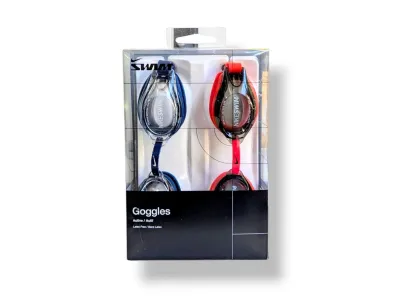
Prices are valid at publication and may change. Please refer to the product page for the latest price.
Competitive racing requires maximum hydrodynamic efficiency. At high speeds, water resistance can drag goggles off the face or slow down a swimmer’s momentum. Therefore, racing goggles prioritize an ultra-low profile, rigid eye cups that sit deep within the eye socket, and a highly secure, tensioned strap system. Comfort is secondary to speed and stability during explosive starts and rapid flip turns.
Regular lap training and daily fitness swimming demand a balance between streamlined performance and long-term comfort. Swimmers in this category often spend 45 minutes to two hours in the pool several times a week. For these athletes, goggles must feature durable, cushioned gaskets that prevent painful pressure points while maintaining a reliable, leak-proof seal over hundreds of laps. Excellent anti-fog properties and UV protection are also vital, especially when training in bright, outdoor environments.
Casual fitness and recreational swimming prioritize comfort, ease of use, and a wide field of vision. If you are swimming for light exercise, participating in water aerobics, or simply cooling off, you do not need to worry about hydrodynamic drag. Instead, you will benefit from oversized lenses, ultra-soft silicone gaskets that sit comfortably on the outer orbital bone, and simple, quick-adjust strap mechanisms that do not pinch the skin or pull the hair.
| Swimming Style | Primary Need | Key Goggle Feature | Recommended Nike Line / Model |
|---|---|---|---|
| Competitive Racing | Hydrodynamics & Low Drag | Rigid, low-profile eye cups; secure split strap | Nike Vapor / Nike Swift |
| Regular Lap Training | Durability & Consistent Seal | Cushioned silicone gaskets; balanced profile | Nike Chrome / Nike Legacy |
| Casual Fitness | Comfort & Wide Visibility | Oversized lenses; ultra-soft gaskets; easy-adjust | Nike Expanse / Nike Easy Fit |
Key Features to Evaluate for Your Swimming Style
Before selecting a specific model, it is essential to understand the technical dimensions and structural choices that differentiate swim goggles. Evaluating these features will allow you to customize your gear to your local swimming conditions and personal preferences.

Lens Shape and Tint
The shape of a goggle lens dictates your field of vision and hydrodynamic profile. Low-profile lenses are engineered to sit as close to the face as possible, reducing the surface area that meets oncoming water. This design minimizes drag but slightly narrows your peripheral vision. Conversely, wide-view or curved lenses wrap around the sides of the face, providing excellent lateral visibility. This wide-angle view is highly beneficial for spatial awareness in crowded training lanes or when navigating open water.
Lens tint is another crucial factor, primarily determined by your swimming venue and lighting conditions. In the Philippines, where bright tropical sunlight and outdoor pools are common, selecting the right tint is essential for eye safety and comfort:
- Mirrored Lenses: These lenses feature a reflective coating that deflects harsh glare and bright sunlight. They are highly recommended for outdoor pools and open-water swimming during peak daylight hours.
- Polarized Lenses: Polarized options filter out horizontal light waves, dramatically reducing the blinding reflection of the sun off the water's surface. This makes them ideal for outdoor lap swimming and open-water navigation.
- Smoke or Tinted Lenses: These function like sunglasses, reducing overall brightness without altering color perception. They are highly versatile for partly cloudy days or well-lit indoor facilities.
- Clear or Light-Colored Lenses: Clear, blue, or yellow lenses maximize light transmission. They are best suited for indoor pools, evening swim sessions, or overcast days when visibility is low.
Eye Cups and Gaskets
The gasket is the material that makes direct contact with your face, creating the vacuum seal that keeps water out. Gaskets generally fall into two categories based on their placement and material composition:
- Inner-Eye Fit (Rigid): Designed primarily for racing, these eye cups sit directly inside the orbital socket. They use minimal gasket material—often thin, high-density thermoplastic elastomer (TPE) or even bare plastic in traditional Swedish-style goggles. While highly hydrodynamic, they apply direct pressure to the bone around the eye, which can become uncomfortable during long sessions.
- Outer-Eye Fit (Soft): Designed for training and recreation, these gaskets are larger and sit on the softer tissue surrounding the orbital bone. They utilize plush, liquid silicone that conforms to the contours of your face. This design distributes pressure evenly, allowing for hours of leak-free swimming without causing deep red marks or headaches.
Nose Bridges and Straps
A secure fit is impossible without the right nose bridge and strap configuration. The nose bridge controls the distance between the two eye cups. If the bridge is too wide, water will leak into the outer corners of the goggles; if it is too narrow, the inner corners will pinch the bridge of your nose and break the seal.
Many performance Nike swim goggles come with interchangeable nose bridges of varying lengths (typically three to five sizes). This allows you to customize the goggles to your exact pupillary distance. Recreational models often feature self-adjusting or flexible nose bridges made of soft silicone that stretches to fit a wide range of face shapes automatically, prioritizing convenience over absolute precision.
Head straps keep the goggles tensioned against your face. For athletic swimming, a split-strap design is highly recommended. The strap splits into two bands across the back of the head, allowing you to position one band higher and one lower. This dual-point anchoring system prevents the goggles from shifting or slipping down when you dive into the water or execute high-speed flip turns. Casual goggles often use a single, wider strap with quick-adjust side buckles that allow you to loosen or tighten the fit with a simple push of a button.
Top Nike Goggle Picks for Competitive and Racing Swimmers
For competitive athletes and high-performance swimmers, every millisecond counts. When selecting goggles for race day or high-intensity time trials, you must prioritize hydrodynamics, stability, and a secure fit that can withstand explosive forces.
The Nike Vapor is the flagship racing model in the Nike swim lineup. Engineered with an ultra-low-profile frame, the Vapor minimizes water resistance to help you maintain maximum velocity. Its curved, oversized lenses are designed to optimize peripheral vision, allowing you to monitor competitors in adjacent lanes without turning your head. The gaskets are constructed from low-profile, high-density silicone, sitting securely within the eye orbit to prevent any shifting during high-speed entries off the starting block.
When preparing for a race, proper strap tensioning and adjustment are critical. Follow this checklist to ensure your racing goggles are secure:
- Select the Correct Nose Bridge: Before your swim, test the interchangeable nose bridges. Choose the size that allows the eye cups to sit flat against your eye sockets without pinching the bridge of your nose.
- Position the Split Strap: Place the lower strap just below the crown of your head and the upper strap slightly higher. This creates a secure cradle that prevents the goggles from slipping down.
- Adjust Tension Carefully: Racing goggles require a firmer tension than training goggles, but they should never be so tight that they cause pain or distort your vision. The suction should do most of the work, with the strap acting as a stabilizer.
- Perform a Dry Dive Test: Push off the pool wall underwater at high speed to verify that the goggles remain firmly in place before using them in an actual race.
Keep in mind the natural trade-offs of racing goggles. Because they sit deep within the eye orbit and feature minimal cushioning, they are not designed for extended, multi-hour wear. Using them for prolonged training sessions can lead to eye fatigue and discomfort. For daily practice, it is best to transition to a dedicated training model and save your low-profile racing goggles for race-day preparation and competitive events.
Top Nike Goggle Picks for Regular Training and Lap Swimming
If you swim laps multiple times a week to maintain your fitness or train for triathlons, you need goggles that combine durability, consistent sealing, and long-term comfort. Your gear must withstand daily exposure to pool chemicals while keeping your vision clear through long, demanding sets.
The Nike Chrome is an exceptional choice for regular lap swimmers. It features a deeper lens pocket and a soft, hypoallergenic silicone gasket that cushions the orbital bone. This design provides a highly reliable, leak-proof seal that remains comfortable even during workouts exceeding an hour. The Chrome also includes an adjustable nose bridge system, allowing you to fine-tune the fit to your facial structure.
Another excellent training option is the Nike Legacy, which offers a slightly wider field of view with its curved lenses, making it highly versatile for both indoor pool training and outdoor workouts. The Legacy’s frame is designed to balance low drag with a highly cushioned fit, making it a favorite among multi-sport athletes.
When training in the Philippines, local environmental factors play a major role in your gear’s performance. Bright, outdoor municipal pools and resort facilities expose swimmers to intense tropical sunlight and high UV radiation. To protect your eyes from long-term damage, ensure your training goggles feature integrated UV protection. Additionally, mirrored or dark smoke-tinted lenses are highly recommended to prevent eye strain and squinting under the midday sun.
Furthermore, high humidity levels can cause rapid condensation inside your goggles, leading to persistent fogging. Nike’s training models are equipped with advanced, factory-applied anti-fog coatings. To preserve this coating during daily use, avoid touching or wiping the inside of the lenses, and always rinse them with cool, fresh water after your swim.
Top Nike Goggle Picks for Casual Fitness and Recreation
For those who view the pool as a place for relaxation, low-impact exercise, or family fun, performance-driven racing features are unnecessary. Instead, casual fitness swimmers and recreational users should focus on maximum comfort, ease of use, and an unobstructed view of their surroundings.
The Nike Expanse is a standout model in this category, featuring a wide-view, semi-mask design. Unlike traditional goggles that sit close to the eyes, the Expanse utilizes an oversized, ultra-soft liquid silicone seal that rests on the outer forehead and upper cheekbones. This design distributes pressure across a much larger surface area, virtually eliminating the uncomfortable “goggle eyes” pressure marks that can persist long after your swim. The wide-view lenses provide an expansive, uninterrupted field of vision, which is highly reassuring for beginners, casual lap swimmers, and those participating in water aerobics classes.
Another user-friendly option is the Nike Easy Fit. As the name suggests, this model is designed for hassle-free adjustments. It features a flexible, one-piece frame with a self-adjusting nose bridge that automatically stretches to conform to your face. The strap system utilizes a simple push-button mechanism on the side of the frame, allowing you to loosen or tighten the fit instantly, even while wearing the goggles in the water.
These recreational designs are ideal for individuals who prioritize a relaxed fit over hydrodynamic speed. They are perfect for casual pool games, light fitness laps, or snorkeling in calm coastal waters. By choosing a model with an ultra-soft seal and a wide field of view, you can focus on enjoying the water without the distraction of leaking, pinching, or restricted vision.
How to Ensure a Proper Fit and Maintain Your Goggles
No matter which Nike swim goggles you choose, their performance depends heavily on a proper fit and consistent maintenance. Taking the time to test your goggles before swimming and caring for them afterward will extend their lifespan and ensure a leak-free experience.
The Suction Test
Before you jump into the pool or purchase a new pair of goggles, you should always perform the standard suction test to verify that the shape of the eye cups matches your facial structure. This test determines if the goggles can create a natural seal without the aid of the head strap:
- Position the Goggles: Hold the goggle lenses against your eyes, aligning them comfortably over your orbital bones. Do not put the head strap over your head; let it hang loose in front of you.
- Apply Gentle Pressure: Press the eye cups firmly against your face to expel the air inside the lenses, creating a vacuum.
- Release Your Hands: Let go of the goggles. If the goggles stick to your face for a few seconds before falling off, they have successfully created a seal. This indicates that the nose bridge width and gasket shape are compatible with your face.
- Check for Air Leaks: If the goggles fall off immediately, air is leaking in. Try adjusting the nose bridge to a different size (if applicable) and repeat the test. If they still fail to stick, the eye cup shape may not be suitable for your facial structure, and you should try a different model.
Anti-Fog Care in Humid Climates
Nike swim goggles feature a delicate, hydrophilic anti-fog coating on the inside of the lenses. This coating works by absorbing moisture and spreading it into a micro-thin, transparent layer of water, preventing the formation of distracting droplets. However, this chemical layer is highly sensitive and can be easily damaged.
In humid, tropical climates, temperature differences between the warm air and cool pool water accelerate condensation. To preserve your goggles’ anti-fog capabilities, never touch, wipe, or rub the inside of the lenses with your fingers, towels, or cloths. Rubbing the lens will scratch or completely strip the anti-fog coating, leading to permanent fogging issues. If your goggles begin to fog during a swim, gently dip them into the pool water and let the excess drain out. Avoid using saliva, spit, or household detergents, as these can irritate your eyes and degrade the silicone seals.
Storage and Rinsing
Chlorine, salt water, body oils, and sunscreen are highly corrosive to goggle materials. Over time, exposure to these substances can cause silicone gaskets to harden, yellow, or crack, and can degrade the elasticity of the head strap. Proper post-swim care is essential to protect your investment:
- Rinse Immediately: As soon as you finish your swim, rinse your goggles thoroughly in cool, fresh tap water. This removes residual chlorine, salt, sand, or organic debris.
- Air Dry in the Shade: Shake off excess water and allow the goggles to air dry completely in a well-ventilated indoor area. Do not expose them to direct sunlight, as intense heat and UV rays can warp plastic lenses and degrade silicone components.
- Use a Protective Case: Once dry, store your goggles in a dedicated hard protective case. Tossing loose goggles into a sports bag exposes them to scratches from keys, swim caps, and other gear, which can permanently ruin mirrored or polarized lens coatings.
Frequently Asked Questions (FAQ)
Do Nike swim goggles come with prescription lenses?
Nike does not officially manufacture prescription (optical) swim goggles or corrective lens inserts. Swimmers who require vision correction have a few alternative options. You can wear daily disposable contact lenses underneath your Nike swim goggles, provided the goggles have a secure, leak-proof seal to prevent pool water from entering the eyes and causing irritation or infection. Alternatively, you can look into specialized optical goggle brands or consult an optometrist to source custom prescription inserts that fit within standard goggle frames.
How often should I replace my training swim goggles?
There is no rigid timeline for replacing swim goggles, as their lifespan depends on how often they are used and how well they are maintained. However, active lap swimmers who train two to three times a week typically need to replace their goggles every four to six months. You should replace your goggles immediately if you notice physical signs of wear, such as yellowing or brittle silicone gaskets, a loss of elasticity in the head strap, persistent leaks that cannot be resolved by adjusting the nose bridge, micro-scratches on the lenses that impair your vision, or the complete failure of the anti-fog coating despite proper rinsing.
Are Nike swim goggles suitable for open-water swimming?
Yes, certain Nike swim goggles are highly suitable for open-water swimming, provided you select a model with the appropriate features. For open water, you should avoid ultra-narrow racing goggles, as they restrict your peripheral vision, making it difficult to sight buoys and navigate currents. Instead, opt for models like the Nike Legacy or the Nike Expanse, which offer curved, wide-view lenses. Additionally, ensure you select mirrored or polarized lenses to combat the intense glare of the sun reflecting off the open water, and use a secure split-strap design to prevent the goggles from being dislodged by waves or choppy water.
Community discussion
Share your experience or ask a question. Comments are reviewed before publication.